When winter is over it is the time to look at the state of all our exterior woodwork and see what needs to be done
Doors, windows, fences, sheds and other outbuildings all suffer the exigencies that bad weather has wrought upon them. Since weather – bad, good, hot, wet, windy or cold – doesn’t just go away, now is a good time to get your exterior woodwork sorted out. Different types of woodwork may need different solutions, so here are some tips and types to get it right.
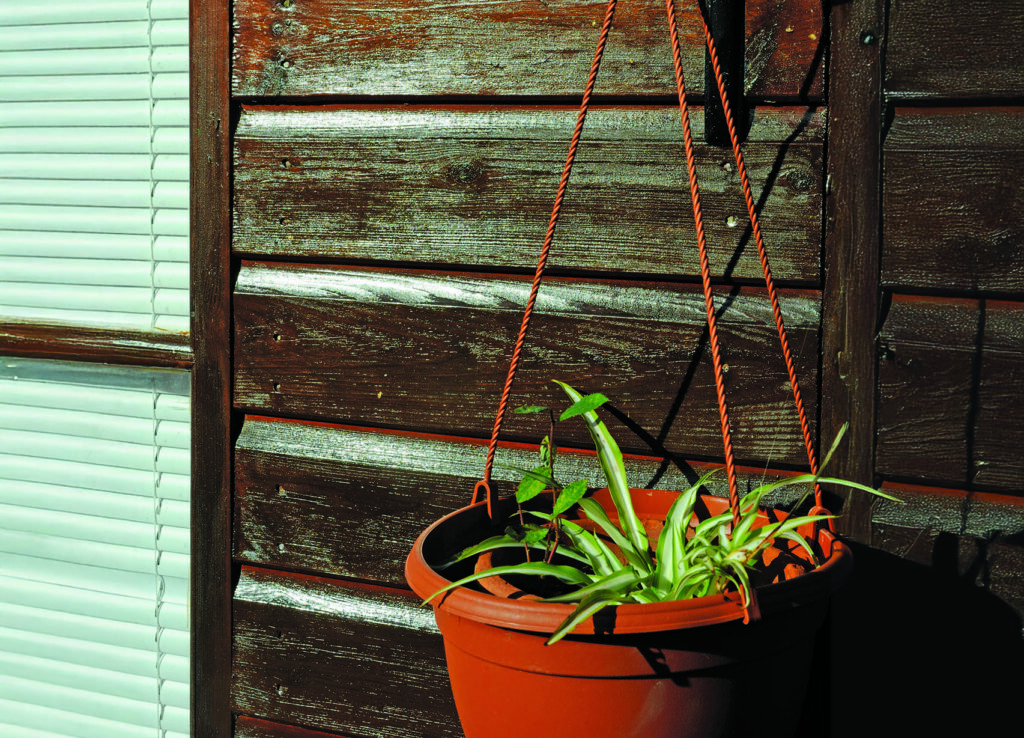
1. Fences and garden tool sheds, etc. can be protected in several ways. Creosote substitute in medium or dark brown, is a smelly and a messy substitute to apply by brush or spray. However, it can look good in the
right setting so long as it doesn’t go all over plants or paving. It needs regular renewal; I have treated a big shed with it for years and it is still in good condition.
2. A more acceptable alternative is fence or garden paint, which comes in a variety of colours to suit your taste and is water-based, so it’s easy to clean up. It is fairly thin in nature and can spill or overspray easily, so protect plants and paths using plastic sheeting.
3. The next level of finish are the more expensive oil-based varnishes and exterior wood finishes. They are best reserved for things like workshops and summerhouses that need superior protection. Older wood tends to be rather open and porous, so coating with Sadolin or another exterior finish for the first time can be costly if you have to apply several coats.
4. The same applies to exterior oil-based varnish, which is much tougher than the interior water-based equivalent. Applying varnish over another type of finish can cause it to crack and separate, so stick with
the previous finish type when applying a new coat.
5. Some years ago, ‘breathing’ microporous paints were being marketed and you can still buy them, but expert opinion is against them for several reasons: one being if they allow moisture out, they can also let it in. The coating needs to be thin enough for the porosity to work; overcoat it and any alleged advantage goes. I can’t see any particular advantage, especially if they cost more than standard gloss paint.
6. Finally, conventional oil-based gloss paints – Dulux, Crown, Johnstone’s, etc. Unlike exterior wood finishes or microporous paints, which can be one or two coats of the same material, conventional paints require a complete system of either primer and undercoat or combined primer/undercoat, followed by the gloss finish usually as two top coats.
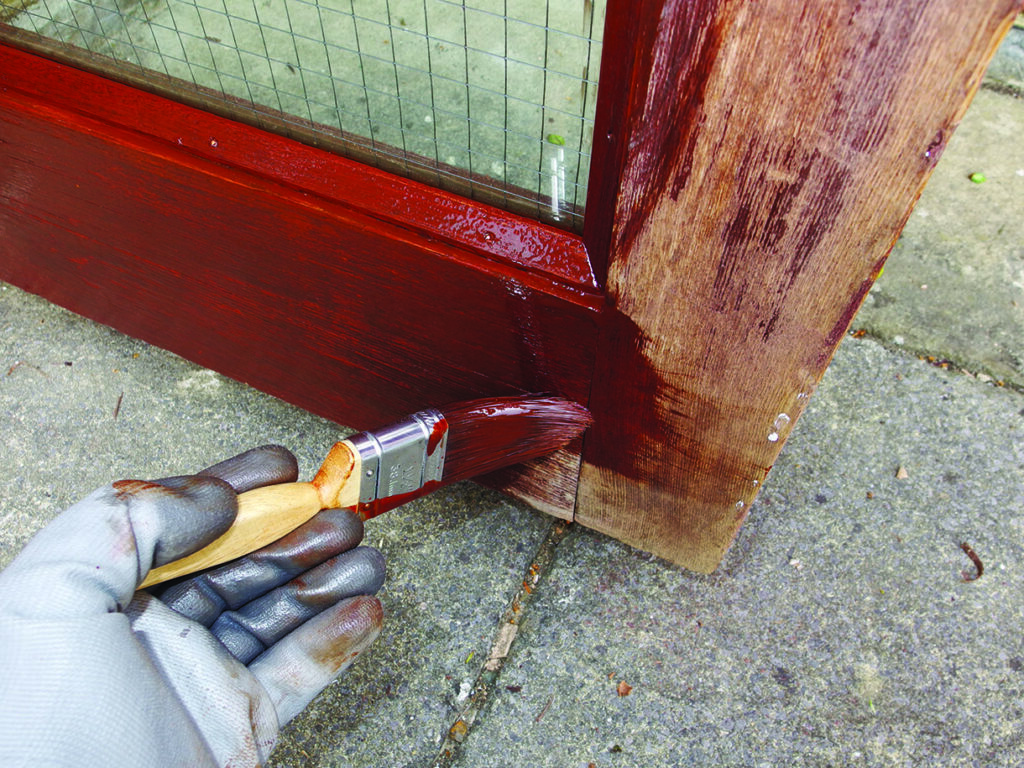
7. Rub down surfaces that may have become roughened by weather exposure and to give a good ‘key’ for the new finish to grip on to. 60–100 grit aluminium oxide papers are good for this, or you can use abrasive coated foam blocks which will follow the contour better.
8. Spraying is a quick way to apply a finish, especially to rough out uneven surfaces like fences. Buy a sprayer with a large enough tank as it needs to hold enough fluid, plus the air pressure to expel it. Pumping to pressurise it is quite hard work. Try and avoid overspray and keep the nozzle and the whole system clean by spraying the correct thinners or water if water-based, after use. Moving parts may start sticking if they do use petroleum jelly to lubricate ‘O’ rings and sliding parts.
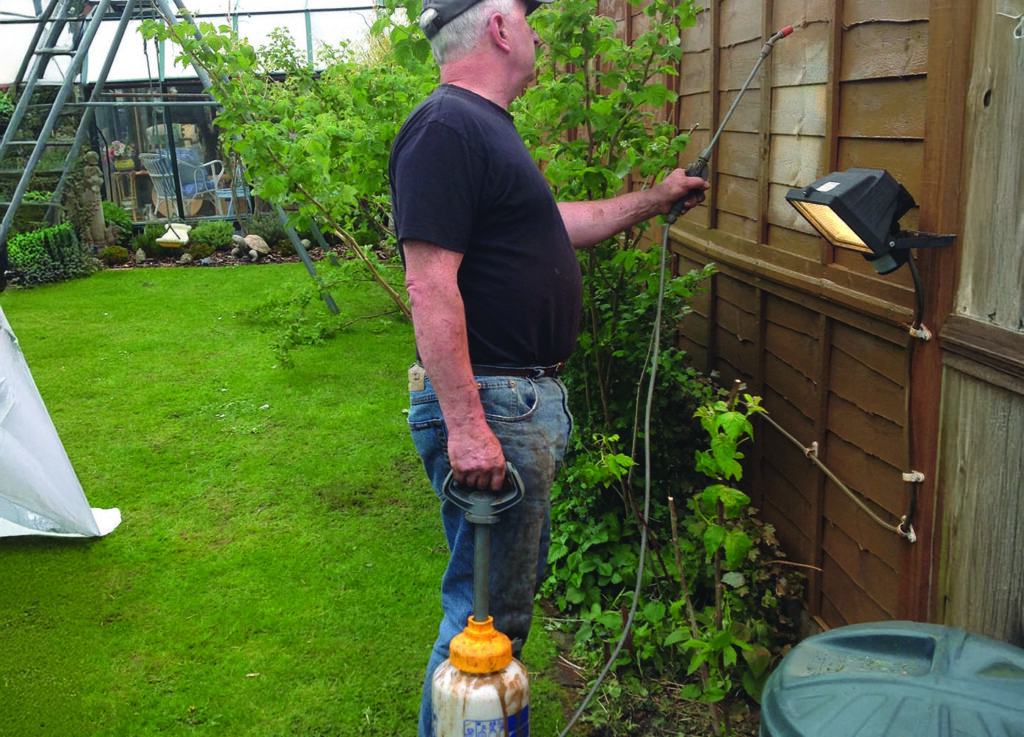
9. Always wear suitable old clothing for applying finishes; if you get in a mess it can be thrown away. Wear protective gloves and a mask if you are spraying. It can help to seal sleeve cuffs to your wrists without cutting off circulation if you are using very runny brush-applied finishes, as it tends to run down your arms.
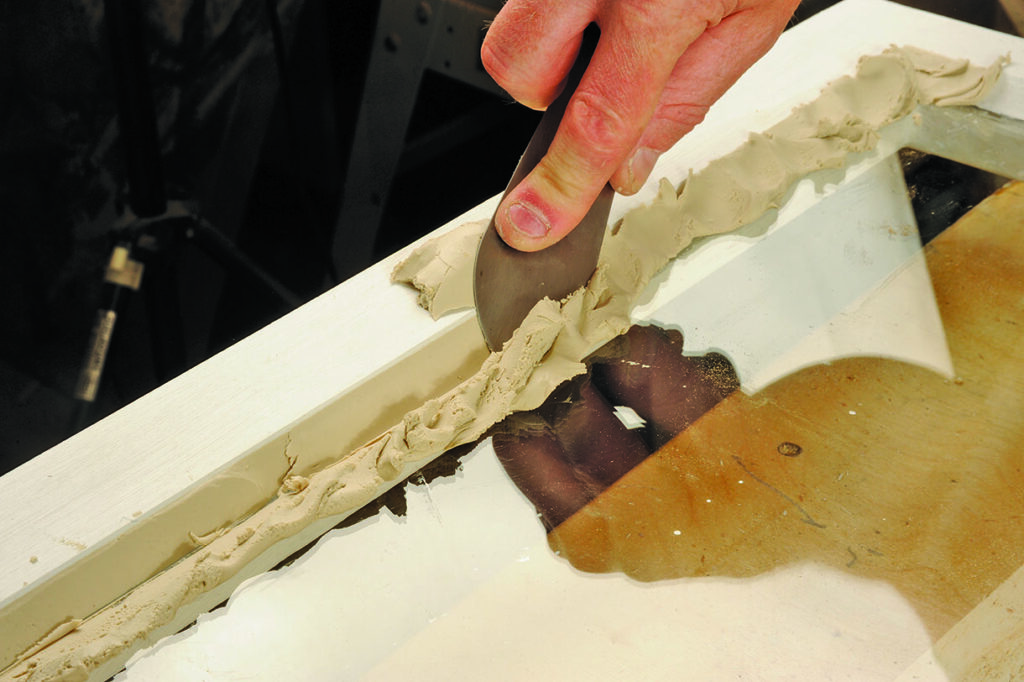
10. Windows in garden buildings and houses tend to leak along the bottom edge where putty or silicone fails, due to weathering. Both putty and silicone are best renewed before painting; putty needs time to ‘skin over’, which can take a few weeks. Old silicone can be hard to remove without the glass breaking if it is still adhered, in which case paint and apply a neat bead of silicone afterwards.