The Woodworkers Institute

We bring you the very best of woodworking!

“Make it with us”

Tool restoration– spirit level

Amber Bailey restores a delightful antique spirit level back to its former glory 
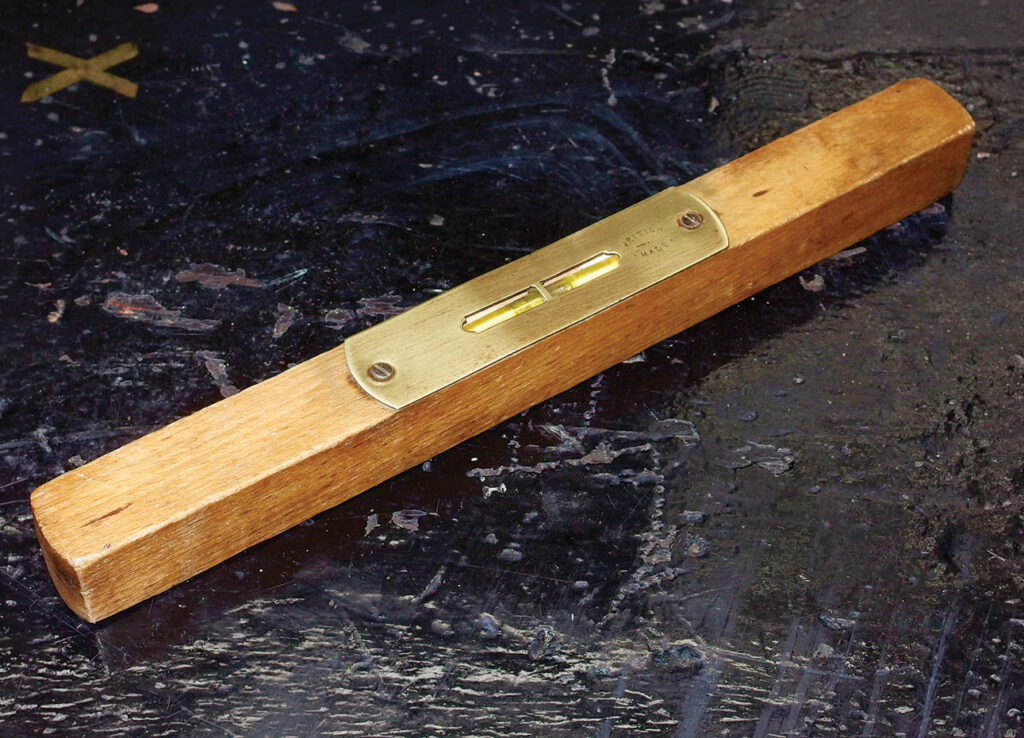
Wooden spirit level on dark surface

Any woodworker will testify that it is far too easy to spend a vast fortune on tools. When forking out on brand new equipment, you cannot always guarantee that you are getting quality items for your money. Sometimes your best bet is to pick up second-hand tools from a local car boot sale or junk shop. The majority of antique tools were designed to be sturdy and built to last, proving superior to many of their contemporary counterparts. Unfortunately there is always a danger that if a tool is left lying around the workshop gathering dust for 50 years, it will start to show its age but with a little bit of TLC they can be brought back up to a showroom finish.

This rather worn-out looking antique spirit level in oak (Quercus robur) and brass, is believed to have been made by William Marples & Sons of Sheffield. The company operated throughout the 19th and 20th centuries before coming into the ownership of Irwin Industrial Tool Co. in 2008. 
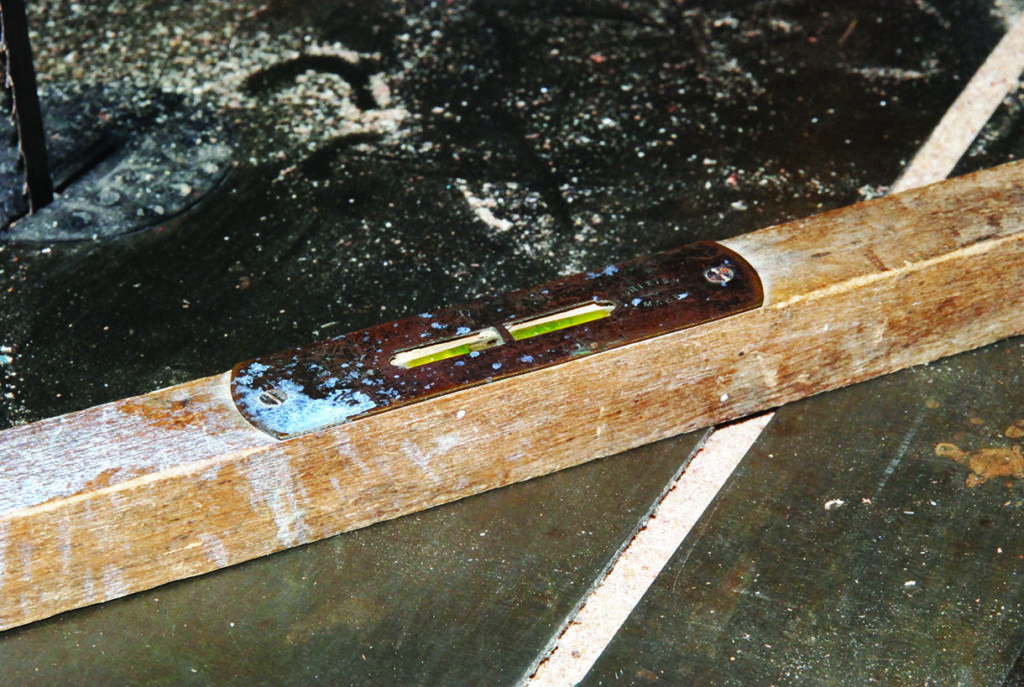
Wooden spirit level on concrete surface
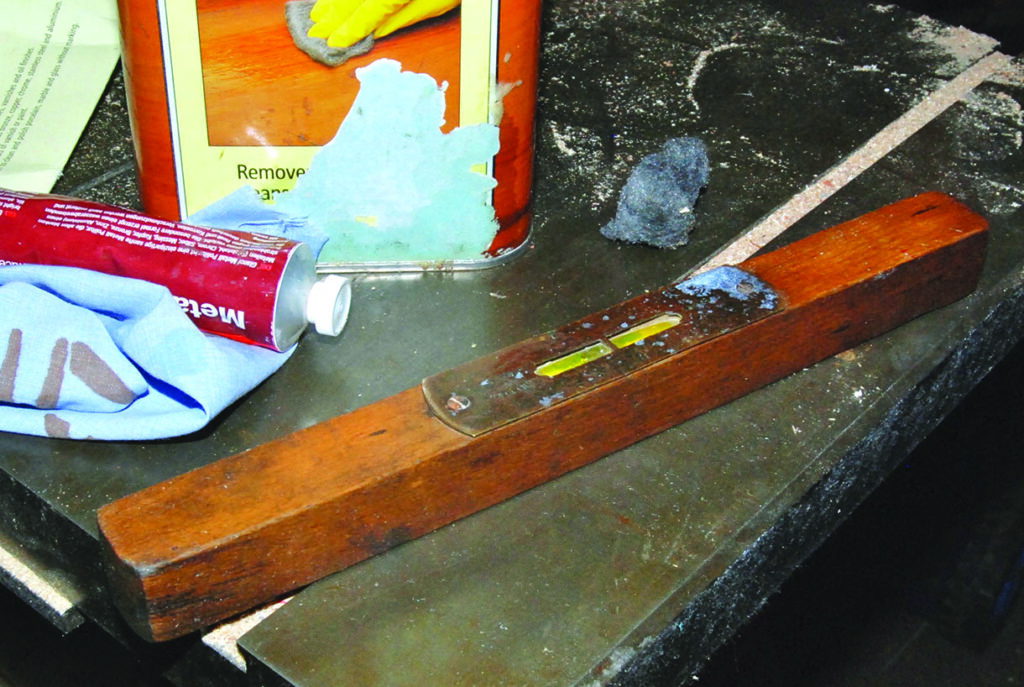
1. Tools left lying around in workshops are subjected to all sorts of polish and chemicals. With fine grade wire wool doused in wax remover, I gently rubbed along the grain of the wood until all dirt and remains of finish were removed. With a serious build up of matter, I decided to sand back with abrasive paper wrapped around a block. This was a very intrusive step that could have risked the natural patina of age. On antique objects, sometimes ‘less is more’, patina can appear very charming rather than restoring right back to fresh wood
Workbench with spirit level, cloth, and metal polish
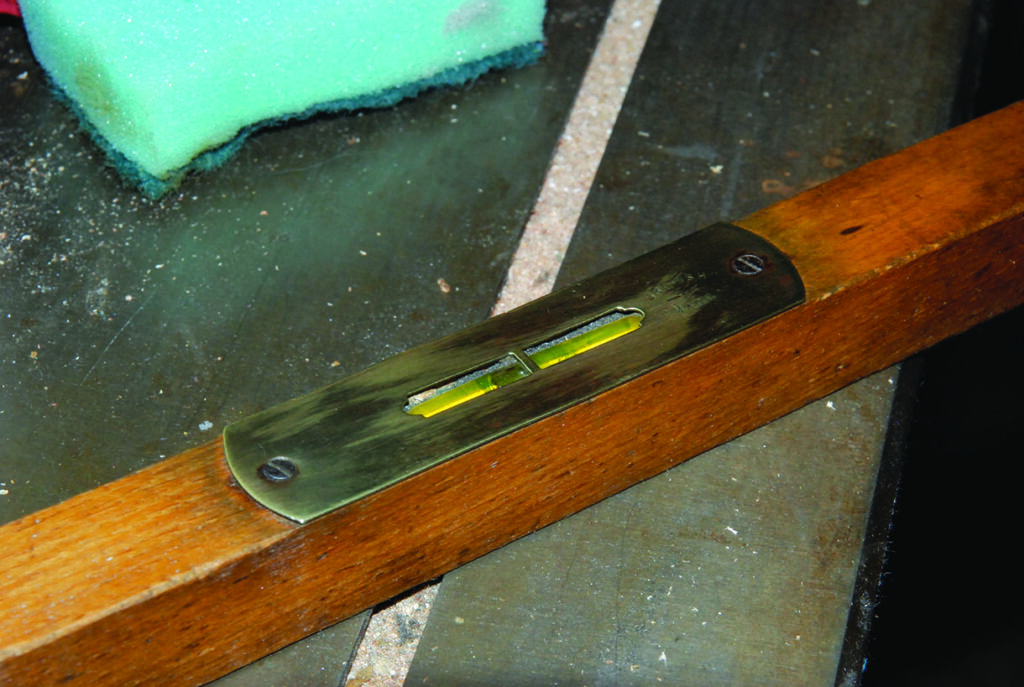
2. The brass plate surrounding the vial had become tarnished from oxygen exposure, so I cleaned it with a combination of fine wire wool and metal polish. I followed along the length of the metal, making sure not to alternate direction, any alteration would create scratch marks. For particularly bad damage, a coarse metal abrasive may be required. Coarse abrasives will leave scratch marks, which will then need removing with finer abrasives. To prevent further tarnishing, the metal was coated with a layer of lacquer, avoiding oxidation
Old spirit level on workshop table
3. Once the level was cleaned, a new protective finish could be reapplied. A soft finish such as linseed oil or wax will feel nice to touch and not chip from use in the same way as a lacquer finish may do. Finally I applied wax with cotton cloth before buffing up with a fresh piece, the choice of wax colour will depend on the wood type. Renaissance (micro-crystalline) wax is an ideal protective layer for the brass plate
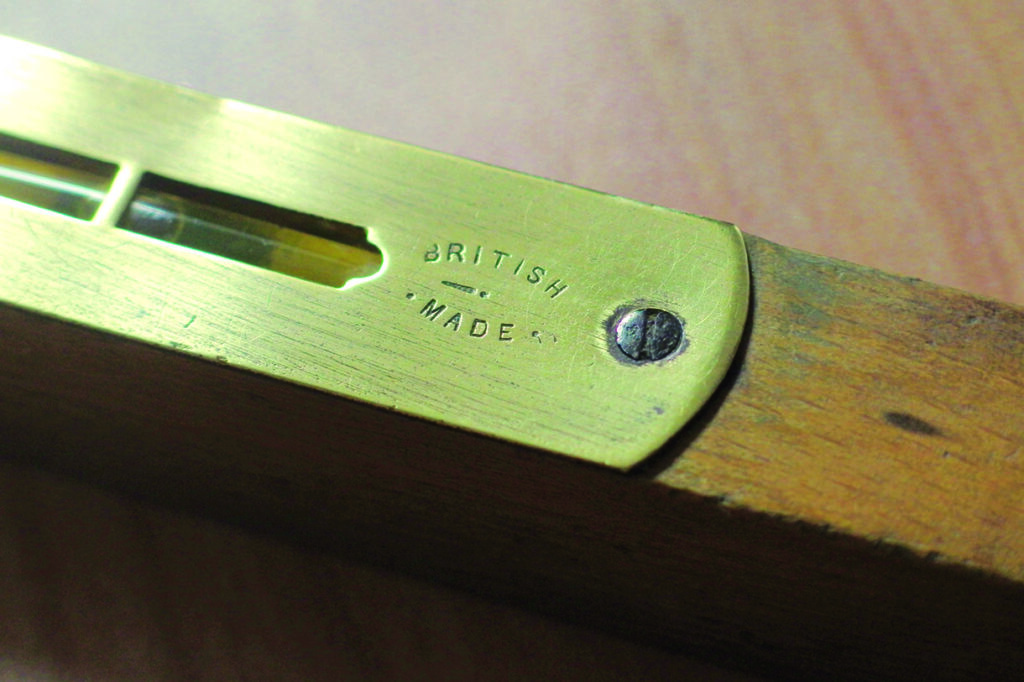
Close-up of British made spirit level tool.
4. The brass has been proudly stamped with a ‘British Made’ mark

To check the accuracy of a spirit level:

1. Position the level on a flat surface.
2. Mark the point of one end of the level and the centre of the vial.
3. Take note of the bubble’s alignment.
4. Rotate the level 180 degrees to the previous reference marks.
5. If the level is accurate, the bubble will be in the same place as before.


Leave a Reply

Your email address will not be published. Required fields are marked *