The Woodworkers Institute

We bring you the very best of woodworking!

“Make it with us”

Cleaving brakes– devices for cleaving

Peter Wood shows us some artful ways to split wood for his green wood projects
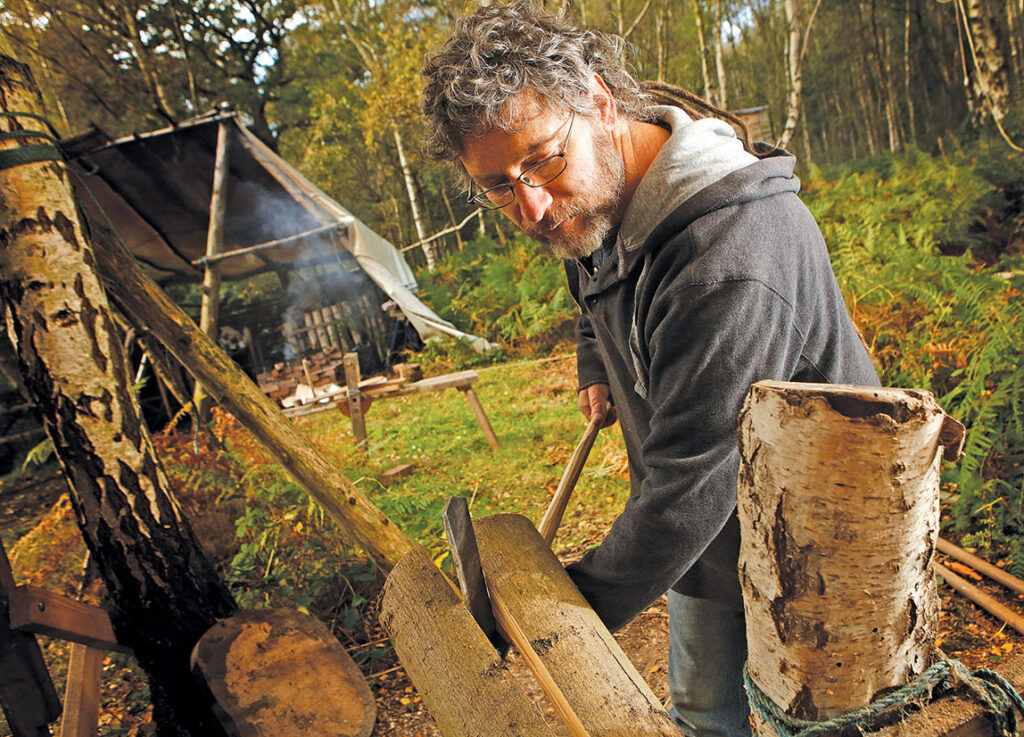
Man splitting logs beside woodland shelter

In this article I will be examining a range of different types and styles of brake that allow us to convert a round log through cleaving (splitting) in a controlled manner into parts that are close to the size needed to shape. Using a few simple hand tools, no power and a brake we can control where the split travels. This is useful for a number of reasons.

Obviously not needing any power to convert the timber means we can work where our raw materials grow. It’s much easier to transport a number of smaller pieces than one large piece, and this can reduce the impact on the environment (if extracting timber from a nature reserve, for example).

Cleaving wood, if done correctly, splits the wood along the grain. You will have seen this in some of my previous articles, both when steam bending and cleaving to make an
oak gate. 

As you split along or follow the grain you retain the inherent strength of the wood. Conversely, cutting with a saw is usually slower and will follow where the saw wants to go rather than the grain. Cutting these fibres reduces the strength of the wood. Finally, when it’s all working well, cleaving is very fast.

We control the split by putting pressure on the side with the greater mass. Putting pressure on the larger side reduces its effective mass and ‘moves’ the split towards the pressure. 

We can then relatively accurately control where the split moves and this enables us to cleave and produce blanks that are very close to the finished size, which means we have less wood to remove when shaping – giving less work and less wastage of materials.
Axe splitting a log beside stacked firewood
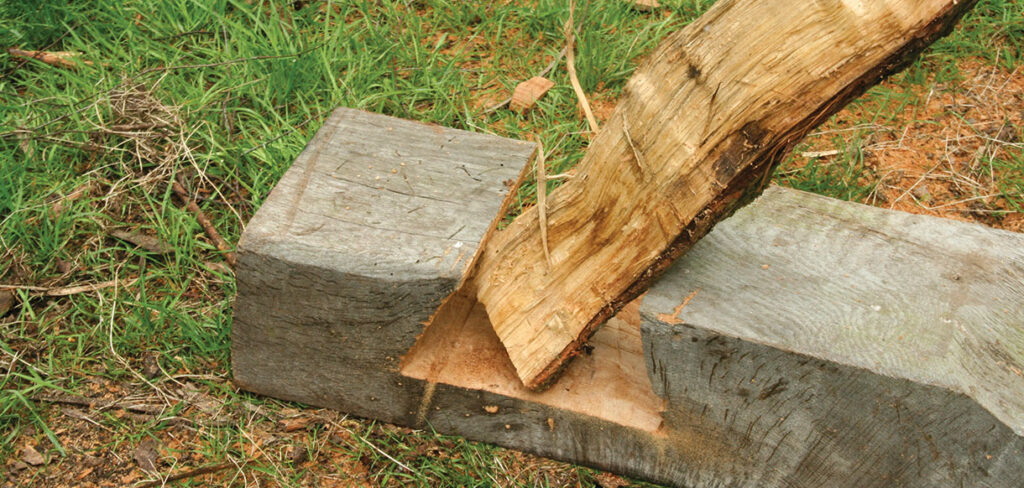
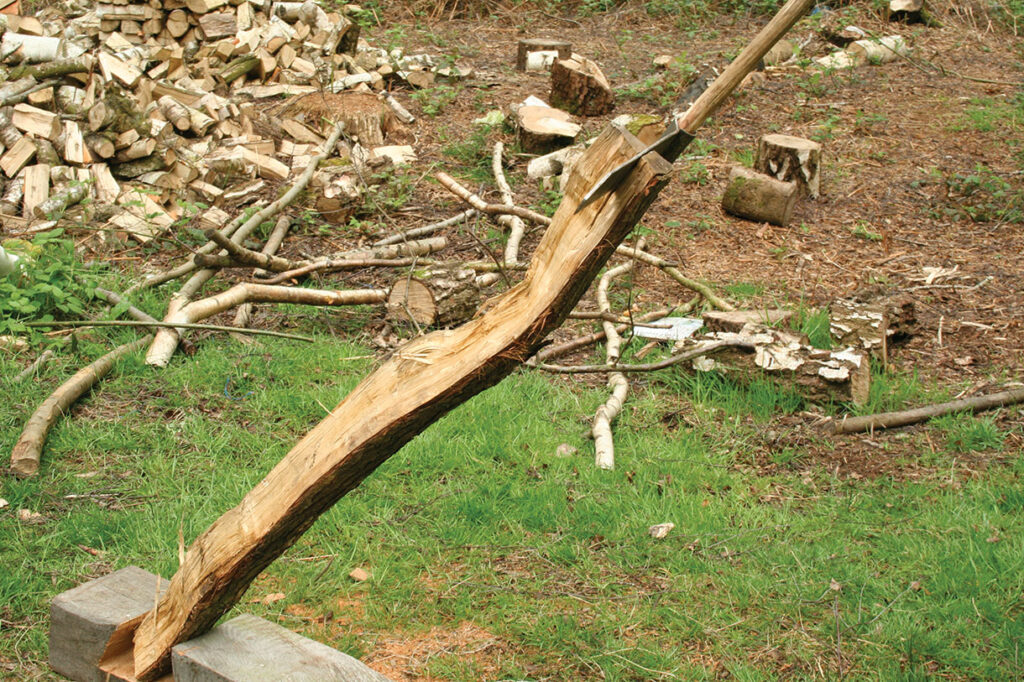
1. The first and simplest brake is a simple dovetail chain-sawed from a large log. The piece to be cleaved is slotted in and by pulling on the top of the log we can apply pressure to the underside of the log and, using a froe lever, open the split
Axe splitting a log on a wooden support
2. You can see here the larger section is underneath so receives the pressure. With a smaller mass above the froe the split would very quickly run towards the smaller side
Split tree trunk resting on two wooden blocks
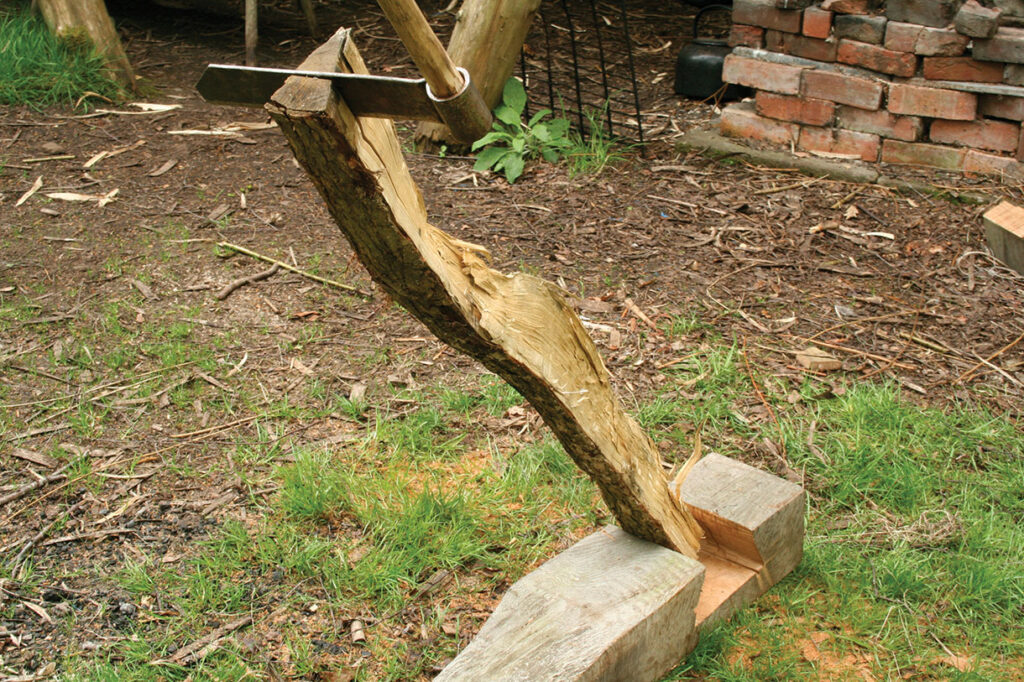
3. This type of brake is handy to have in your workshop but I only find it useful for smaller stock. It has a number of problems: with only one fixed opening it only works with one size of wood. Ideally it needs to be substantial in size or have a long piece of timber behind the opening to stop it lifting up. Finally, as you can see with this piece of oak, there is a danger of the leverage splitting the brake along the grain. A coach bolt through the wood will reduce this danger
Rustic log fence between two birch tree posts
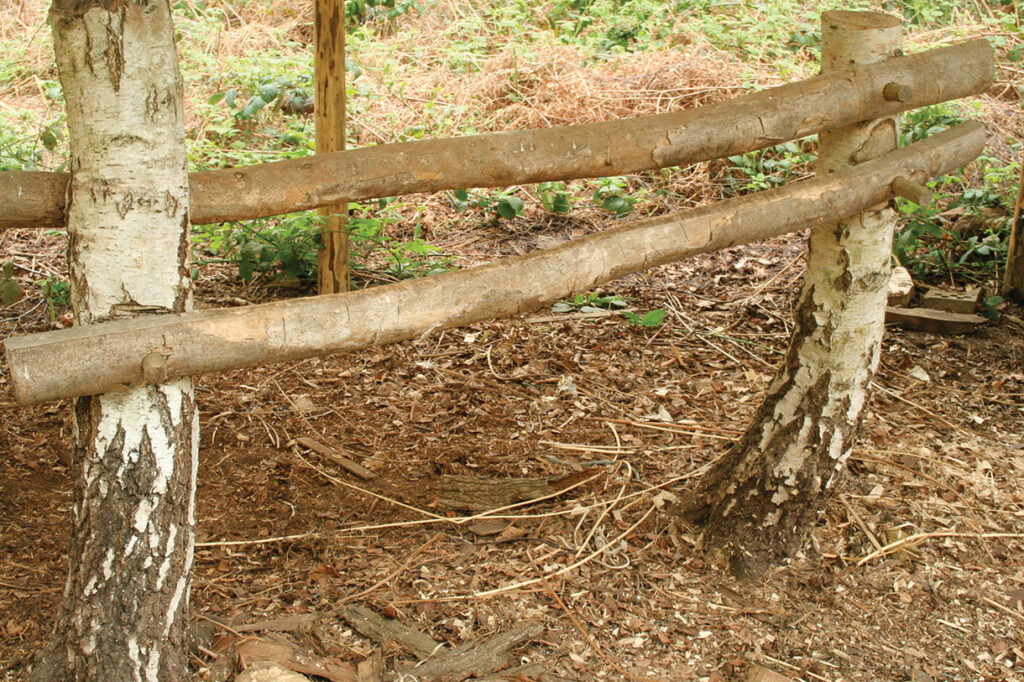
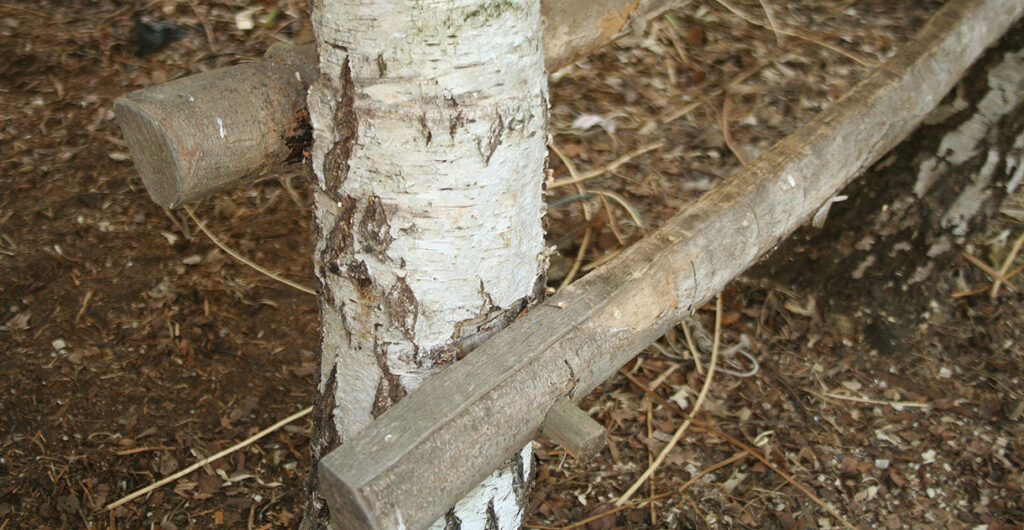
4. The second brake we’ll be using is an older style green woodworker’s brake. What we’re trying to achieve with this brake (and all brakes) is to put more pressure on one side of the wood. Here I’ve fixed two poles to some secure uprights – I was lucky enough to have two convenient trees to use
Birch log post supporting rustic wooden rails
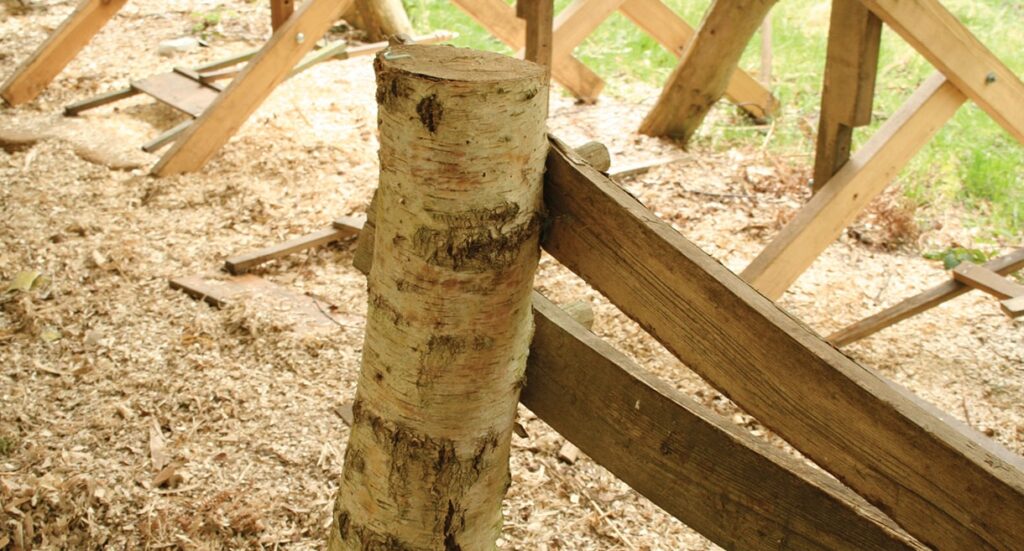
5. At the right-hand end both horizontal poles are fixed to one side of the upright with some large pegs. On the left-hand upright the horizontals are fixed on opposite sides of the other uprights
Birch tree surrounded by felled logs and timber
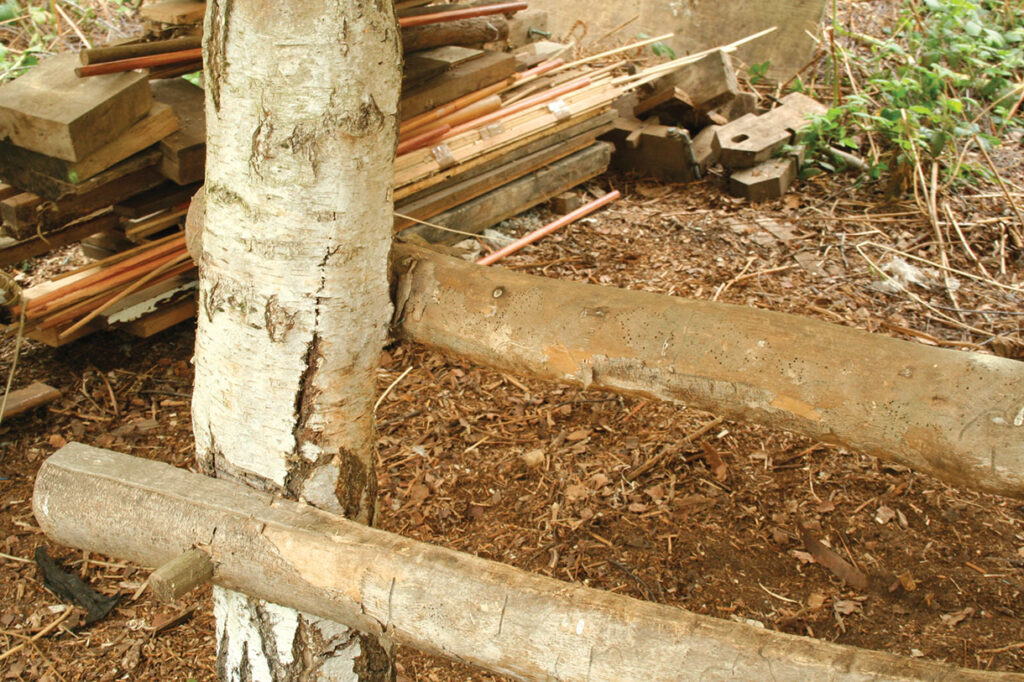
6. The lower pole is ‘in front’ of the upper horizontal pole. We can then rest the piece of wood we are cleaving on this horizontal and apply pressure
Birch tree incorporated into rustic wooden fence
7. Because the horizontals are offset we can move across the split depending on the size of wood we are cleaving. Initially, with larger diameter wood we use the left-hand side then move towards the right as the wood reduces in size. Another advantage of this brake is that, as well as dealing with different sizes of wood, you can move the wood through the brake so you can apply pressure at very specific points
Handmade wooden ramp structure on bare soil
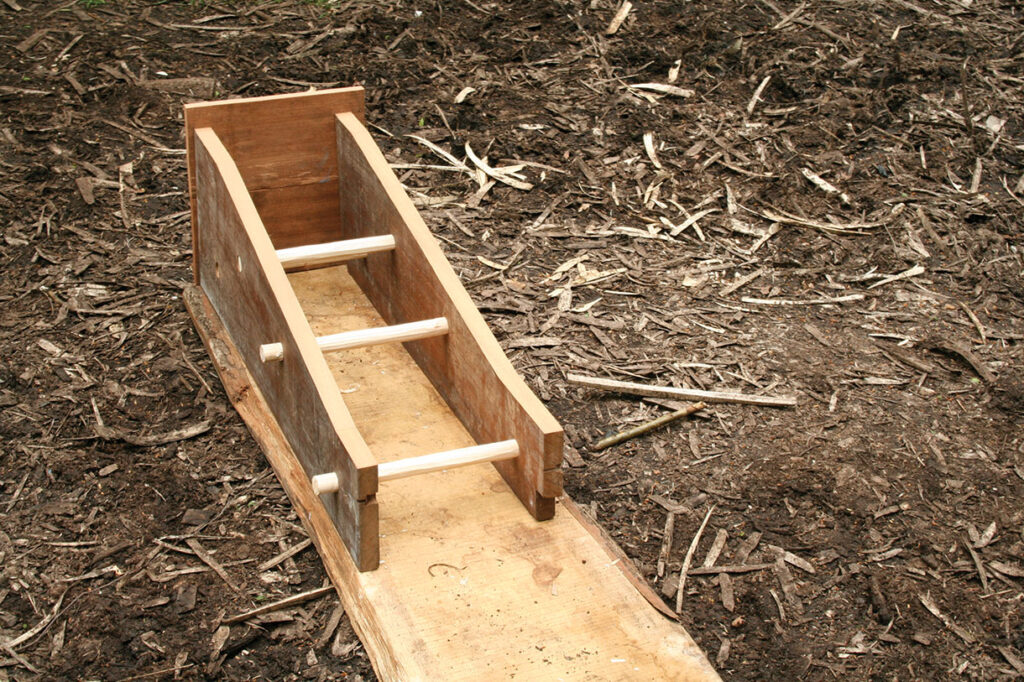
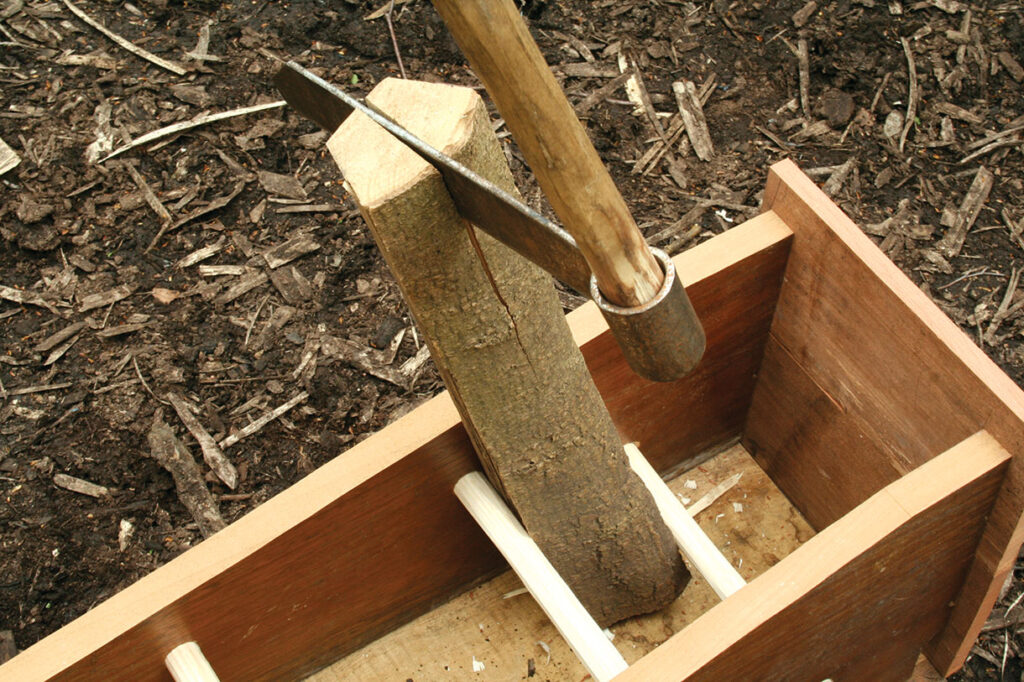
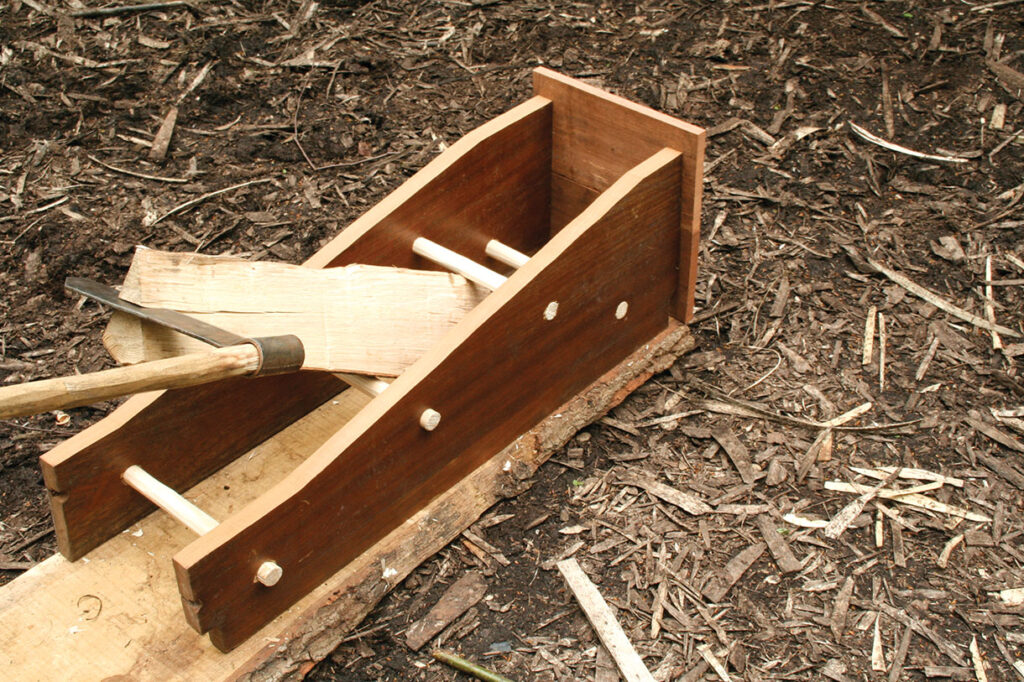
8. The final cleaving brake I’ll look at is the simple but effective box brake. Its design is credited to Dave Sawyer (a great American Windsor chairmaker). It’s very versatile, movable, easily stored and constructed very quickly out of offcuts. This one is made from an old table top, a spare plank of oak and some cleft ash to make the pins
Manual wooden log splitter with blade and handle
9. You have a choice of where to place the lengths of wood for cleaving depending on their size. Here I’m cleaving some spindles and will happily split down to 20mm square
Traditional wooden shaving horse with drawknife outdoors
10. Larger billets can be placed in the second section with much larger logs in the first section. The brake needs to be substantial and the bottom ‘floor’, as with the first brake, needs to be long to cope with the leverage when applying pressure
Wooden post fitted with rusted metal brackets on workbench
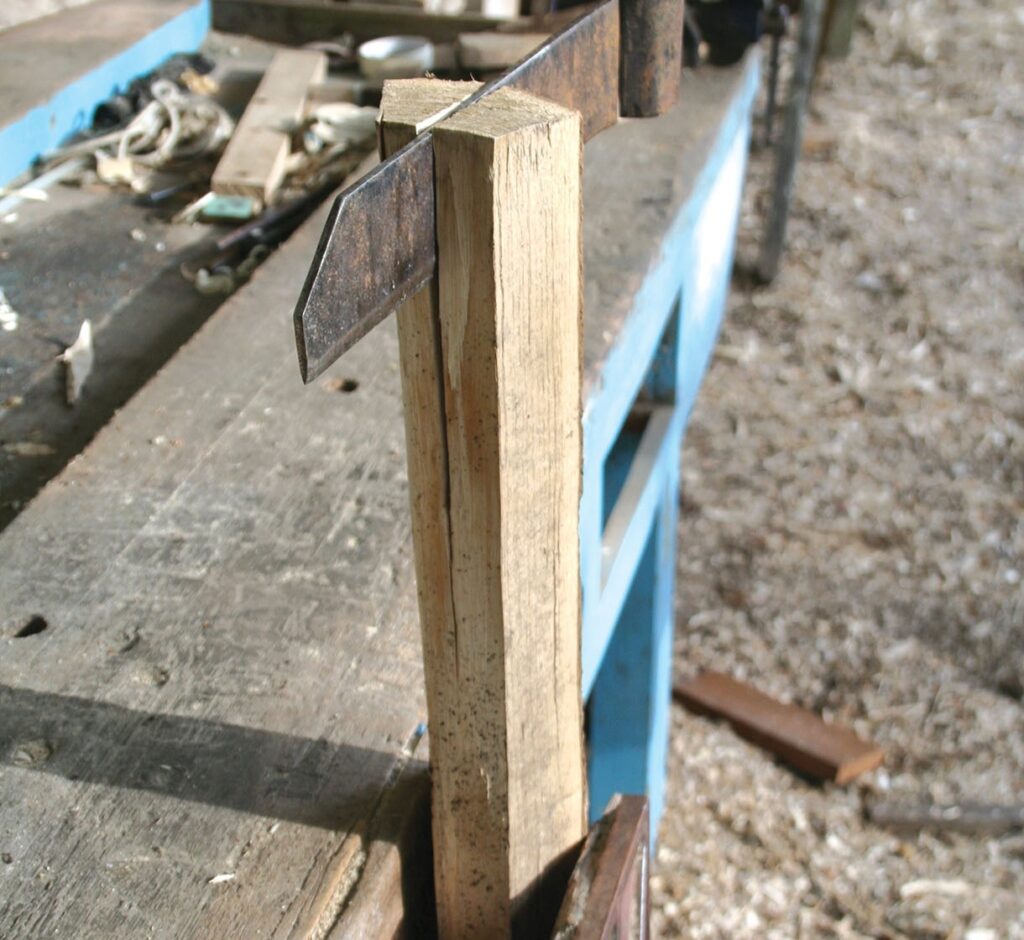
11. Finally, if you have no brake to hand have a look around. When I was working in a school and needing to cleave some wood, a metal gate enabled me to put just enough pressure on some wood to stop the split running off. If you are in the workshop just open up your vice and it will make a very effective brake for cleaving smaller lengths of timber

Leave a Reply

Your email address will not be published. Required fields are marked *