The Woodworkers Institute

We bring you the very best of woodworking!

“Make it with us”

Biscuit ‘bites’ 

Here are some tasty jointer tricks to get your teeth into…

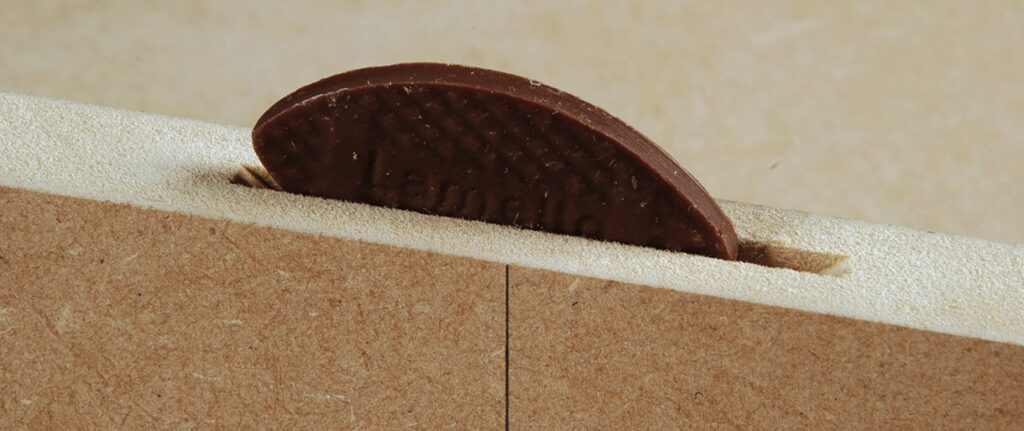
Wood biscuit joiner in wood panel slot.
‘Anyone fancy a chocolate biscuit?’

Biscuit jointing is so easy, but it gets easier and more accurate still when you make up some simple jigs or even use the workpiece as the jig itself. So make project building less stressful and even fun with these useful ideas. 

Carpenter using biscuit joiner on wooden board.
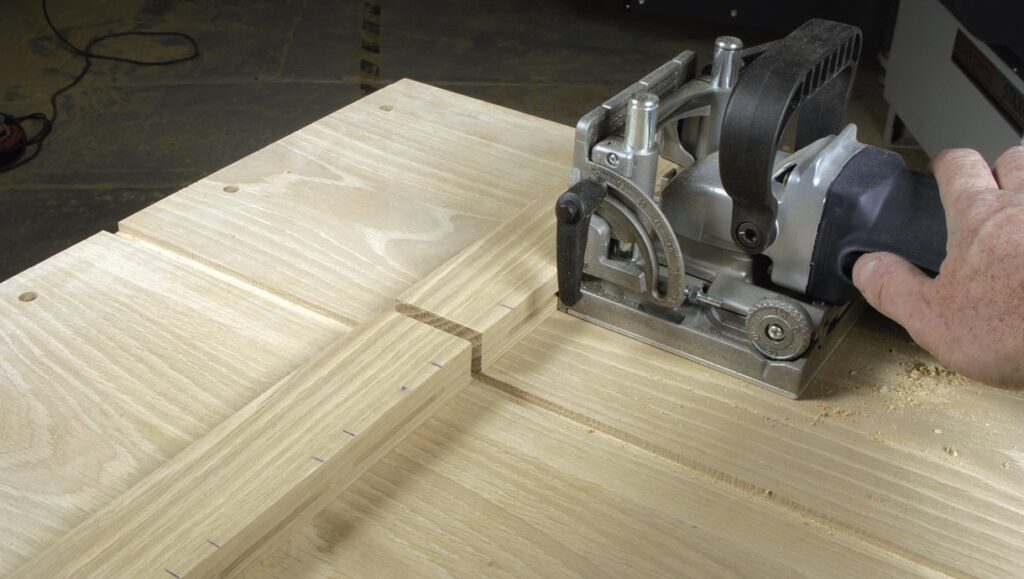
If you are making a bedframe or a drop-in shelf biscuit the support rails in place and leave to dry. Once set, you can use the internal face of the board as the reference surface for the jointer to sit on. Then proceed to slot the rails ready to receive the slats or shelf as desired
Biscuit joiner cutting groove in wooden board
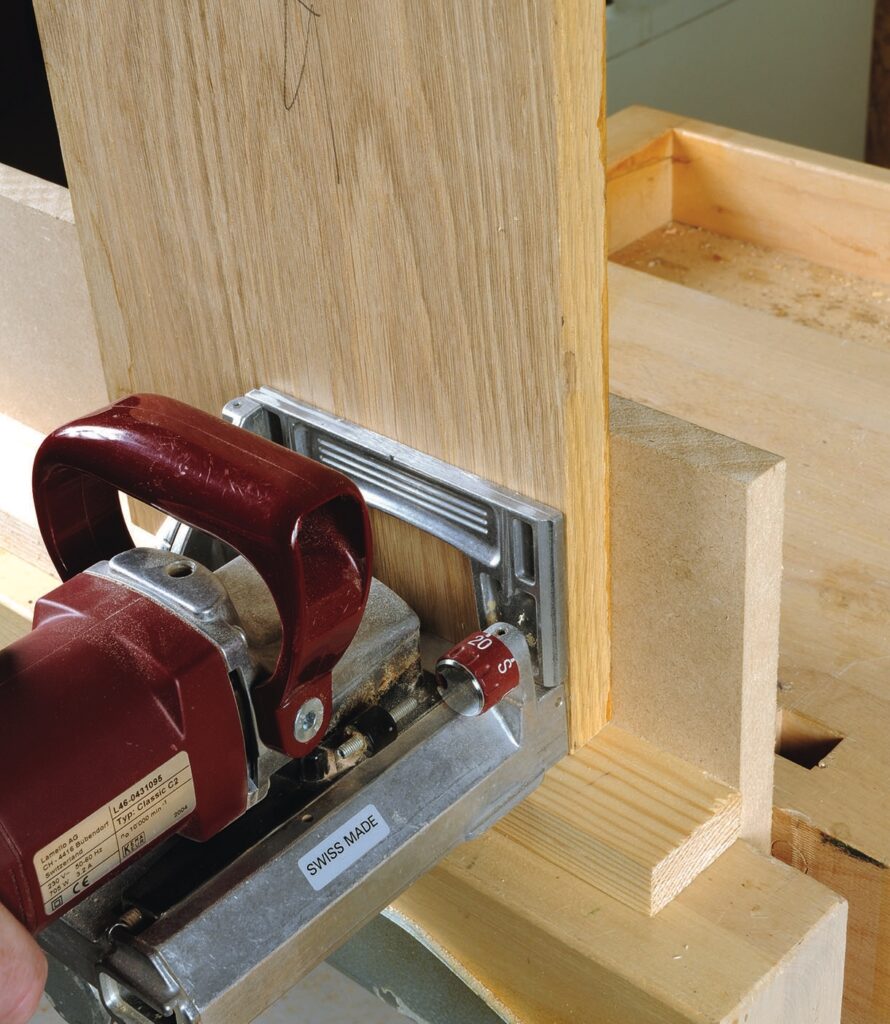
Now the corresponding slots need to be made using an L-shaped jig for accurate slot registration. In the case of narrow slat the L-jig needs modifying with two strips of MDF, one either side of the slat to locate it. They need to be slightly lower so they don’t reduce the slot depth. Press the jointer against the back of the jig and centre it on the slat and plunge. Normally, a 20 biscuit would be best for strength
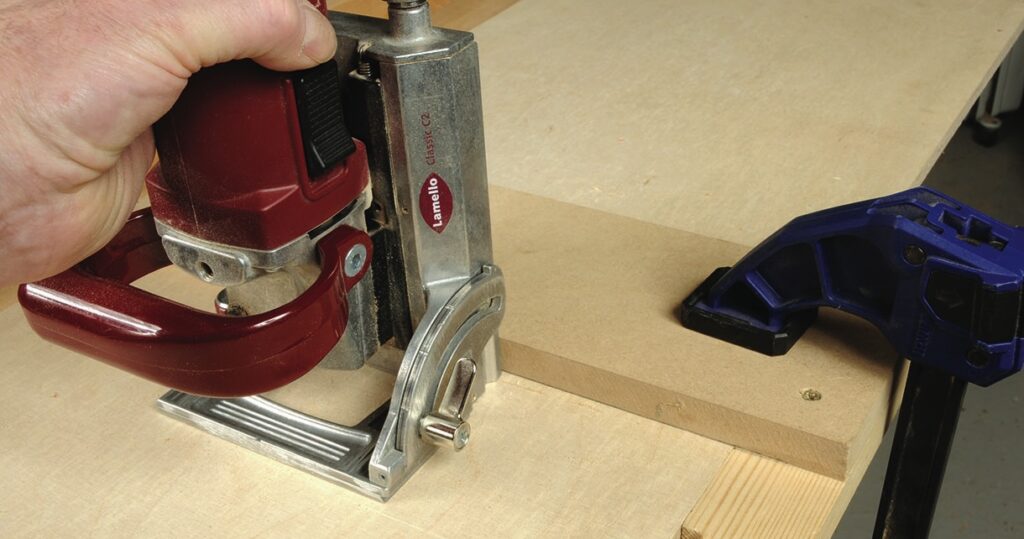
Using biscuit joiner on wood with clamp
A simple T-square made from MDF or ply glued and screwed to a batten makes cross-panel slotting easy. You can even mark the T-square with set divisions if you need to do a lot of repeat slots
Wood being cut with a biscuit joiner tool.
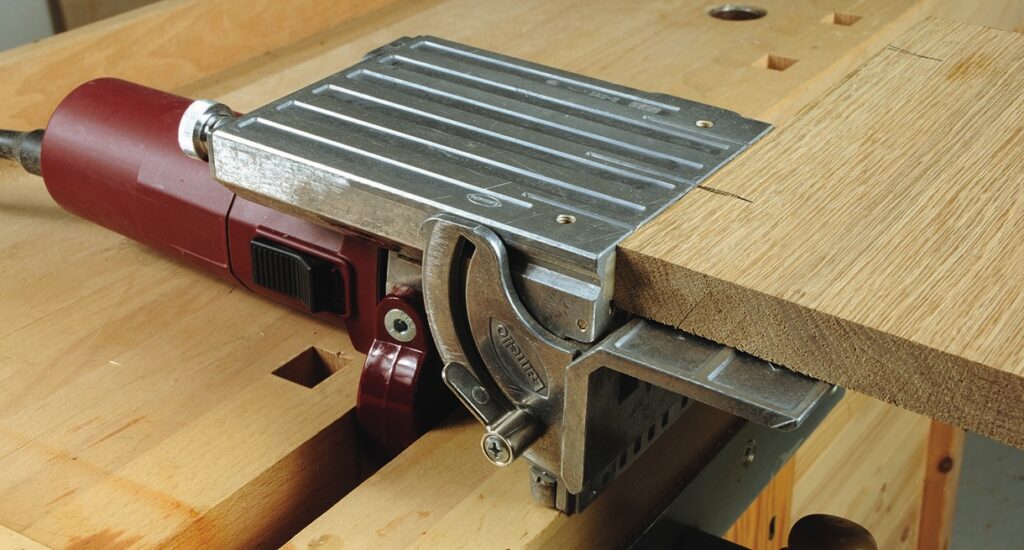
Most jointers can be inverted and clamped in a vice for static slotting. Make sure the fence is set correctly and clamp the machine firmly. Switch it on and leave it running so you can make as many slots as required. The base centre mark will show where to align the component strike marks against
Electric biscuit joiner on a wooden surface.
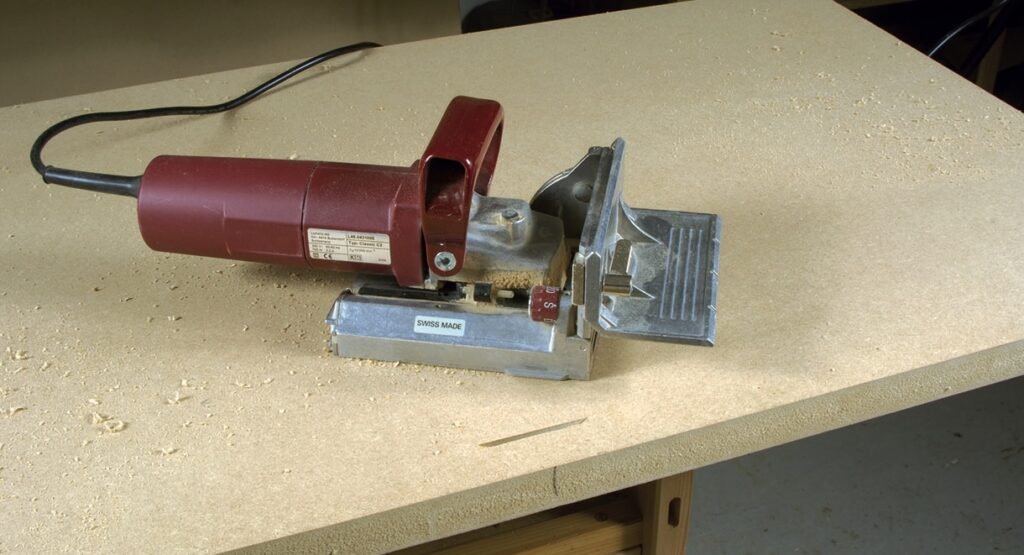
If you want a double thickness board for a workbench or a desk aligning both boards is tricky, especially once the glue has been spread out because the top board will keep slipping around. Just set the fence so you can do a few biscuit slots near one edge along the length of the board. Now repeat a matching set of slots on the other board
Woodwork glue on MDF board, preparation for assembly.
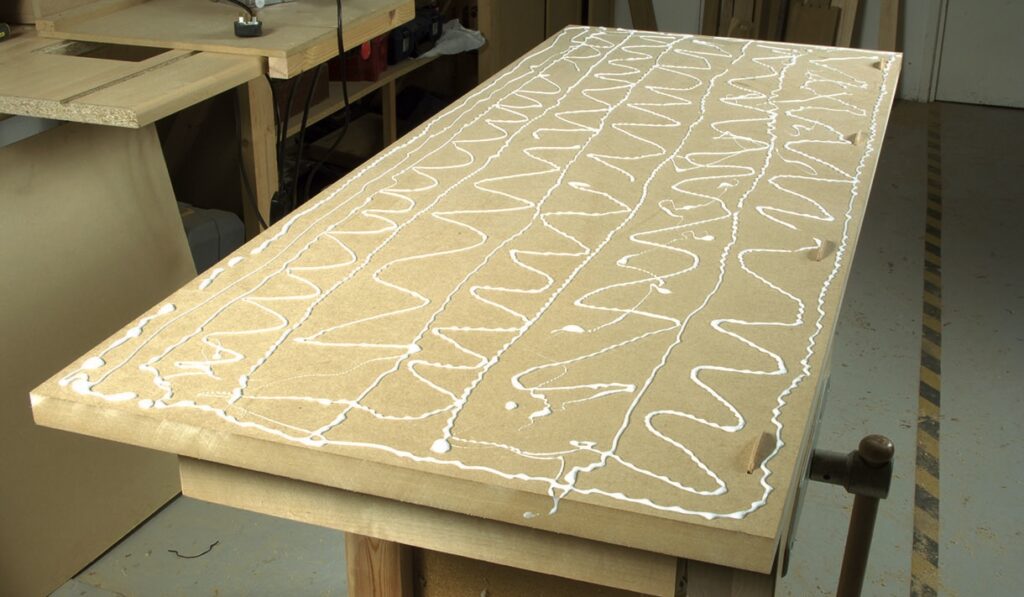
Now create a zigzag pattern of glue lines all over the board, not forgetting an outline line of glue so the edges have coverage as well. You can use a toothed glue spreader or a glue roller but this method works just as well without needing to clean-up tools afterwards. Now add the biscuits, which don’t need glue as they are only intended for positioning. Bring both surfaces together and use heavy weights all over the middle area of the board to push adhesive outwards and then rows of clamps around the outsides edges. Wipe off any exuded adhesive and leave to dry
Swiss made woodworking spacers on a table.
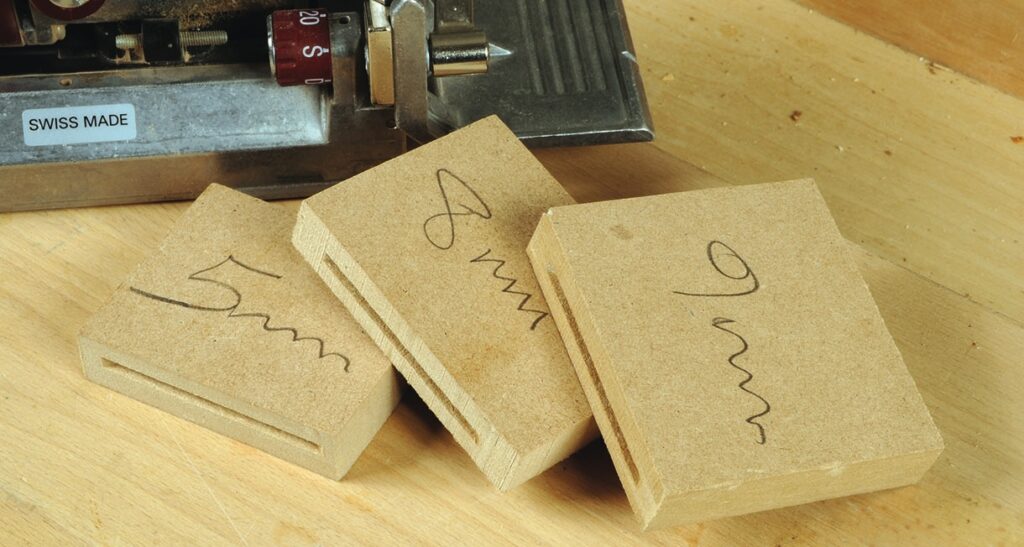
If you use the jointer fence for specific board thickness settings it can be problematic getting the right setting time after time. The answer is to make a set of blocks slotted at specific fence settings. Mark them accordingly so you know which one to pick. Then with the machine unplugged, adjust the fence with the blade protruding and lock the fence ready for slotting
Biscuit joiner on woodworking table.
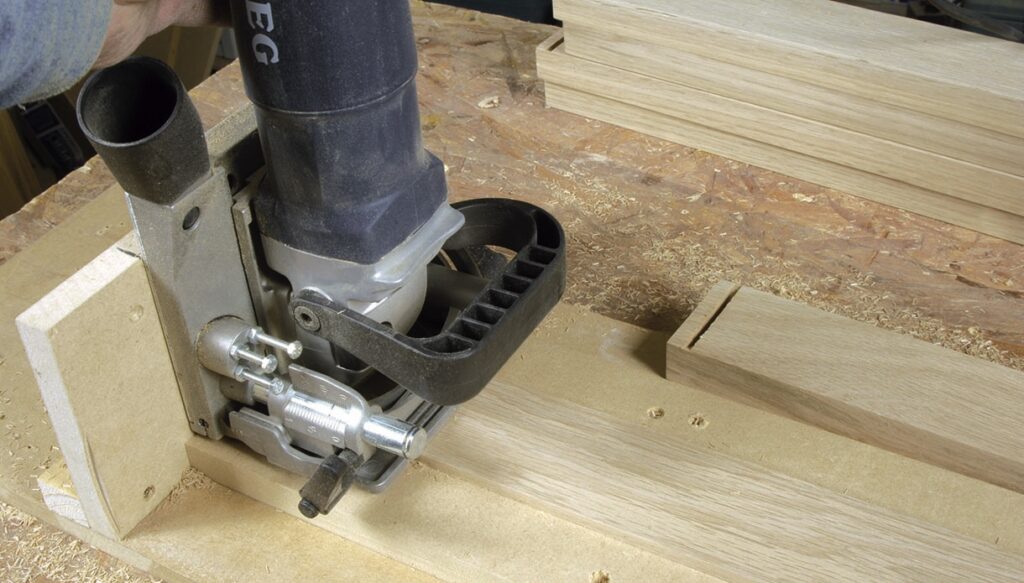
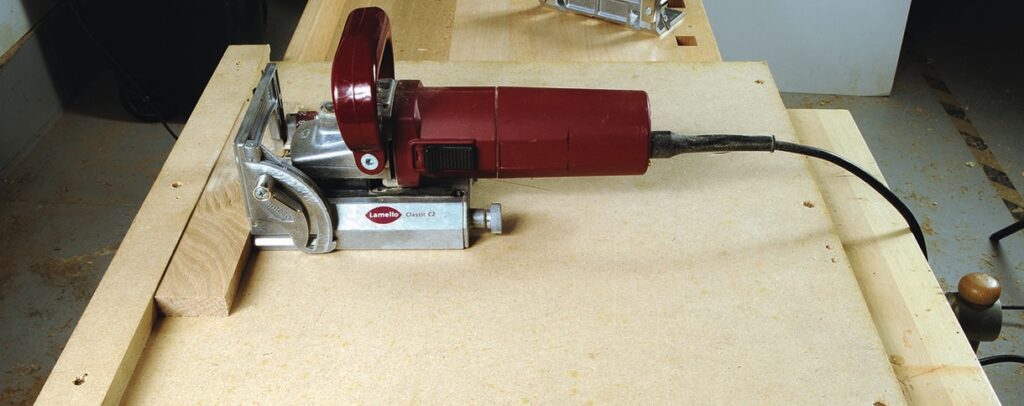
The easiest and safest way to slot components is to make a biscuit jointer bench hook. It can be quite large and clamped in a vice. Just place the workpiece against the upstand at the rear and then press the jointer against and lined up with the pencilled strike mark and plunge – quick, safe and simple
Biscuit joiner cutting wooden board joint neatly
Another variant on the L-jig is a board with a batten across it, which is held vertically in a vice. You can then rest the jointer on the batten for slotting components that lie against the back of the jig. Clamp them in place so they stay put while slotting

Leave a Reply

Your email address will not be published. Required fields are marked *