The Woodworkers Institute
We bring you the very best of woodworking!
"Make it with us"

Bread Slicer and Keeper

Oh crumbs! The Editor nearly ‘did his crust’ when we told him to ‘use his loaf’ and earn some daily bread – it is grist to the mill after all.
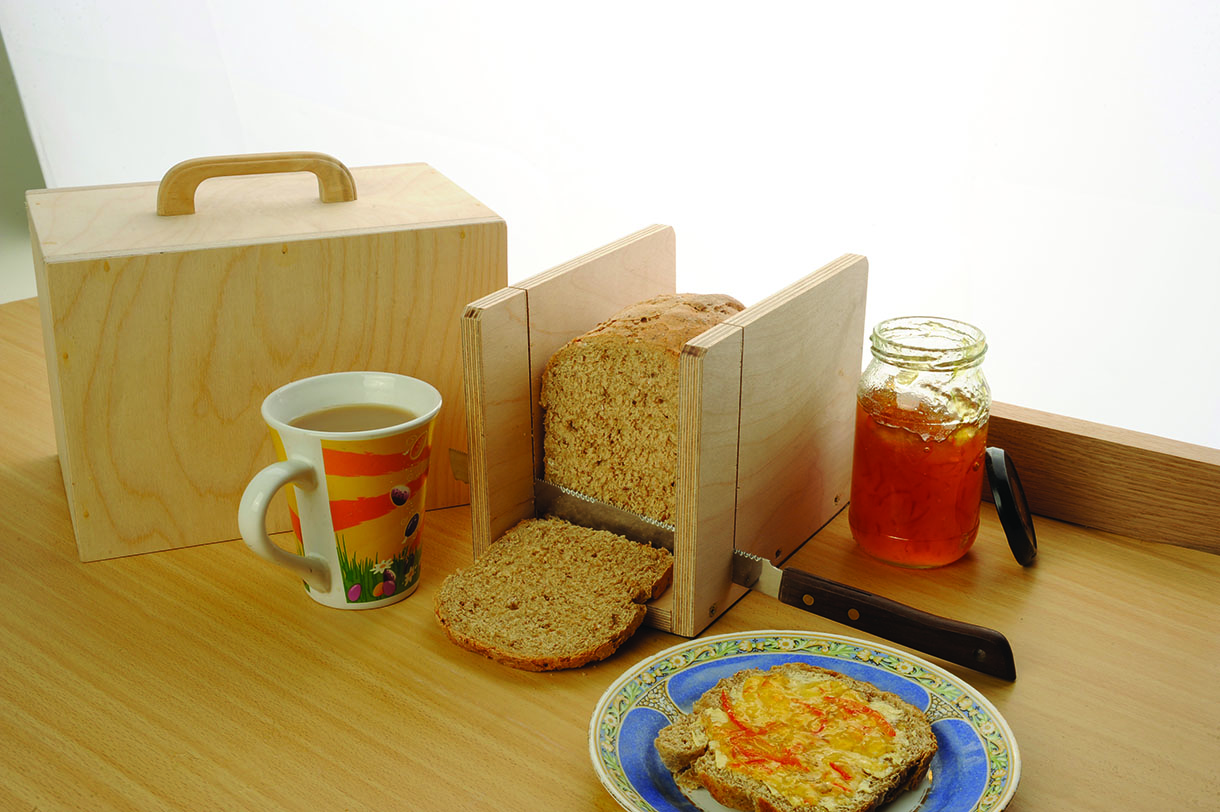
Bread, a cup of tea and a bread slicer

At home I make all our bread the traditional way. It tastes, smells and feels far better than a supermarket loaf. The problem arises when trying to cut even slices, without it crumbling. First you need a proper bread knife with coarse teeth, then you need to hold the bread in a way that keeps it firmly together. Here is my simple-to-use solution. 

Bread slice
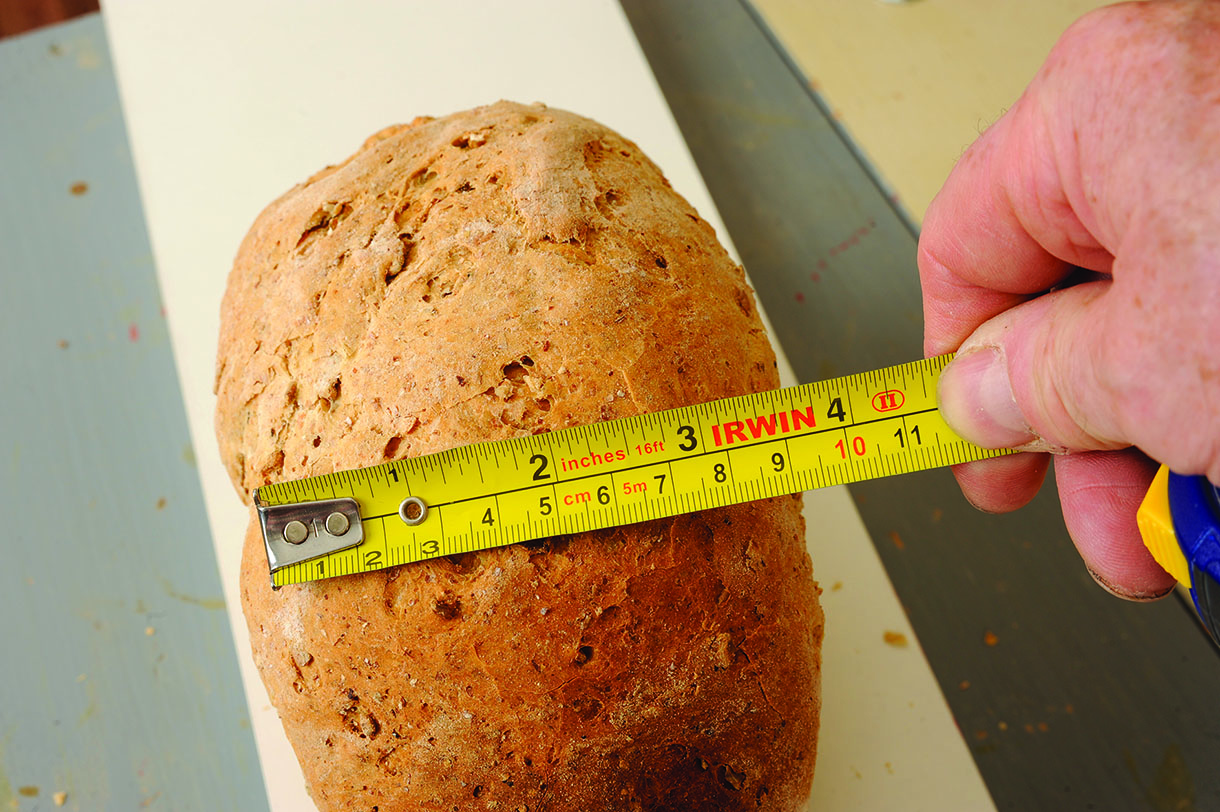
measuring the size of a loaf of bread
1. The slice needs to be a good fit around the size of loaf you normally bake. It can be as long as a loaf or slightly shorter, it isn’t critical and a bit higher than the risen, baked loaf. In this case, I made the internal dimensions 200 x 140 x 110mm
cutting a piece of wood with a hand saw
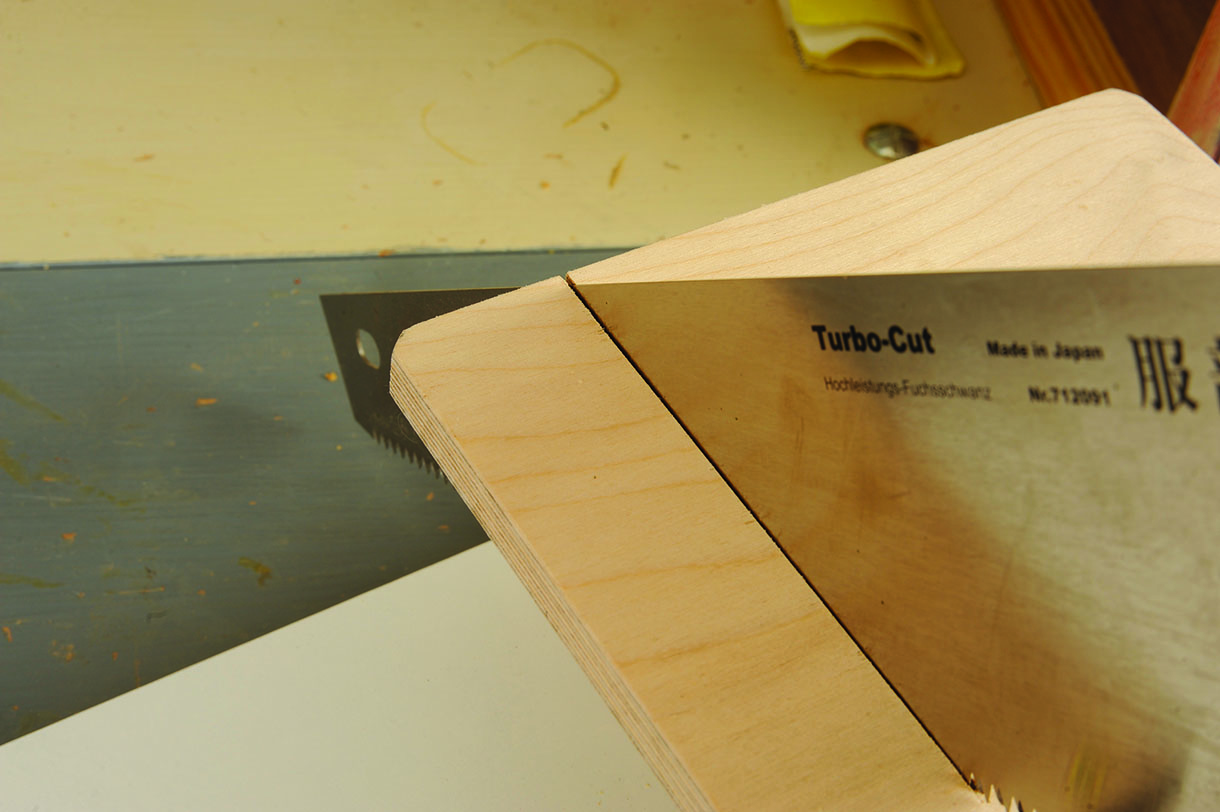
2. Cut out the base and the sides from 9–12mm thick birch ply. Cut matching slots towards one end of each side. The slots need to be narrow because they guide the knife. Each slot stops short of the bottom so the pieces stay together
drilling small holes near the edge of a piece of paper
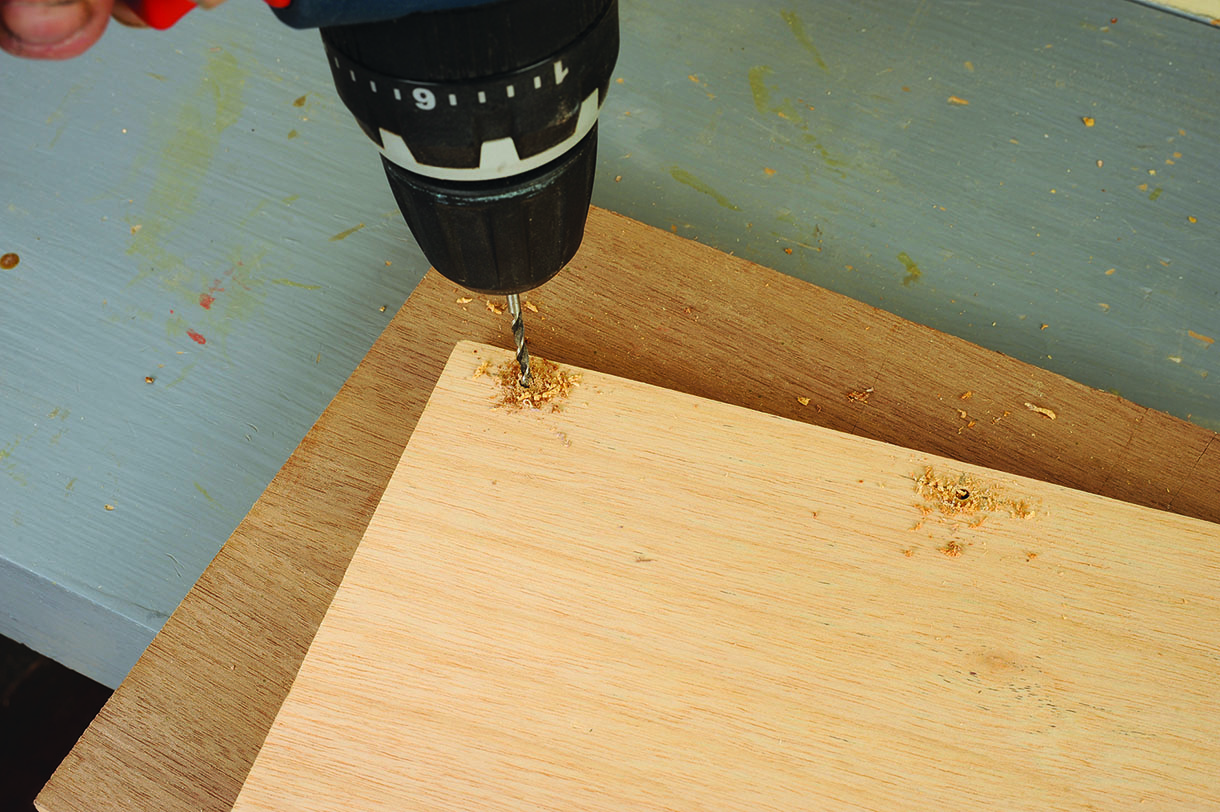
3. Pre-drill small diameter holes to take slim twinfast screws, which will hold the U-shape box together. Make sure the holes are centred in the ply so the screws won’t break out
drilling in screws to some wood
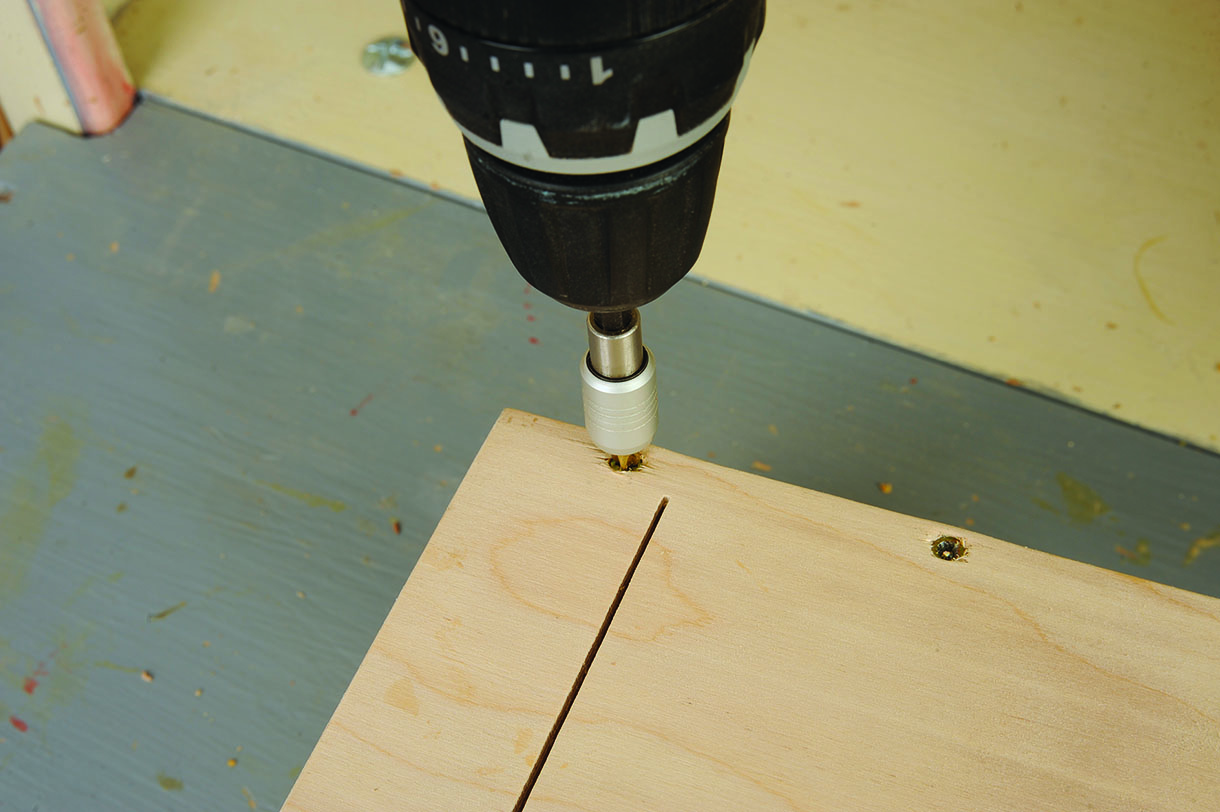
4. Apply PVA glue along the base edges in turn and screw the respective sides in place. The slots should line up so the bread knife can move freely but stay on course. Use a damp cloth to remove excess glue
a knife and some non-slip rubber
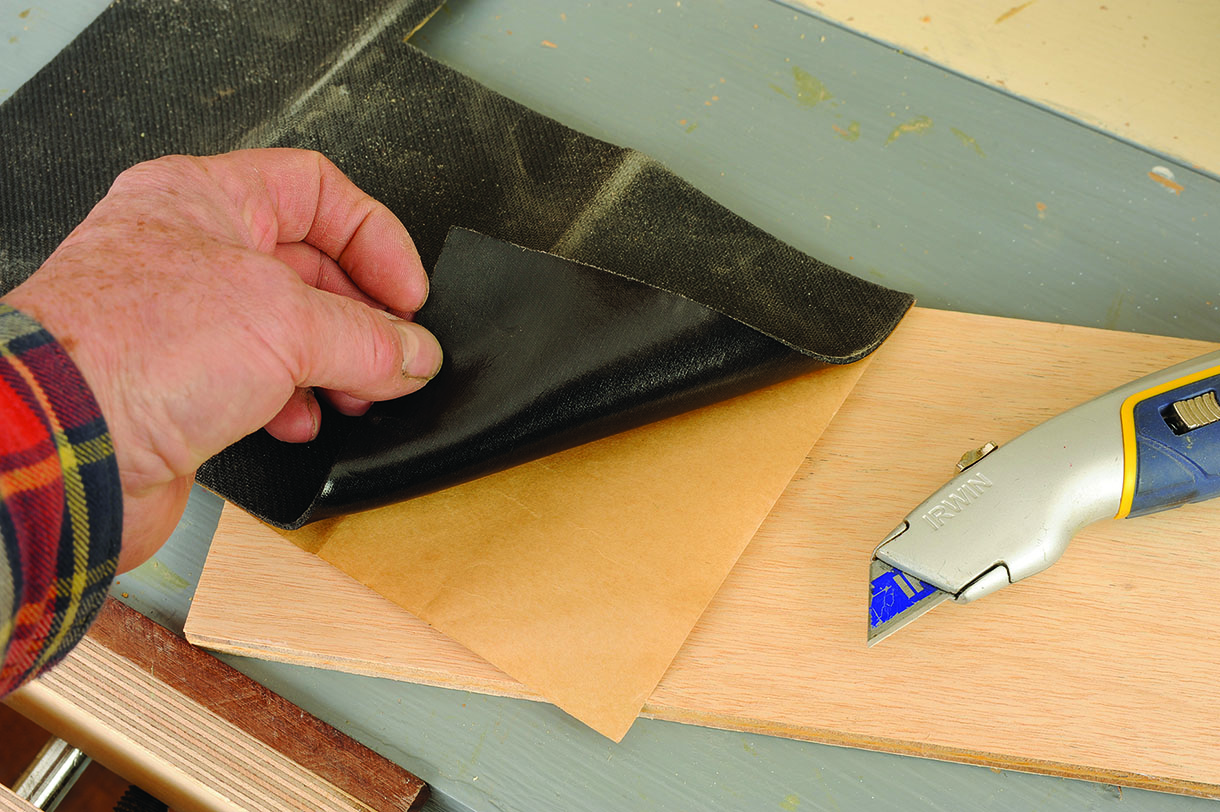
5. The base needs a piece of non-slip self-adhesive rubber to hold it firmly on the kitchen worktop or table. Trend Machinery sell the very thing for this, enough for two bread slices in fact
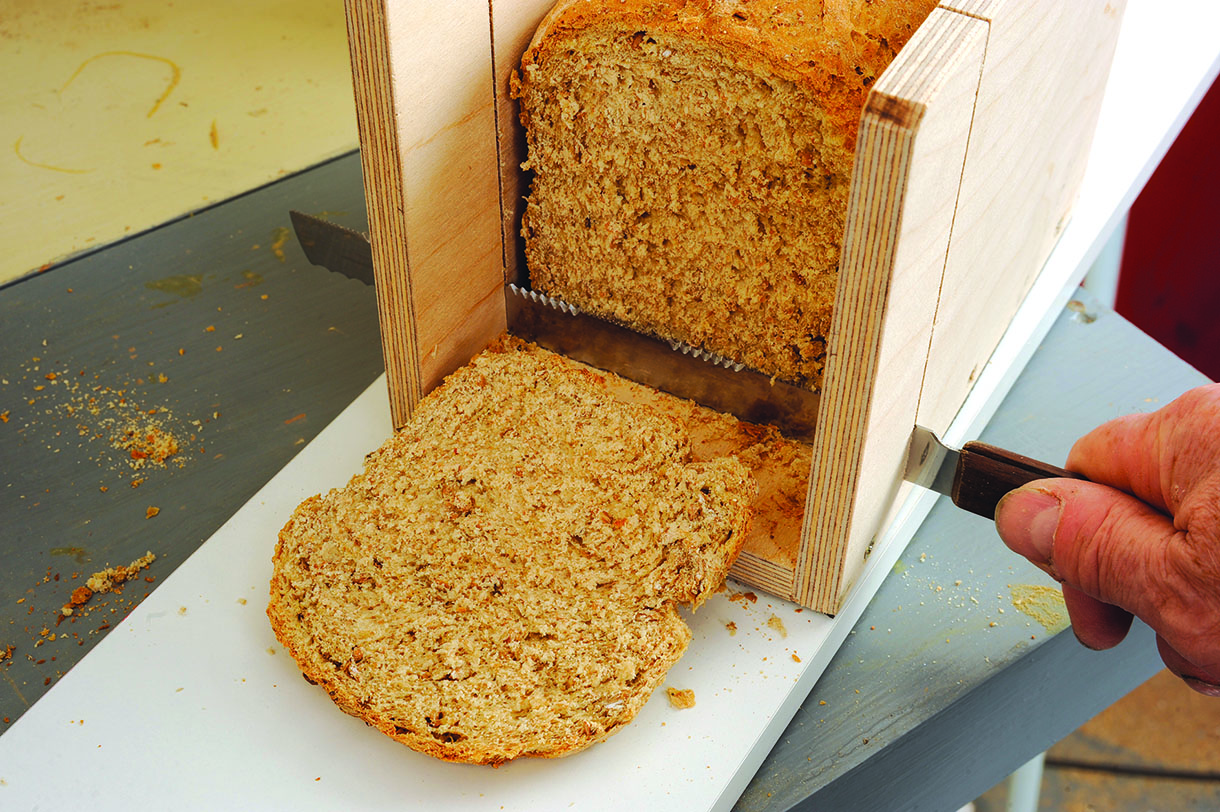
cutting a load with a bread knife
6. Once dry, try a fresh-made loaf to see that it sits nicely in the U-shape. Now try cutting a slice of bread, this simple device is amazing, you’ll wonder how you managed beforehand! Use a sawing action, don’t force the blade downwards

Bread Keeper

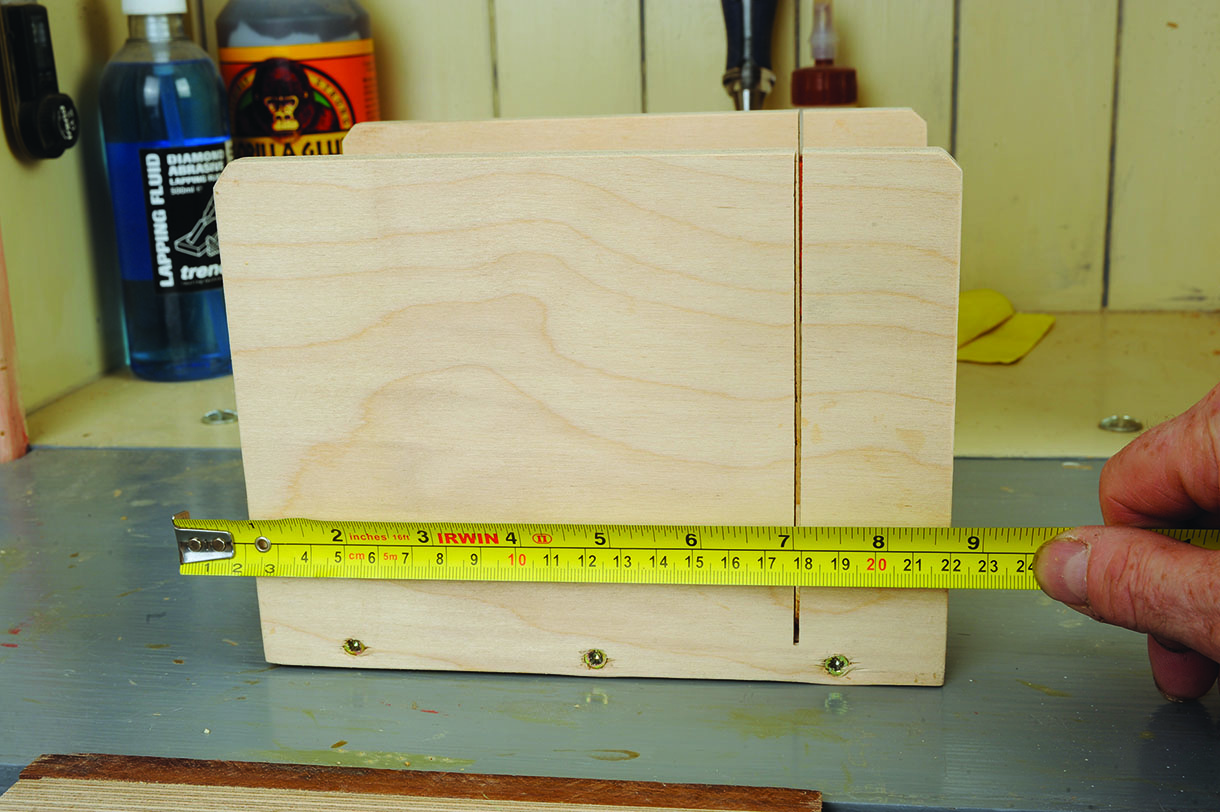
a measuring take across a bread slicer
7. Measure and cut out more ply to make a lift-off cover that is slightly wider and higher than the bread slice. It should be a bit longer to account for loaf length and avoid having to jiggle the cover to take it on and off
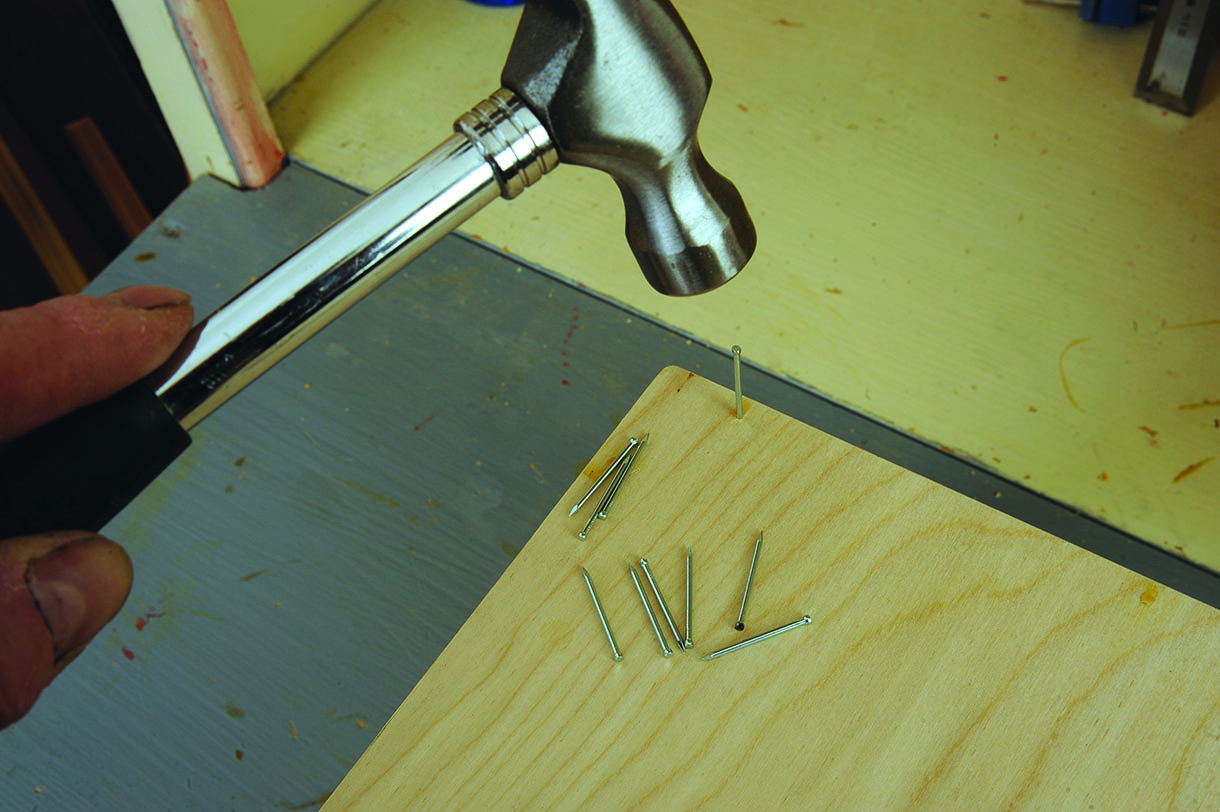
a hammer and some nails and some wood
8. This time you can use panel pins when gluing the pieces together, as it is such a rigid box structure. Check that it fits nicely over the bread slice once the surplus glue has been wiped away
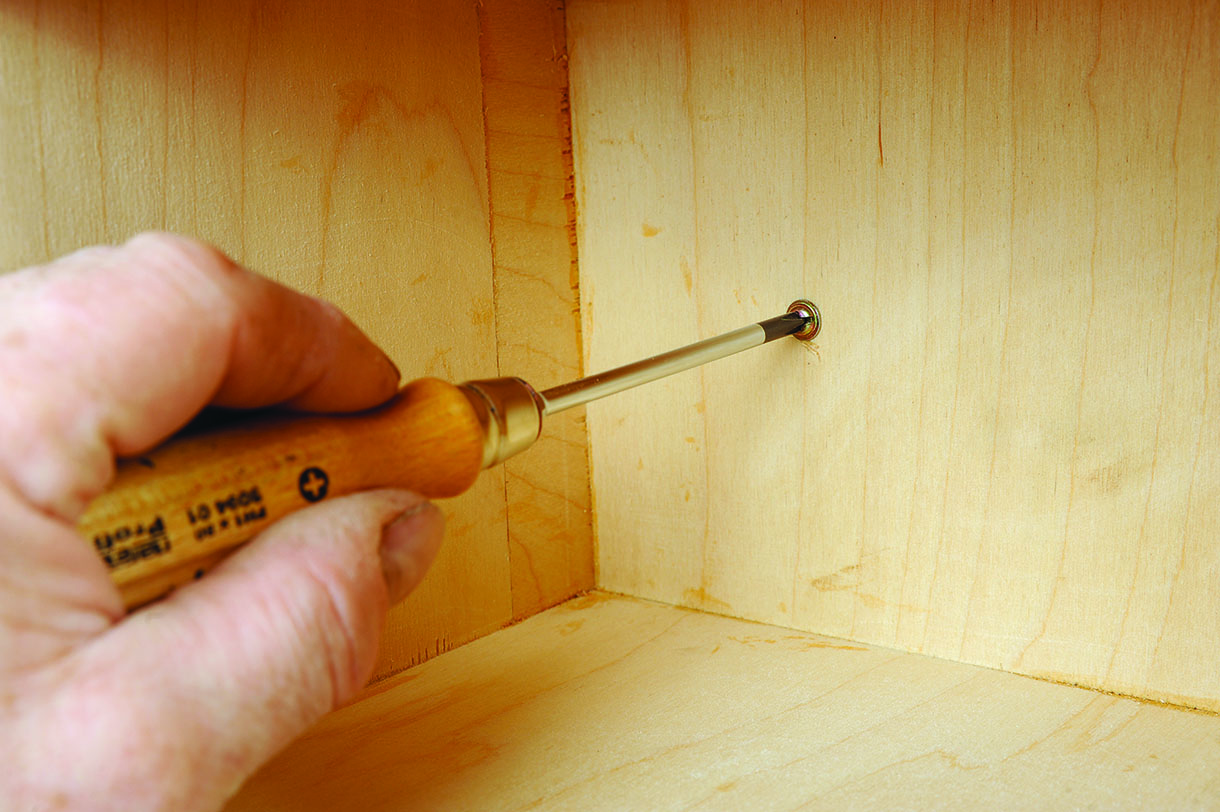
screwing a screw into a box
9. It needs a handle rather than a knob. A pine one is in keeping with the natural look of it. Mark the centre and measure the positions for the screw fixings before drilling the holes
sanding the edges of some plywood
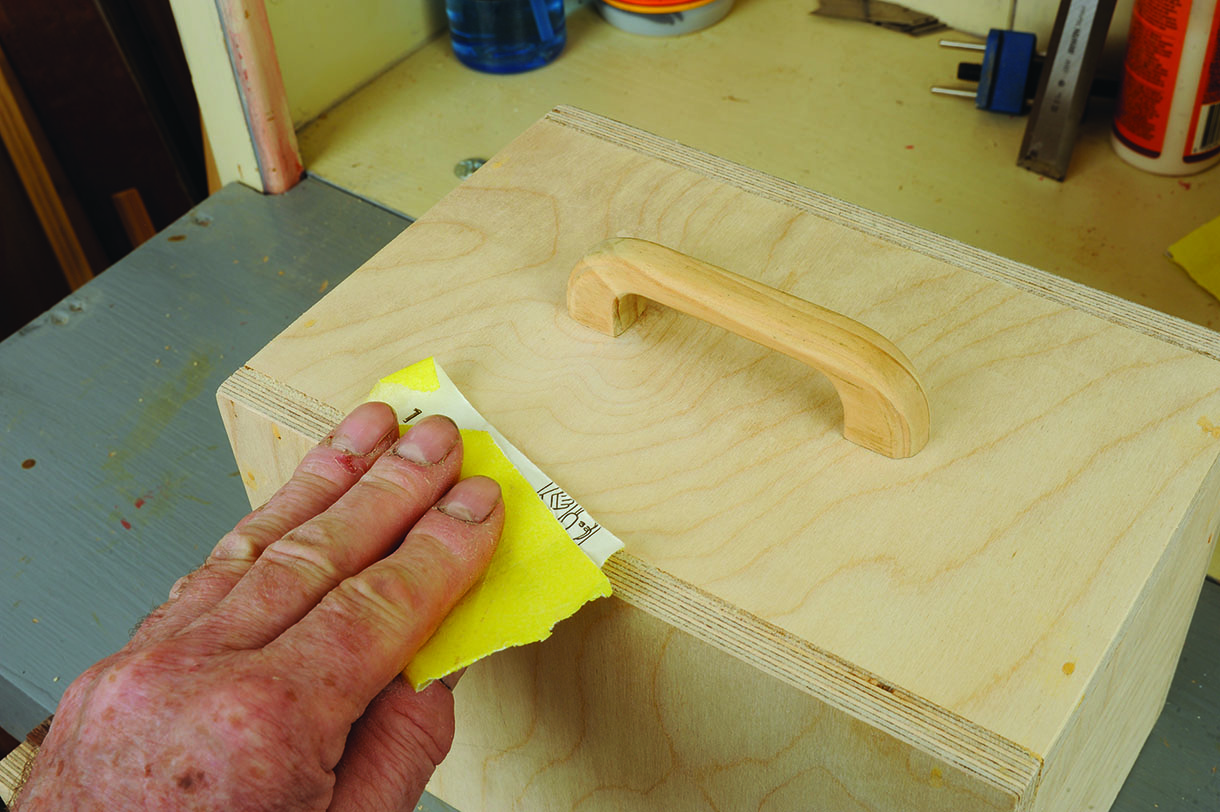
10. Sand any marks away and generally sand all the surfaces and edges to make it pleasant to the touch. It does not require any kind of finishing especially as the slice is in contact with a food substance i.e. bread. You can now impress friends and family alike, with your breadmaking and slicing skills!

The editor’s harvest loaf

To make 2 x 500 gram loaves

  • 1000g flour – 500g of granary-type flour and 500g of strong white flour
  • 2 tablespoons dried yeast granules
  • 2 tablespoons cooking oil
  • 3 teaspoons table salt
  • 2 teaspoons granulated sugar
  • 750ml warm water
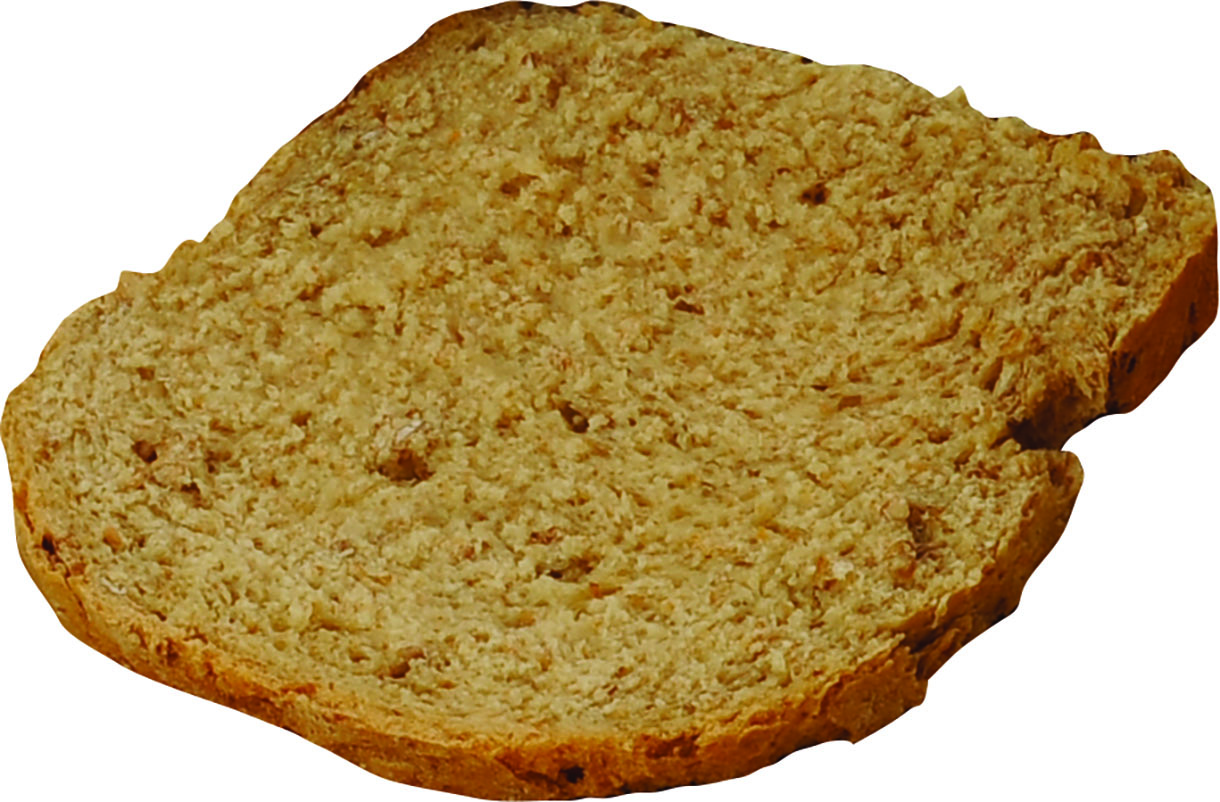
a slice of bread

1. Pour the sugar in 300ml warm water (not hot, as it ‘kills’ yeast activity) and stir until dissolved. Add the yeast and whisk until frothy. Leave in a warm place to rise to a soft-foam ‘head’ – 15–20mins. Add the remaining 350ml of warm water and re-whisk the mixture.

2. Put the flour combination in a very large mixing bowl, add the oil and the salt and fermented yeast mixture. Stir using a wooden spoon until combined then with clean hands, mix thoroughly by hand to create a dough ball. Then pick the dough off your hands! 

3. Put the bowl in a warm place for one hour, covered with a tea towel. Remove the dough from the bowl, place it on a lightly floured surface and knead thoroughly. 

4. Cut in two equal pieces, place in very lightly oiled bread baking tins. Put in a warm place and cover with a tea towel until the dough rises above tin level. 

5. Place in an oven preheated to 220°C or gas mark equivalent. Leave for 25–30mins before taking out using oven gloves as they will be extremely hot, remove from the tins and place on a wire grid for at least an hour as cooking will continue until cool. 

6. Now place in your new bread slice, cut and proceed to savour the taste of your very own fresh bread! 

Further reading

PHOTOGRAPHS BY GMC/ANTHONY BAILEY

Leave a Reply

Your email address will not be published. Required fields are marked *