
Barry Robbins shares his passion for a tool that most of us take for granted but couldn’t bear to be without
Introduction to tape measures
We have been talking to Barry Robbins from New York about his collection of tape measures, which at first might not sound quite as interesting as a premium plane, but I’m prepared to wager that at some point in our lives we have all owned, and most likely lost, a much loved example. When it comes to tape measures I think we’re all aware of their limitations, in the scheme of things they’re not that accurate. Even so, it’s hard to imagine ever starting or finishing a single project without one. Retractable pocket tape measures started to come into common use around the 1930s, replacing what was then in the top drawer of every carpenter’s tool chest, the folding wooden rule. Of course, the concept of a flexible tape measure had been around for years before then but in the form of string, leather or woven material tapes that required rewinding by hand every time the tape was used. Although the first ever patent for a retractable tape measure was recorded in America in 1864, historical documents show that a 22-year-old Englishman, Charles White, was transported to the penal colonies in Australia in 1838 for the heinous crime of stealing a ribbon tape measure that spooled into a plain metal container.
Farrand Rapid Rule
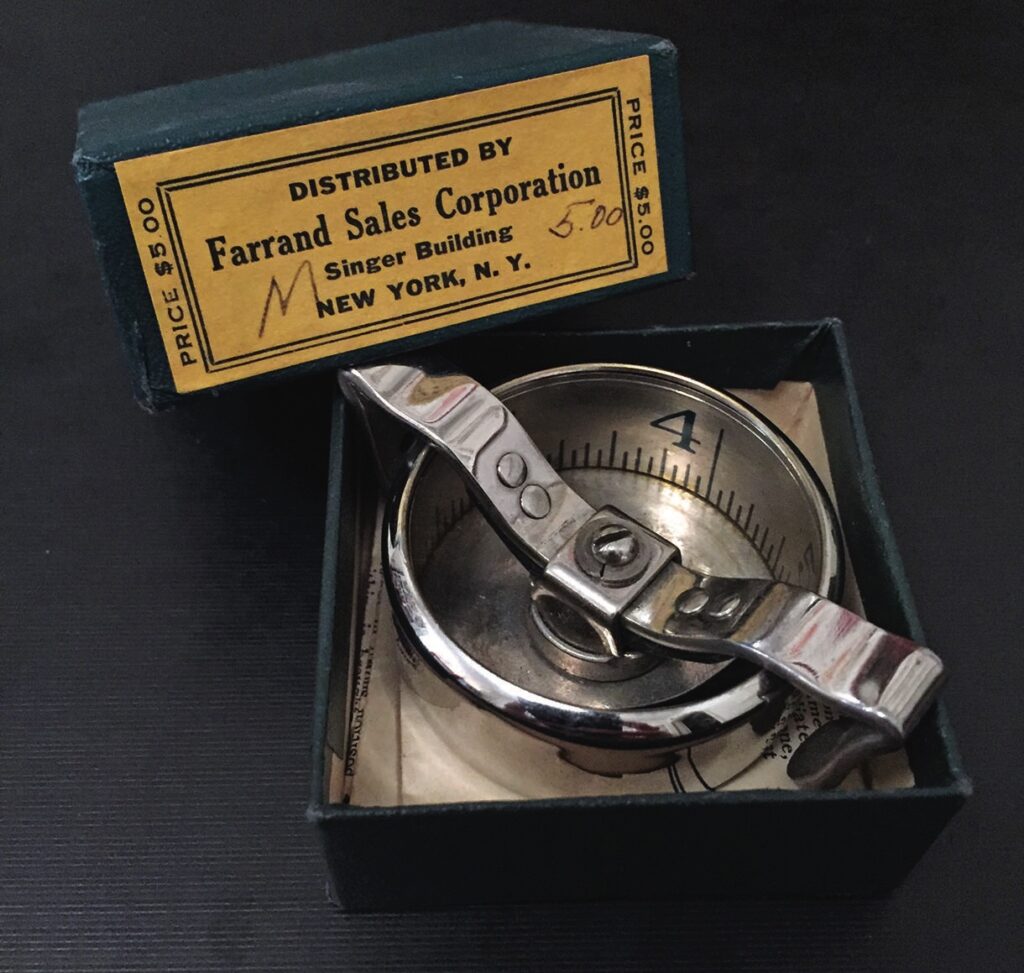
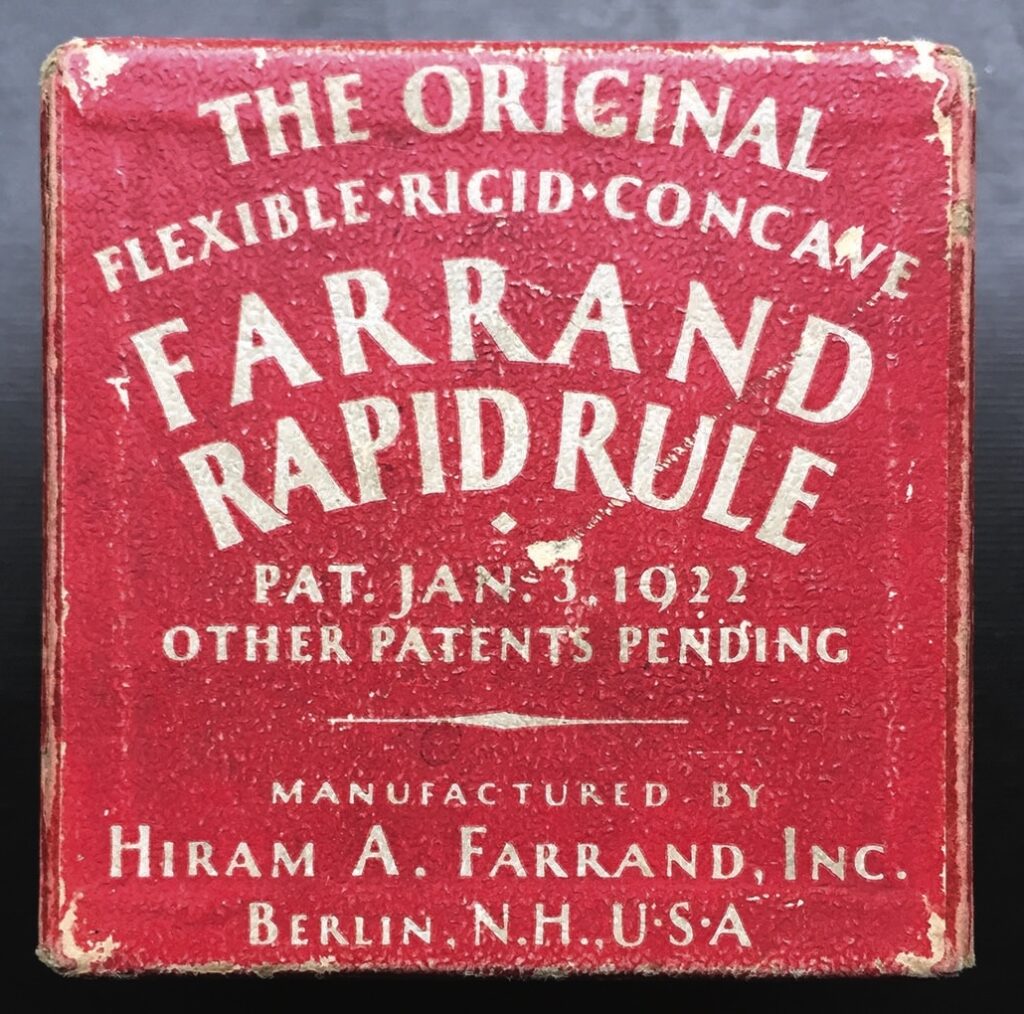
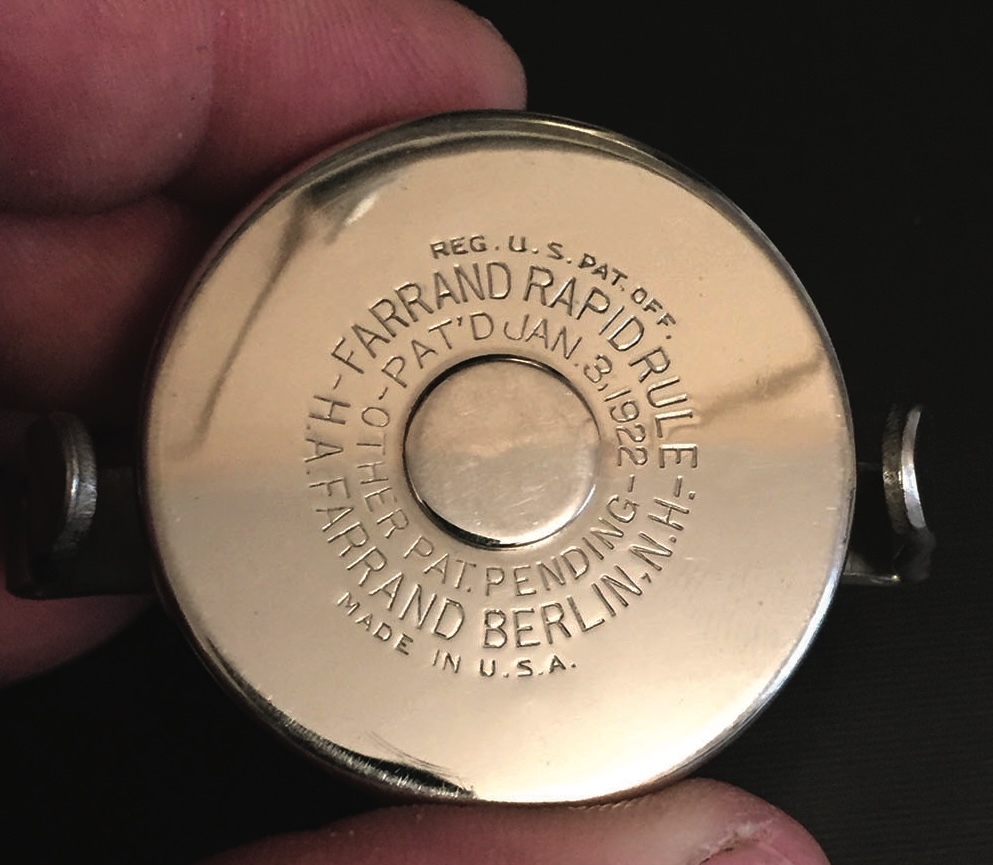
The first ever patent for a tape measure was issued on 6 December, 1864 to William H. Bangs Jr. of West Meriden, Connecticut. It was the first and for nearly 50 years the only attempt in the United States to make a spring return pocket tape measure until 3 January, 1922, when Hiram A. Farrand received the patent he filed in 1919 for his spring tape measure, called the Rapid Rule. By 1926 Farrand had teamed up with co-owner of the Brown Company, Berlin, New Hampshire to mass-produce the product. The company was formed by a group of philanthropic businessmen from Portland, Maine whose interests included a sawmill, a railroad and latterly
a paper mill. The Brown family owned land that stretched from Canada to Florida, which they used primarily for logging. During the early 1900s the company created a new department known as ‘research and development’ and constructed an entire building to contain it to ‘demonstrate that the future of the Brown Company didn’t lie
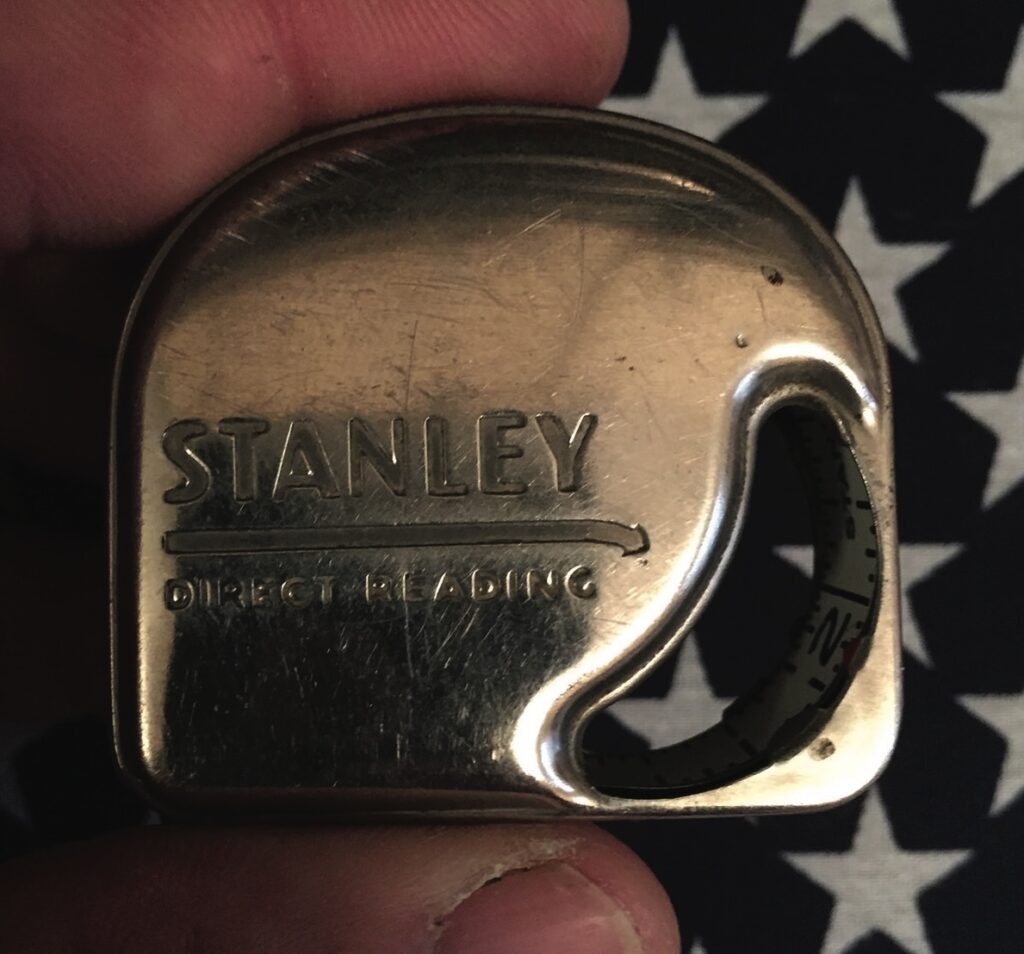
in the achievements of the past, but in the development of products and processes that were yet to come’. The company had its fair share of financial difficulties, even surviving bankruptcy in the 1940s, by which time rights to Rapid Rule had been sold to Stanley Works.
Hooked on tapes
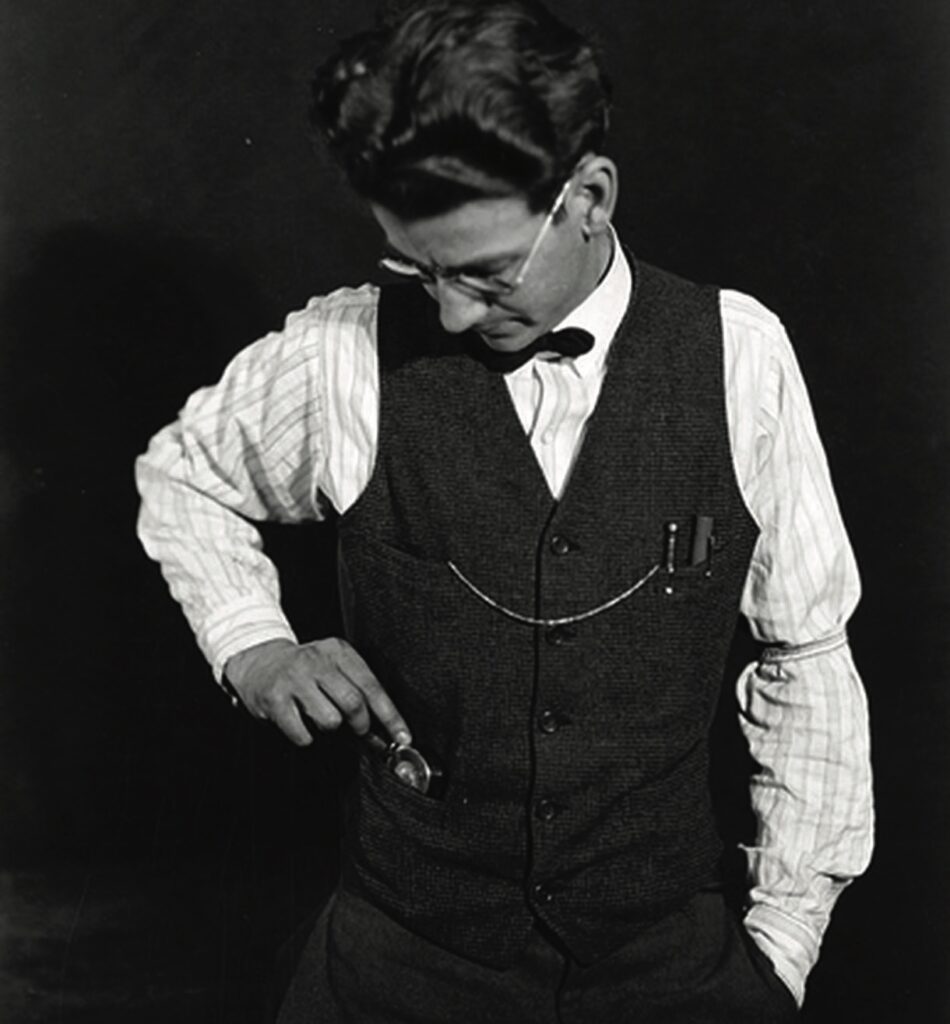
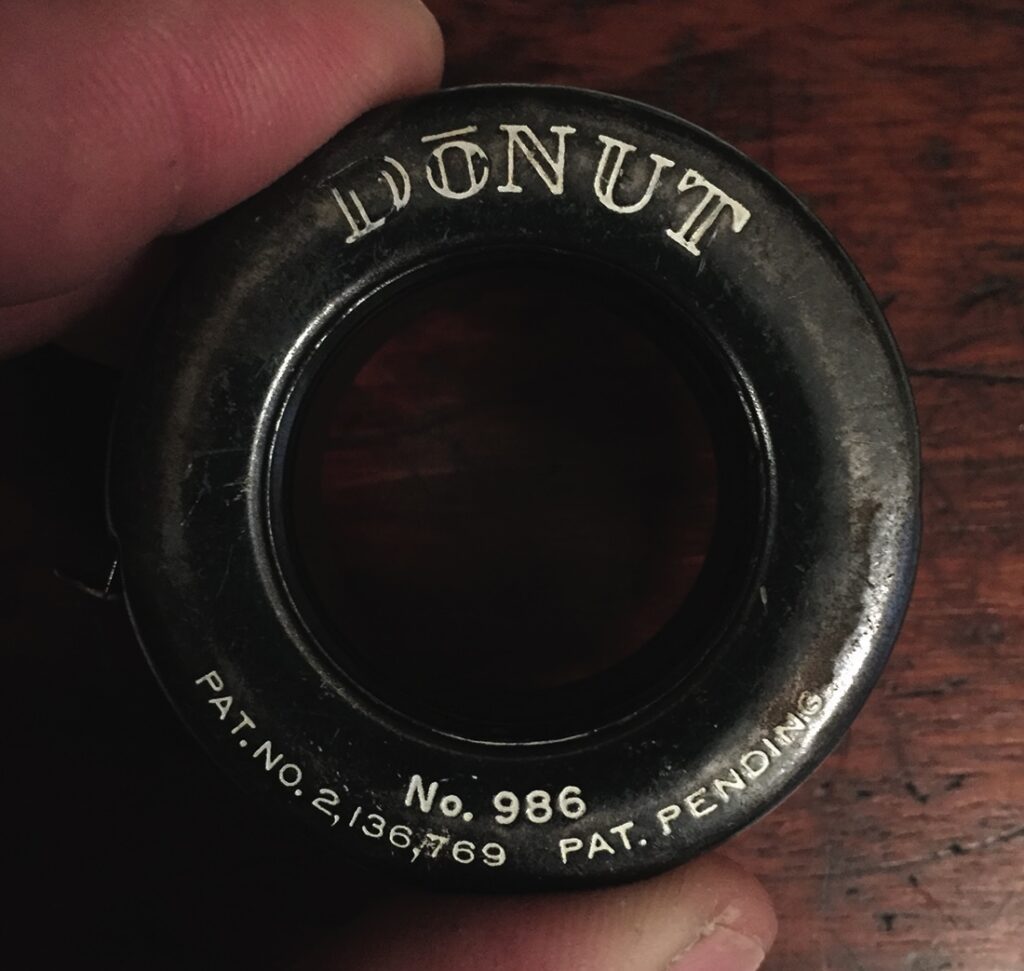
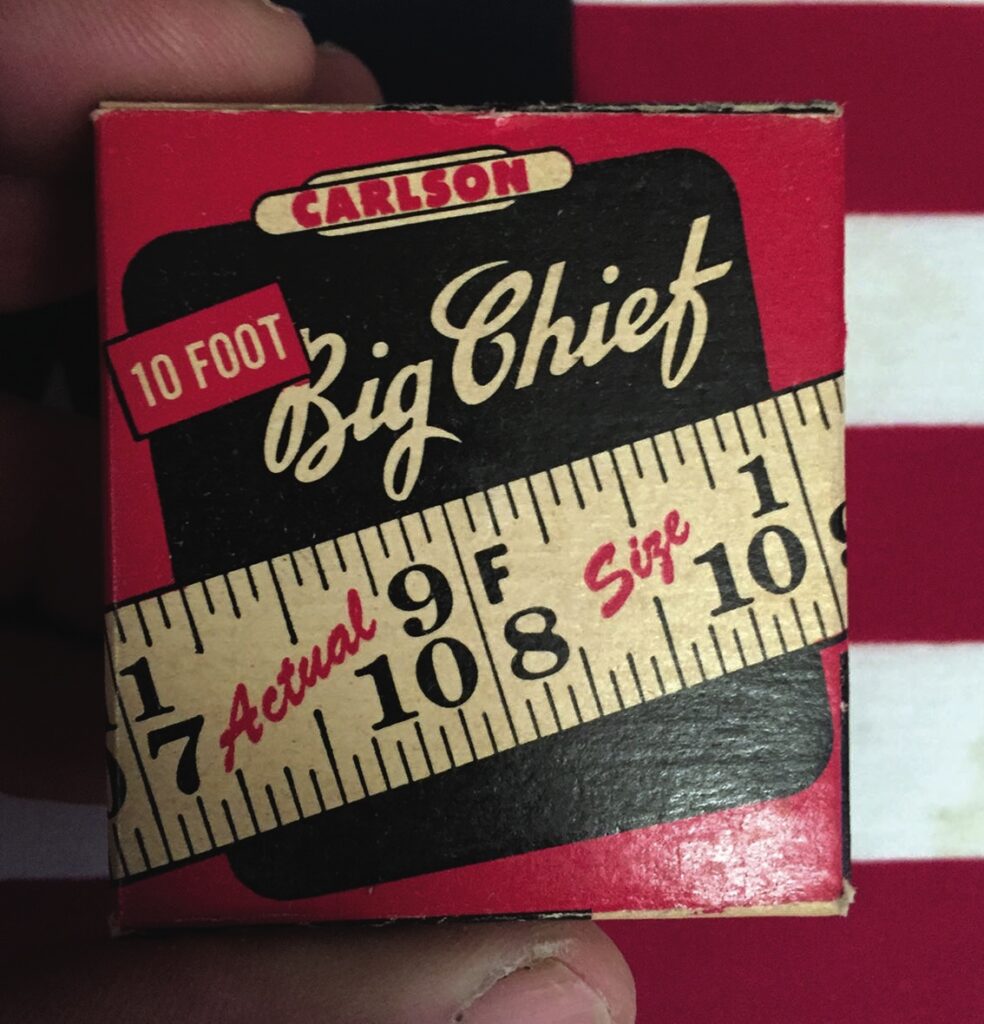
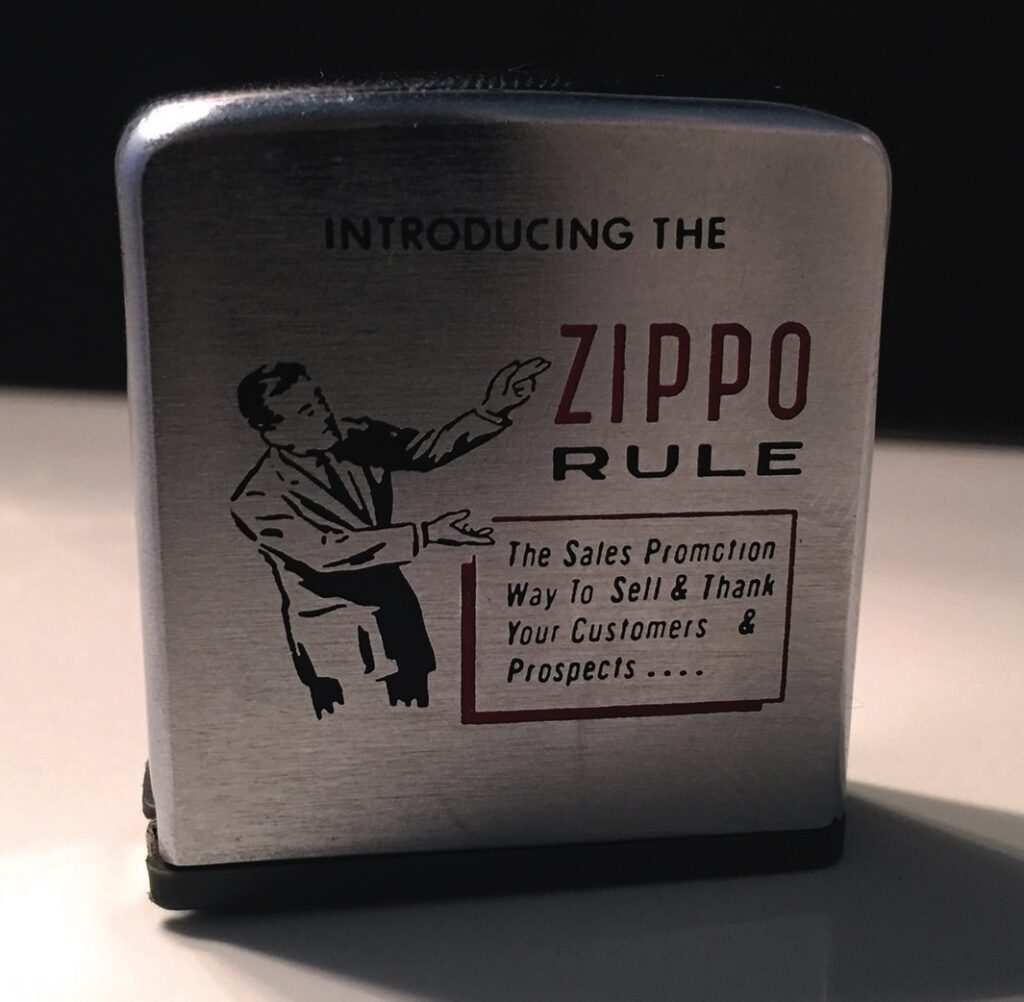
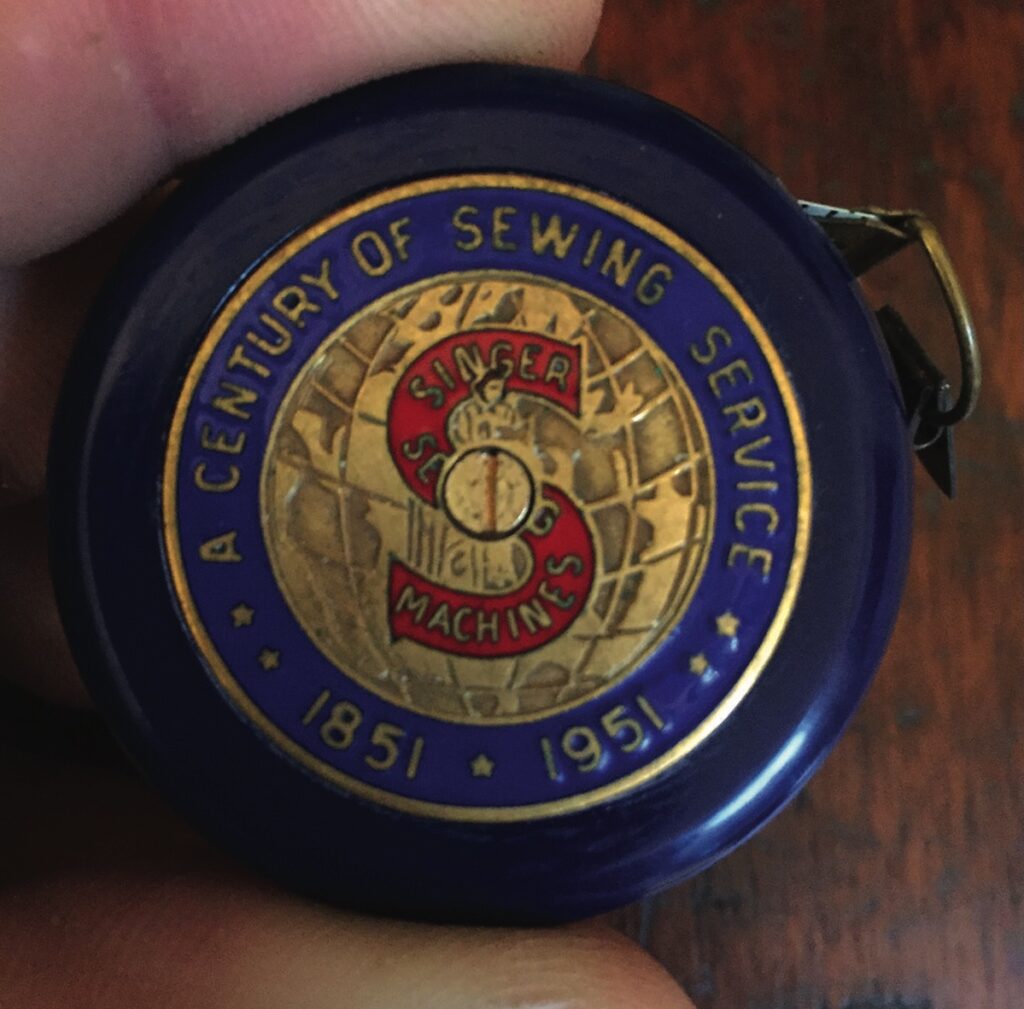
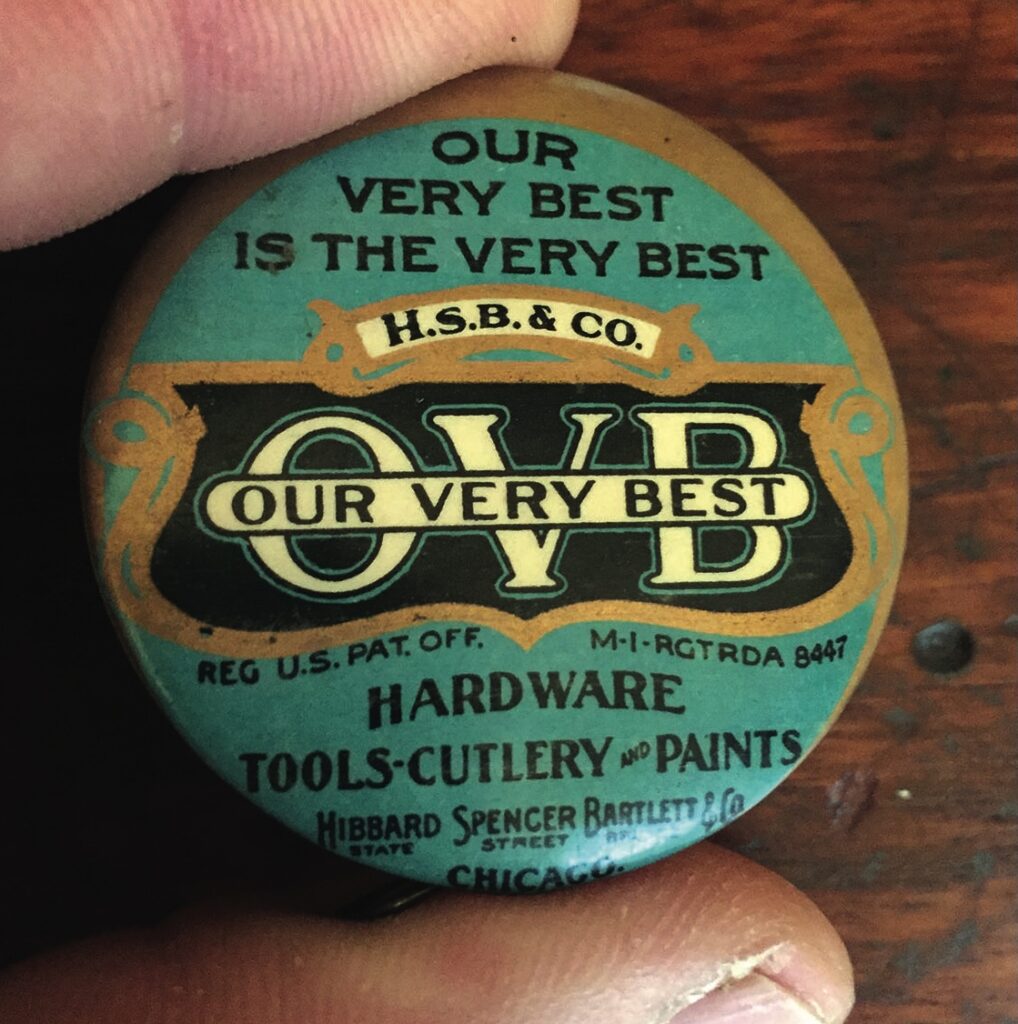
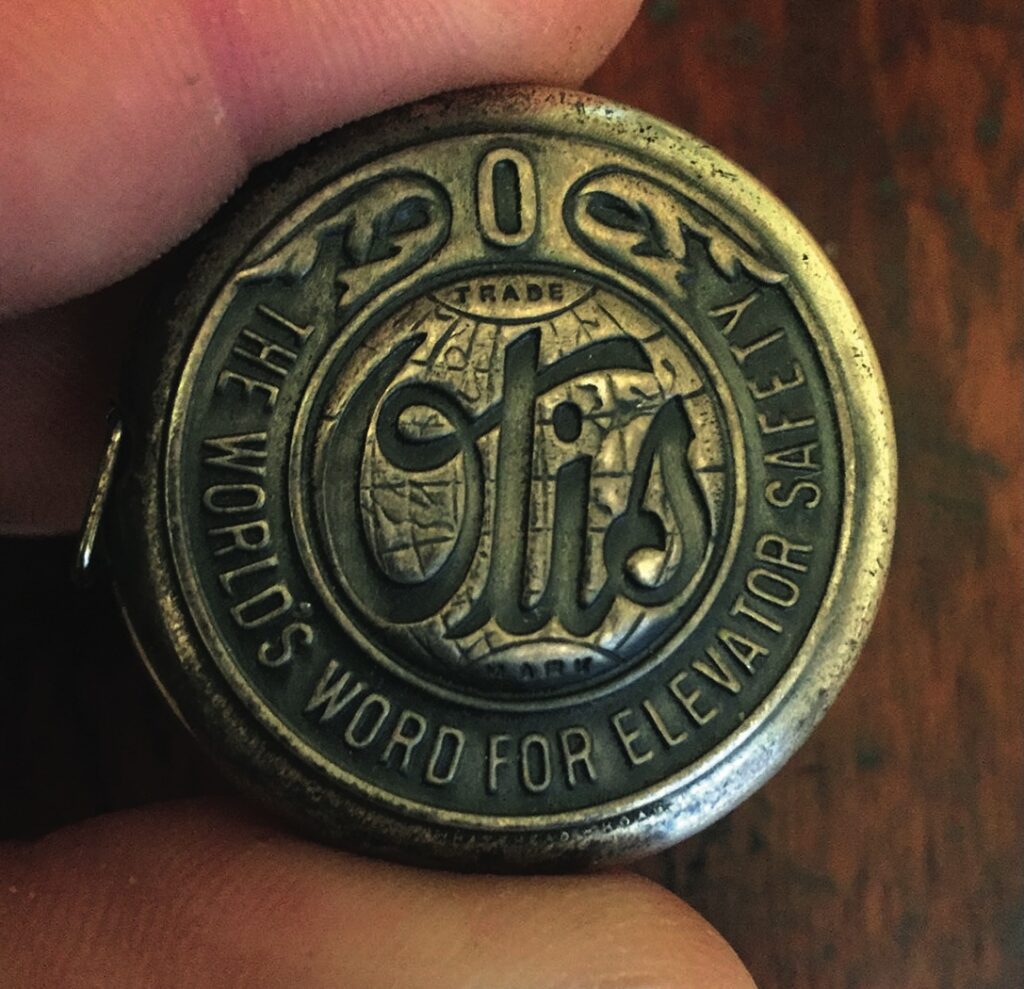
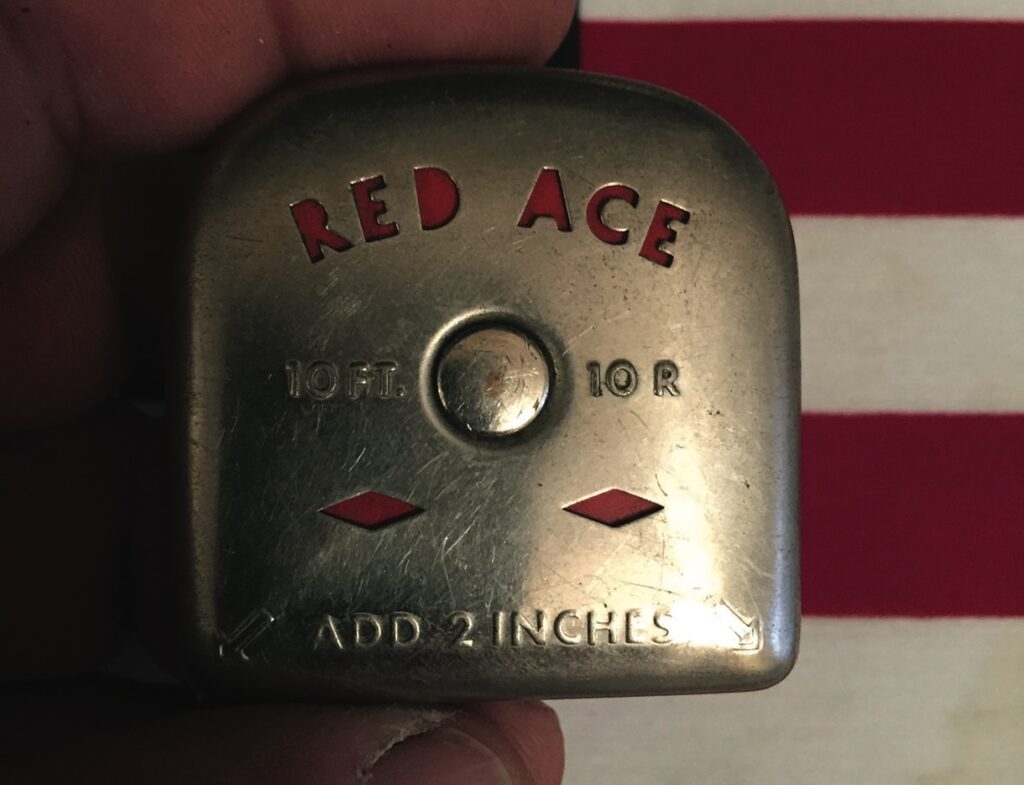
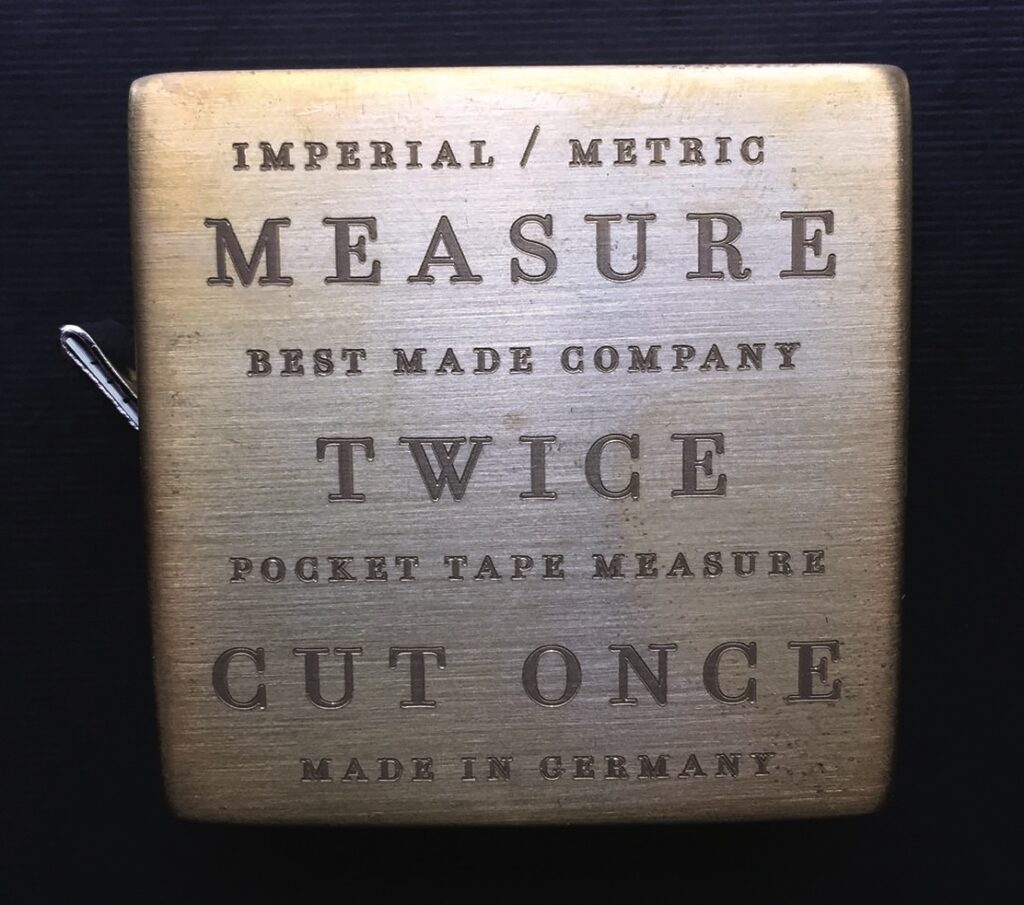
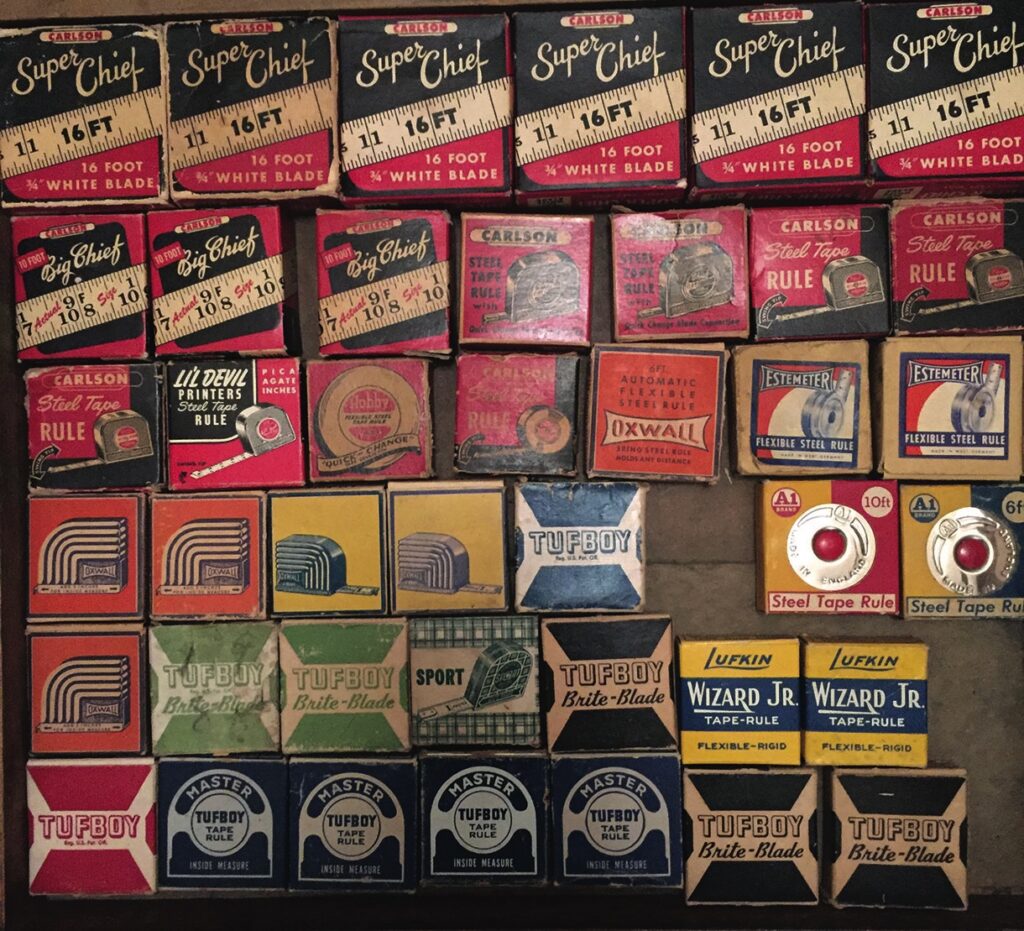
‘Having worked in construction for 25 years I’ve always liked tools especially vintage ones, and after finding my first vintage tape, a 1950s Master Brownie, I was hooked,’ explains Barry. ‘Like any collection the more you discover the more you find there is to collect and learn. I just loved some of the cool names they were given like the Lufkin Donut, the Tuff-Boy by Master, the Big Chief by Carlson & Sullivan and the Glide-o-Matic by Stanley. Although these were sold primarily as tools intended for use, the manufacturers never missed an opportunity to make them stand out from the competition and what better way to promote a brand name than to have it in the palm of your customer’s hand hundreds of times a day, every day of the working week. By the late 19th century the device was so popular that it caught the attention of two newspaper publishers and entrepreneurs from Coshocton, Ohio who thought it would be a good idea to use their printing presses to put adverts onto a range of objects including horse blankets, book bags, shoe horns and pencils. But when the humble tape measure was given similar treatment it changed the face of product marketing forever. All of a sudden companies that had no interest in tools were having tape measures made with their advertising slogans displayed on the cases.’
Who’s counting?
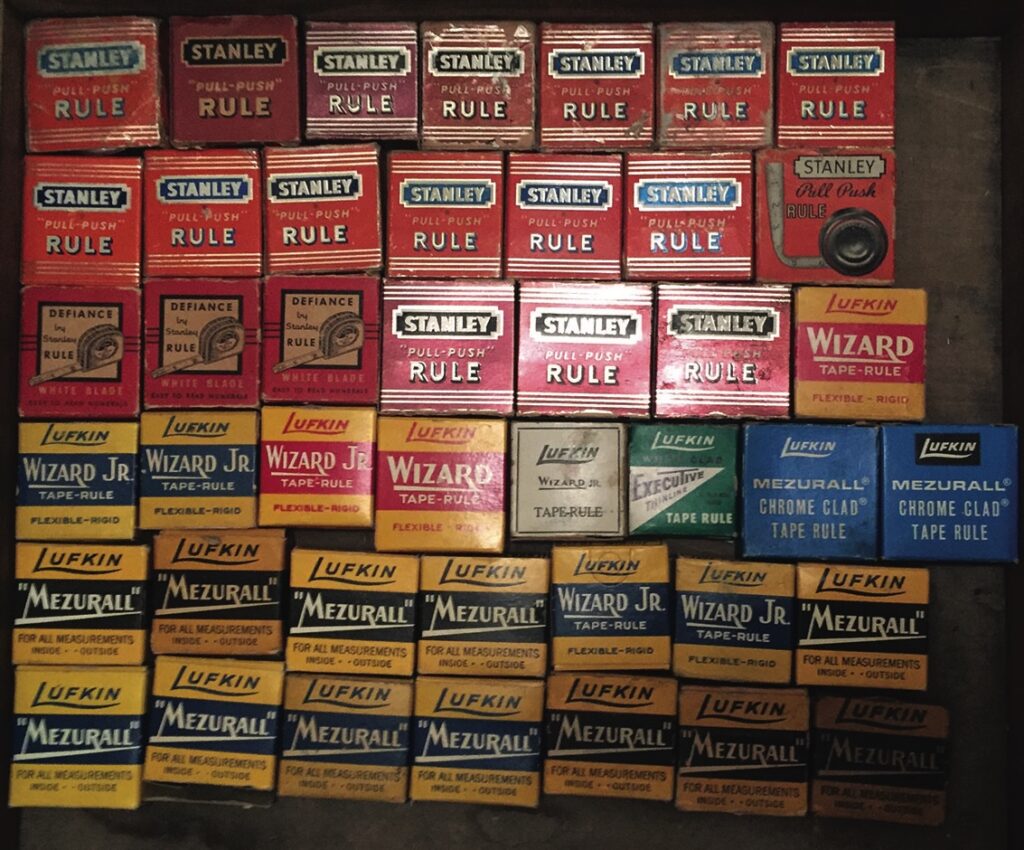
‘I do have tape measures dating back to the early 1900s but most of my collection is later than that and would best be described as pre-1950s. I have close to 1400 in my collection, the rarest and most valuable of which is a pristine Stanley #3206 from 1933. To give you an idea of how rare this tape is, I’ve only seen one other example in 20 years of collecting. I found my one at a flea market in Connecticut for $10. In 2012 one sold on eBay for $620.
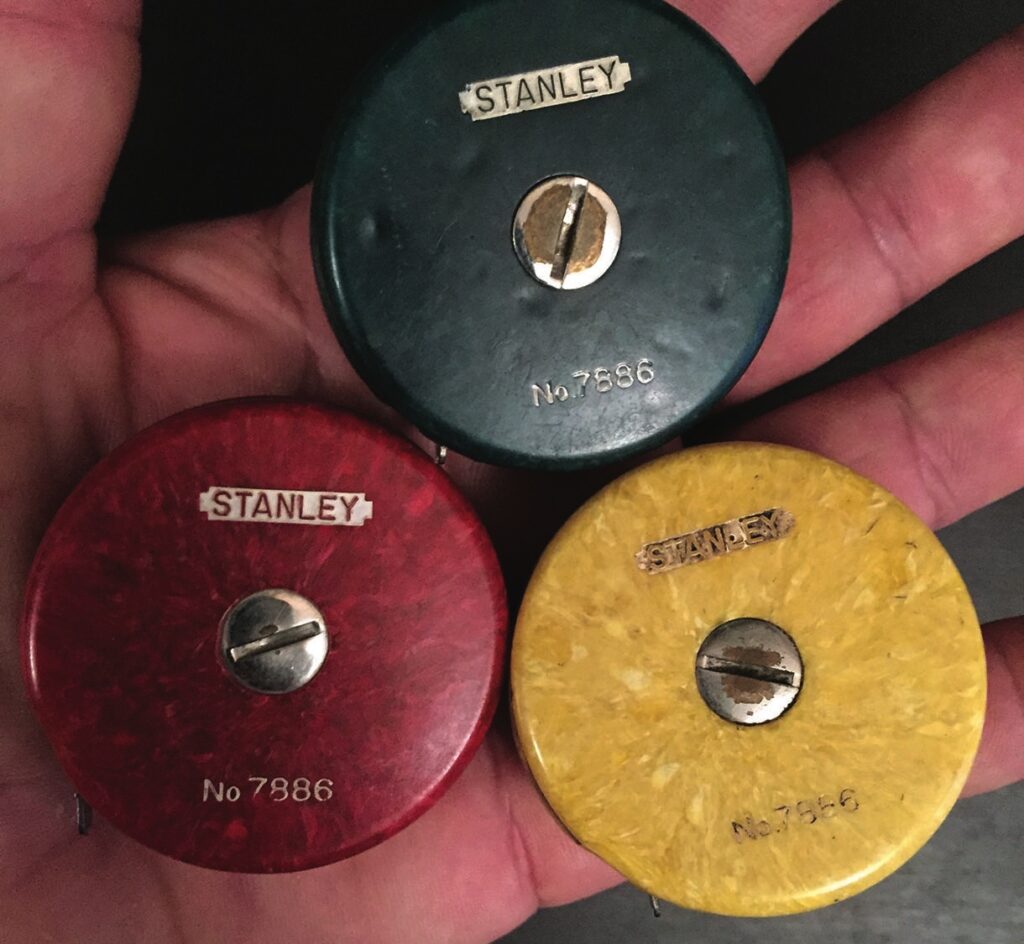
‘Other rare tapes in the collection are the Rapid Rule by Hiram Farrand and a complete set of the Stanley Stanlex #7886. This tape was only produced in 1933 and was available in three colours, red, yellow and green. To find one is tough but to find all three is very unusual. The #7886 are so rare that they are featured on the cover of the acclaimed Stanley Woodworking Tools: The Finest Years by Walter Jacob.
‘While tape measures are used in hundreds of different trades my interest lies primarily with those connected with the construction industry and there are a number of details that are specific to their use. Some tapes are marked with small black diamonds known as ‘truss marks’ at 19¼in intervals. These are used to set out the required number of five trusses in a roof structure at equal spacing over 8ft of building material. A similar mark can be found at 16in intervals for setting out studs in a dry wall construction; three spaces of 16in equals exactly 8ft, which is the standard length of most sheet goods.’
Where to start
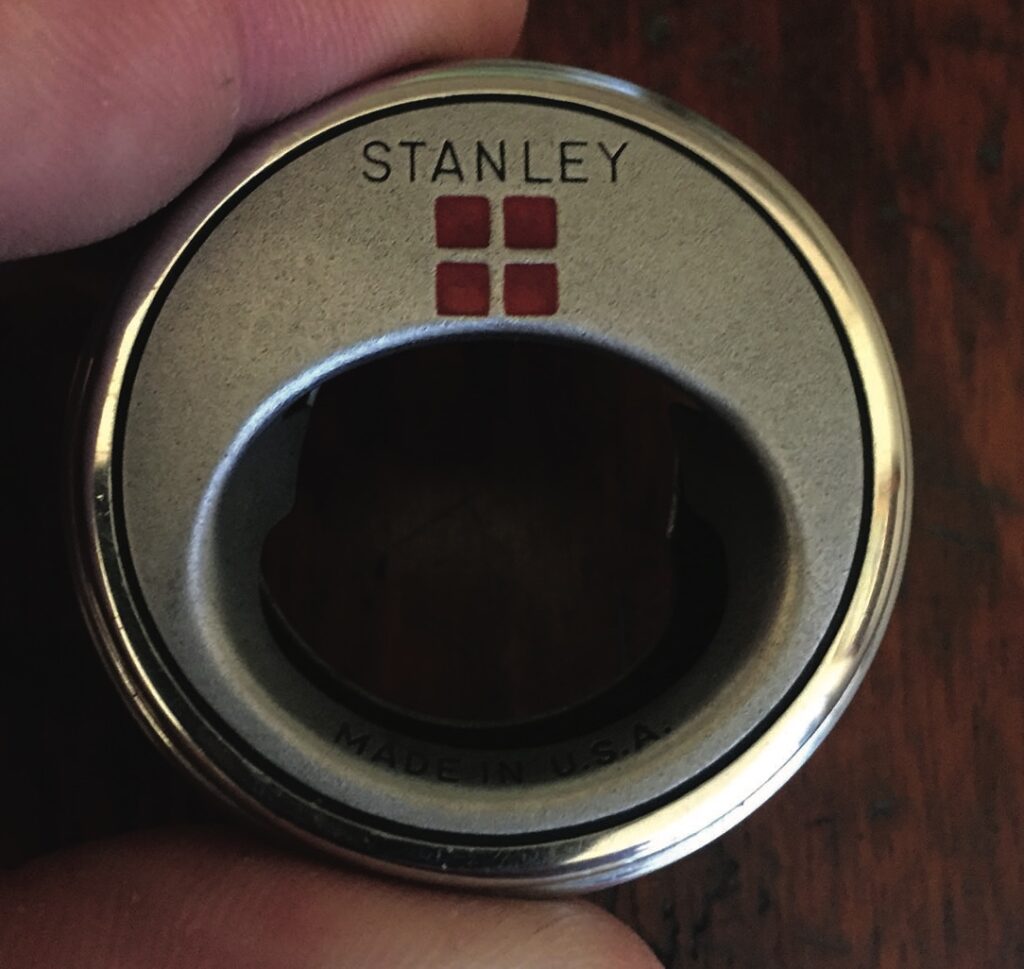
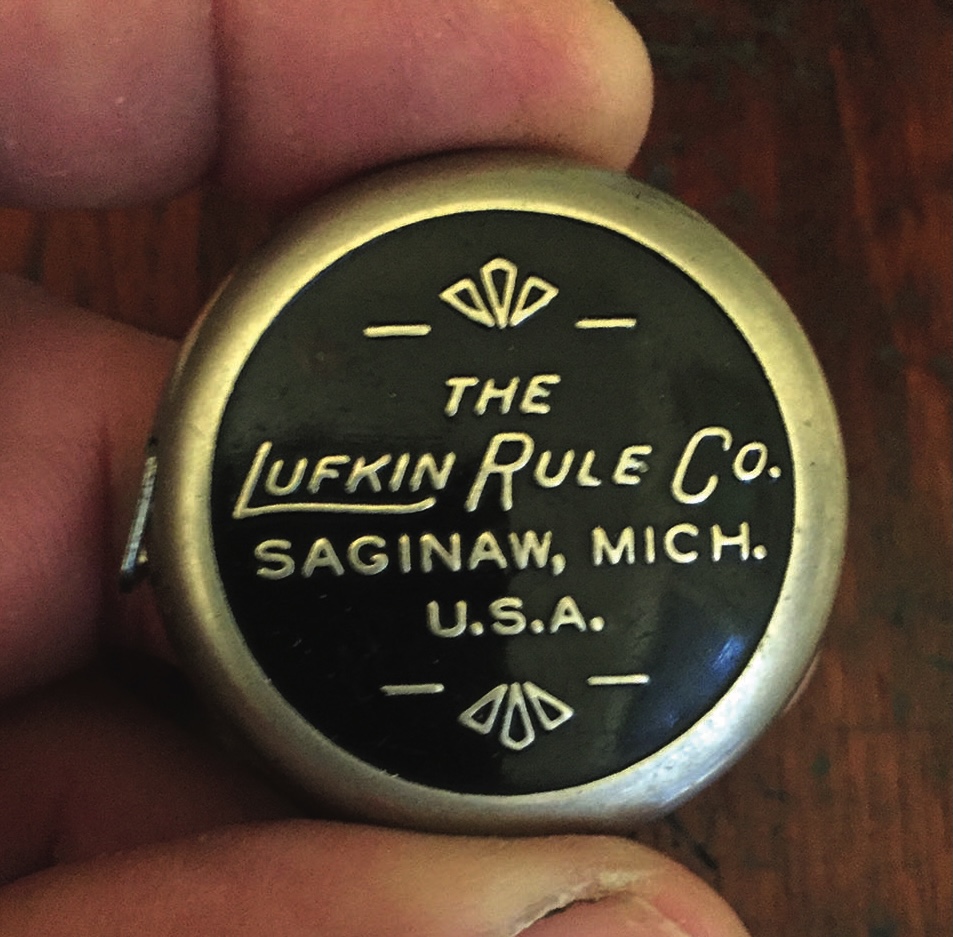
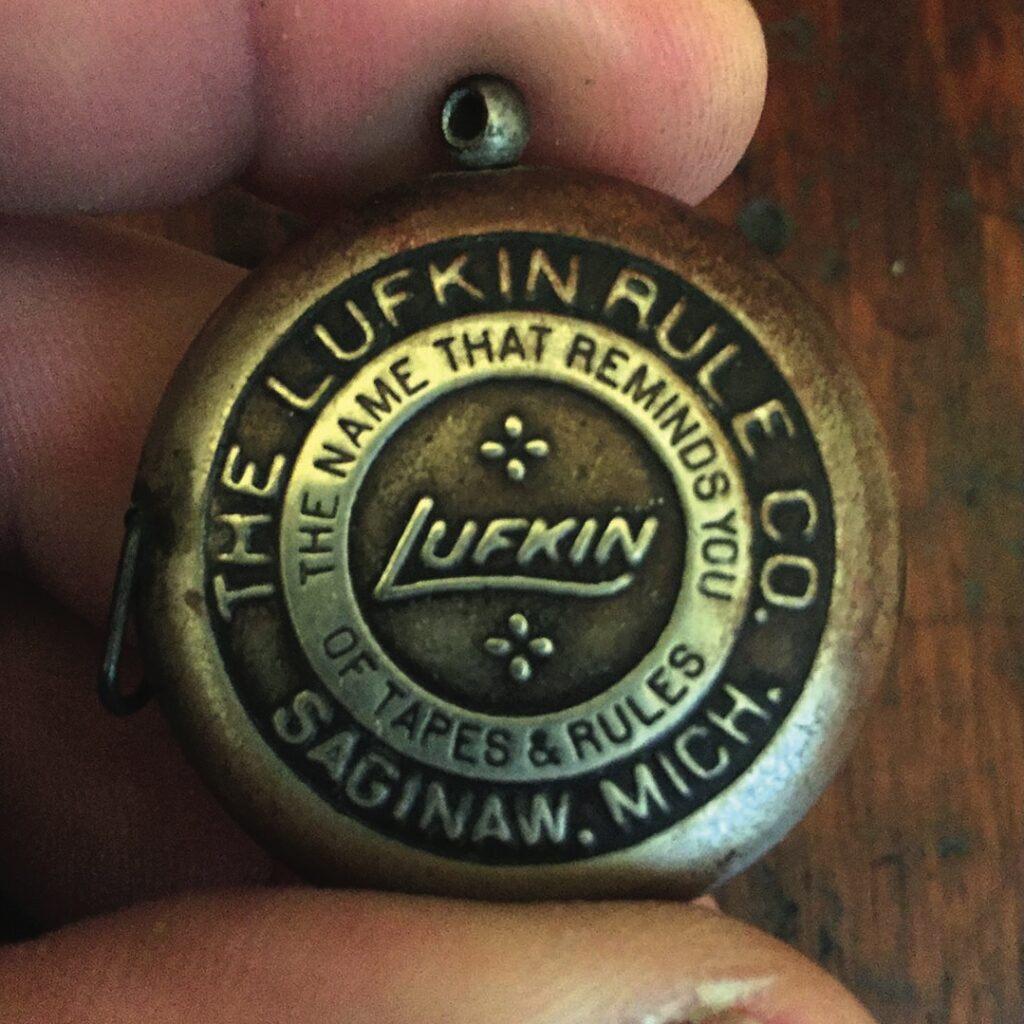
‘For collectors in North America, the main makes to look out for are obviously Stanley from New Britain; CT Lufkin from Saginaw, Michigan; Master from White Plains, New York; Keuffel and Esser both from NYC
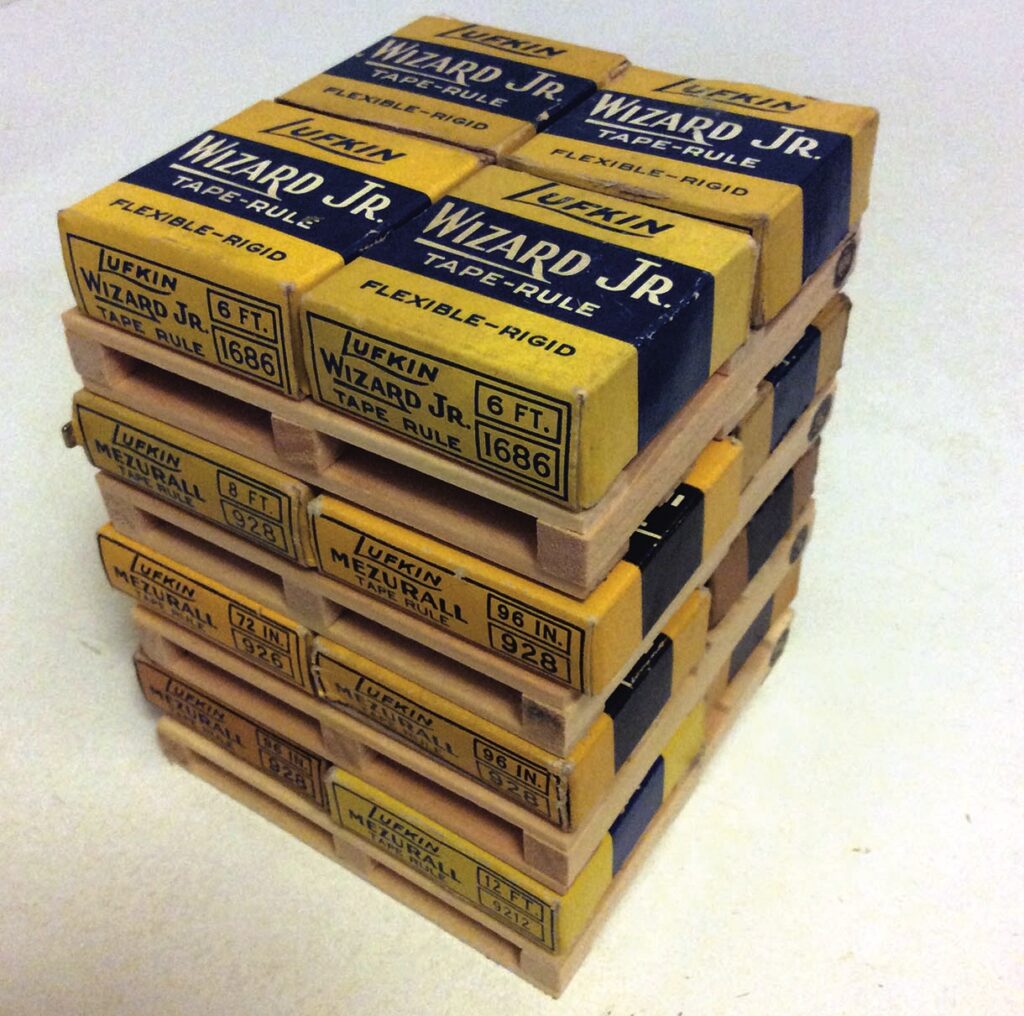
and Starrett from Athol, Massachusetts. Less prevalent but still easy to find are examples by Justus Roe & Sons from Long Island, New York; Carlson & Sullivan from Monrovia, California, Walsco from Milford, Connecticut; Evans from Newark, New Jersey and Baldwin from Parkersburg, West Virginia. With international bidding available on most auction websites it’s likely you would be able to add these to your list alongside more local makes. Whatever you collect, the most important thing to consider is condition. I always try to look for tapes in the best possible condition and wherever possible with the original box. Yes, once upon a time tape measures were sold in boxes and not in plastic blister packs. For this reason I store all my tapes in a cool,
dry place out of direct sunlight to protect the packaging as much as possible.’
Dating tape measures
‘As far as dating tape measures and finding information about them is concerned, it’s not that easy as there’s no single reliable source of information available. There are a few books about tape measures used in advertising and novelty tape measures but nothing that would help the collector date or gauge value. The best and probably the most reliable source of information can be found in old trade and hardware catalogues but be warned, you could find yourself starting a whole new collection.’