The Woodworkers Institute

We bring you the very best of woodworking!

“Make it with us”

How to make a woodturning cart

Andrea Zanini brings order out of chaos with a useful storage cabinet for all your gouges and turning accessories
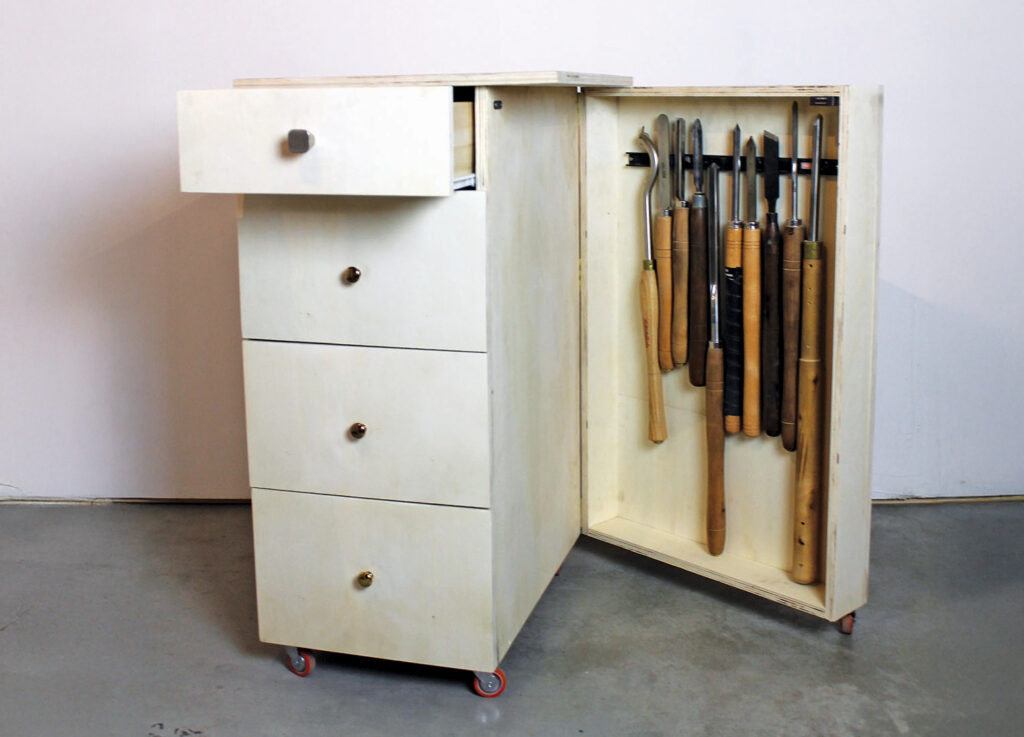
Wooden tool cabinet with open drawers and shelves.

When we start turning our first purchases are usually recommended by someone else, but soon enough we all find how satisfying buying new tools and accessories is. It soon becomes clear that everything needs a place, so we build a tool rack and struggle with the problem that all turners face: everything gets covered in enormous quantities of shavings. They seem to get everywhere and finding that chuck key, or the chuck itself, becomes a stressful rescue mission. I’ve always liked to work in a clean and organised workshop. A clean ’shop is a safe ’shop and finding what I need quickly means more time to work on a project. But which tool holder or cabinet is the most convenient for a woodturner? Here, I am going to describe the process and design of a cart, born after a long series of trial and error, that could fit in almost any ’shop, from the garage to the pro,
and which will help every turner to save space and stay organised.

Plans and equipment

Equipment and materials

Tools
• Hand circular saw
• Hand saw
• Biscuit jointer
• Tape measure 
• Straight edge
• Drill

Materials
• 18mm plywood
• Brad nails
• Wood screws
• Wood glue 
• Biscuits
• Hinges
• Casters 
• Water-based finish 


Short sawhorse? No problem

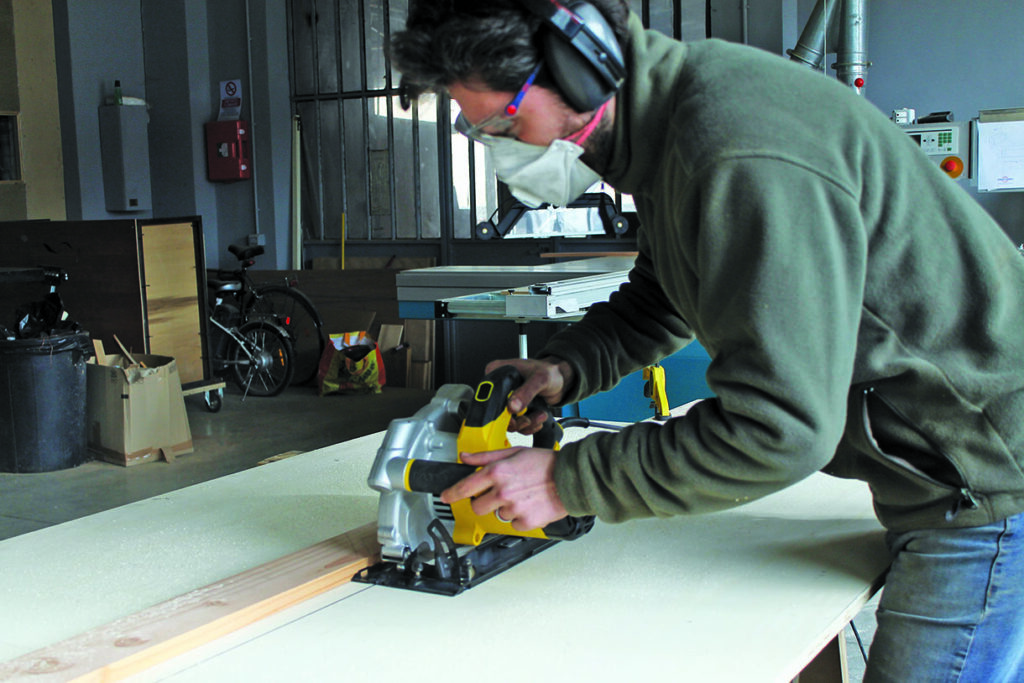
When cutting wide panels it often happens that the sawhorses are too short to hold the piece in place once the cut is completed. A simple yet effective trick consists of stopping the hand-held saw once you’re past the first sawhorse. Lift the panel and place a stick beneath it. This will support the timber once you’ve finished the cut. You can easily hold the other free end of the piece you’re cutting with your hand but if don’t want to take any risks, just add a stick on the other sawhorse before completing the cut. 
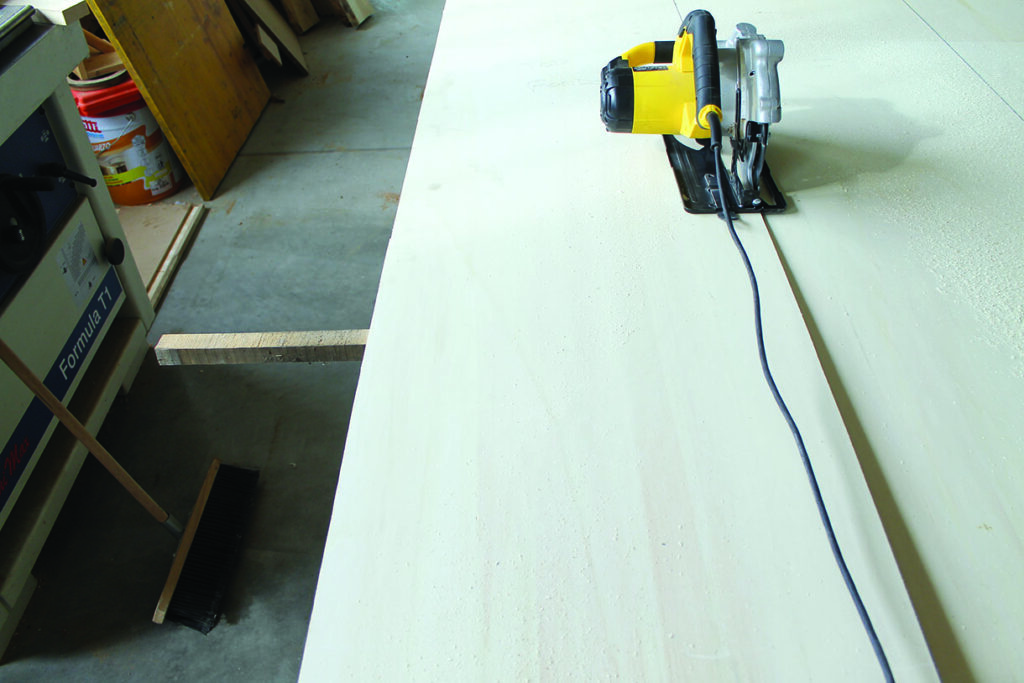
Circular saw cutting wooden board in workshop.
You can see the support piece of wood sticking out. Don’t add it before starting to cut, or you will cut through it!

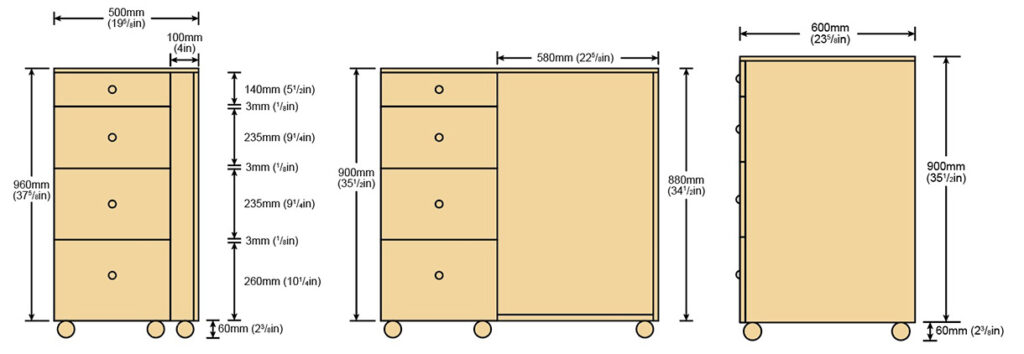
Plans

Three drawer cabinets with dimensions and wheels.

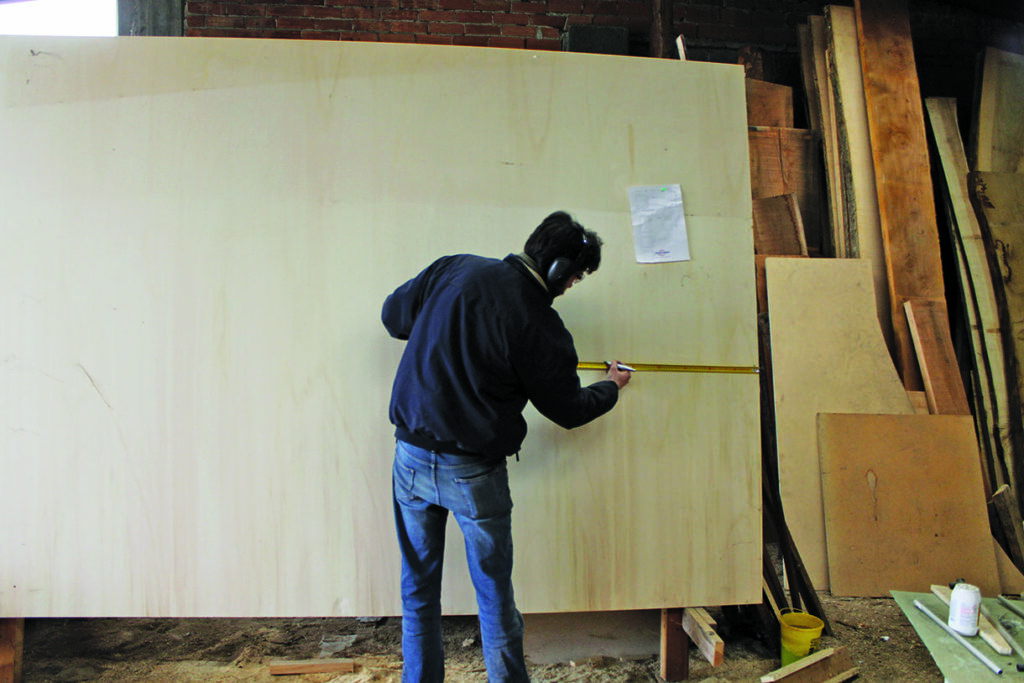
Carpenter measuring large wooden board in workshop.
1. A project like this is perfect to get rid of scrap pieces of plywood lying around the ’shop. However, I didn’t have enough suitable pieces and had to use a brand new piece of 18mm poplar (Populus spp.) plywood. Mark the main measurements in order to make the first cut to reduce the sheet to a manageable size. If you struggle with big plywood sheets, buy smaller pieces that fit the cart sizes or ask your local lumber supplier to cut it. It’s a basic service and they will be happy to do it for you
Person using circular saw on wood in workshop.
2. Now that the sheet is lighter, lay it down on a pair of sawhorses and start making the cuts. You can use a panel saw or a tablesaw – but if you don’t have one, a regular hand-held circular saw combined with a straight edge and a couple of clamps will do the trick. Even a jigsaw and a little bit of patience will work
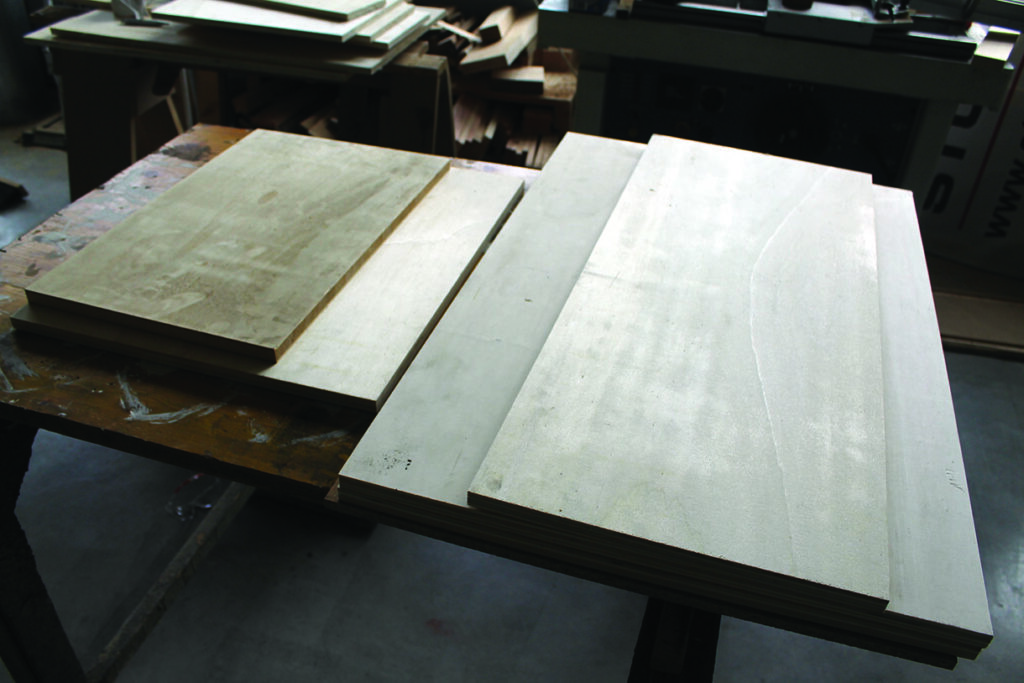
Plywood sheets stacked on workshop table
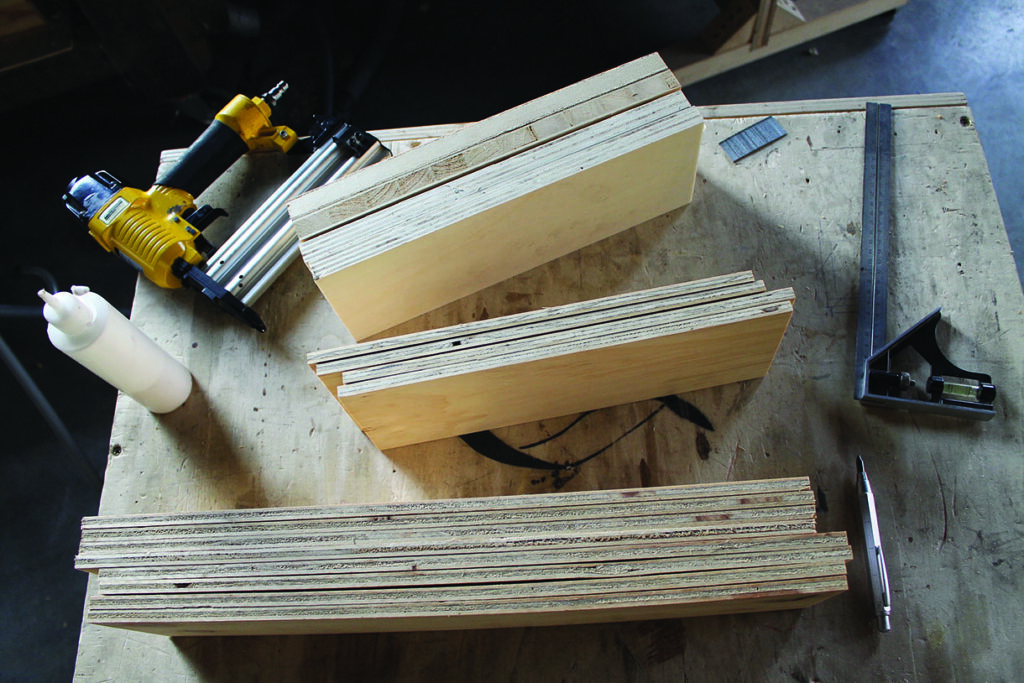
3. Once you’ve finished all the cuts you’ll end up with two sides, a back and a top piece, a bottom piece and an extra side – plus some strips that will become the wings for the turning gouges. Don’t forget to cut the pieces for the drawers; just leave some extra material because the measurements might change a little to take account of different materials or hardware
Hand drawing on a wooden board surface.
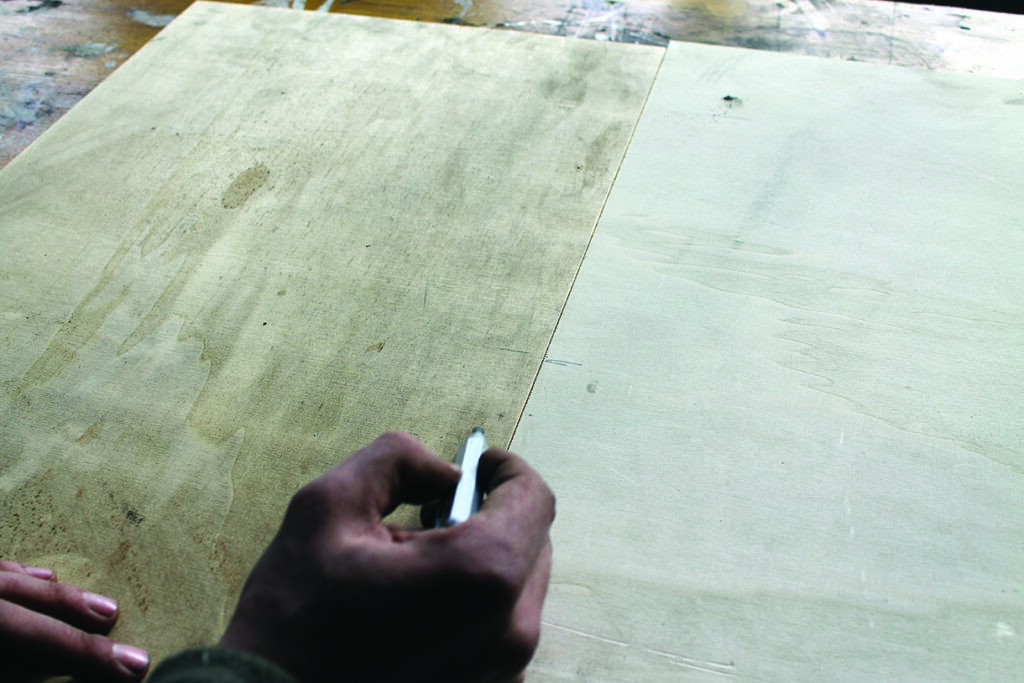
4. On a bench or table (or the floor) lay the parts of the cabinet that will have to be jointed together. This step is very important because you must try a quick dry assembly to make sure that the measurements are correct. Then mark with a pencil the location of all the biscuit joints
Person using woodworking tool on plywood.
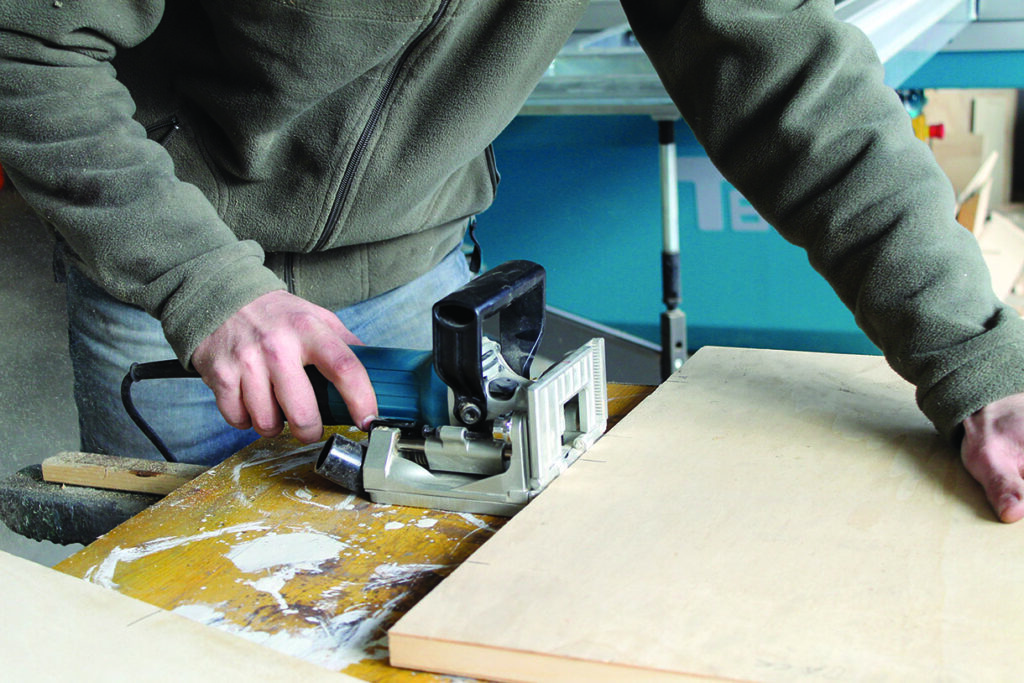
5. Hold the piece of ply on the bench tightly and let the biscuit jointer do its job. I used a biscuit jointer because I find it very quick and precise but if you don’t like it or you don’t have one, you can use any other method. Even screws will work, but in this case biscuits will guarantee a perfect alignment with no effort
Applying wood glue between wooden panels
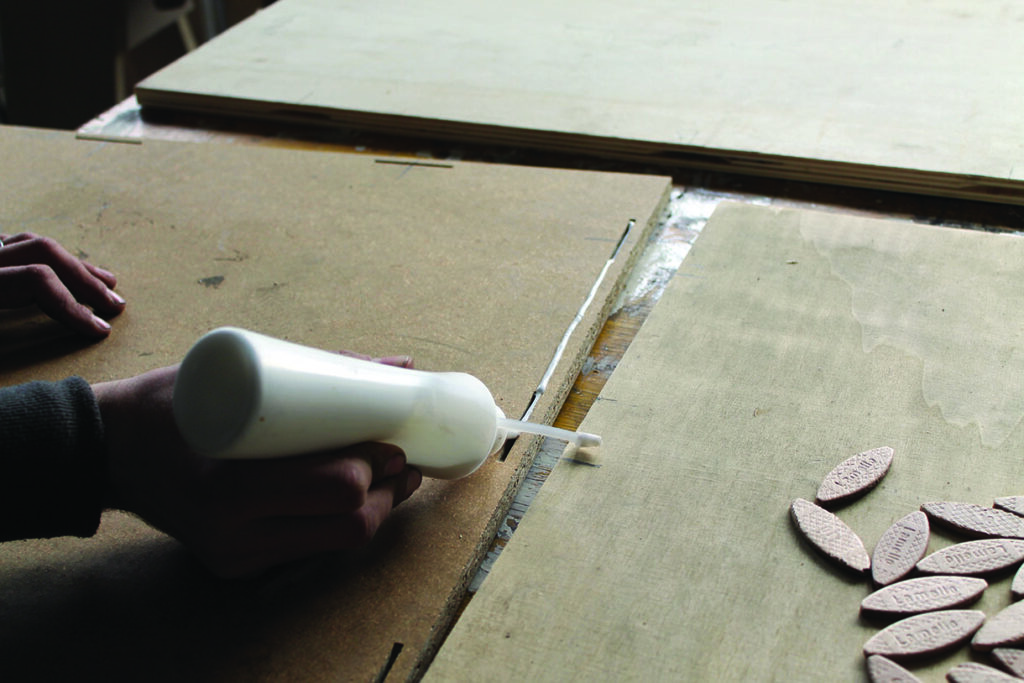
6. Spread an even amount of glue on the joints and inside the biscuit slots. Take your time and don’t try to assemble all the sides in one go. The main body is the most important part of the cart and must be squared and well assembled to ensure stability once it’s finished
Person drilling into wooden board in workshop.
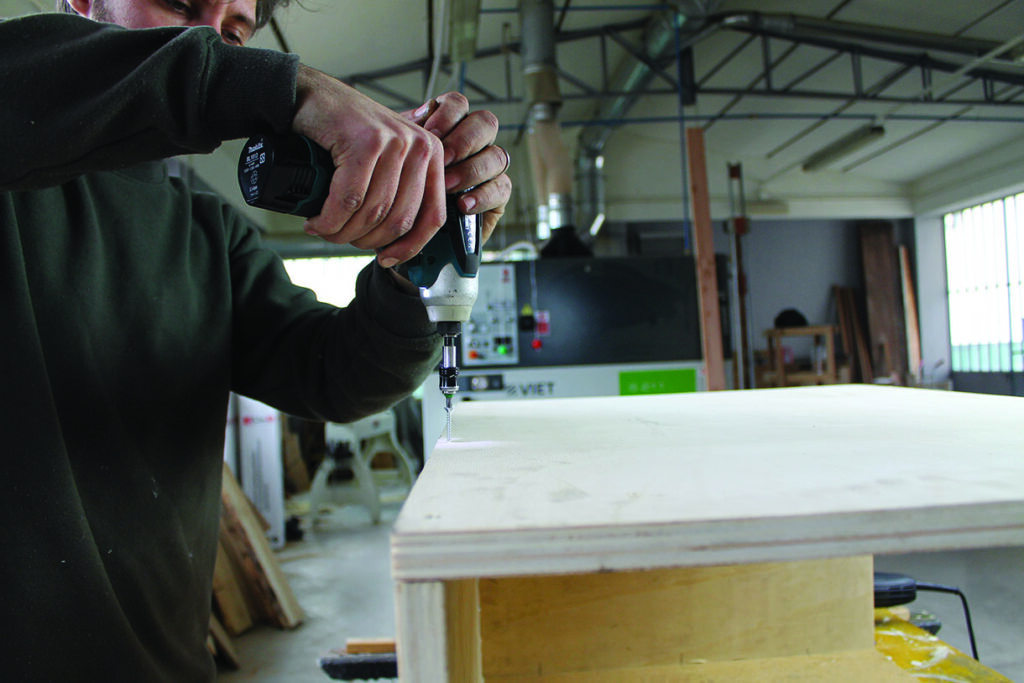
7. Create stability by adding some screws, just a couple per side is enough. If you care about aesthetics you could use dowels and glue or angle brackets screwed from the inside
Wooden box clamped in workshop
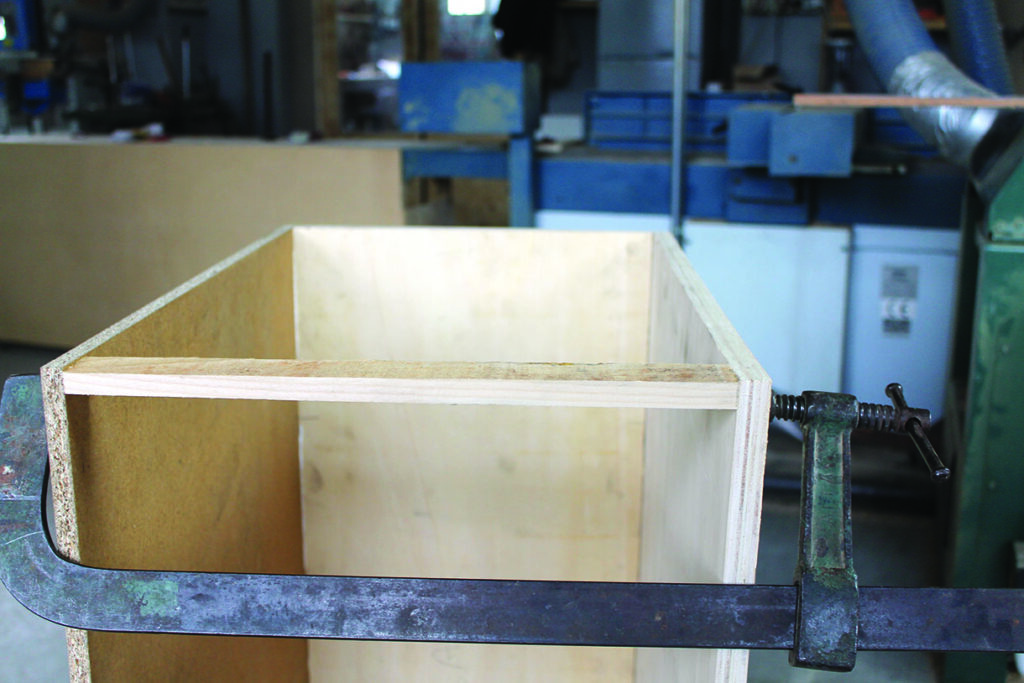
8. Before installing the top, cut a strip of wood as long as the width of the cart. This will keep the measures right and the cart’s body squared. Keep it in place with a clamp and spread some glue on the top of the cart
Carpenter hammering nail into wood board.
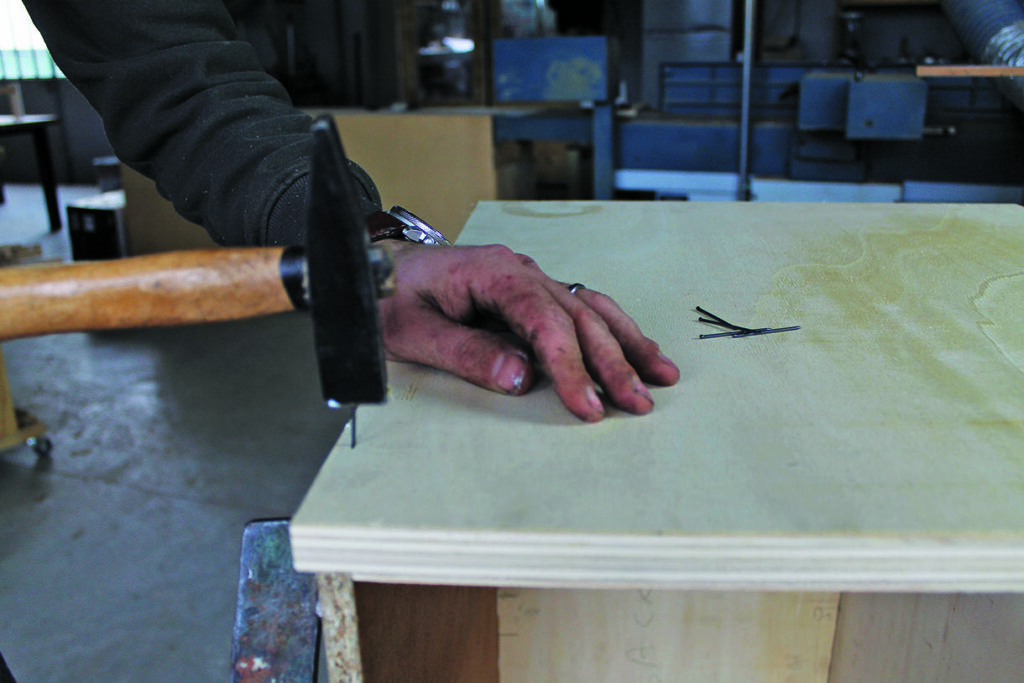
9. Once you have got the top in the right position, you need to fix it in place. Again you could use some other technique, dowels, biscuits or just screws. If you are going to use nails like I did, be sure to drive them not perpendicularly but at a slight angle, creating a sort of dovetail pattern
Wooden tray on workshop table
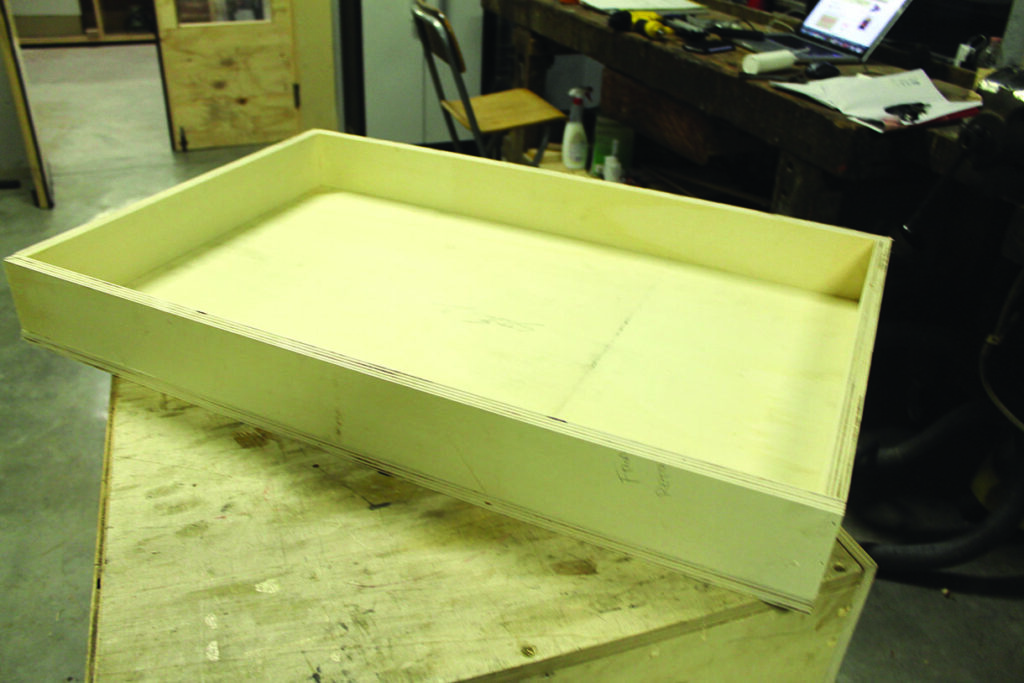
10. With a third side and 12cm wide strips of plywood assemble a sort of tray. This will be the ‘wing’ where you will store all your gouges. To assemble it use some glue and brad nails. It really doesn’t need screws to add strength
Unfinished wooden cabinet in workshop.
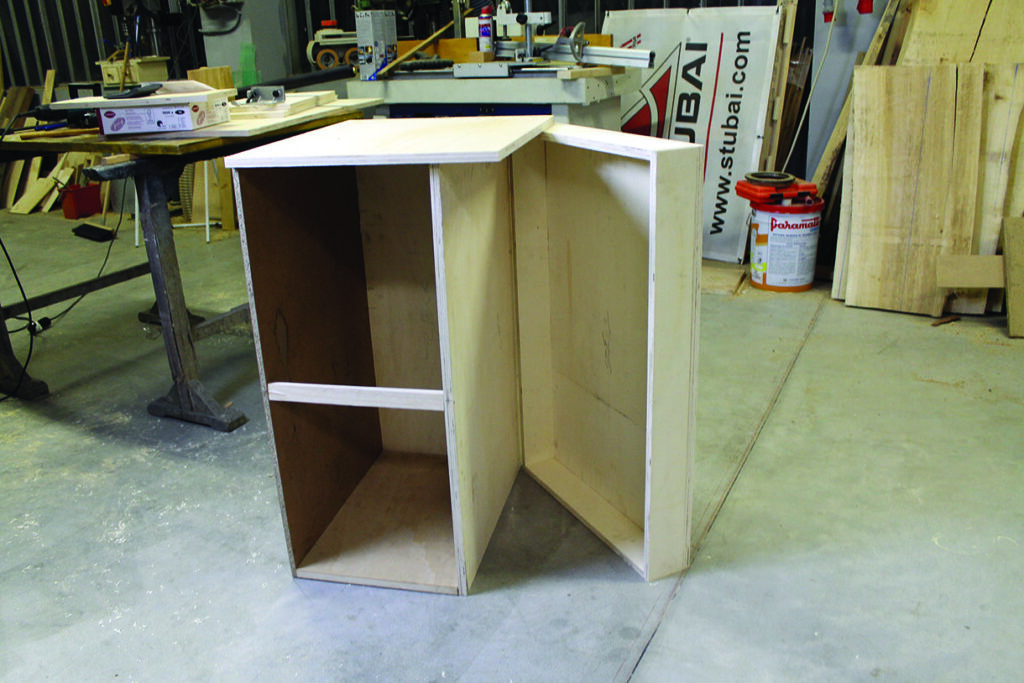
11. By now, the main body and the wing will be in place. As you can see, the top overlaps the wing in order to have a larger surface to put things on. Place the strip of wood that you cut earlier in the middle of the cabinet to add torsion resistance. When I took the picture the piece of wood wasn’t in the final position
Woodworking tools and materials on workbench
12. It is now time to start the drawer madness! Take your time to figure out quantities and dimensions. Depending on the hardware you choose, the drawers’ width might change, so when taking measurements have a drawer slide to hand and always add an extra millimetre to avoid an extra tight fit
Wooden drawers with tools in workshop.
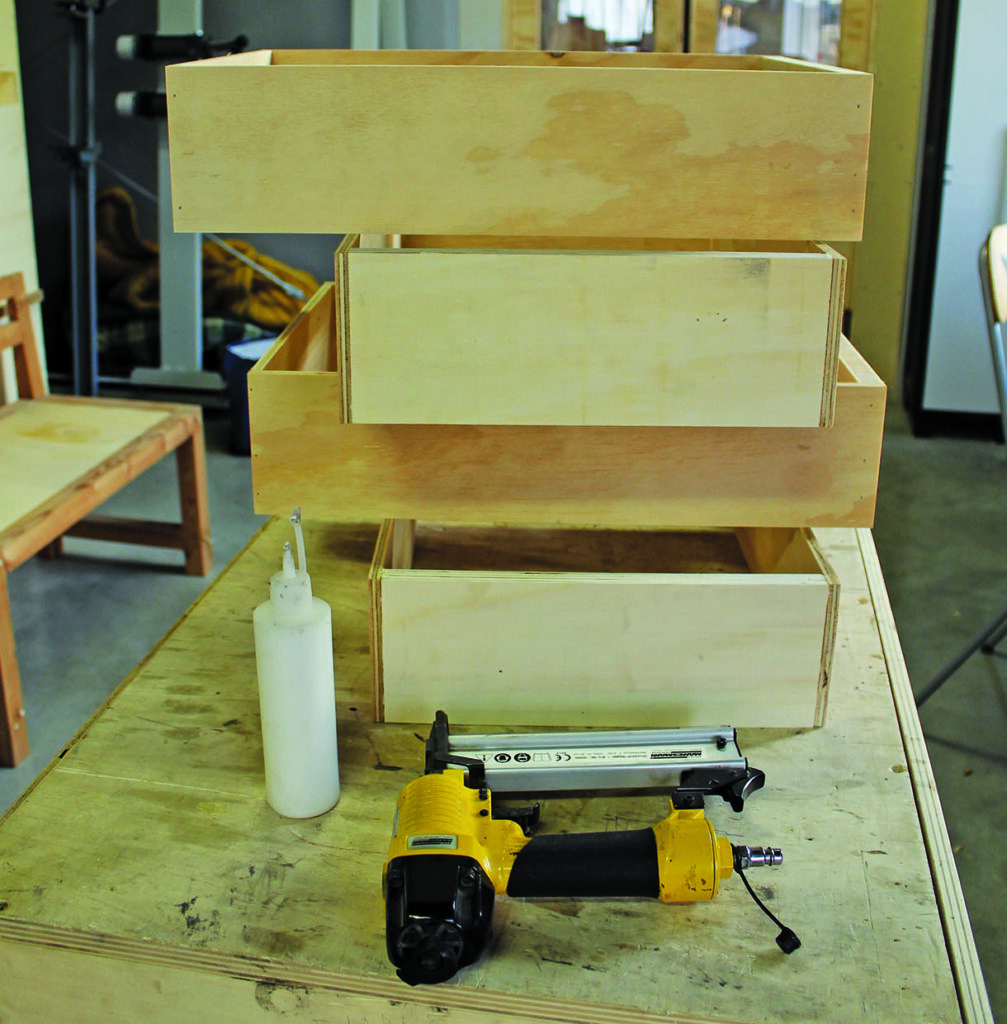
13. After a fair bit of work, glue and nails you will have four nice drawers. Scrap wood is fantastic for making drawers – have a look round your ’shop and you’re bound to find some suitable pieces, just avoid super-thin bottoms. A 3mm thick plywood might work, but only if you cut a groove along the sides where you will accommodate it and if you’re not going to store your chucks there. I used some pieces of 5mm plywood cut to fit the inside of the drawer, glued and nailed in place
Woodwork bracket, casters, hardware on wooden surface.
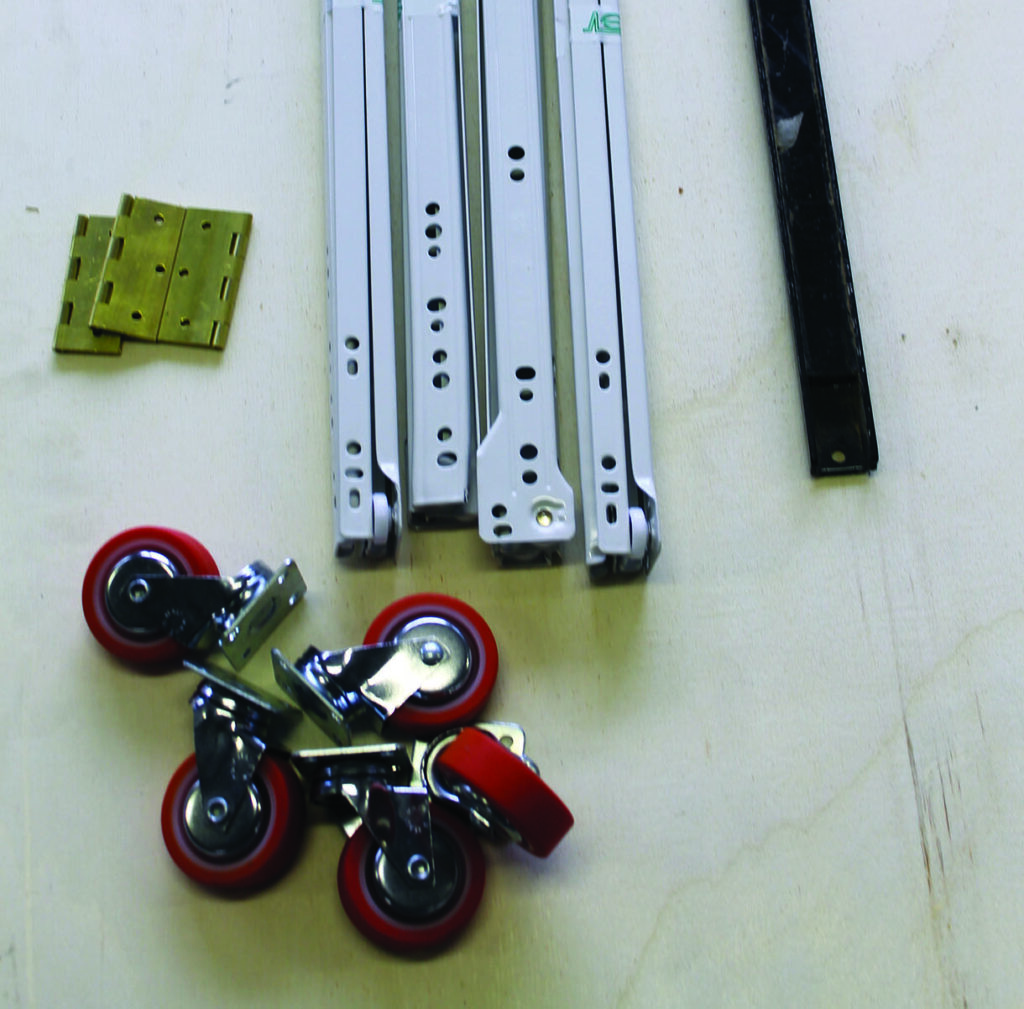
14. This is the basic hardware that you need: eight drawer slides, three hinges, a magnetic bar and five casters. The extra caster will be placed under the wing so the weight won’t lie completely on the hinges. This is why you won’t need to buy expensive extra-strong hinges. Let’s not forget these kind of projects are always on a budget (well, mine are)
Wooden panel with brass hinges in workshop.
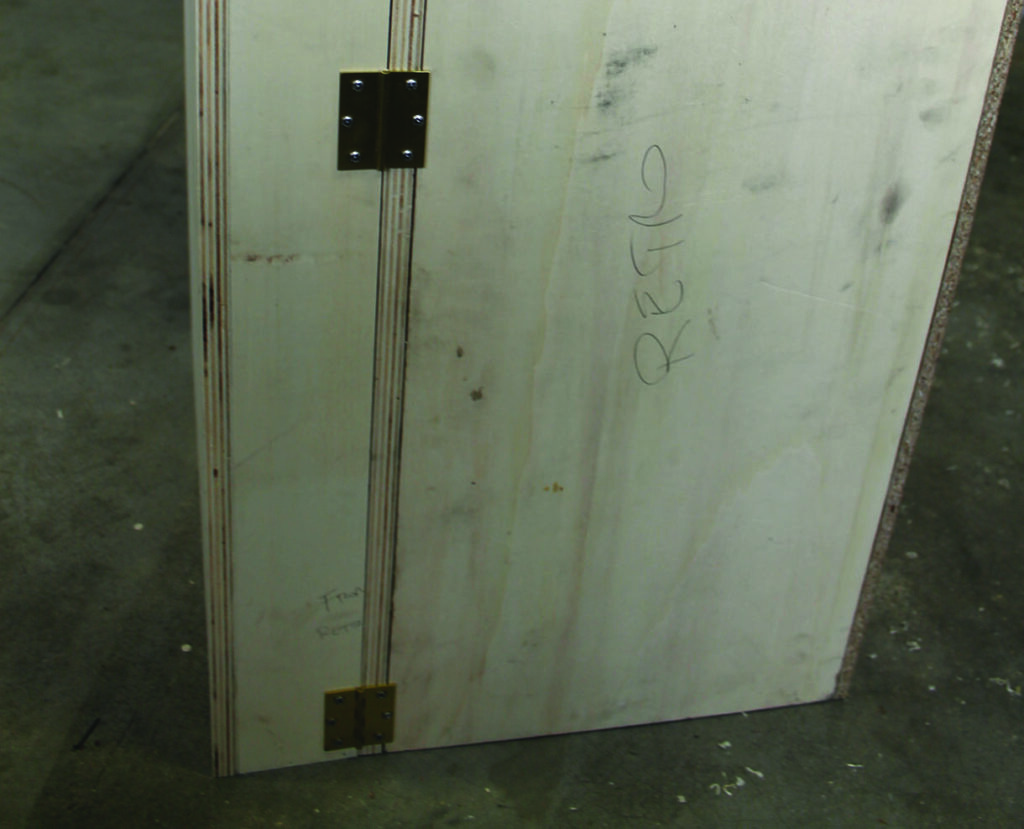
15. While the cabinet is sitting on the floor or the bench, install the hinges at the back. Space and align them accurately to ensure a fluid movement. If you are in the mood, and if the dimensions of the hinges fit, you can install them between the side of the cabinet and the wing. This is a good time to also attach the magnetic bar on the inside of the wing
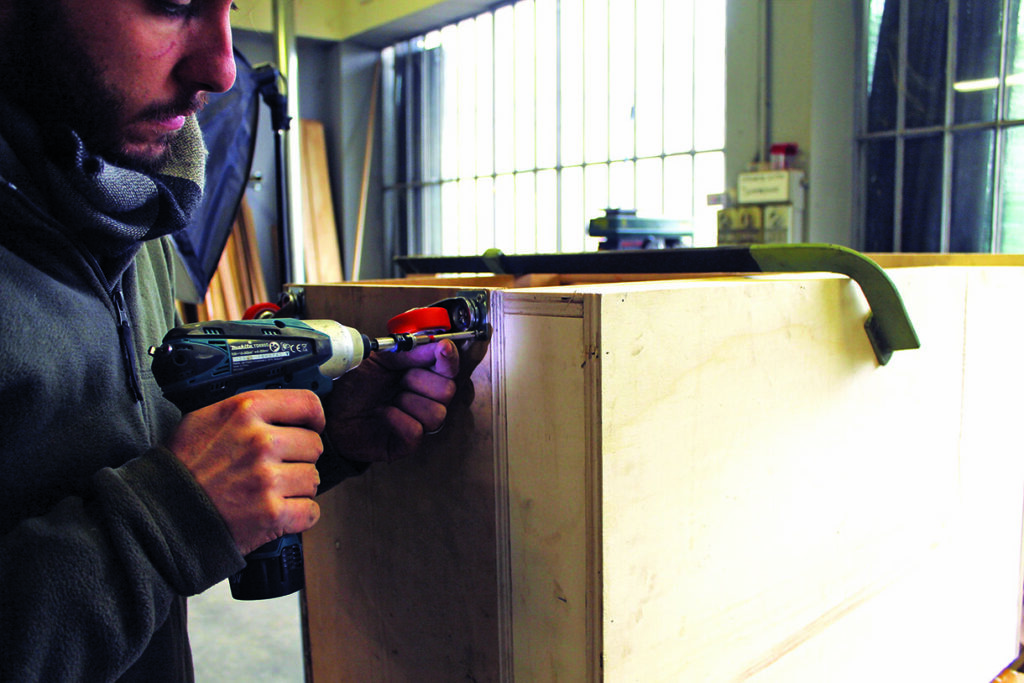
Person using drill on wooden box assembly.
16. Lay the cabinet on its back, keeping the wing closed with a clamp and install the casters. The one that goes under the wing must be placed on the external corner opposite the hinges

Keep track of everything

In every woodworking project there are a lot of parts involved and everything must end up fitting together. It is easy to forget a piece or mistake a measure, so to prevent stress, write everything down. It doesn’t have to
be a CAD file, a piece of paper is more than enough. There are two golden rules:
no useless details and keep your detailed cutting list in plain sight, so that you can check it at a moment’s notice.
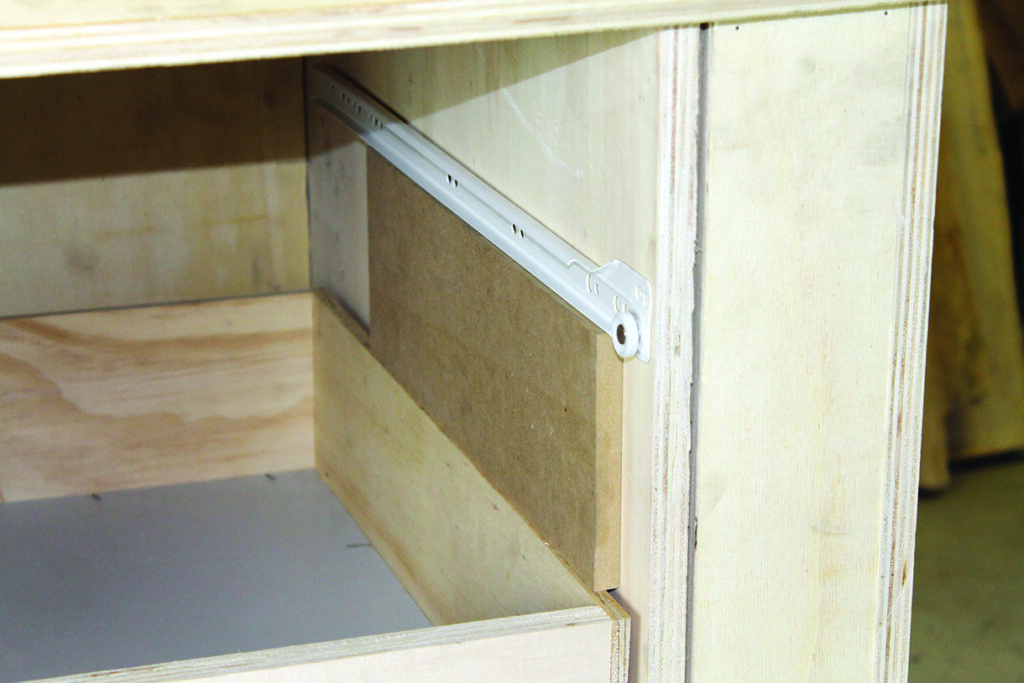
Wooden drawer with metal slide mechanism.
17. Installing the drawers is fairly easy. Cut a piece of scrap wood, in this case 140mm wide, 10mm thick mdf (the length depends on the hardware you choose); this will be the interval between your drawers. Start from the bottom resting the scrap piece you just cut on the wide side, so that there is a 10mm gap between the first slide and the bottom of the cabinet. Then install the other parts of the slides on the bottom of the drawers and check the fit
Person using a yellow nail gun on wood.
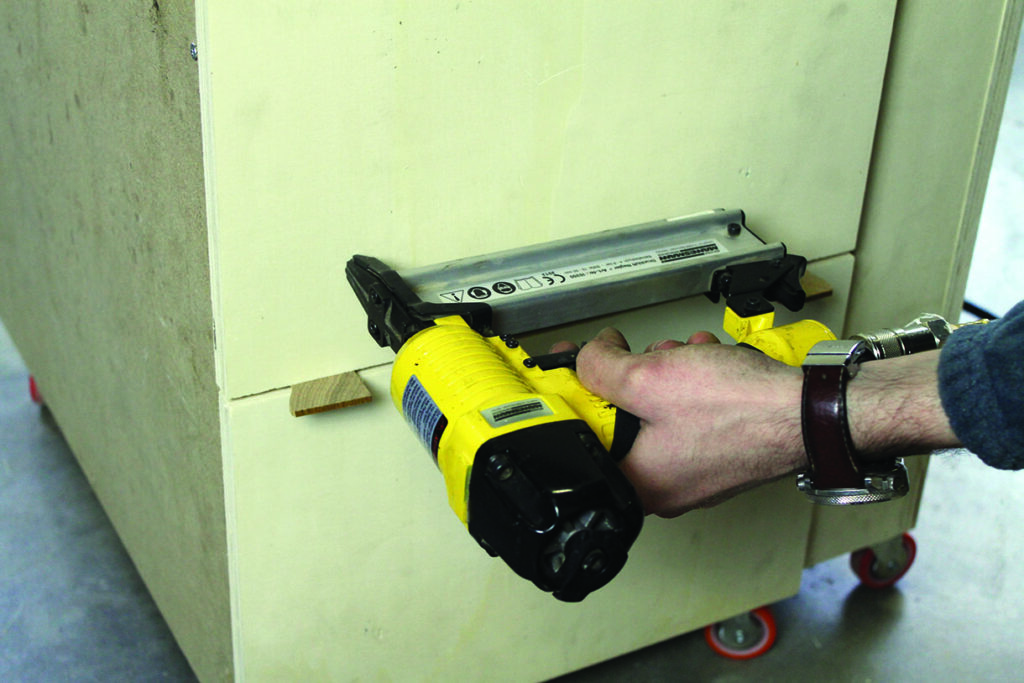
18. Once all the drawers are in place, it’s time to cut the front. Use the front piece you cut earlier and always prepare the four pieces starting from the bottom. My advice is to prepare them in couples instead of trying to do all four at once. Doing it this way lets you correct any small mistakes and achieve a nice, evenly-spaced look. Use a couple of shims as thick as the gap that you’d like to see in the finished front and use a couple of finishing nails to hold it in place. If you don’t want to see those small holes, you can use double-sided tape or hot glue. Drive a couple of 30mm screws from the inside of the drawers to hold the front firmly in place
Hand sanding wooden furniture with electric sander.
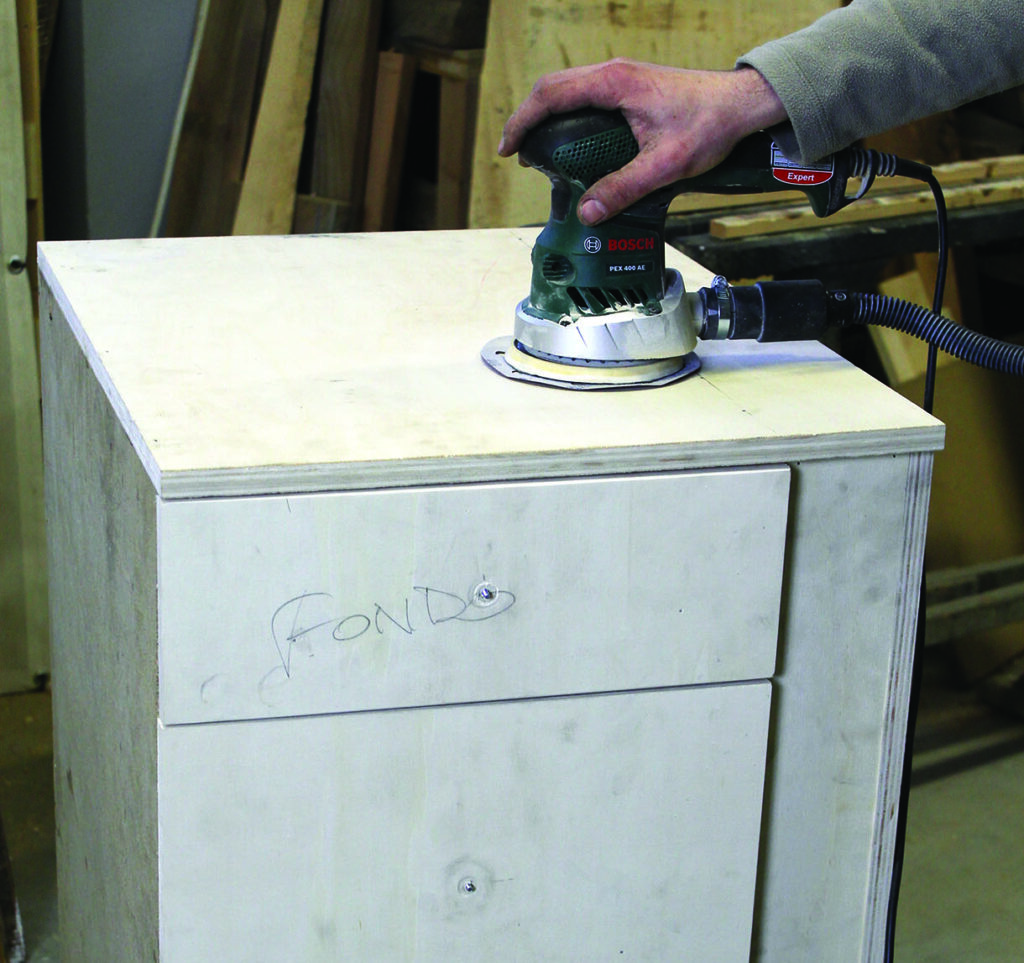
19. It’s now time to sand the cabinet. Start using a 150 grit abrasive and if you used a veneered plywood be careful not to sand through the veneer. For the fine sanding use a 240 grit abrasive and then you can apply a finish of your choice. You could also paint it if you want to personalise your turning cart even more
Wooden tool cabinet with open drawers and shelves.
20. This is the final result loaded with gouges, skew chisels, scrapers and all the bits and pieces we love so much. You could make some additions, like a magnet to keep the wing closed while you move the cart around or an extra knob to open it easily. If you wanted an external surface to store smaller stuff like screwdrivers or callipers, you could use the sides and attach more magnetic strips. Basically you can upgrade this cart over time to fit your own particular needs. It will become a trustworthy turning companion that will save you a great deal of space and time

Vertical biscuit joints

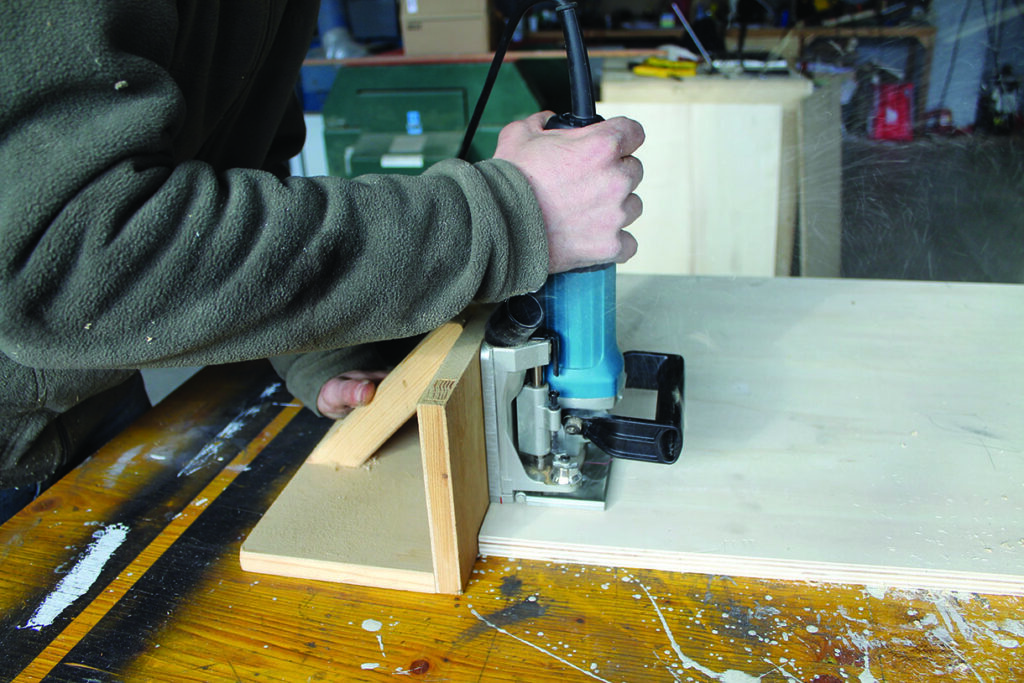
Cutting biscuit joints on the face of a panel can be tricky. To make it easier you could use a big piece of wood with two squared sides or build a simple jig using two pieces of plywood screwed together to form a 90° angle. Rest the back of the of the biscuit jointer on it and you’ll have consistent and precise joints.
Person using router on wooden board in workshop.
Rest the back of the jointer on the jig to cut vertical slots. The jig can be used for other purposes but the one I’m using is actually used to re-saw wide boards on the bandsaw

Leave a Reply

Your email address will not be published. Required fields are marked *