
Many woodworkers cite a bandsaw as the first ‘proper’ machine purchase. What do you need to know and why?
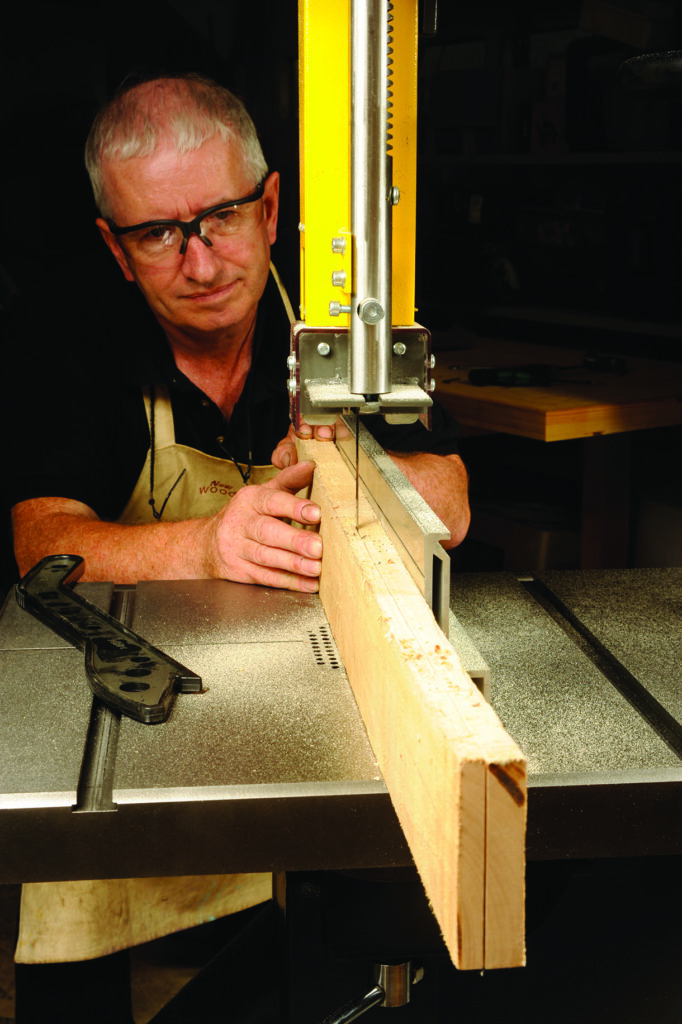
A stable and well set up bandsaw with a sharp blade can perform wonders, but one that shudders during use, has guides wrongly set, worn tyres and a blunt blade is no use to anyone. There are things to look out for if you are choosing a new machine or are trying to decide if your current machine is up to the job. Modern bandsaws are generally well built, the cases are rigid and won’t shake during use. Very small or certain older machines may have casings that flex.
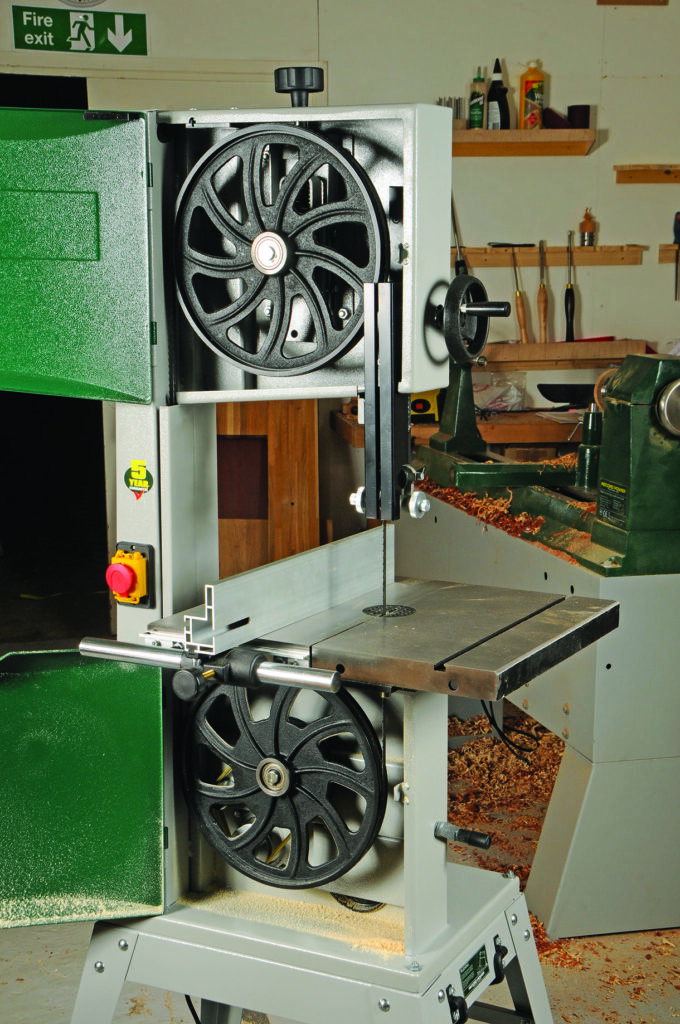
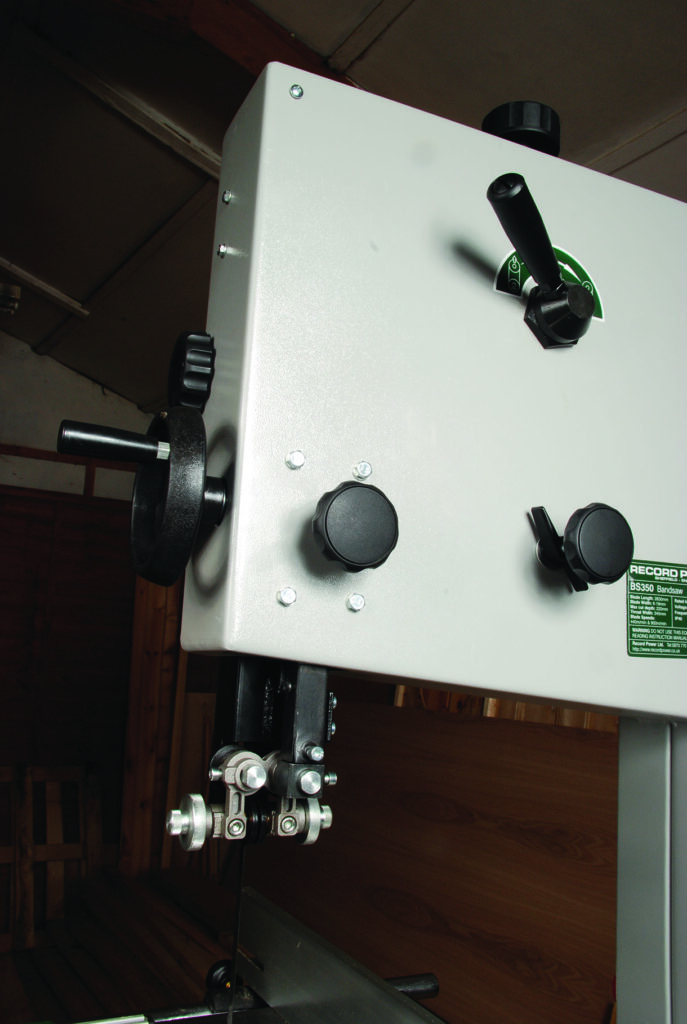
Bandwheels need to run true (without any waggle) and be in line with each other. They should have rubber or cork tyres which have a cambered profile, not flat. There will be a blade tensioning knob and possibly a quick tensioning lever so blade changing is easier and tension is removed when the machine is not being used. The upper bandwheel will also have a tracking knob to tilt it so the blade will run centrally on both wheels.
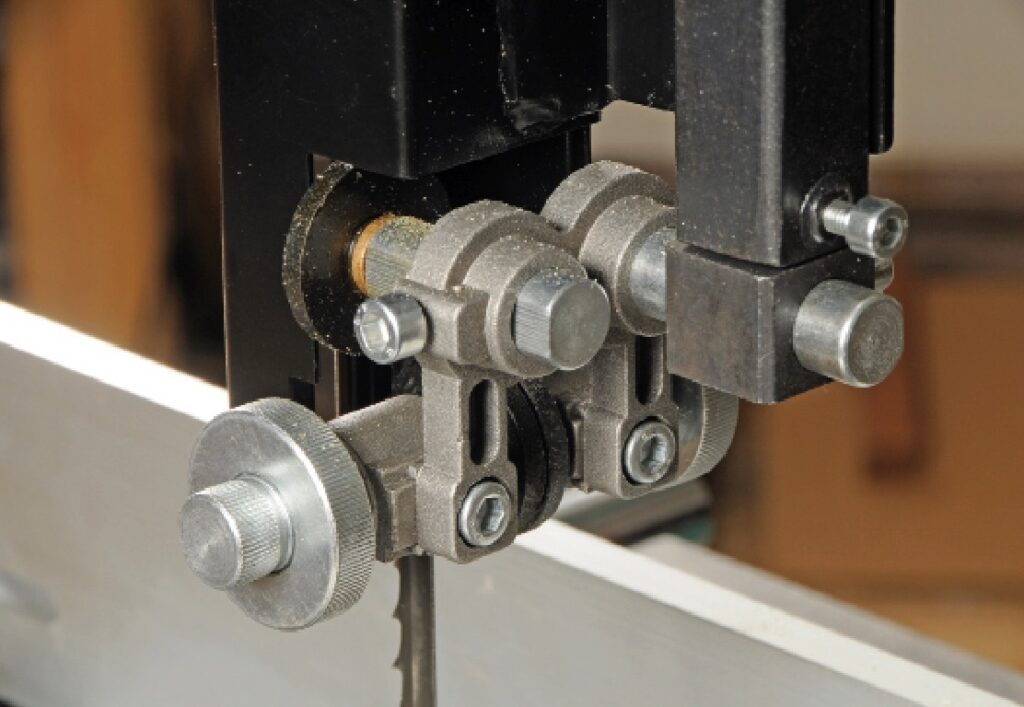
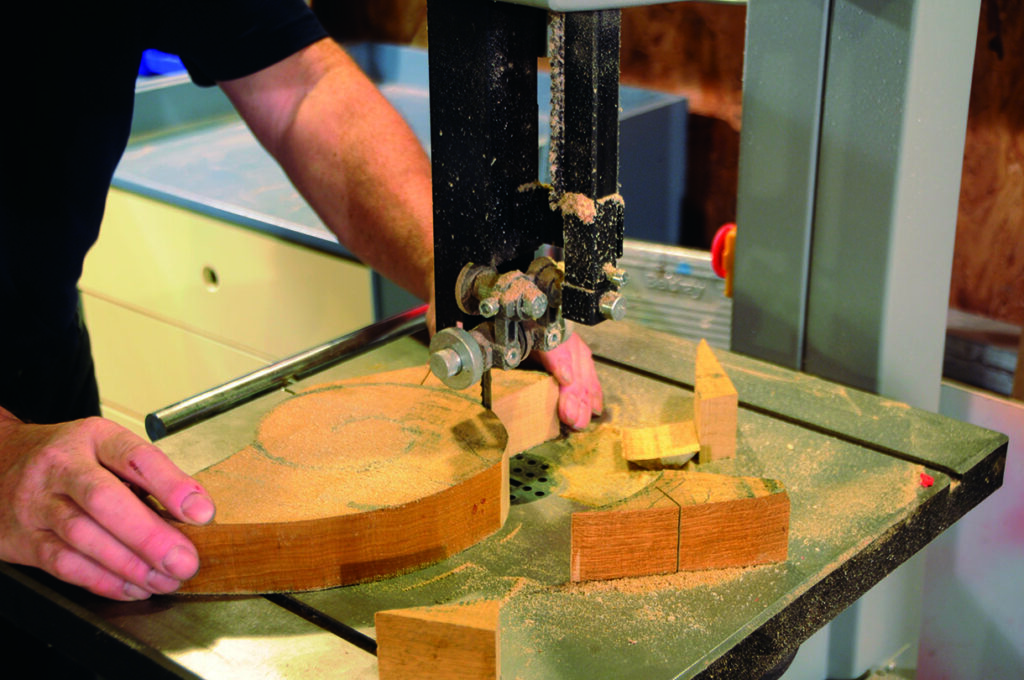
The most contentious matter is the blade guides. Properly set up, the blade will run without any guides but for actual cutting, guides are essential and must be set correctly. Usually there is a guide wheel behind, flat-on to the blade rear edge and about one millimetre behind it. Better machines have a second guide below the table surface usually running edge-on to the blade edge. This is more logical than the flat-on method above, as the wheel will rotate easily as well as having a hardened steel rim.
Next there are side guide blocks or wheels which must be set so as not to bend the path of the blade when running. These need to be in good condition so they can keep the blade facing straight forward to the user.
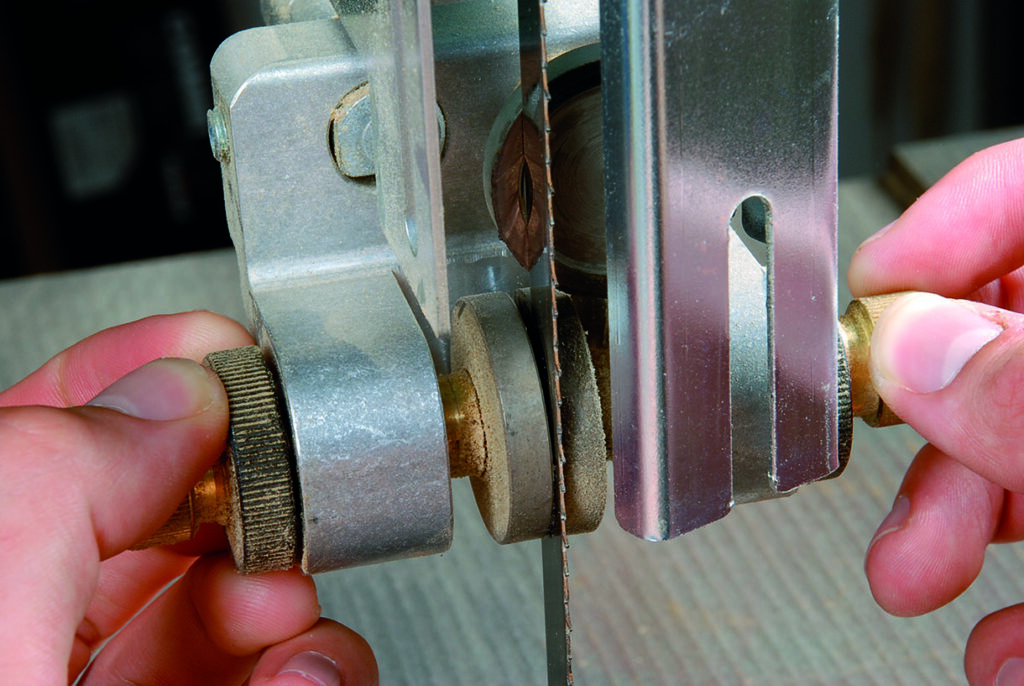
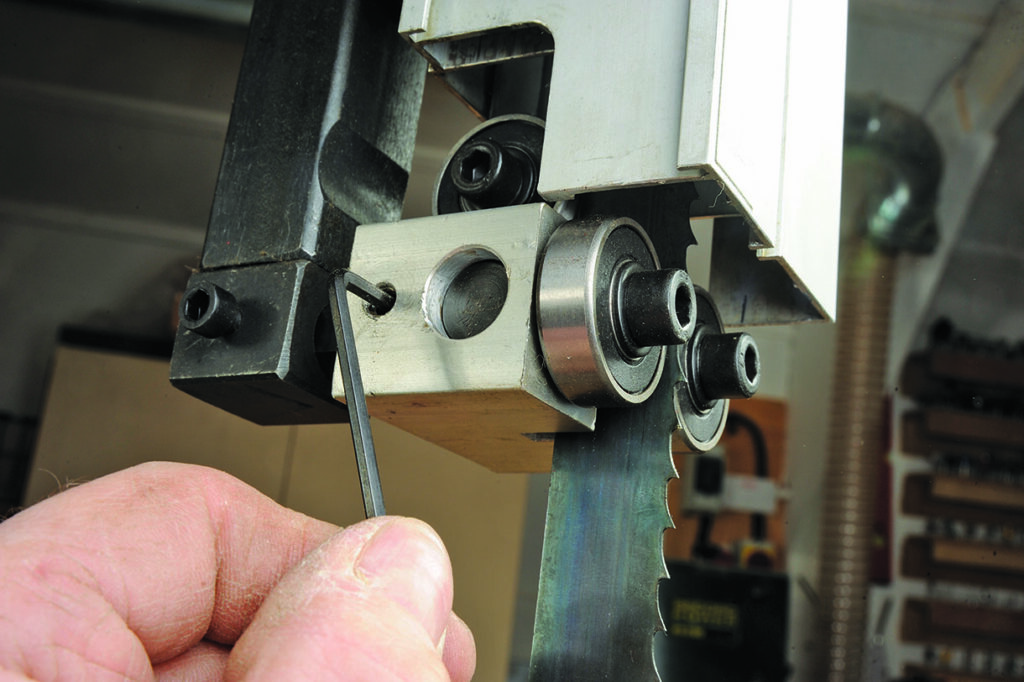
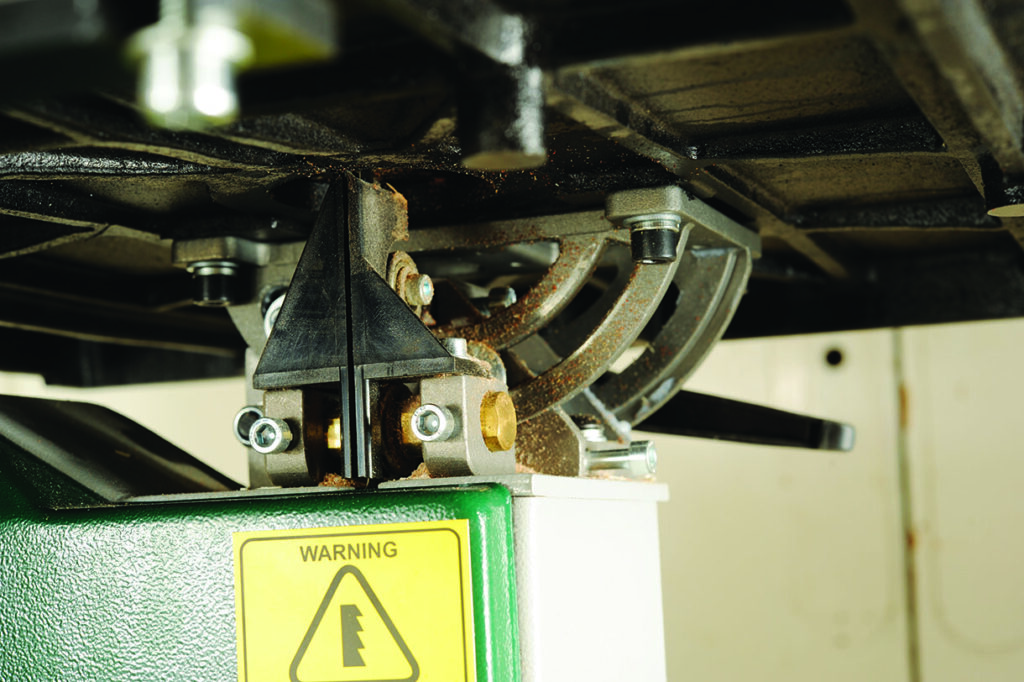
The table should be cast iron and may have a metal dowel that fits in the front edge where the blade slot is. Its function is to hold the cast iron level as it can bend slightly. There can be a bolted-on bar instead of the dowel; this performs the same function. There is usually a scale rod or bar that carries the fence mounting. The fence can be removed and should be adjustable. In the lower bandwheel casing are the pulley wheels and drive belt that turns the bandwheel. There is an idler wheel which can be moved to tension the drive belt. A brush head rubs on the bandwheel to try and keep it free from sawdust and one or two extraction outlets depending on the size of the machine.
At the rear of the machine will be found an induction motor, which is much quieter than a ‘brush’ motor.
It needs to be powerful enough to deal with deep cutting and ‘green’ wood. The bandsaw should be firmly bolted down to a cabinet or stand so it can’t move around and make it safer to balance long sections on
the table for sawing.
The most critical items are the blades. The one supplied with the machine may not be the best quality or the correct type for your work. There are a wide variety of blades available to buy online or if you are lucky enough to have a really good tool dealer near you. Whatever types or sizes you decide are best for your work, you need to keep spare ones in stock because a machine which seems to be behaving poorly may just need a really sharp new blade. A blade can ‘go off’ very quickly when you least expect it and touching the tips of a static blade does not always give you the right information about its condition.
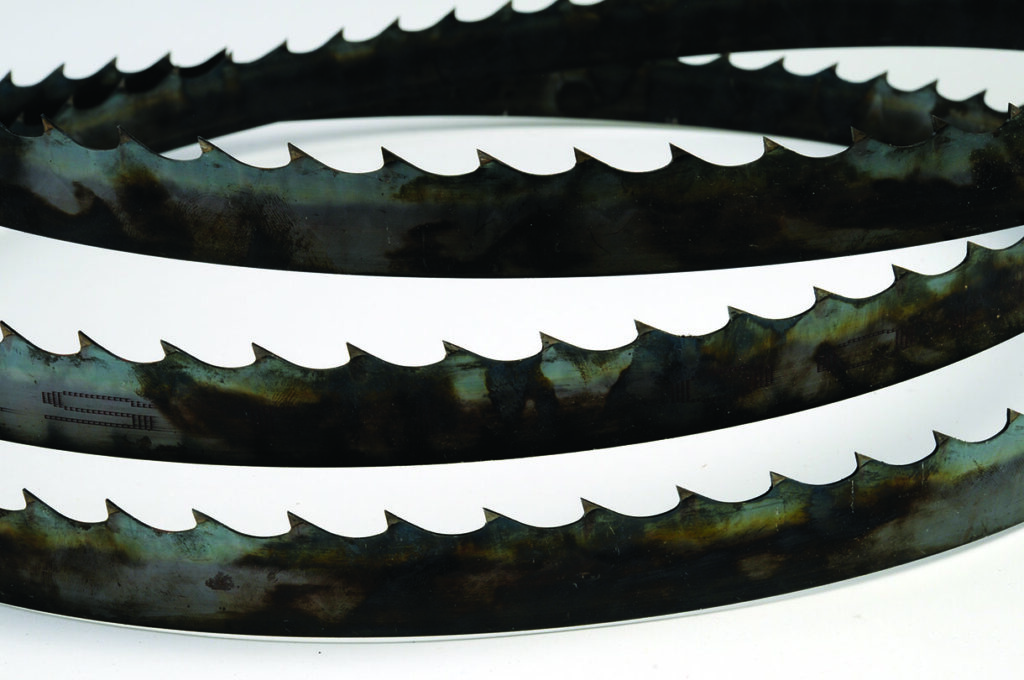
Next time we will look at setting up, cutting and blade changing on the bandsaw.