
Whether you have loose drawers or none fitted at all, here is some useful advice to get them running smoothly
You can make a great piece of furniture or repair an existing one, but trying to fit drawers and get them running nicely can be fraught with problems and extremely aggravating to boot. We have chosen to look at several variants that can inform our fitting technique for different pieces of furniture.
Antique and vintage furniture
Antique chests, dressers and bedside tables, etc. with drawers normally have bottom runners, which are just the bottom edges of the drawers running on wooden rails fitted inside the carcass. This is pretty basic but it works if both parts are in good condition. Unfortunately over time both the runners and the rails wear often quite badly. The top edges of the drawers have to be a close(ish) fit to the top of the carcass drawer opening and this area of the carcass can get damaged with wear. Since the carcass fronts are usually veneered, this chips off as the drawers getting pulled out.
The bottom edges of the drawers can be repaired by planing off the remaining strips at an angle running down from the drawer front where it is less worn and gluing on new pieces which can be trimmed to shape afterwards. If the runner is worn close to the drawer front then it is a case of paring the remaining edge flat with a sharp chisel.
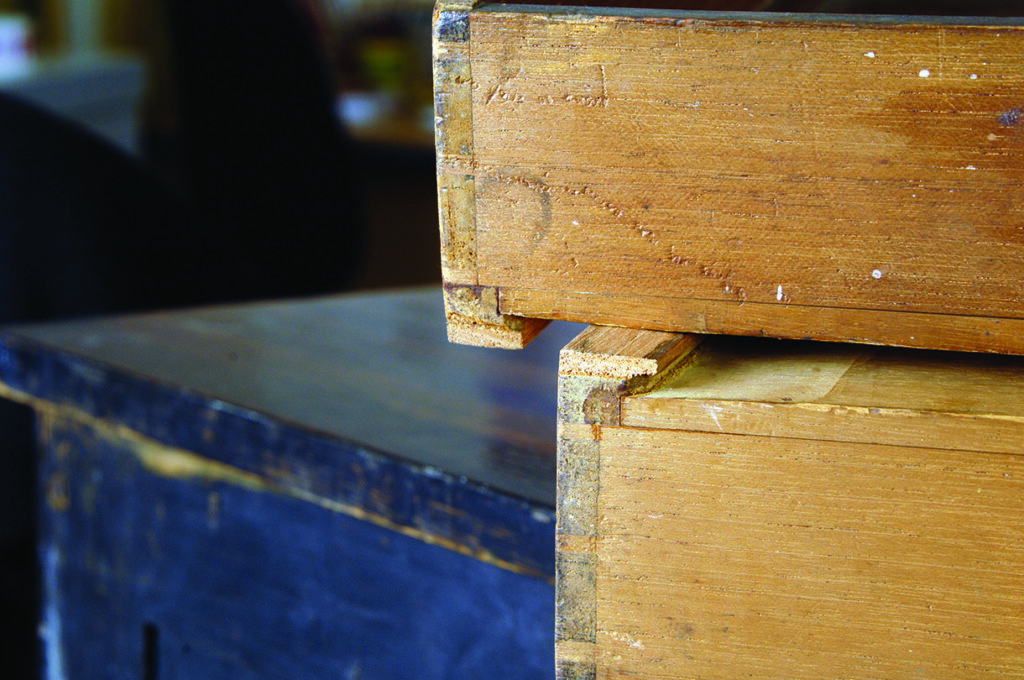
The carcass rails become very worn and indented over time. The correct way to deal with this is to remove the rails and replace them – but, they can be quite well fixed into the carcass sides. If an exploratory levering from the back ends if you can remove the carcass back boards, shows they will pop out of their grooves in the carcass sides, then fine. However, the backboards may get damaged removing them and the rails likewise.
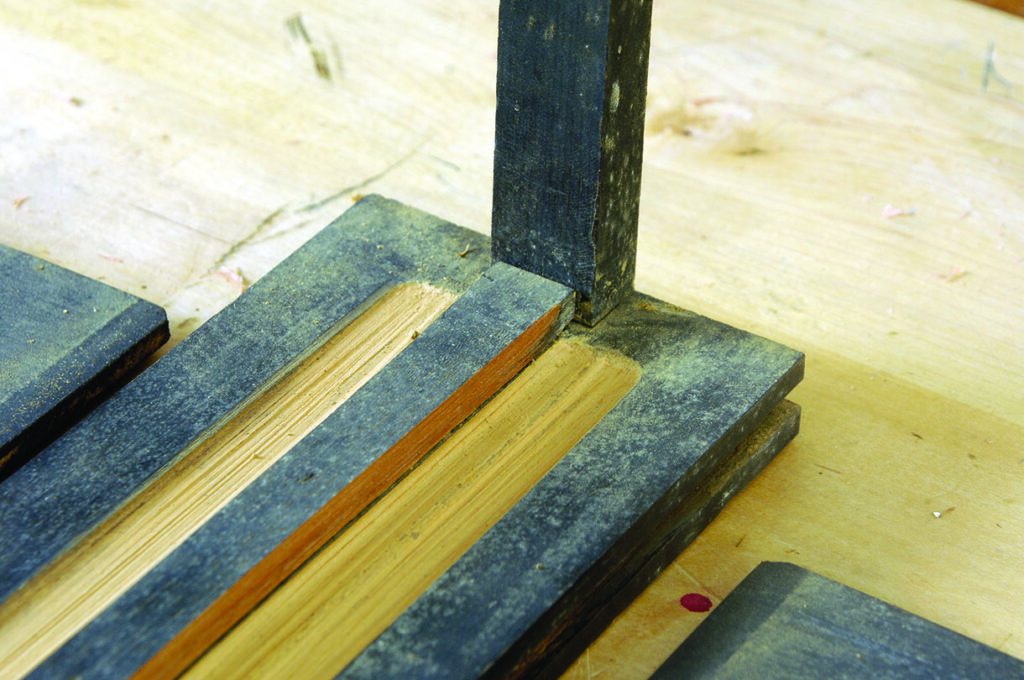
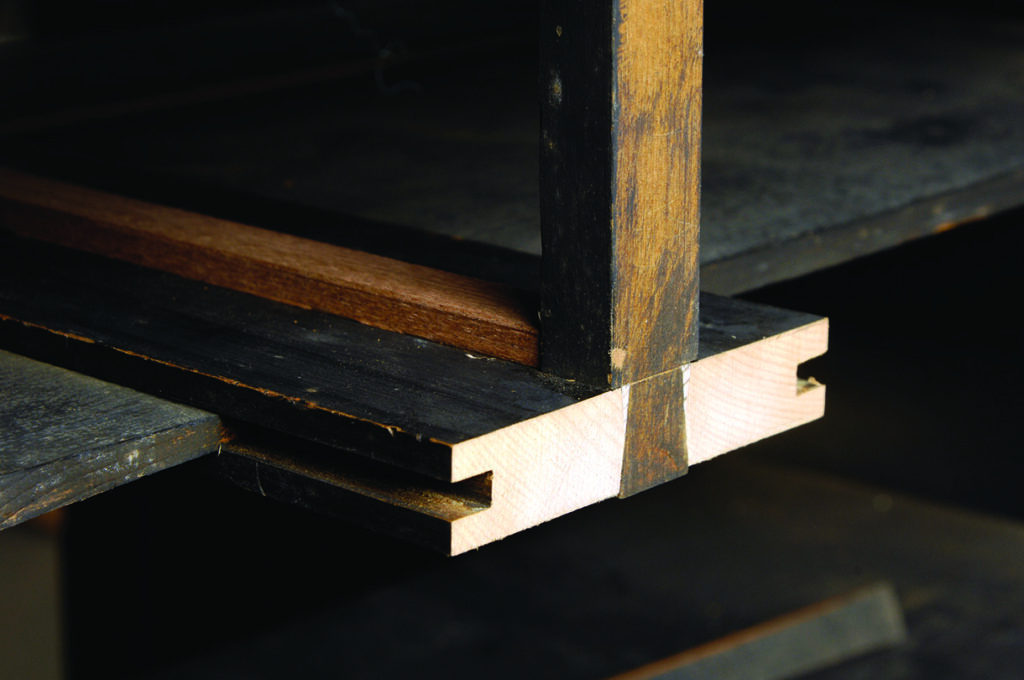
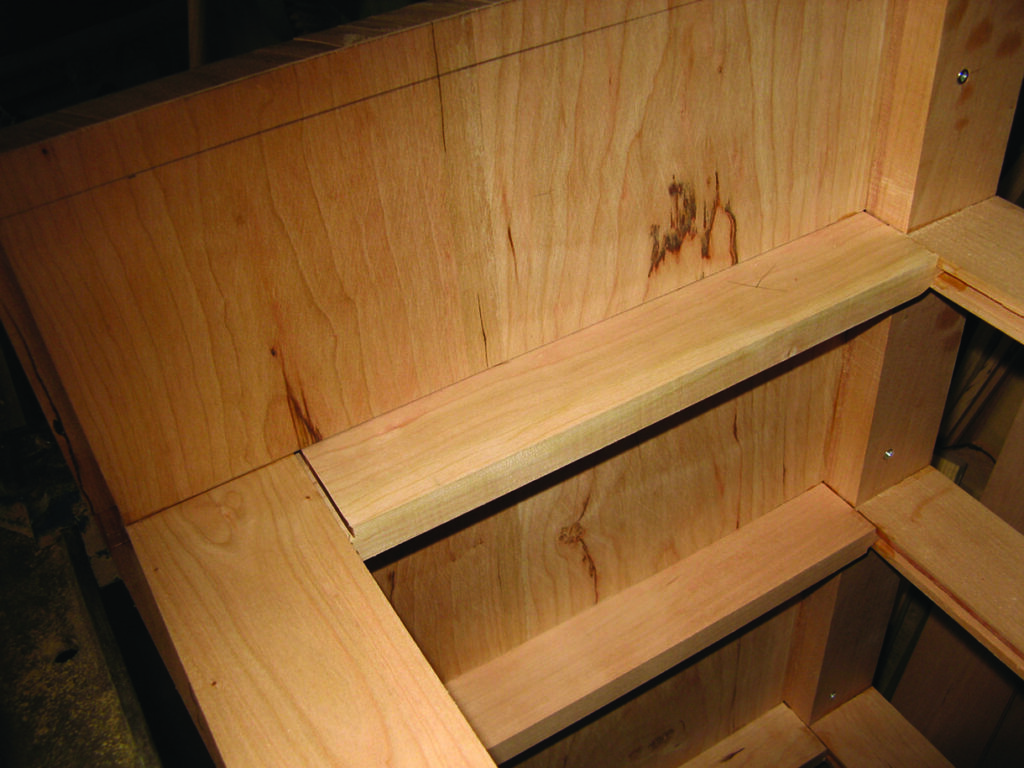
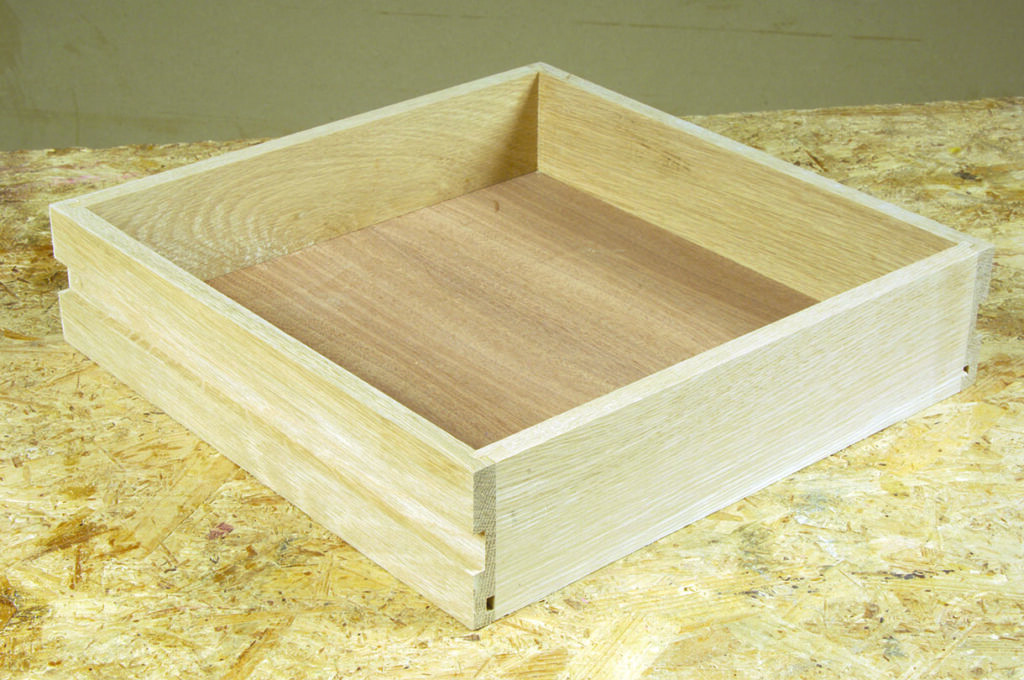
Vintage or modern furniture drawers will generally will be ‘side hung’, that is there will be a wide groove in the drawer sides which run on mid-height rails fitted to the carcass sides. Where there are two drawers side by side there will be a centre board which the rails are fixed to; this applies to the antique variety as well. Wear does take place but not nearly as much as in antique furniture for two reasons. One, it isn’t as old so a lesser amount of use and two, the housing type groove restricts the up-down movement of the drawer and in so doing, reduces the wear factor considerably. Repairs are not often necessary, but drawers can get stiff so waxing runners and grooves can help movement. Candlewax is traditionally used for this because it is so hard and won’t disappear into the wood grain.
Modern drawers
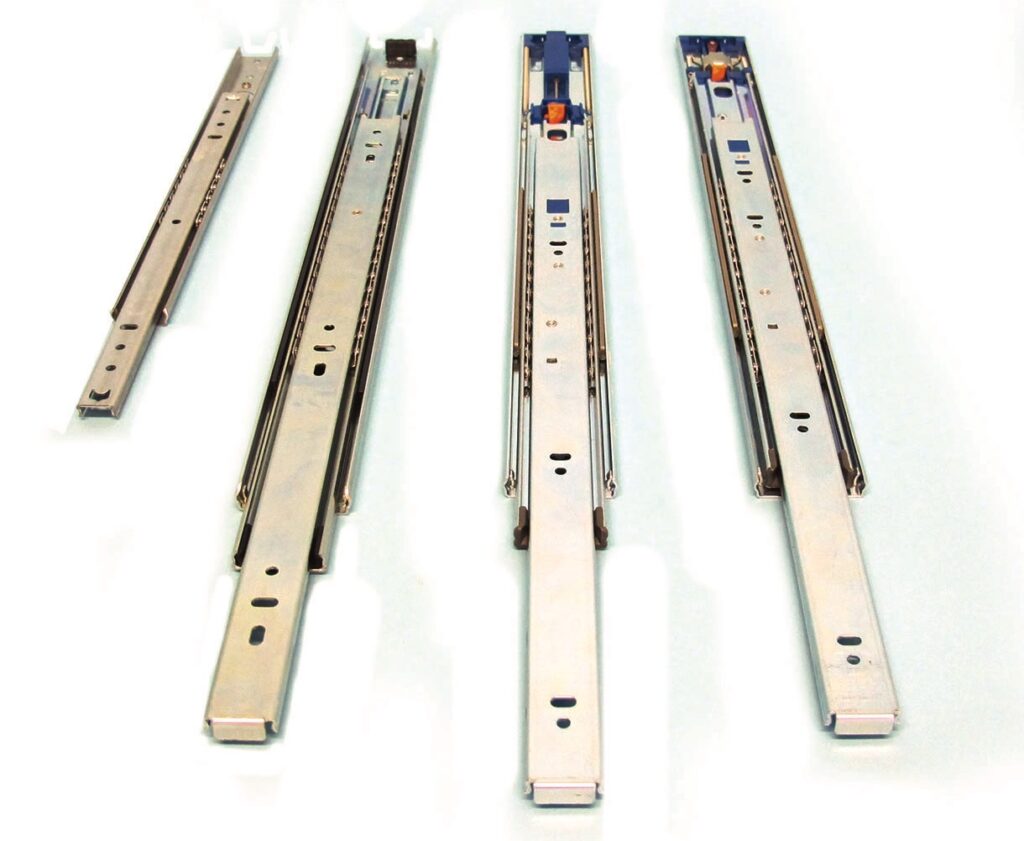
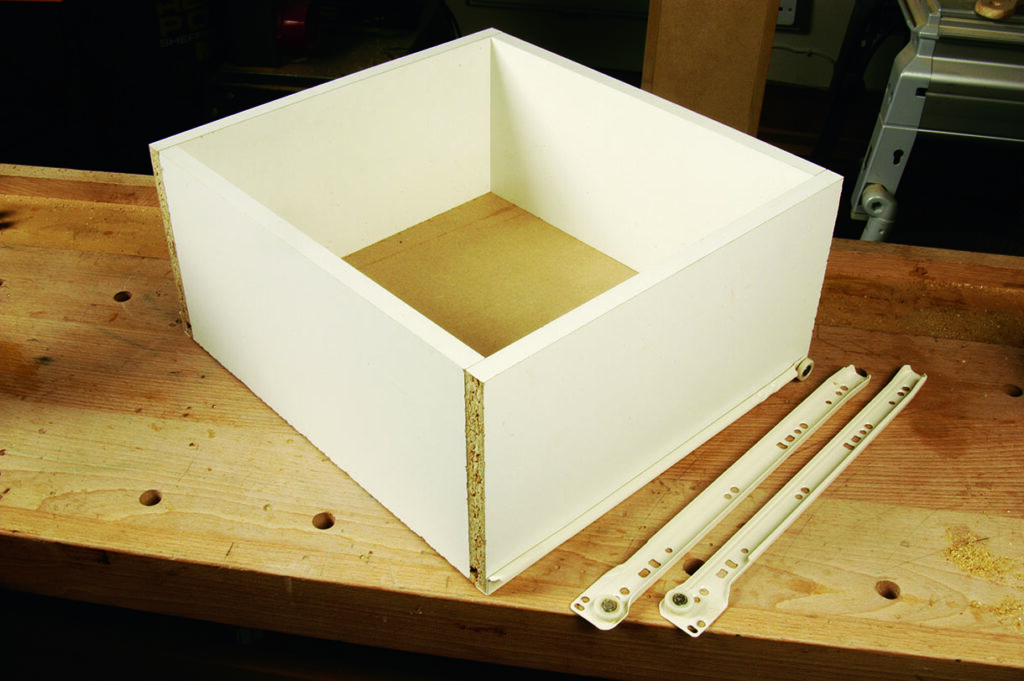
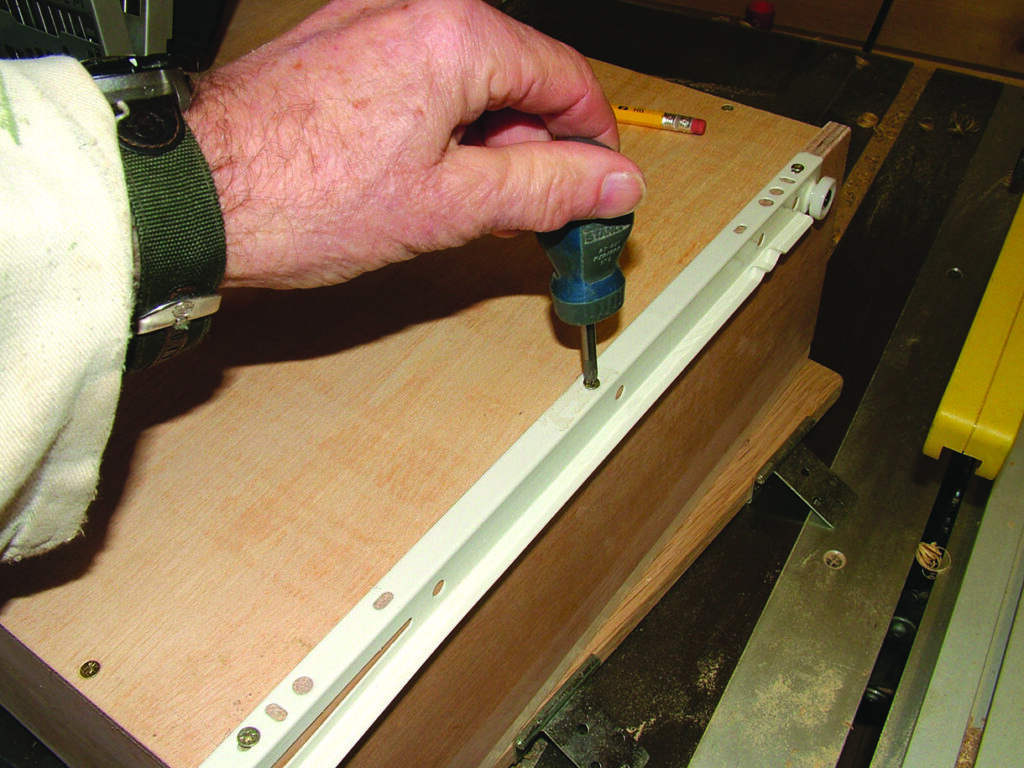
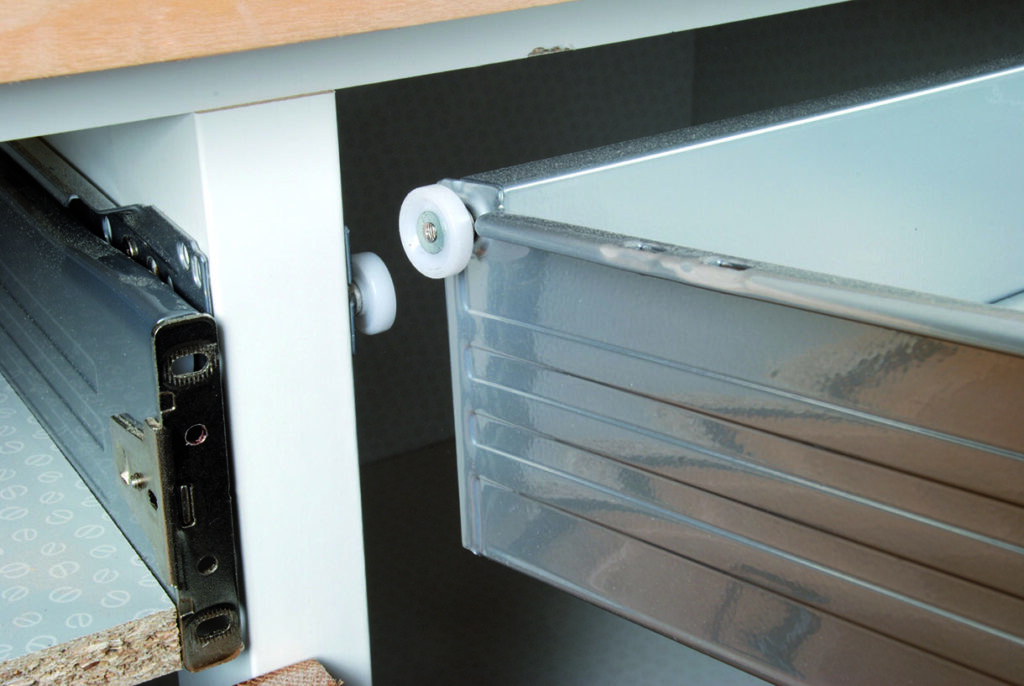
Modern drawers are quite different; they can be solid wood or ply boxes but more recently, melamine-faced chipboard. There are also moulded plastic and formed aluminium drawer boxes. Chipboard is an intrinsically weak material and can get damaged quite easily. Modern drawer runners are mostly metal types. The standard ‘easy runner’ is bottom mounted and allows the runner on the drawer to be dropped into the receiving part in the carcass. If these give trouble it is often a case of removing the drawer and putting new screws in runner holes that have not already been use. For the receiving rails in the carcass you need special short screws with smaller heads designed for the purpose that don’t project and catch on the runners, so pre-drilling is essential.
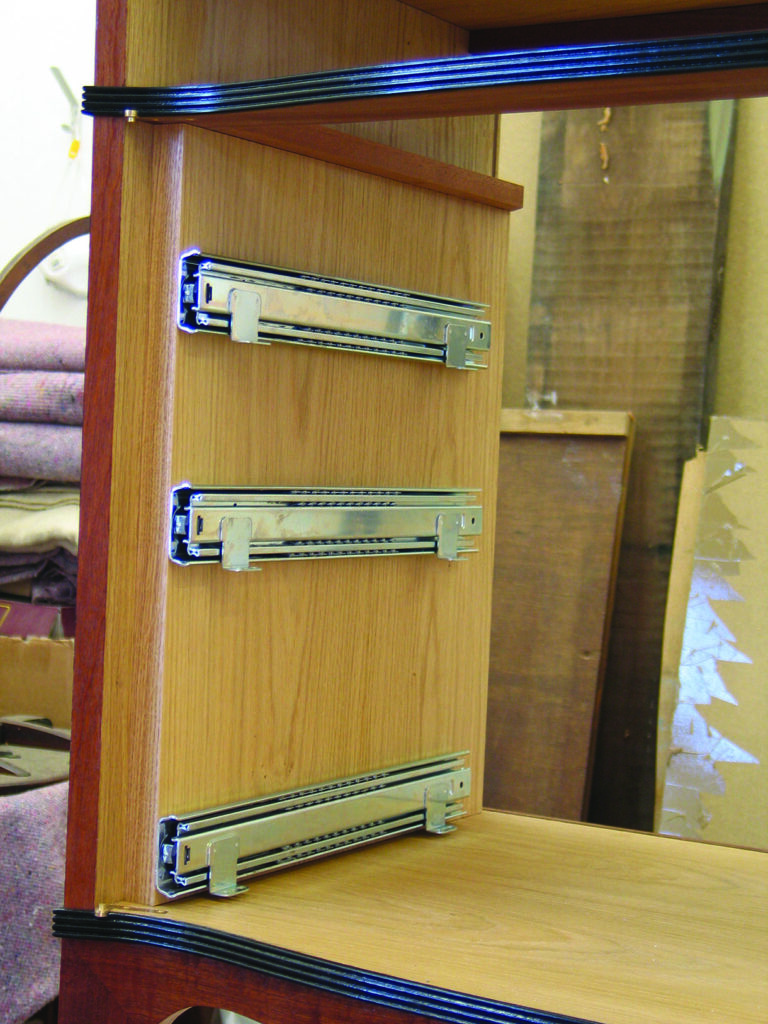
Better quality ball-bearing runners are often side mounted but have a smoother action and some types have a ‘soft-stop’ action when pushed back in to the carcass. They also have finer tolerances i.e. not so sloppy an action when used.
Fitting new runners
The key is measuring and checking drawer positions then using a jig so the positions and any hole drillings are accurate. You can buy ready-made drawer marking and drilling jigs or you can experiment and make your own. A big advantage of modern drawers is the drawer box is separate to the front. This means the fronts are added after the drawer boxes are installed and running correctly.
The exception to this, are top quality pieces of furniture made by designer craftsmen who work to very fine tolerance creating what is known as a ‘piston fit’, where a drawer will displace air because it is such a close fit in the carcass.