
Gary Marshall looks at small scale willow growing
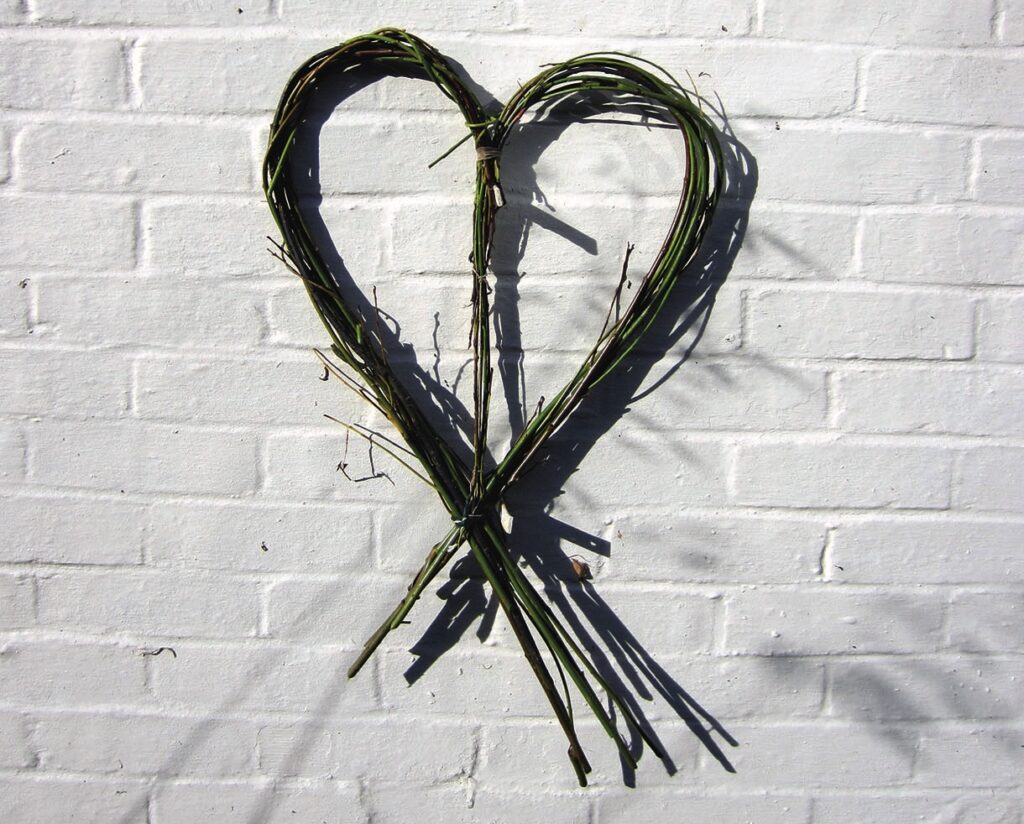
Have you got a soggy bottom (of the garden, wood or field)? If it’s fairly light then it could be the ideal area in which to grow osiers (Salix viminalis). This willow grows stems that are straight and long if harvested regularly – and they’re easy to grow. You can start with just one or two bought plants or root cuttings otherwise gleaned, even in a jar or bucket of water. This is how I started…
Planting
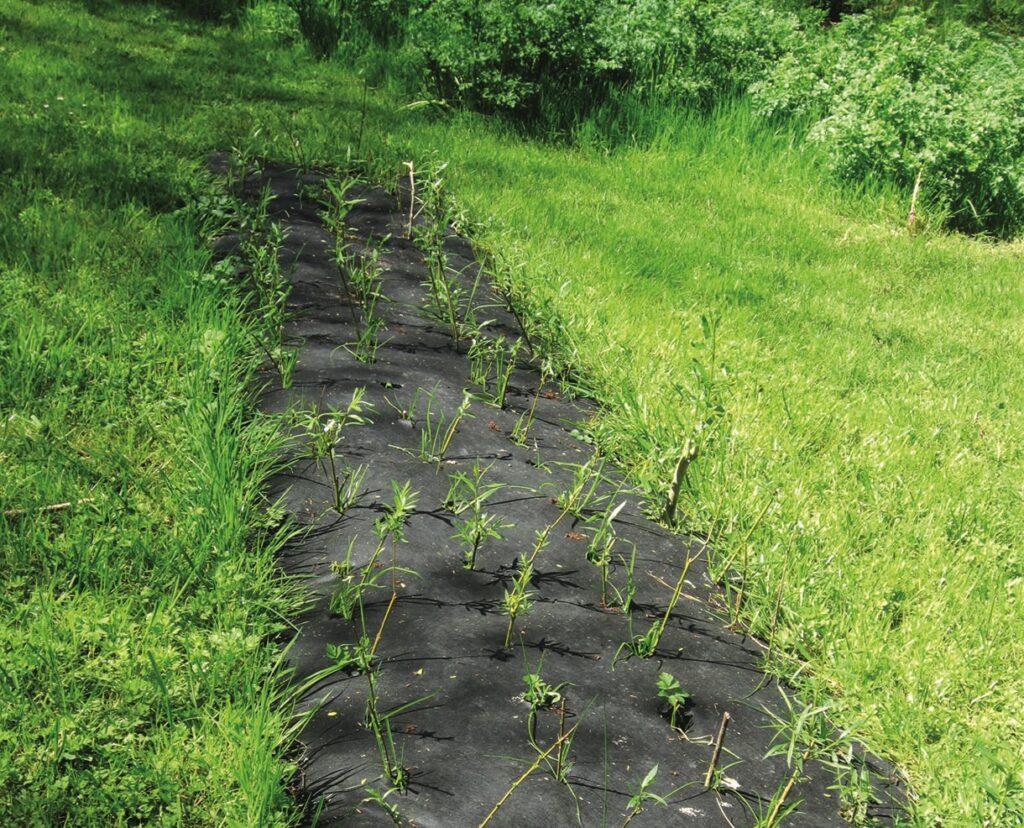
When I had enough stock, I planted out rows. These were initially protected from excess weed growth with biodegradable black matting. Five months later and hey presto! There are signs of real growth. If the planting is in a remote area that cannot be tended regularly or floods, some people prefer to harvest stems from pollarded osiers.
Protection
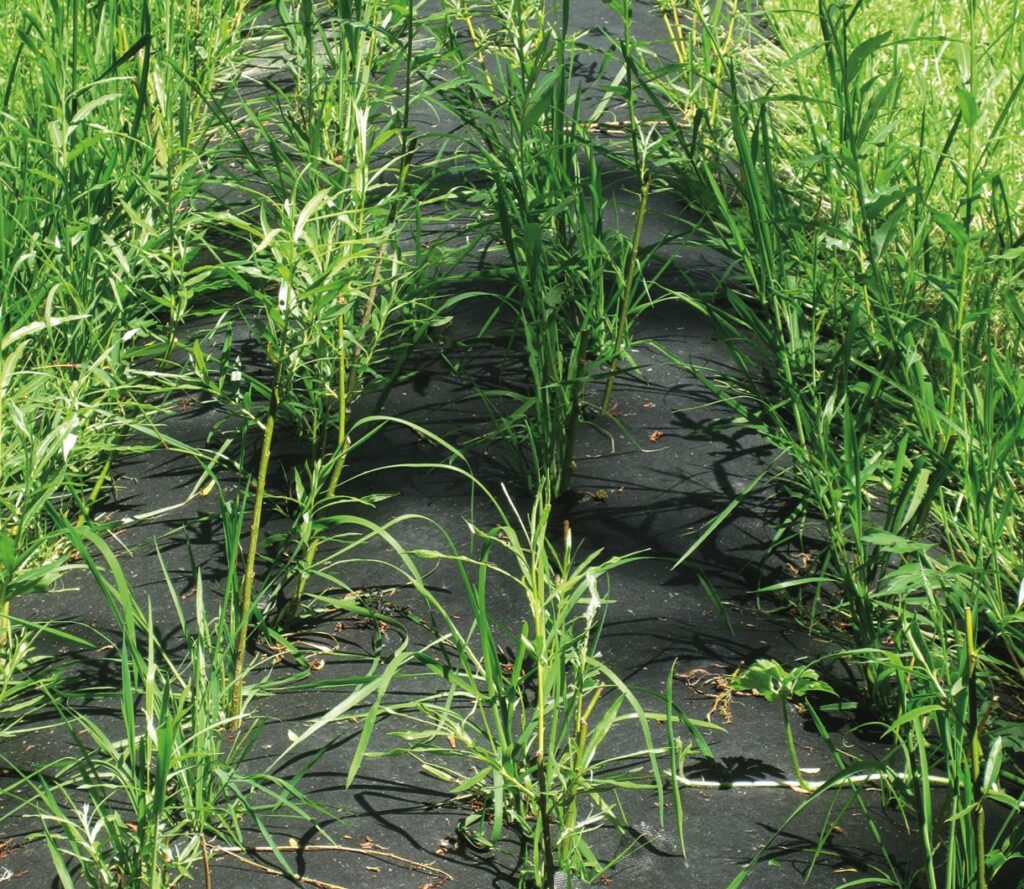
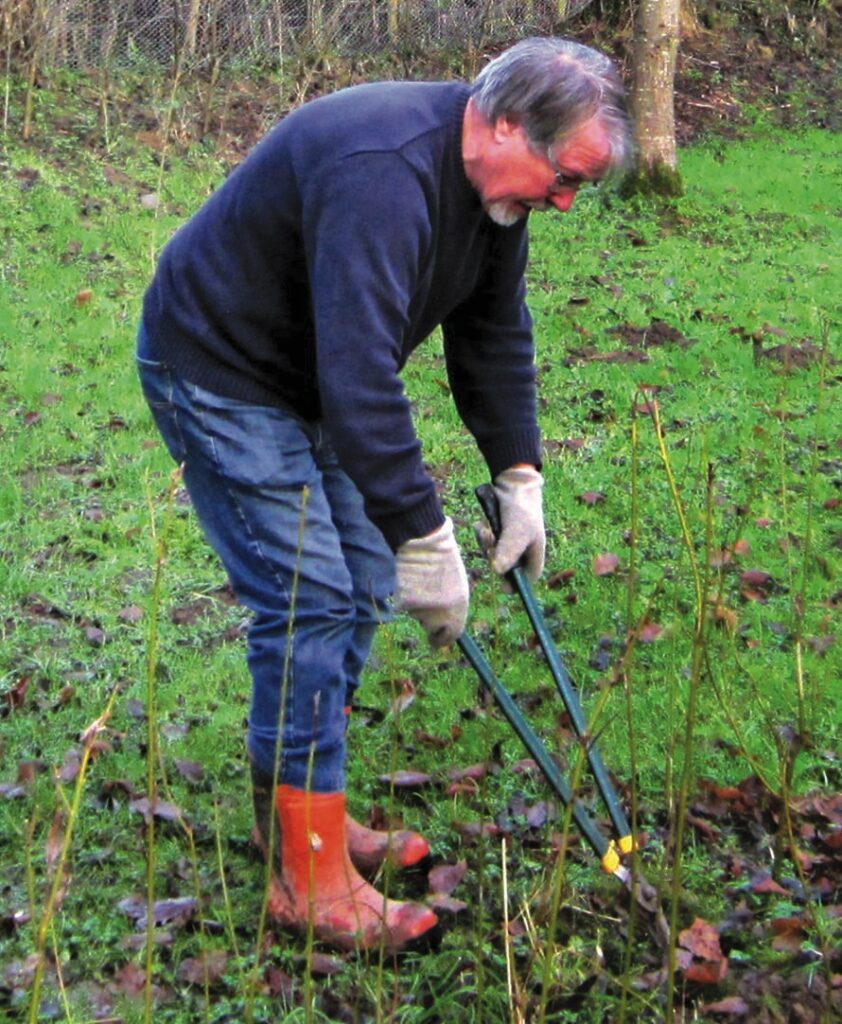
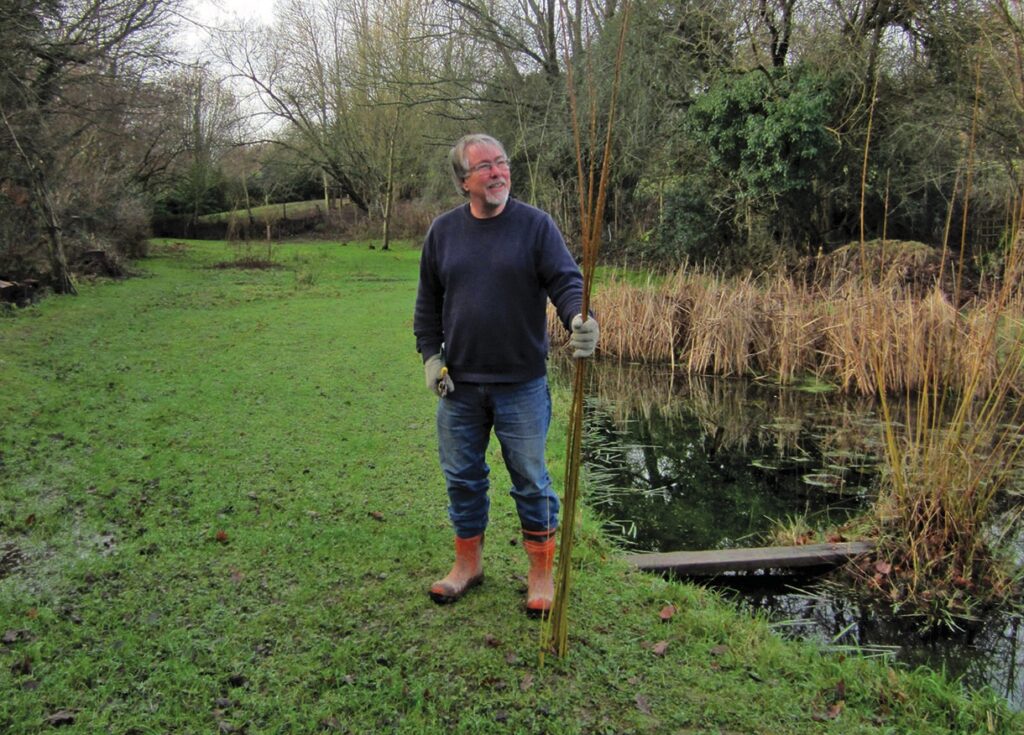
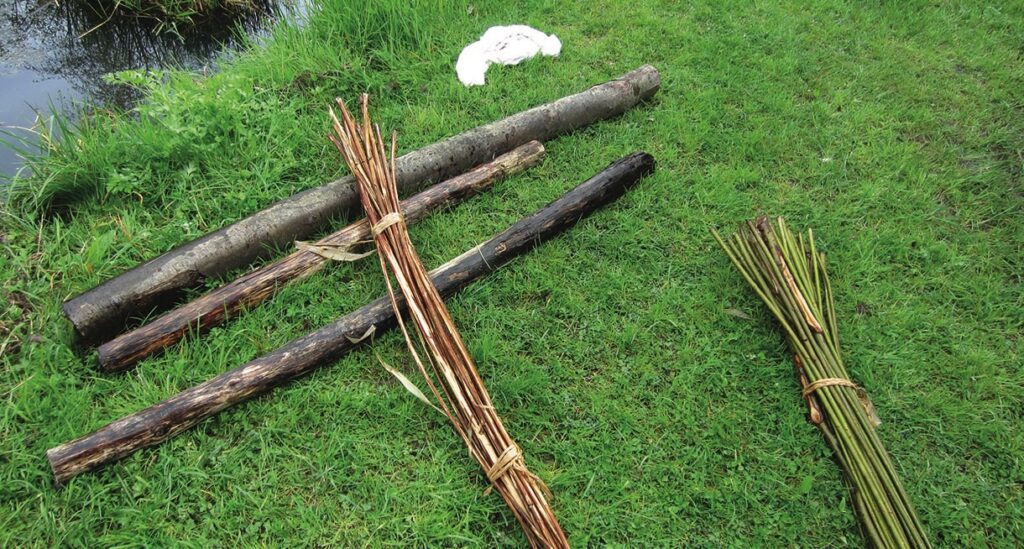
My first planted out willows were stunted by deer that broke into the meadow one night. Also, some younger osiers take up to three years to send out reliable straight strong stems – so don’t give up – but do cut back once a year once the leaves have fallen. You can see the difference if the plants are in a protected area. Here you can see some of my good straight harvest after just two years.
Using the osiers
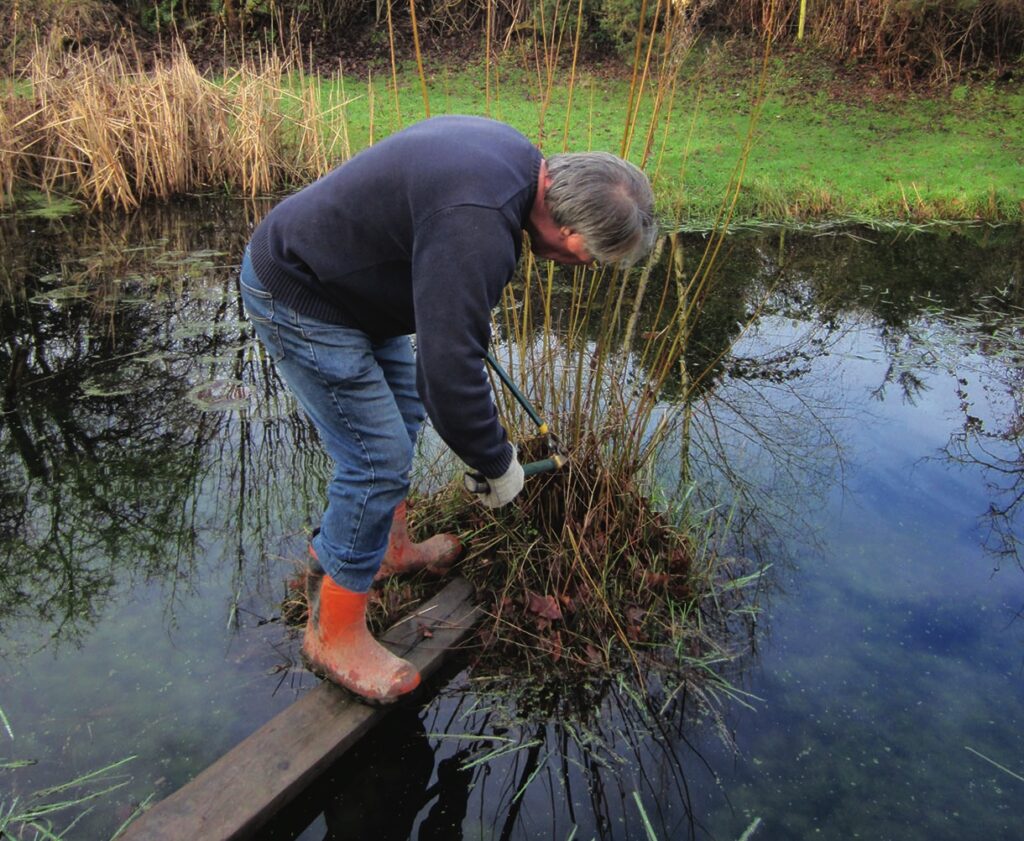
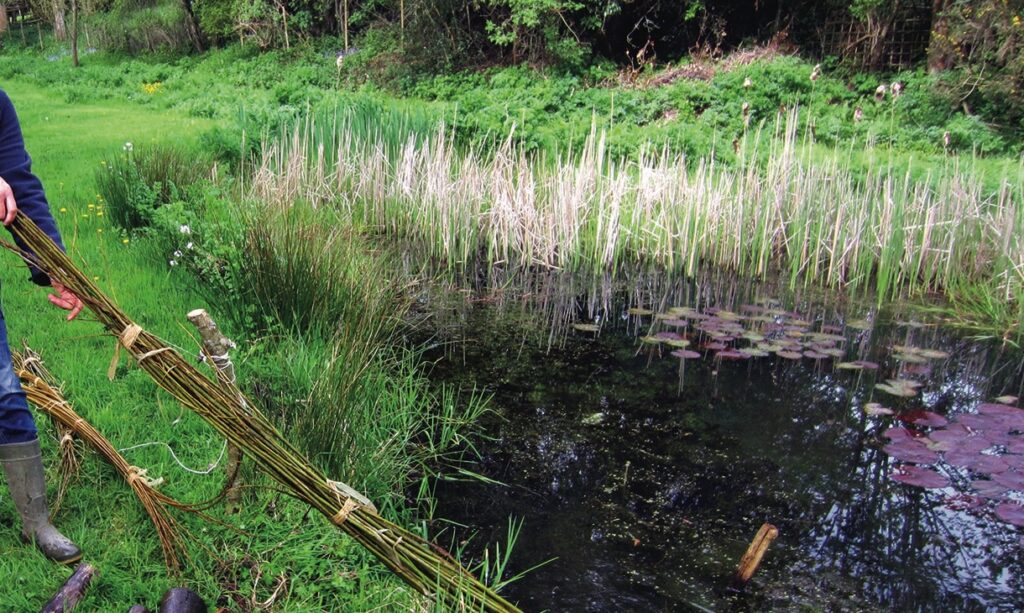
Before we use the stems for any kind of weaving we soak them in the pond (we’ve even used a bath for small items like wreaths). We find it ideal to soak them for a while – the rule of thumb we use is ‘a foot a day’. Then we sort the wands into sizes.
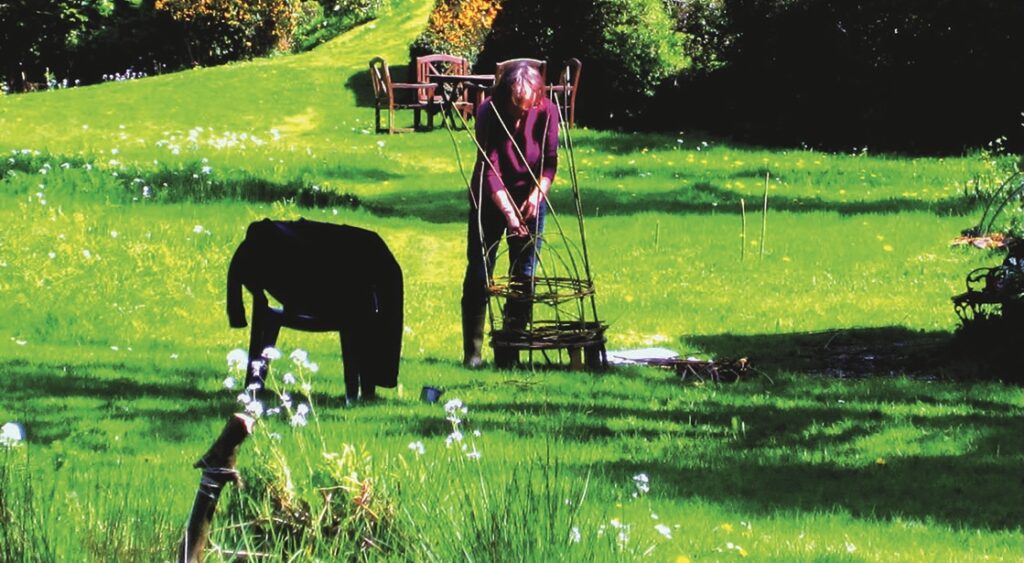
I won’t go into weaving techniques here, however here’s a working picture using our stems to make an obelisk. The uprights can be made of hazel (Corylus avellana) or even other straight willow regrowth – like young or pollarded crack willow (Salix fragilis). Here’s the finished obelisk in the garden.
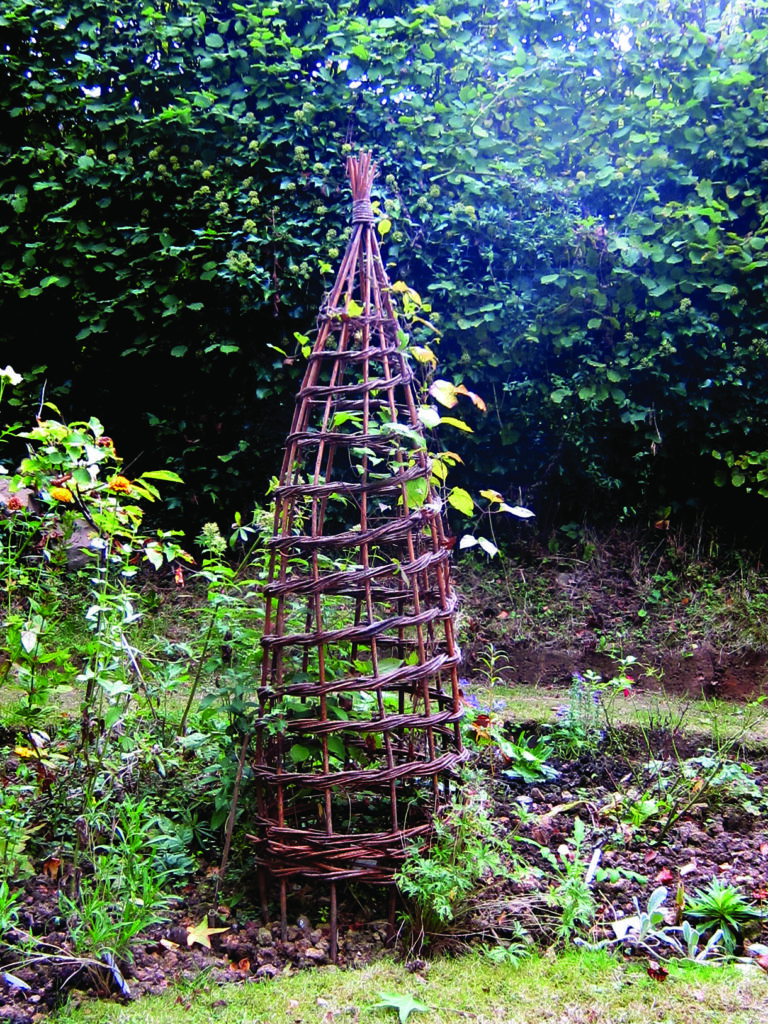
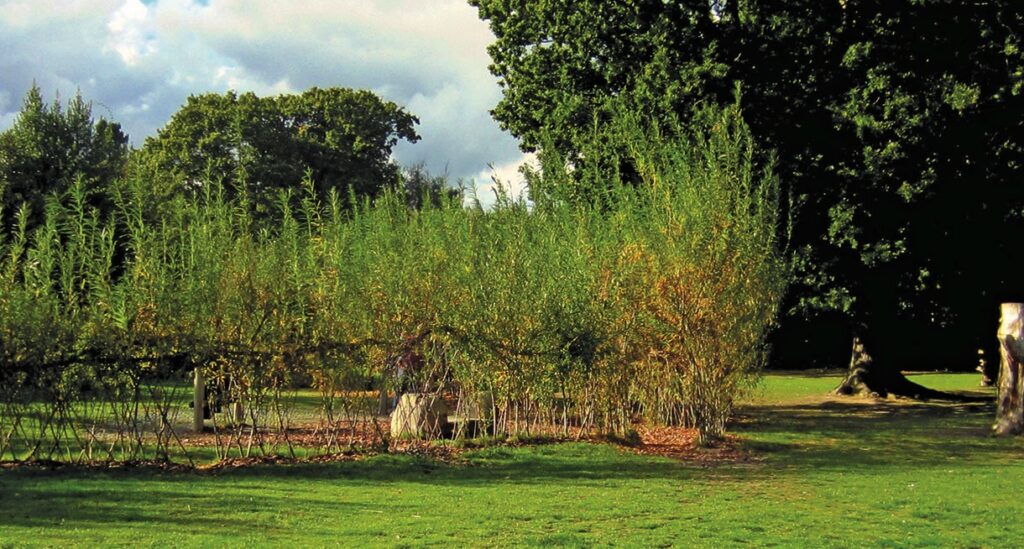
Of course, you can be more ambitious once you get good harvests going every year – like setting up
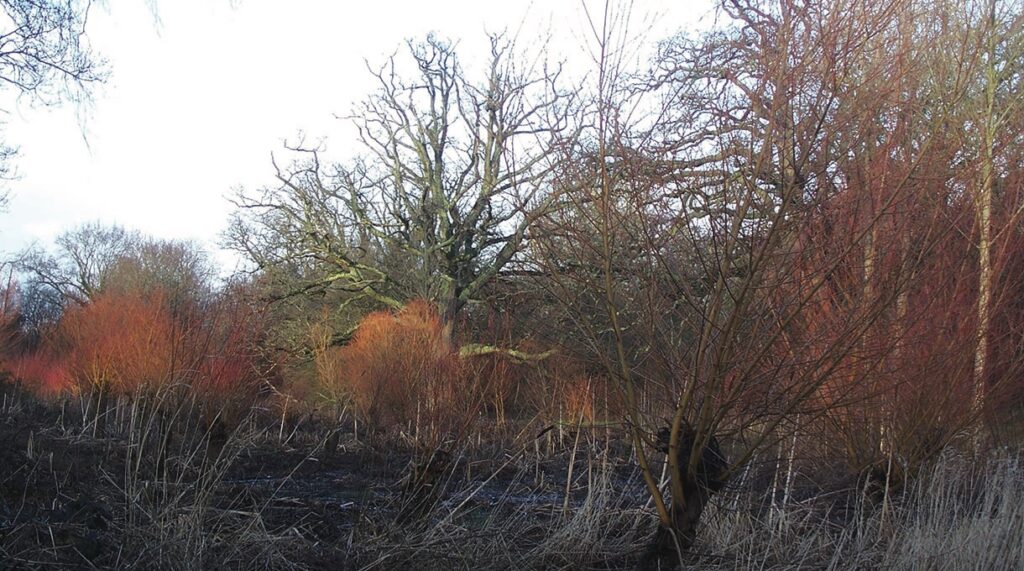
a living woven hedge and just look at the regrowth and all that future produce! So, I suggest you love your self-perpetuating willow wands as much as we do.