The Woodworkers Institute

We bring you the very best of woodworking!

“Make it with us”

Carving a fun door wedge

Peter Benson looks at carving a humorous and quirky doorstop
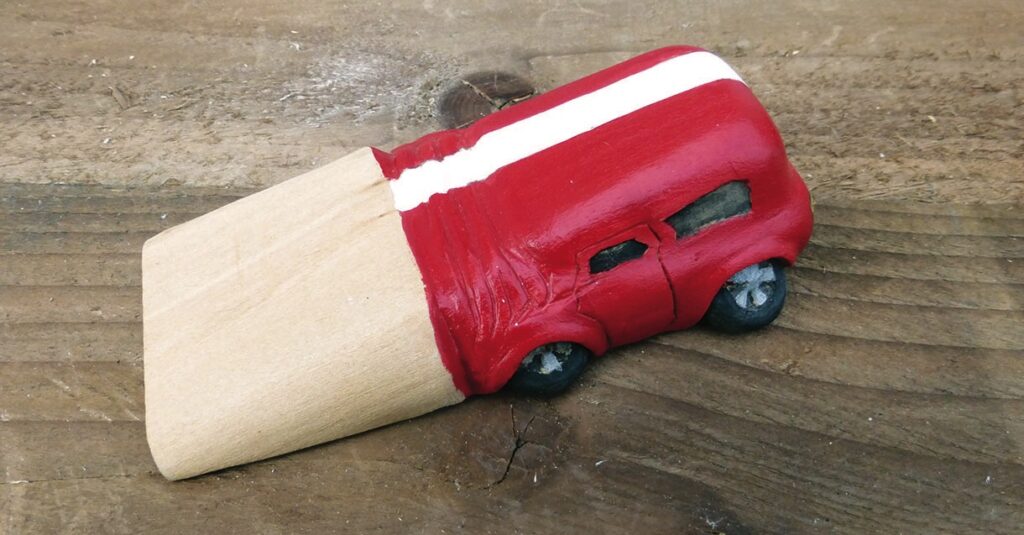
Toy car shaped like pencil on wood surface.

Two of the most irritating sounds in a household are a tap that is constantly dripping and a door that is ajar and keeps banging with each slight hint of a draught or breeze. We can’t do anything about the tap here, but we can help with a noisy door. The easiest way to do this is to use a door wedge that can hold the door in whatever position you desire.

The concept

From the design point of view, as long as the wedge will fit under the door, you can add whatever you like to make it more attractive. As long as the wide end is larger than the gap under the door and there is a wedge shape, anything goes. Usually something is added to the top of the wedge, perhaps a mouse or frog or something similar, but this requires a piece of wood that is quite thick and this is not always available. I have chosen a car disappearing under the door so you could start with that and then find a design of your own.

I have used a piece of lime (Tilia europea) 75mm wide, 40mm thick and 140mm long, tapering along its length. Your sizes may, of course, vary. So, before you start on this project you need to look at the door for which it is intended as the distance from the bottom of the door to the floor can vary considerably from door to door. For this design to look right the blank part of the wedge needs to be hidden under the door. Measure the clearance between the door and the floor and cut your block so that this distance is the same as the thickness of the block approximately halfway along its length. You can check this again later before you do any painting.

There is a wide range of variations that you can include in this project. The one shown is pretty basic and simple with a minimum of detail for someone who would like a quick project. For the more adventurous carvers amongst you, a more careful study of a particular car model and the detail involved can make the whole project much more personal and can make a gift with a difference.

Alternatively, if you are not into cars, why not carve a wedge to resemble a piece of cheese or even a slice of cake. The carving of these is very simple and you can really go to town on the painting. Carving doesn’t always have to be meaningful, it can just be fun –  as in this project.


Things you will need

Tools:
• Personal and respiratory protective equipment
• Safety glove
• Knife
• No.5, 7 or 8mm 
• No.3, 3mm

Materials:
• Lime (Tilia europea) 75 x 40 x 140mm (adjust for size required)
• Abrasives down to 240 grit
• Finishing paints of your choice
• Varnish


Drawing
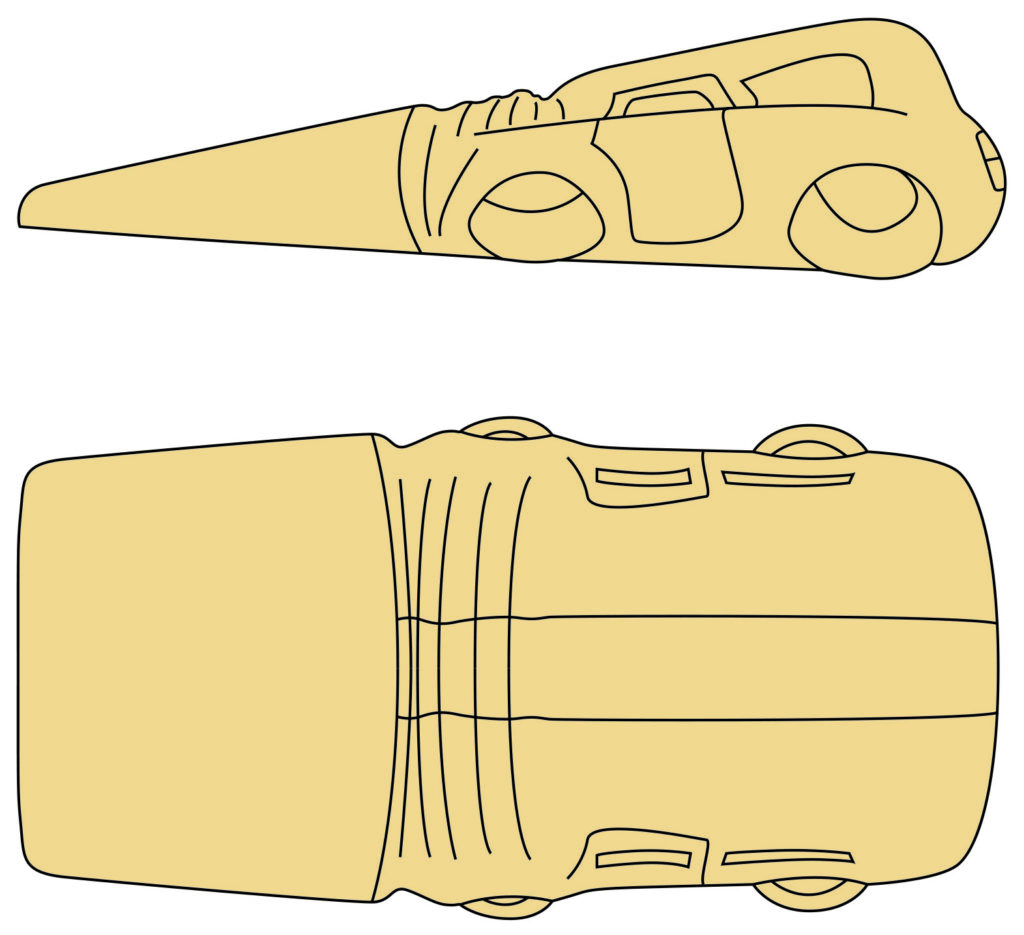
Side and top view of a car illustration.

The project

Wooden wedge on stained workbench.
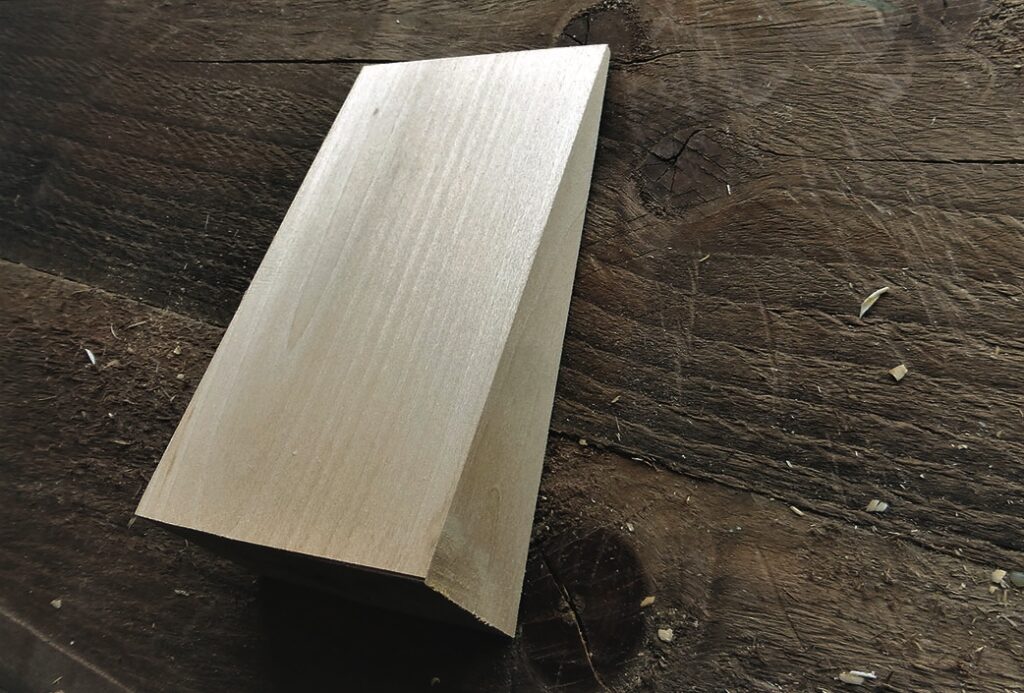
1. Cut out your timber block to a size to suit you. It would be a good idea to sand the block as smooth now as you can as you will only be carving part of it
Woodblock with sketched car design on top surface.
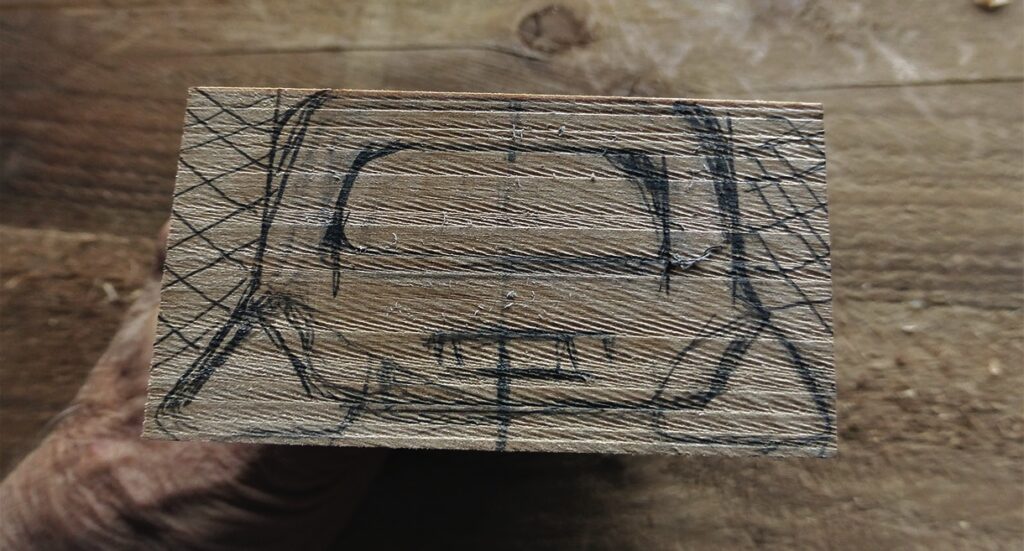
2. Draw the outline of the back of the car onto the end of your block – it doesn’t really matter which way up you have the block. Note where I have marked the waste wood
Person carving wood with hand tools
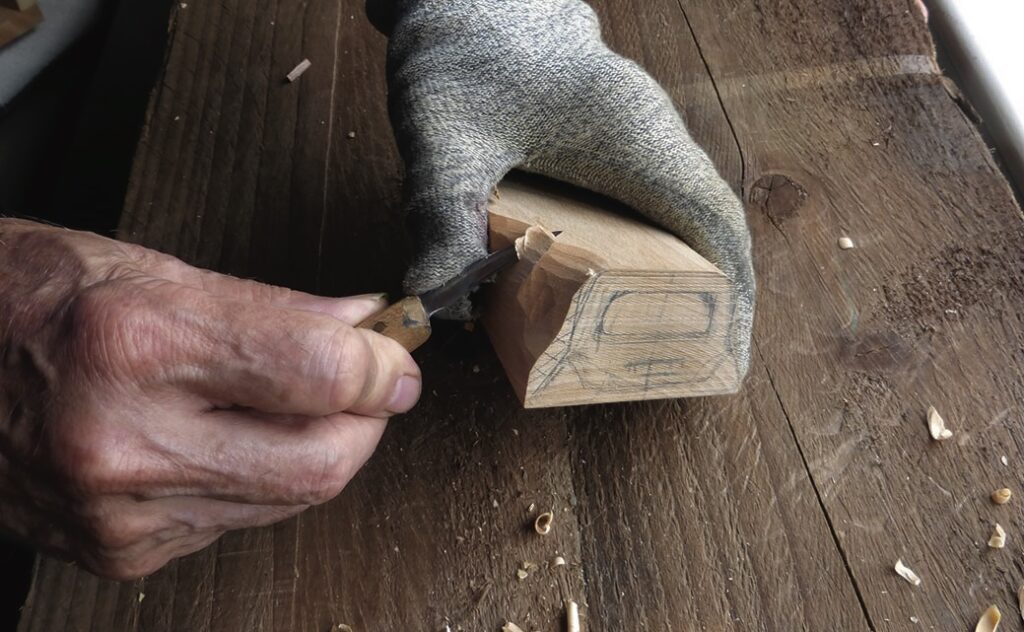
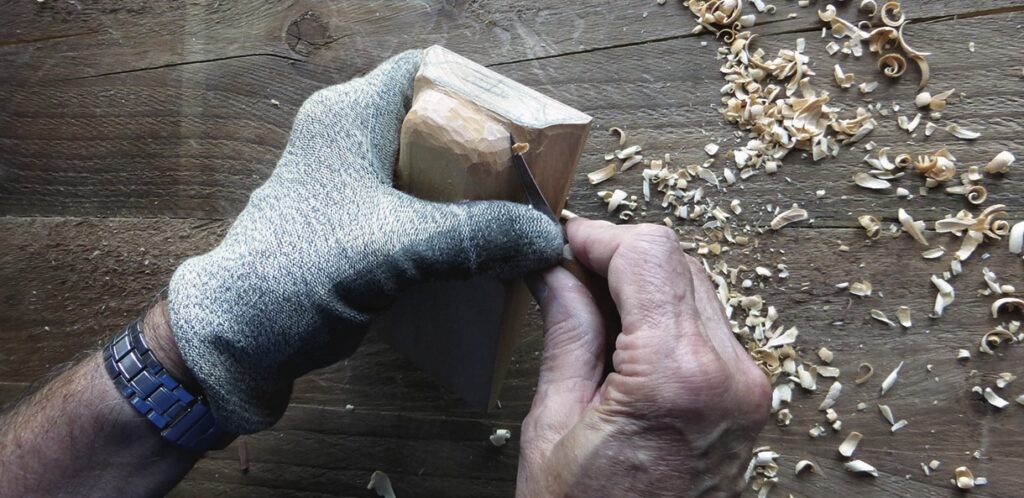
3. Remove the waste wood with your knife down to the outline marked for a distance of around 50mm from the end you have marked
Hand holding carved wood block with markings
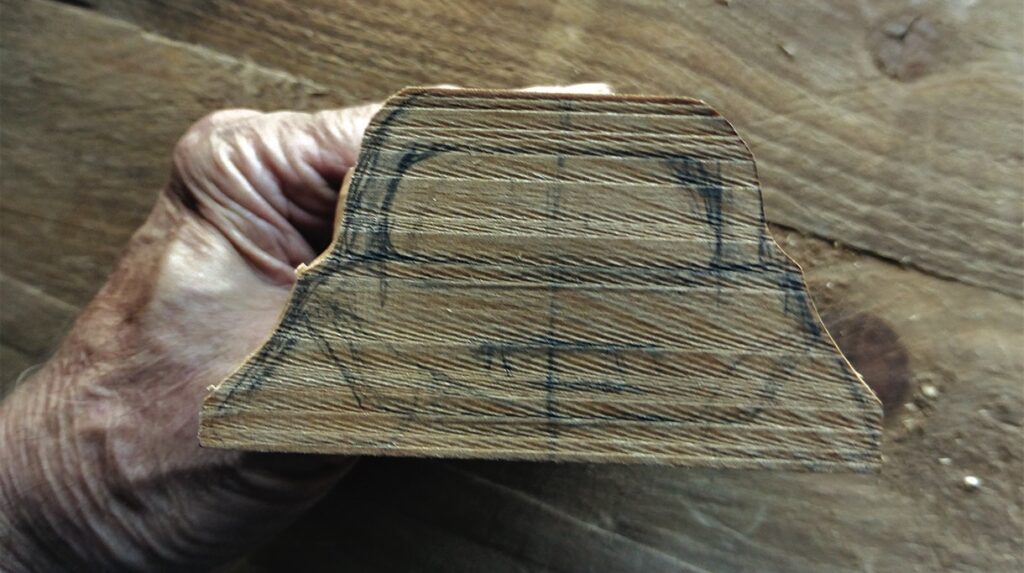
4. The bottom should remain the same depth and the top will taper downwards as you go along the block
Person carving wood with gloves and tools.
5. Round off the top of the back as shown and blend in with the sides
Close-up of carved wooden object in progress
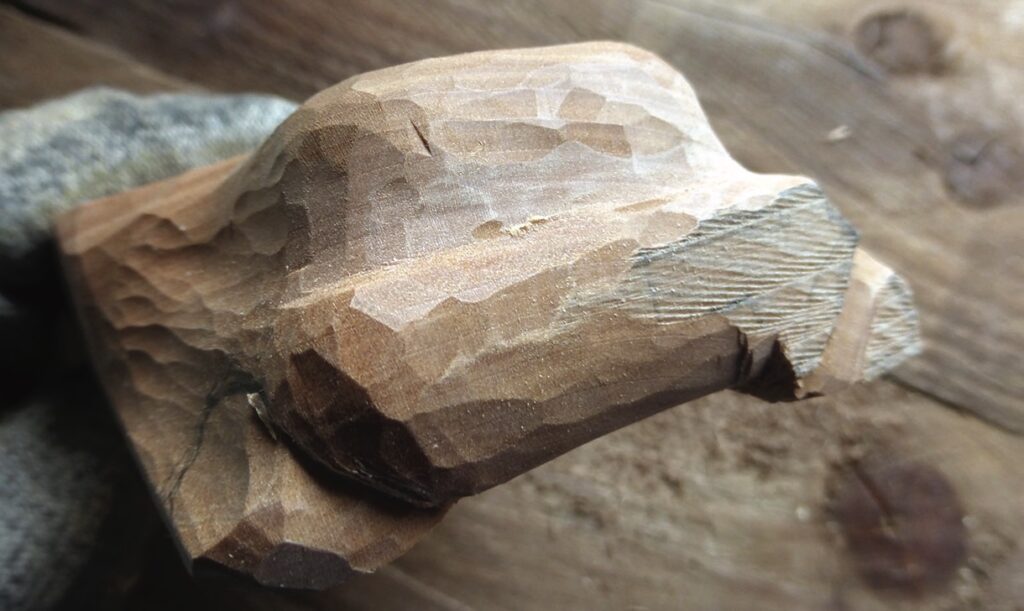
6. Repeat on the other side. Shape the lower part of the rear end around to the back wheels on each side, checking that the overall shape is symmetrical
Gloved hand carving wood with a small knife.
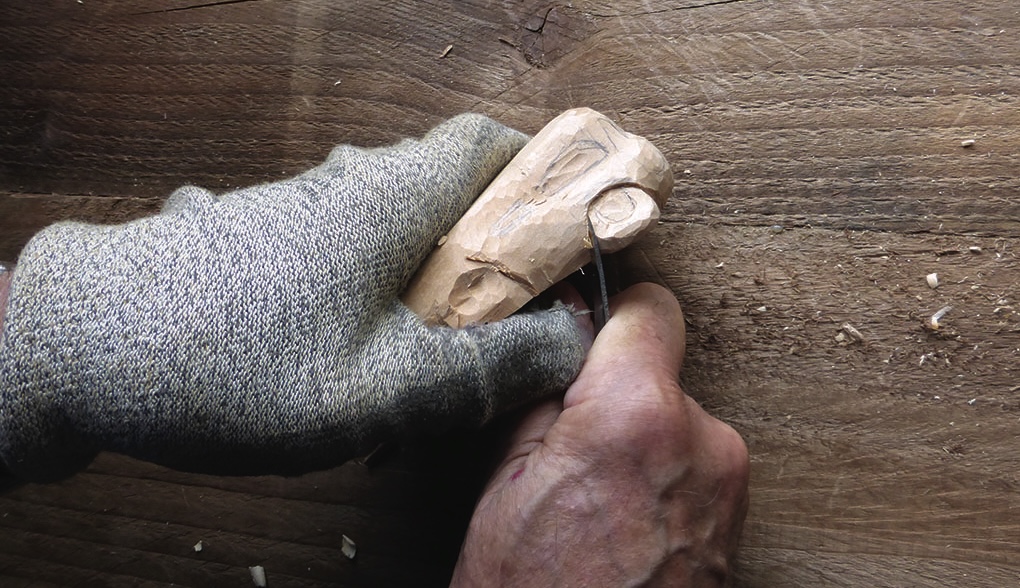
7. Roughly shape both back wheels checking that they are the same size – the angles need not be the same. Don’t remove any wood from the underside of the car body as this needs to rest firmly on the floor or carpet. When you are happy with the shape and size of the back wheels, repeat the process with those at the front 
Wood carving with precision hand tools.
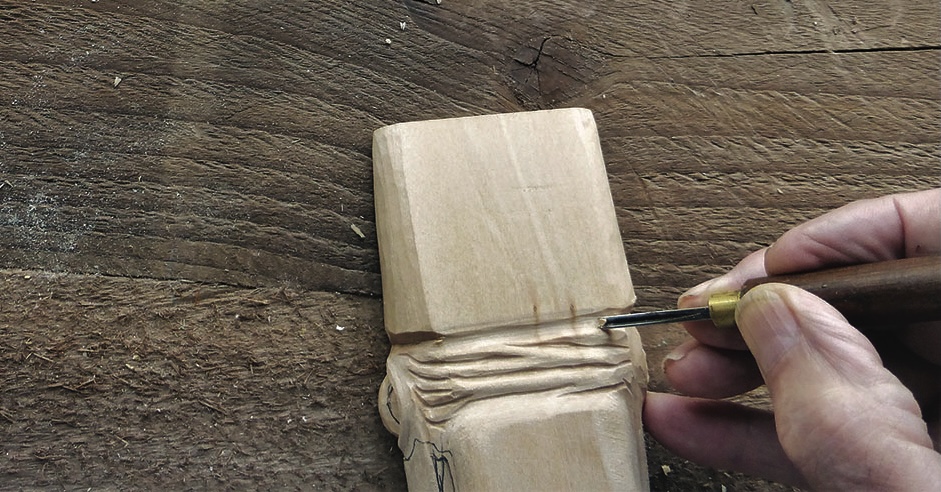
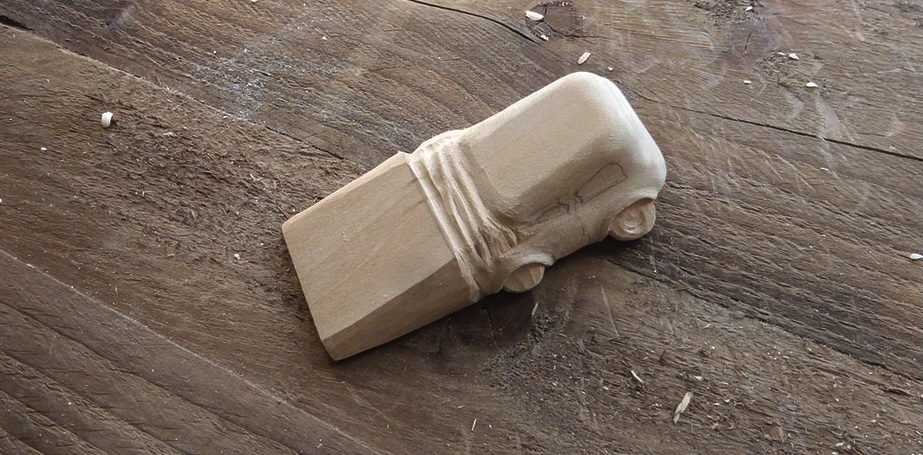
8. Using a small gouge or your knife you now need to cut in the wrinkles on the front of the car. You don’t have to be too careful with these as they are supposed to be the result of a car crash – so can be almost any shape. Just make sure your cuts are clean without any stray chippings
Wooden toy car carved from block on wood surface.
9. Rough sand the body so you can check the overall shape
Wooden car figure carved from axe handle.
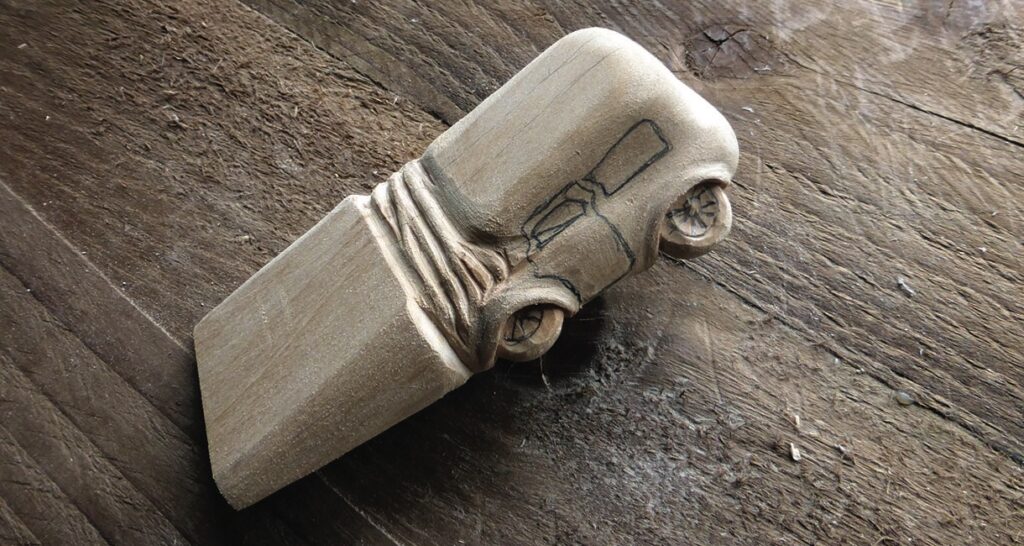
10. Draw in the windows and doors on both sides and the back, making sure that the left and right sides are the same. As the roof is squashed at the front, draw the lines for the bottom of the windows parallel to the floor and the tops sloping downwards towards the front
Wooden car carving on table surface
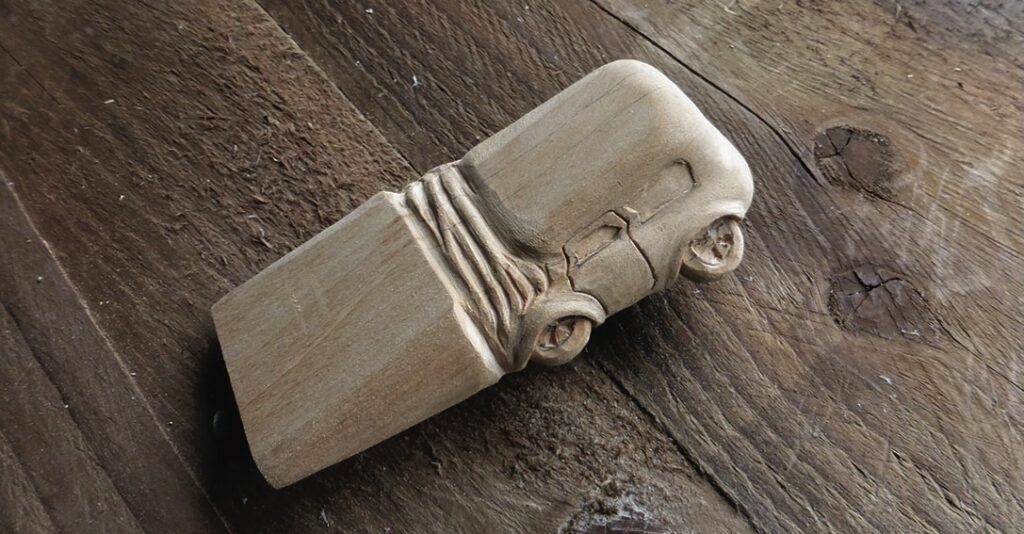
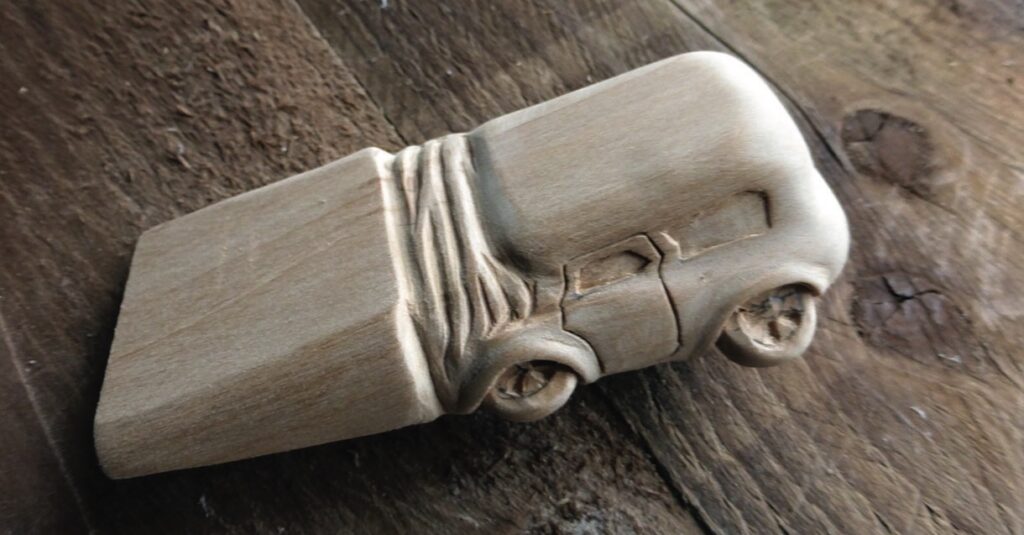
11. Using your knife, carefully cut in the outline of the doors and windows. With a small No.3 gouge, take out the wood within the window outline to a depth of around 1mm or less. It needs to be enough to show a clear outline of each window
Wooden carved car doorstop on wooden surface.
12. You now need to give the whole carving a thorough sanding to remove any scratches and to prepare it for painting. If you don’t want to paint it, after sanding, give it a coat of varnish all over
Toy car soap on wooden surface
13. Paint the car in the colours of your choice and give it an overall coat of varnish
Novelty car doorstop in use on carpet
14. You can add as much or as little detail as you wish

Leave a Reply

Your email address will not be published. Required fields are marked *