The Woodworkers Institute

We bring you the very best of woodworking!

“Make it with us”

Easter Island Moai

Mark Gough carves this unusual statue

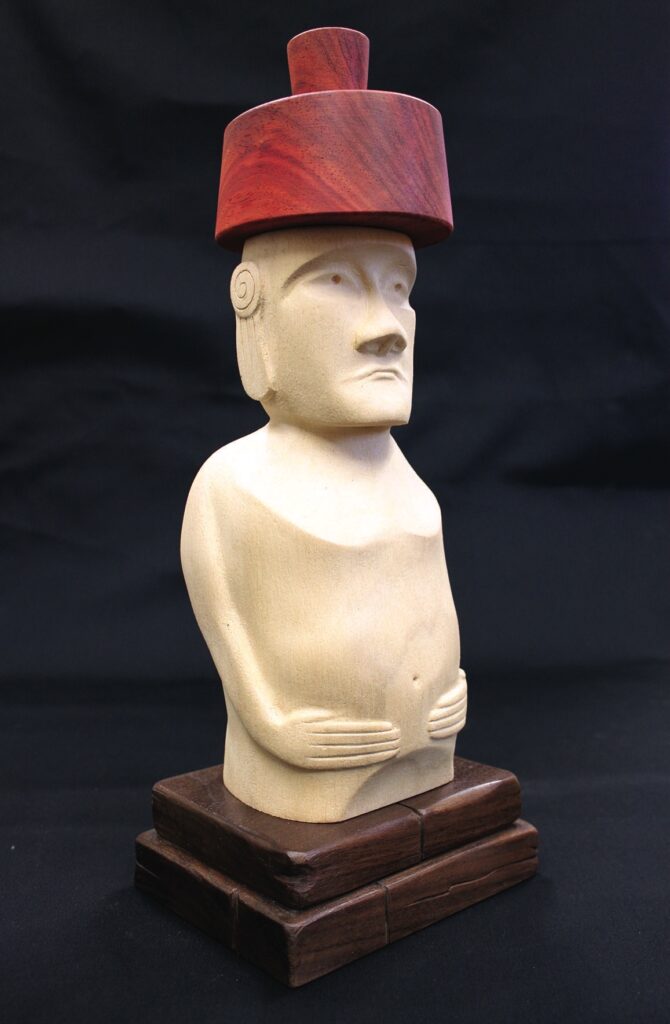
The statues of Easter Island, or Moai, have fascinated people for centuries –  in particular with regard to how they were created and erected. It is now understood that they were hewn from quarries of volcanic rock then detached and transported to their final resting place with ropes and rollers. For this project I have chosen to do my representation of a Moai. 

None of the statues are identical as each one is said to represent a deceased chief or person of importance and my inspiration has been drawn from a number of different ones, rather than making a copy which may be disrespectful to the Rapa Nui culture. This is also a way of paying homage to the original craftspeople themselves. 

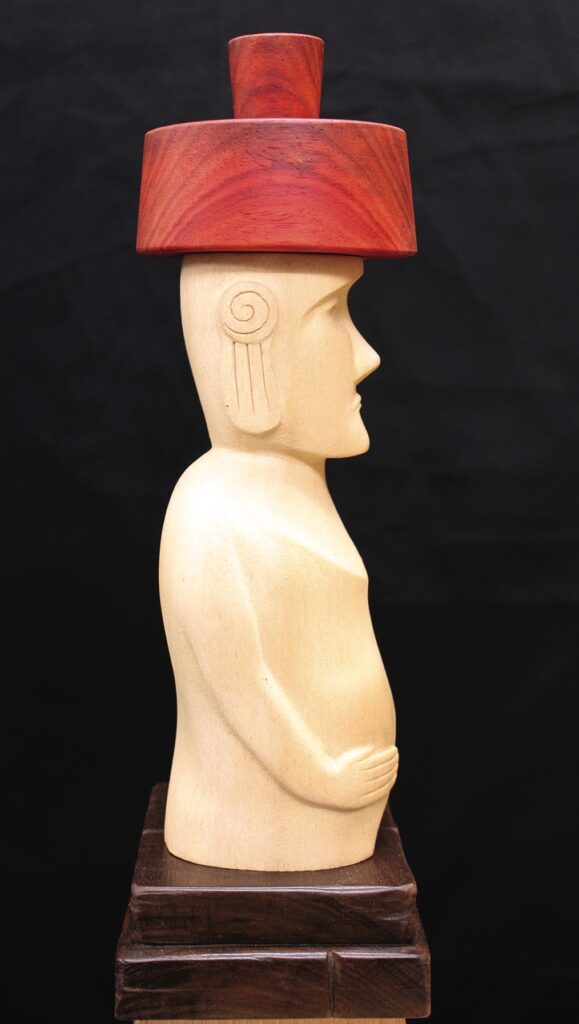
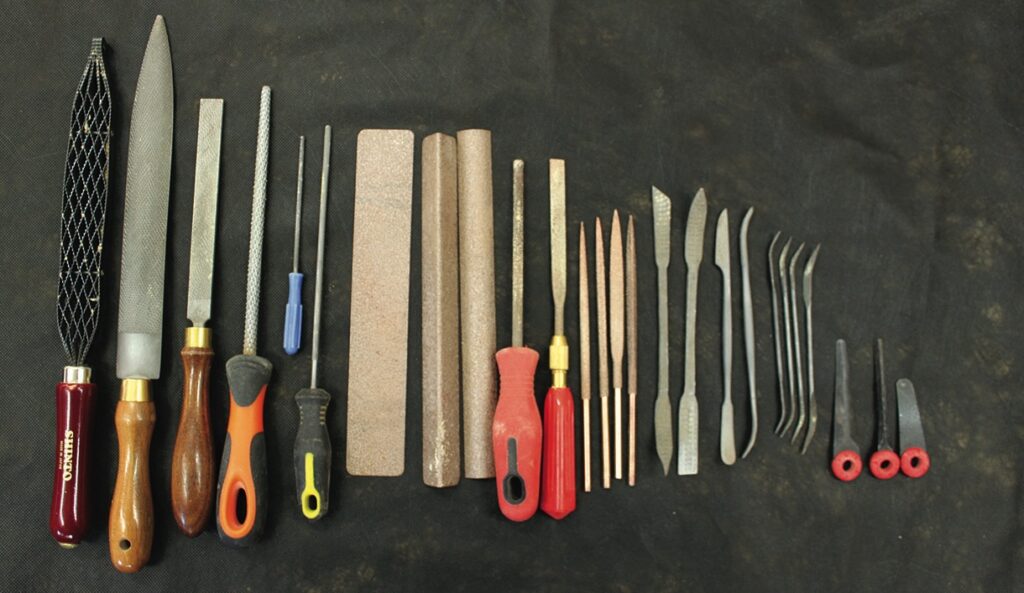
To make it interesting I have chosen to use rasps, files and rifflers, along with a few selected rotary burrs and some other types of file to create the figure, but you can, of course, use carving chisels. It is an excellent project for the beginner to experience carving in the round without the outlay on lots of gouges, although some rasps can be quite expensive. It is also a different discipline allowing the master carver to let loose and be creative. I have chosen jelutong (Dyera costulata) for the main body because of the more or less nondescript grain pattern which lends itself to the original stone texture – and the fact that it is a very easy wood to work with. The hat has been fashioned from padauk (Pterocarpus soyauxii) and the plinth, known as an ‘ahu’, from American black walnut (Juglans nigra). Try to add your own representation of the figure – for example, try eyes closed or a thicker or thinner mouth or flared nostrils. You could add some surface decoration to the hat for instance. Experiment and have fun.

Things you will need

Tools:
• Personal and respiratory protective equipment (PPE & RPE)
• Bandsaw
• Knife
• V-tool
• Japanese saw rasp
• Half round, flat & round rasp
• Selection of coarse & fine rifflers
• Selection of needle files
• Tungsten carbide coated files
• Japanese finger files
• Handsaw
• Rotary carving unit tool
• Bullnose, flame & spherical rotary burrs

Materials:
• Body: Jelutong 140mm x 120mm x 325mm
• Hat: Padauk 100m x 160mm x 50mm
• Plinth: American black walnut (150mm x 125mm x 50mm
• 40-240 grit abrasive cloth or paper
• Steel wool
• Dead flat acrylic varnish
• Dark paste wax
• Epoxy adhesive

Drawings


Selection of tools

Cutting out
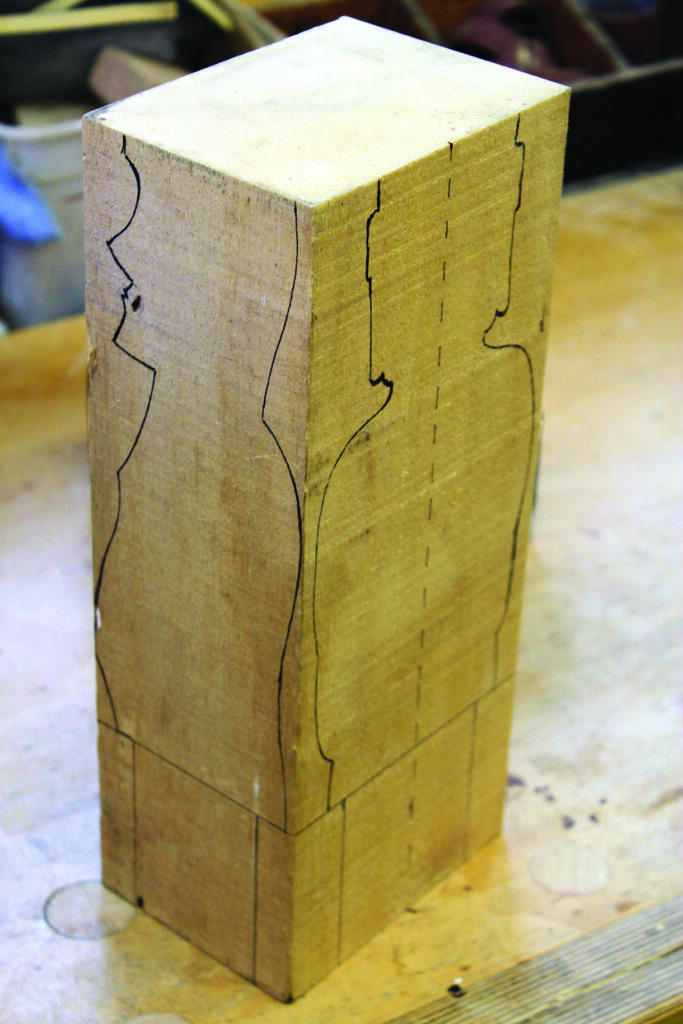
1. Using the pattern provided mark the profile on one side, then draw in the outline on the back of the blank. If you are using a coping saw or bandsaw with a thin narrow blade to cut the pattern out, mark both profile and outline on opposite sides to guide you. Allow 50mm to 75mm excess on the bottom of the blank for clamping
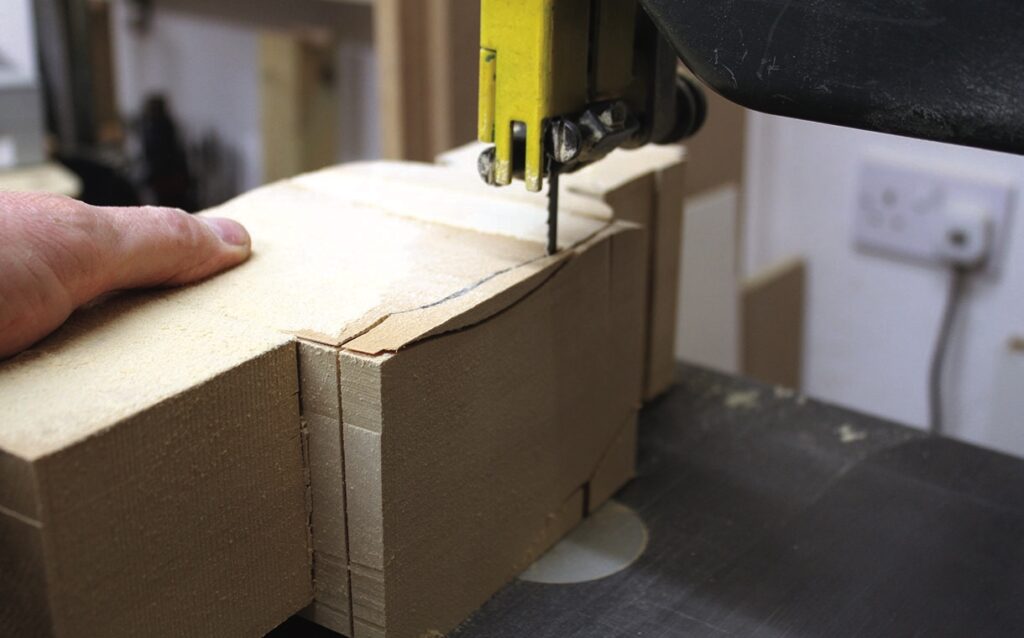
2. When cutting with a bandsaw, try to make as few cuts as possible. Go slow and keep your hands and arms out of the line of blade. You may have to make relieving cuts to cut tight, curved areas. If you do not have a bandsaw or coping saw, carve away the waste areas and use your template as a guide
3. Stick the larger pieces back on to the blank with double-sided tape for support when cutting the outline
4. Make sure the face side is flat then cut the outline out on the bandsaw. Steps 2, 3 and 4 can be done with a coping saw or by cutting down to the lines with a handsaw and chiselling the waste away. If you use this method clean both profiles up with a half-round rasp before moving on to the next step. Cut back the bottom section for clamping
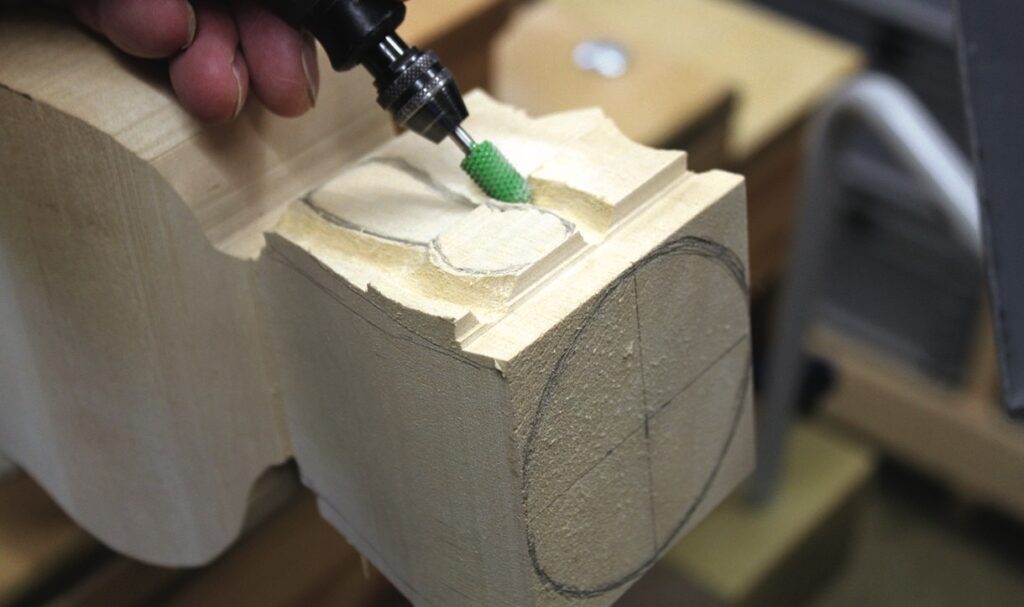
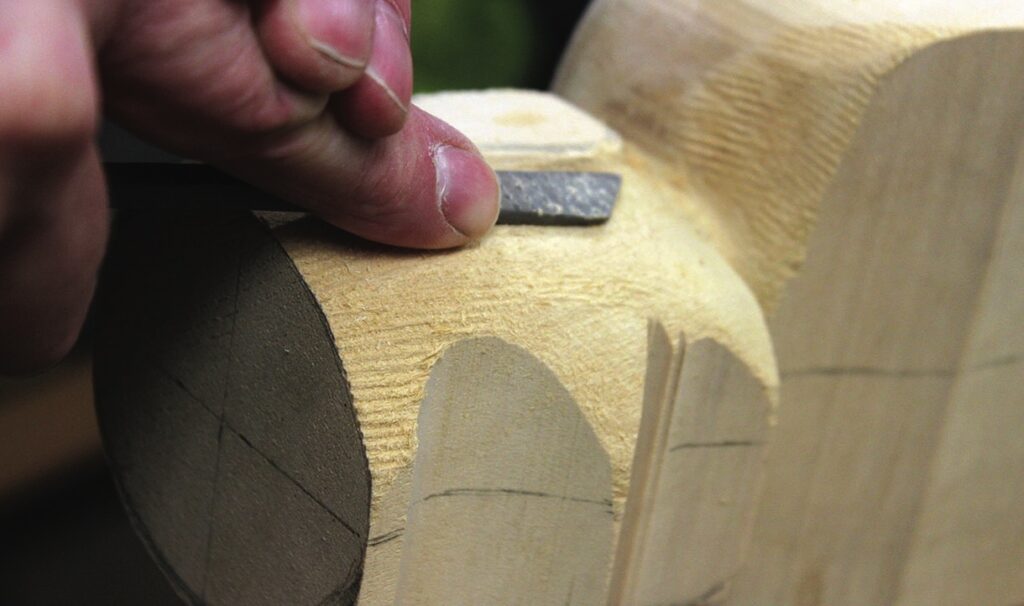
5. Draw in the shape of the ears and top of the head, then cut a groove on the outside of the line with a bullnose rotary burr

Warning When using rotary carving units with burrs and other cutters always wear suitable eye/face protection and suitably rated dust masks. There is a risk of chips of timber flying towards you and dust is a hazard so it is advisable when power carving to have dust extraction too. Also, make sure you work securely and keep your fingers and body parts out of the line of the burr should it skid.

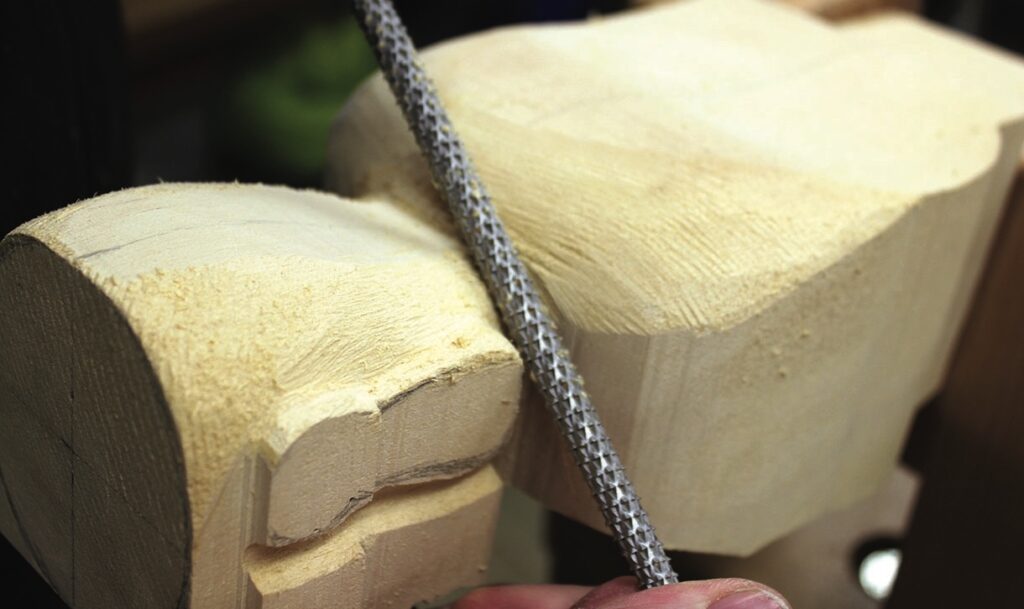
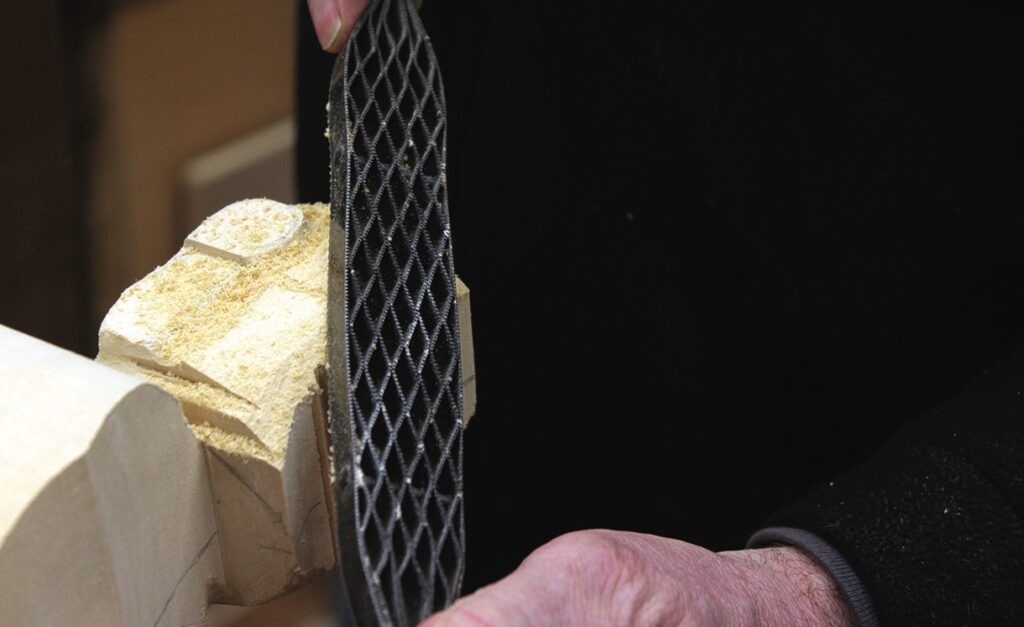
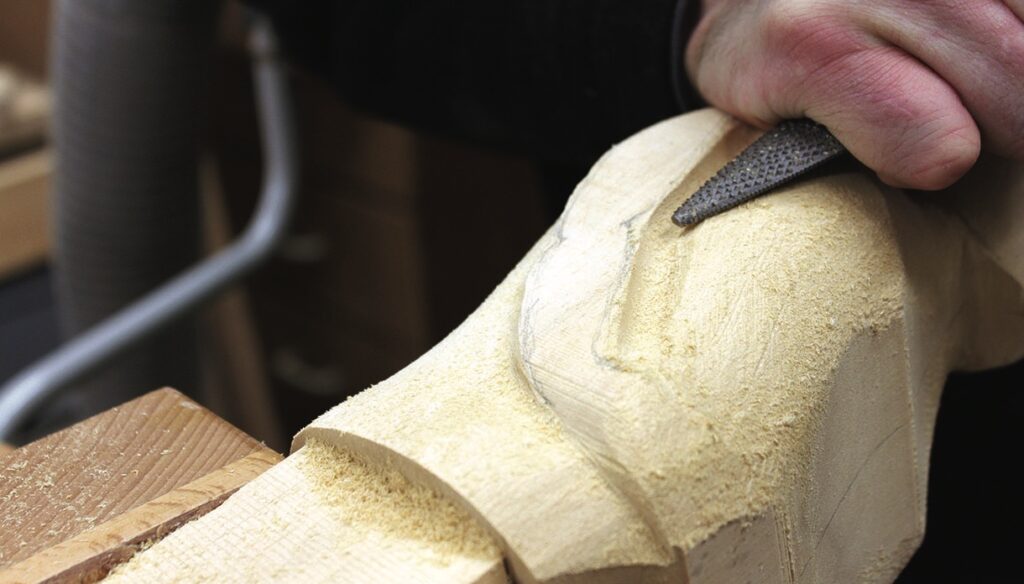
6. Now, mark vertical centrelines back and front, then start to round off the back of the head and shoulders with a Japanese saw rasp and half-round rasp or similar suitable tool
7. Use a round rasp to shape the back of the neck. Sand out the tool marks with 40 grit sandpaper and repeat this periodically throughout the process
8. Draw in the jawline underneath the chin. Once marked, round off the front of the head, face and front shoulders using the half-round and saw rasps
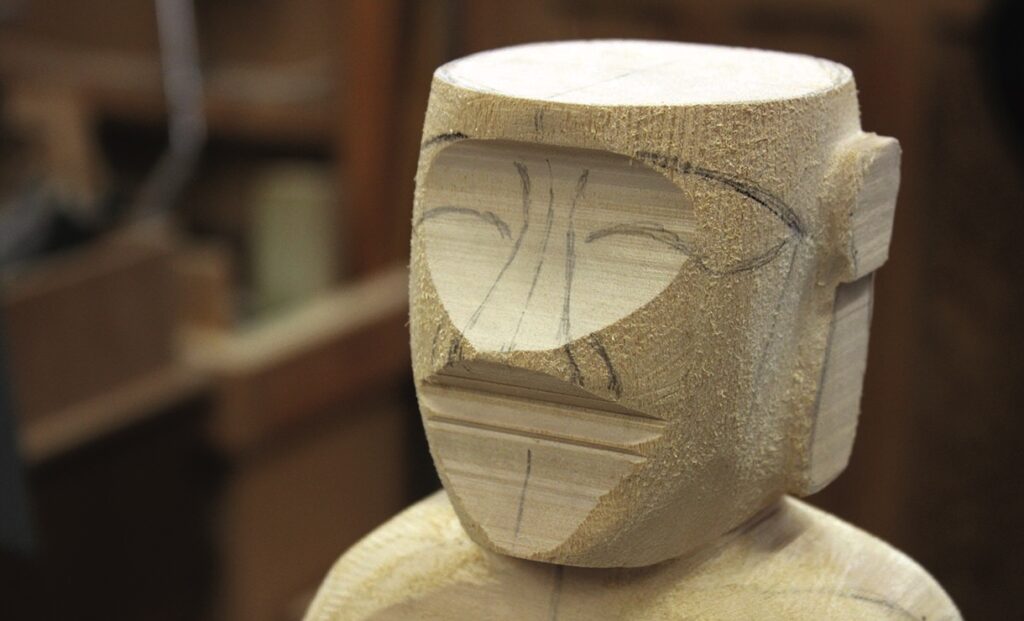
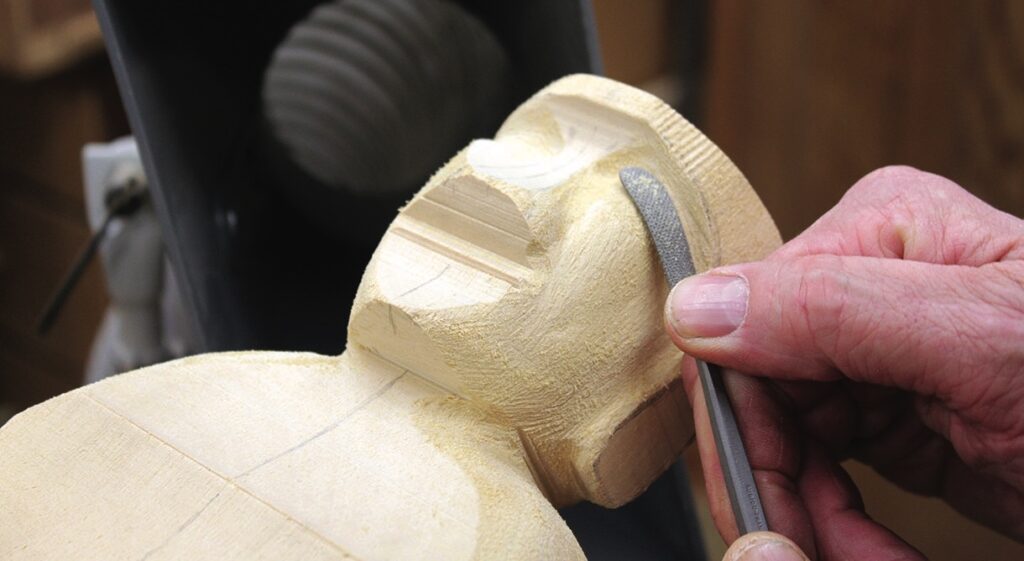
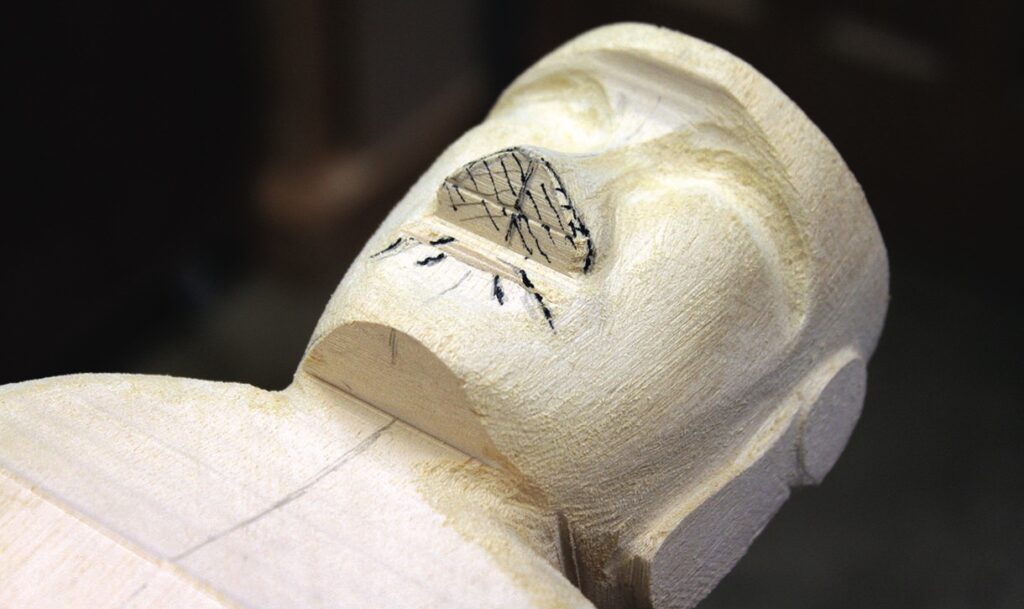
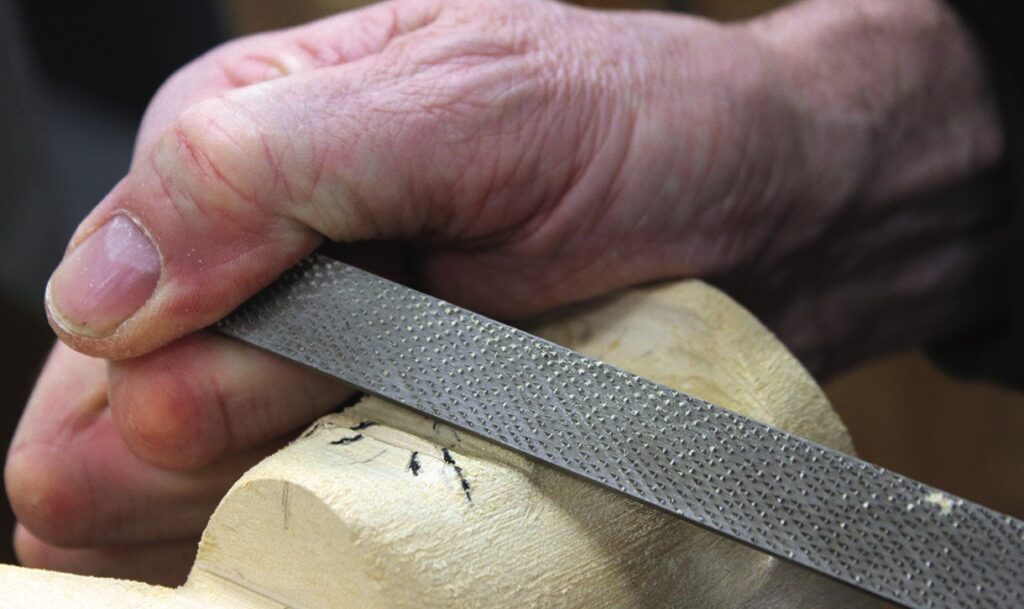
9a. Use a coarse, flat riffler to cut in around the ears. Then draw in the brow line and face detail. Using a bullnose burr and riffler file remove the waste to reveal the features
9b. You may also wish to use other shaping tools for this step
10a. The eyes can be shaped shut or open, whichever you prefer
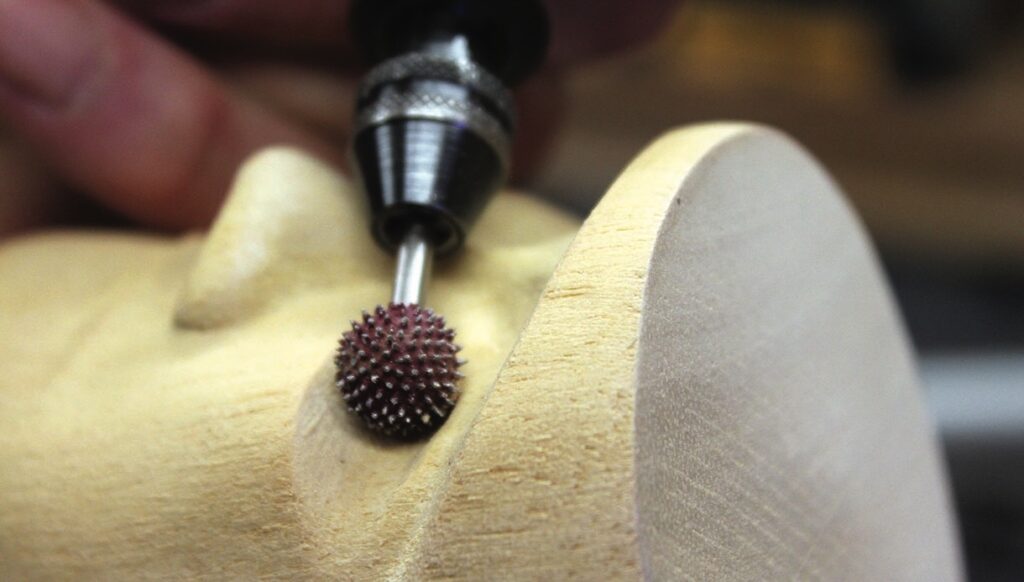
10b. To open the eyes out use a spherical burr
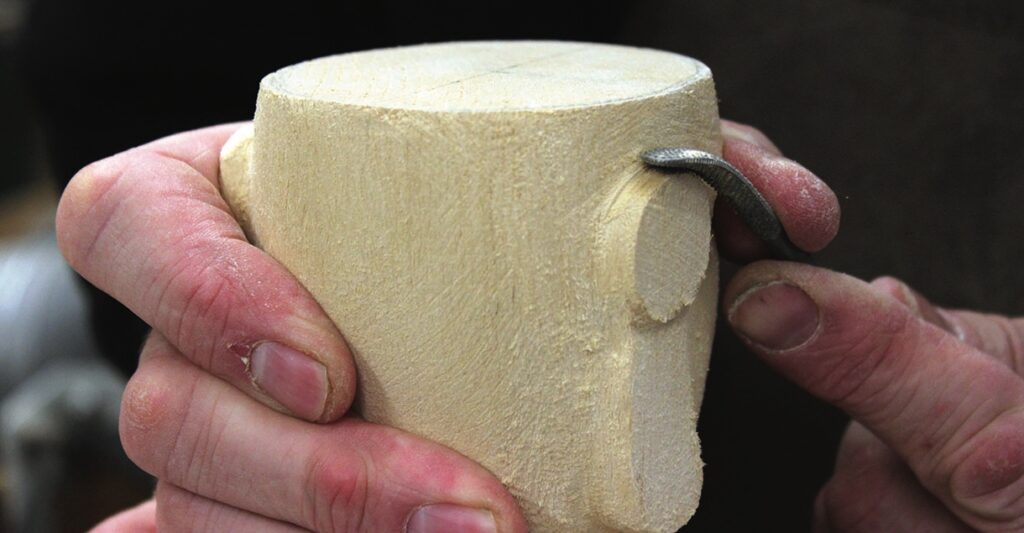
11. Use a leaf-shaped riffler to clean up the ear detail
12a. Draw in the mouth lines and underside of the nostrils. These should taper up a bit from the centre to the edge each side
12b. Use a flat rasp to shape the underside of the nose
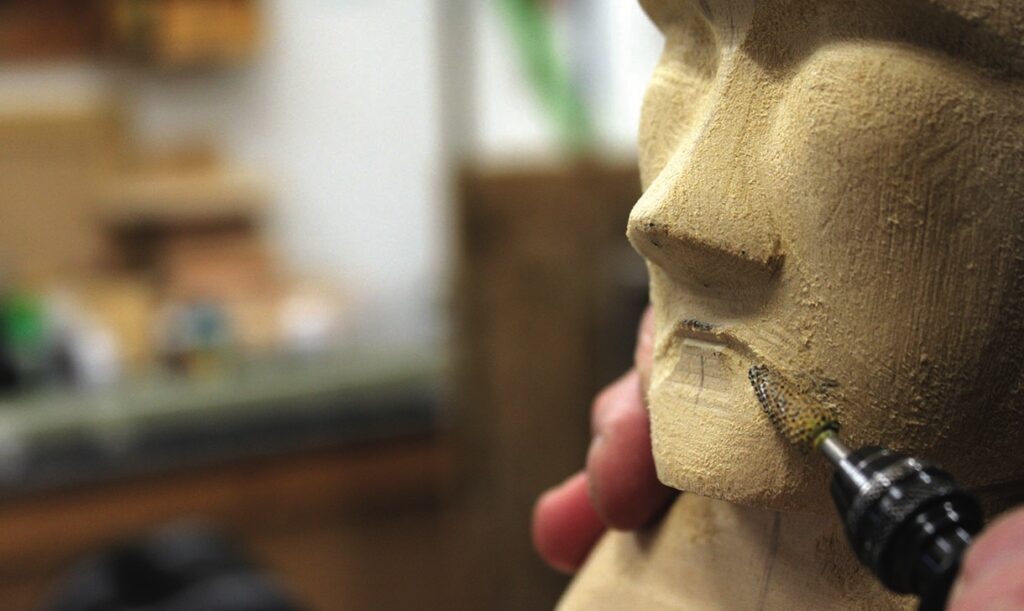
13. Use a small flame burr to shape the mouth, then refine the lips with a V-tool and needle files
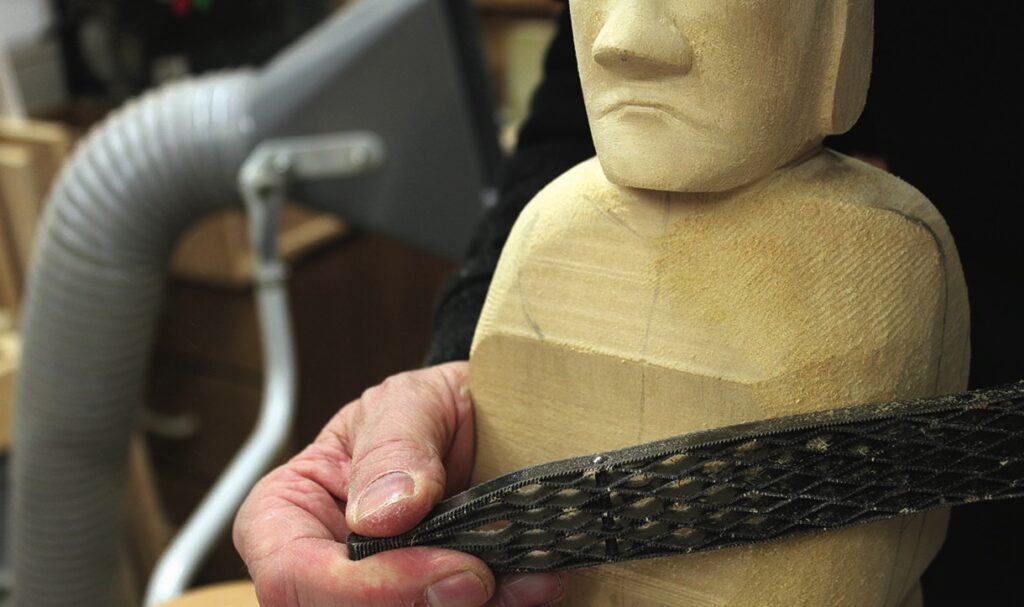
14. Use a saw rasp to round over the bulk of the body front and back
15. Draw in the arms and cut round the outside of the lines with a bullnose burr, then cut back the body with a half-round rasp
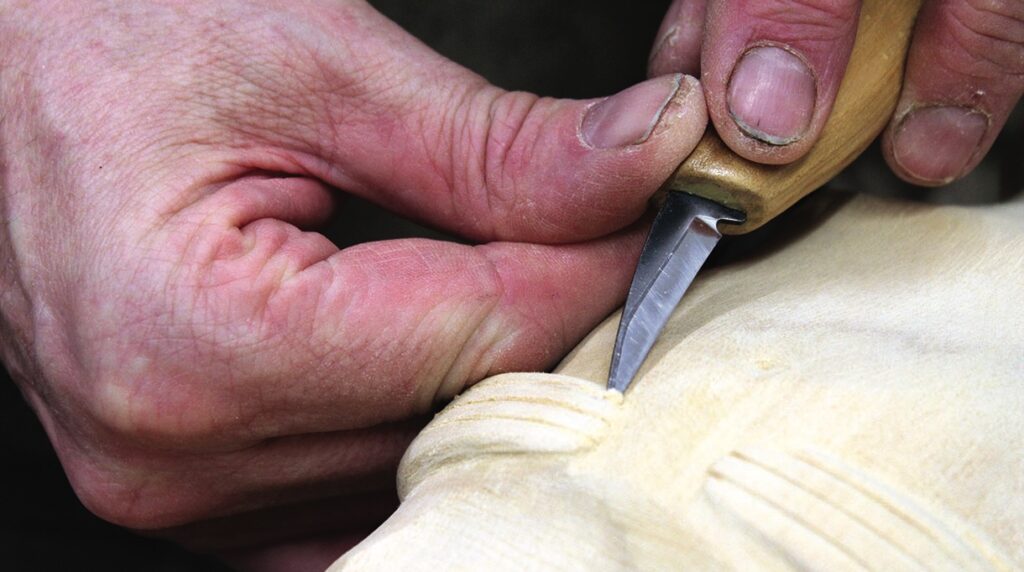
16a. Refine the body shape with rasp and rifflers, then cut in the hand shape with a leaf-shaped riffler and reveal the fingers with a V-tool
16b. Open out the grooves with needle files and sand the edges. Use a knife to clean up
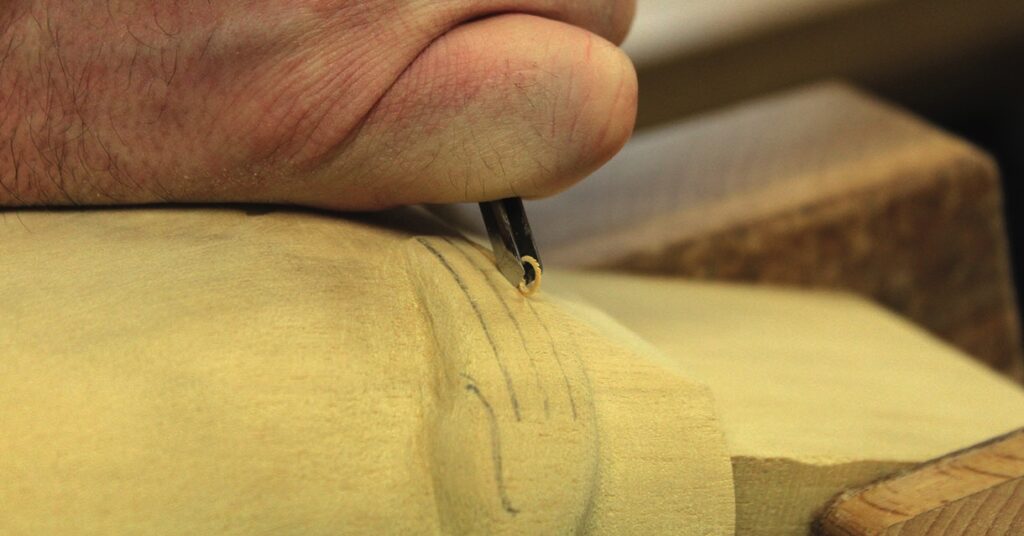
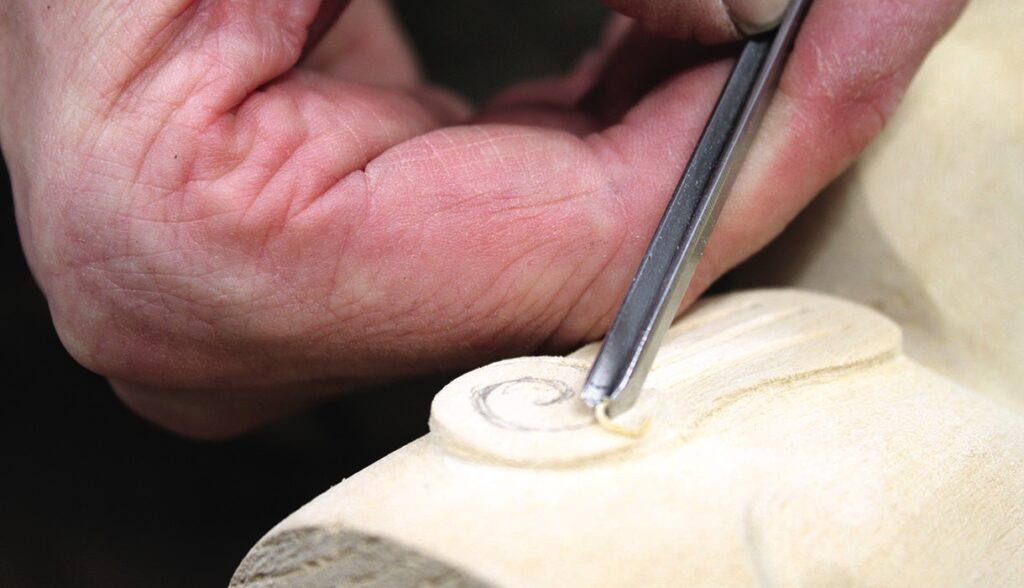
17. Cut in the ear detail with a V-tool

The hat & plinth
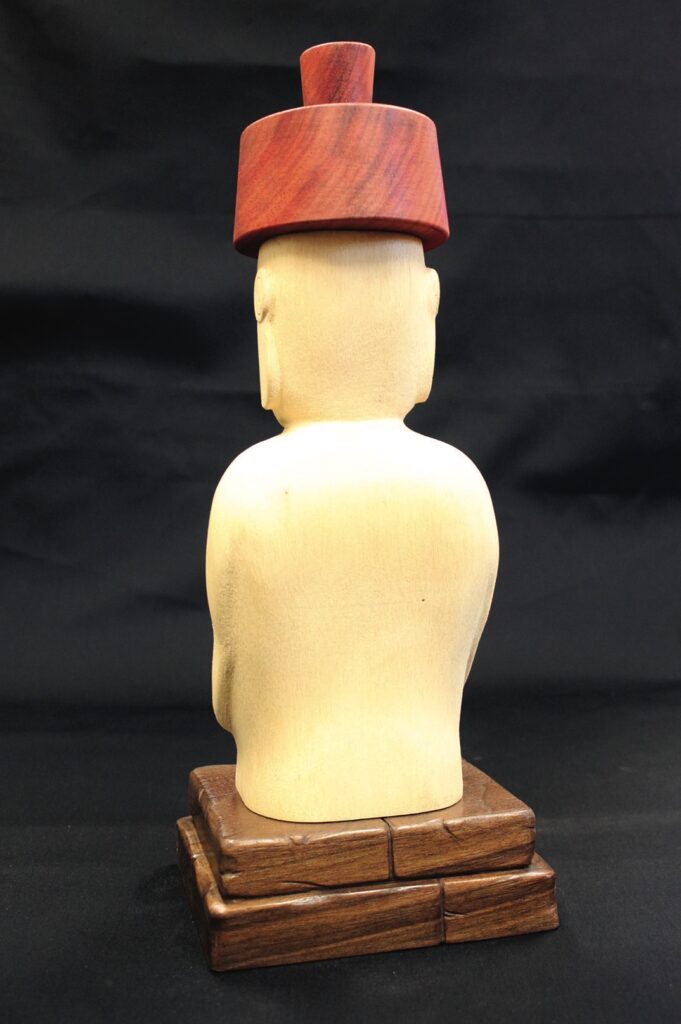
18. Use the pattern provide to cut the oval out, then draw a line on the top face 5mm in from the edge. Taper the side down to this mark all round. Do the same with the top knot but taper in the opposite direction from top to bottom. Sand all three parts down with 120 grit paper and clean up all the detail with finer grades if necessary. The next part might seem counterintuitive but to achieve a stone-like texture go over everything except the finer detail with 80 grit paper, working in one direction as much as possible, then finish with three coats of dead flat acrylic varnish
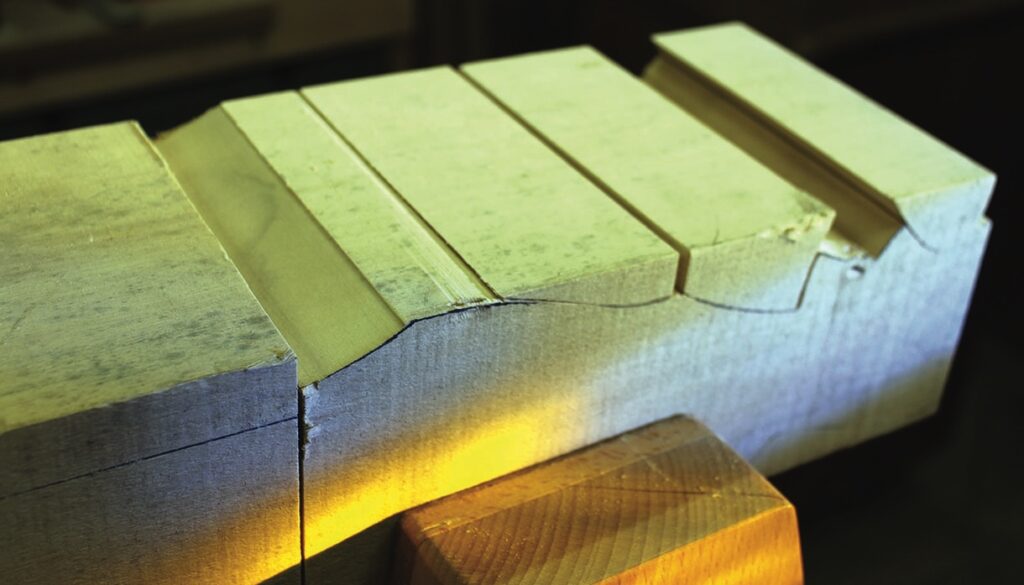
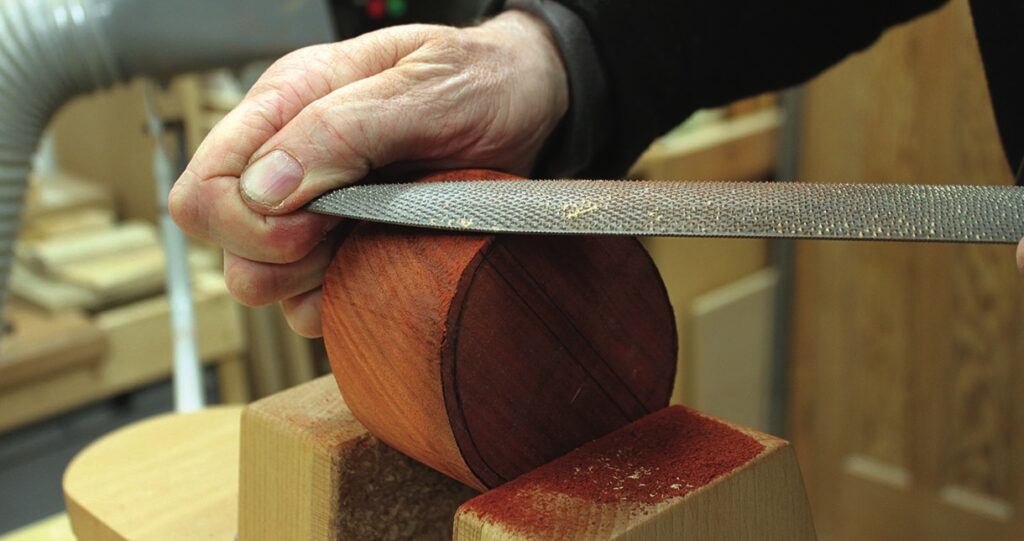
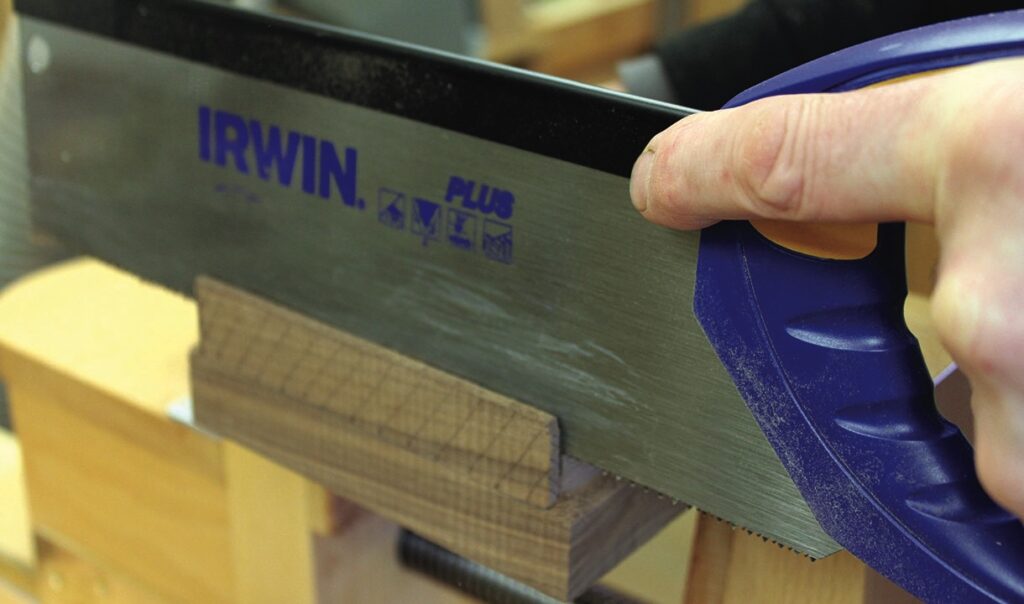
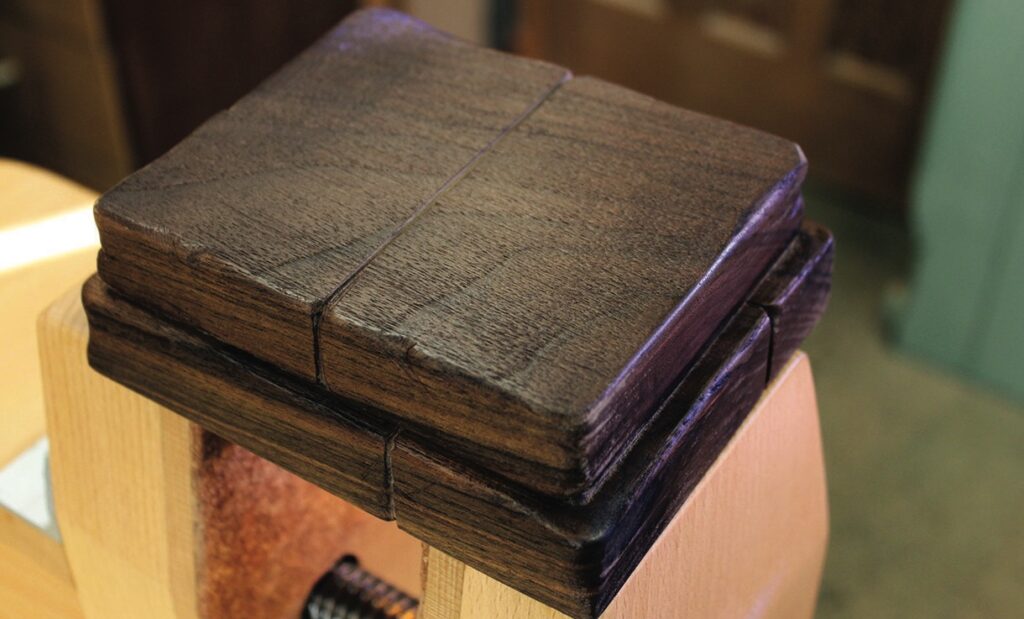
19a. Mark a centreline round the edges of the blank, then mark a line on the top face 5-10mm in from the edge –  vary the dimension on each side slightly. Cut back the top section along these lines with a handsaw
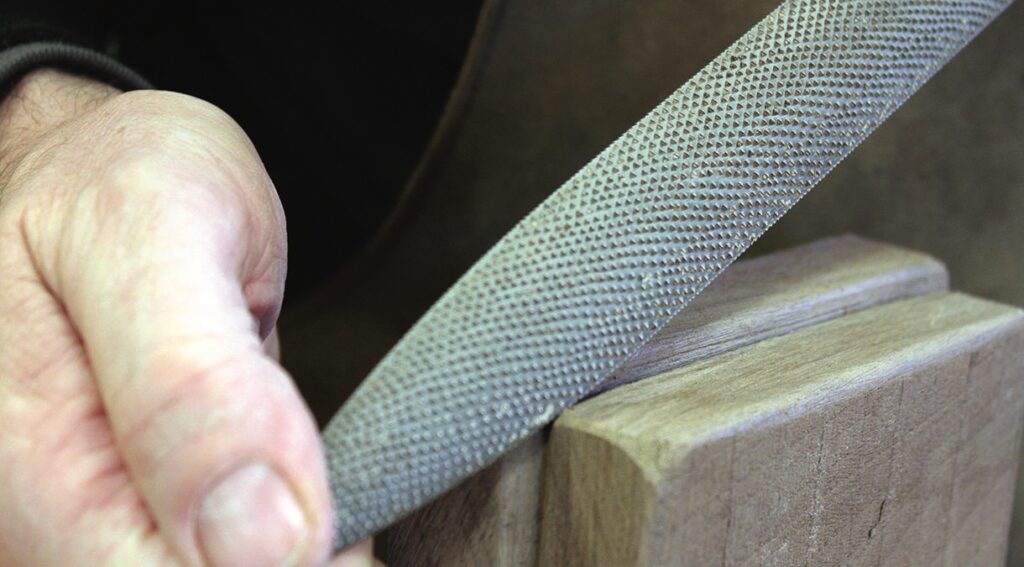
19b. Deepen the sawcut slightly round the centreline then round off all the edges with a half-round rasp
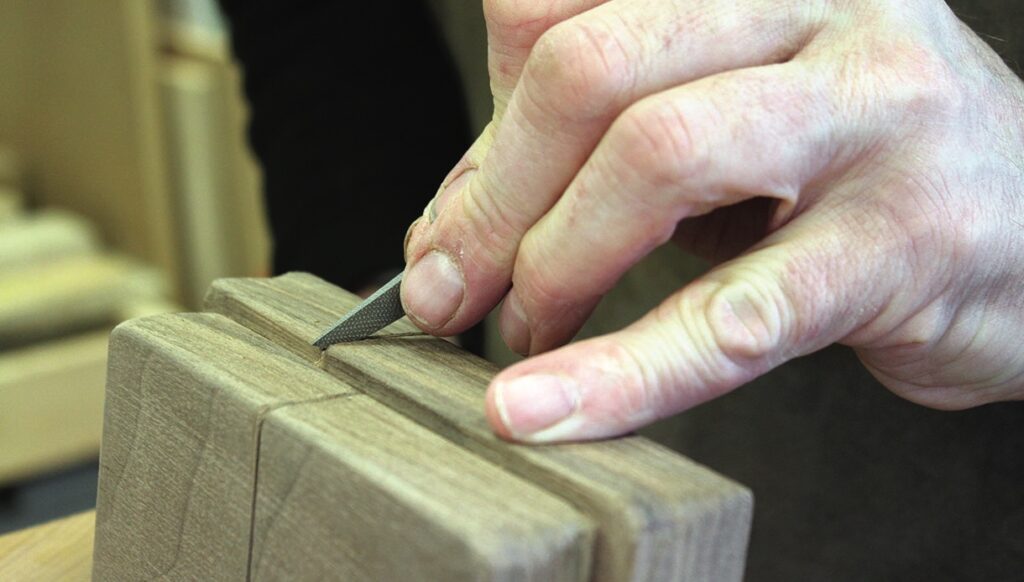
20. Cut in a few joints and add some dints and cracks to give a weathered stone texture
21. Sand the top with 40 grit paper then go straight to 240 grit to smooth it over, leaving deep scores in the surface. Sand the rest of the plinth with 120 grit paper, seal with one coat of dead flat varnish and finish with a couple of coats of dark paste wax
22.
23.
24.

22-24. Stick the parts together with epoxy adhesive. The hat should sit slightly forward of centre on the head

Leave a Reply

Your email address will not be published. Required fields are marked *