The Woodworkers Institute

We bring you the very best of woodworking!

“Make it with us”

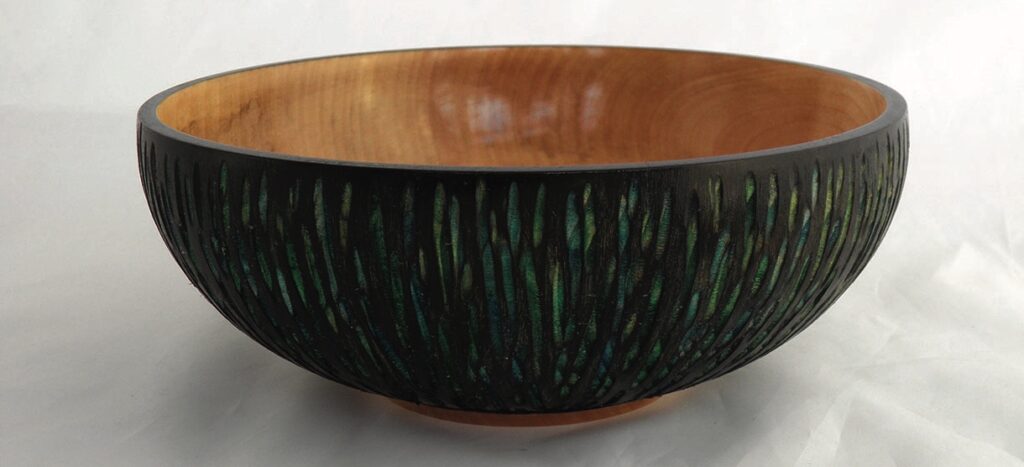
Carved and coloured sycamore bowl

Sue Harker shows how to make a create a textured bowl using a long-neck grinder, and colour it
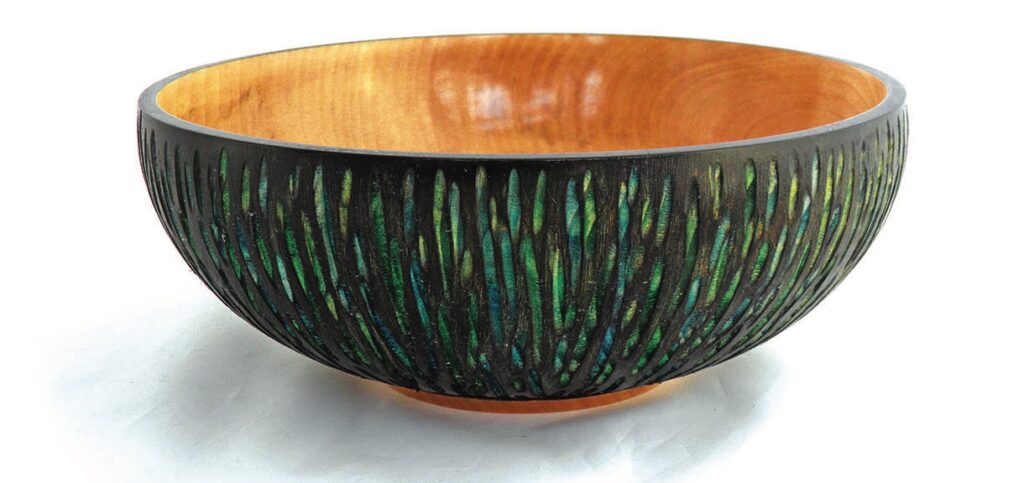
Decorative wooden bowl with carved exterior design.

Bowl turning can be very enjoyable and even therapeutic, but after you’ve turned dozens or even hundreds of bowls of varying shape, size and design, it’s difficult to stay away from adding decoration and/or colour of some kind. 

There are, of course, the purist woodturners who do not like or agree with adding anything to the surface of timber, preferring the natural grain pattern to speak for itself. I agree with that, to some degree, when you are turning a highly figured piece of timber. For timber showing very little grain pattern, the addition of decoration
such as texture and colour can enhance the piece. I prefer to use plainer grained sycamore or lime for this type of work.

For this particular project, spirit stains and acrylic paint have been used to enhance the sycamore bowl blank. I also show alternative methods of applying the carved and coloured texture to your turning. For example, texturing the surface then applying ebonising lacquer or acrylic paint which, when dry, can be sanded back so only the carved-out sections remain coloured. You can either leave the bowl like that or apply stain to the raised surface. 

EQUIPMENT AND MATERIALS

Tools
• PPE – faceshield and RPE – dust mask/respirator and at source extraction
• Four-jaw chuck
• 10mm standard grind bowl gouge
• 10mm long-grind bowl gouge
• 6mm standard grind bowl gouge
• 3mm parting tool
• 13mm flat skew chisel
• Proxxon long-neck grinder
• Arbortec cutting blade
• Abrasive discs – 120-400 grit
• Battery drill
• Rotary sander

Materials
• Sycamore (Acer pseudoplatanus) bowl blank 240mm x 100mm
• Mylands spirit stains
• Acrylic paint
• Finishing oil


Health and safety

When using electrical equipment, such as the long-neck grinder, always follow the manufacturer’s instructions. As an extra precaution turn the lathe off and use an indexer to secure the timber in place while grinding. Always stop the grinder and wait for the cutter to stop revolving before repositioning the bowl for the next section of grinding. Hold the tool away from you to restart the grinder.


Plans
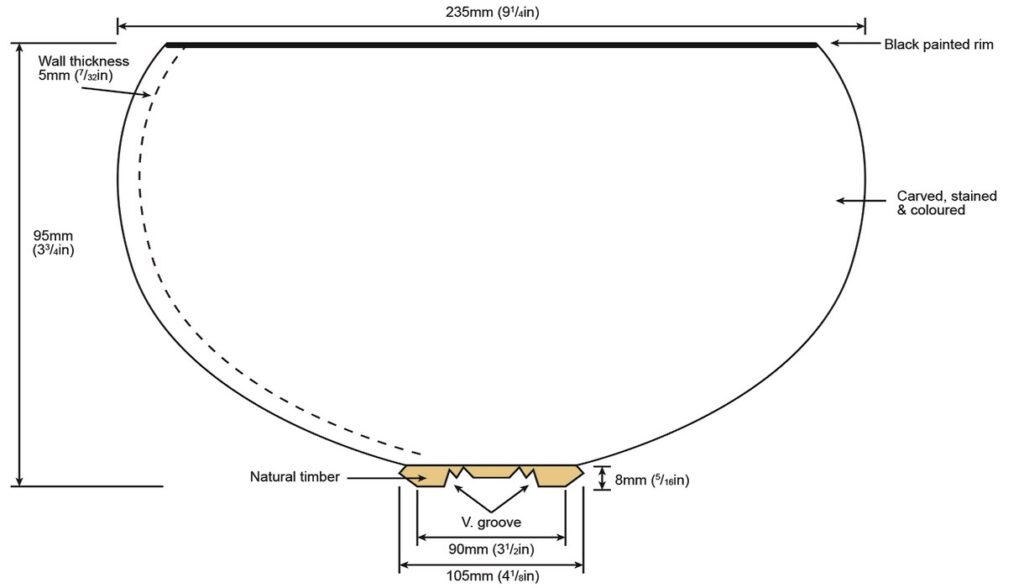
Cross-sectional diagram of carved wooden bowl.

Turning the bowl

Hand using chisel on wood lathe.
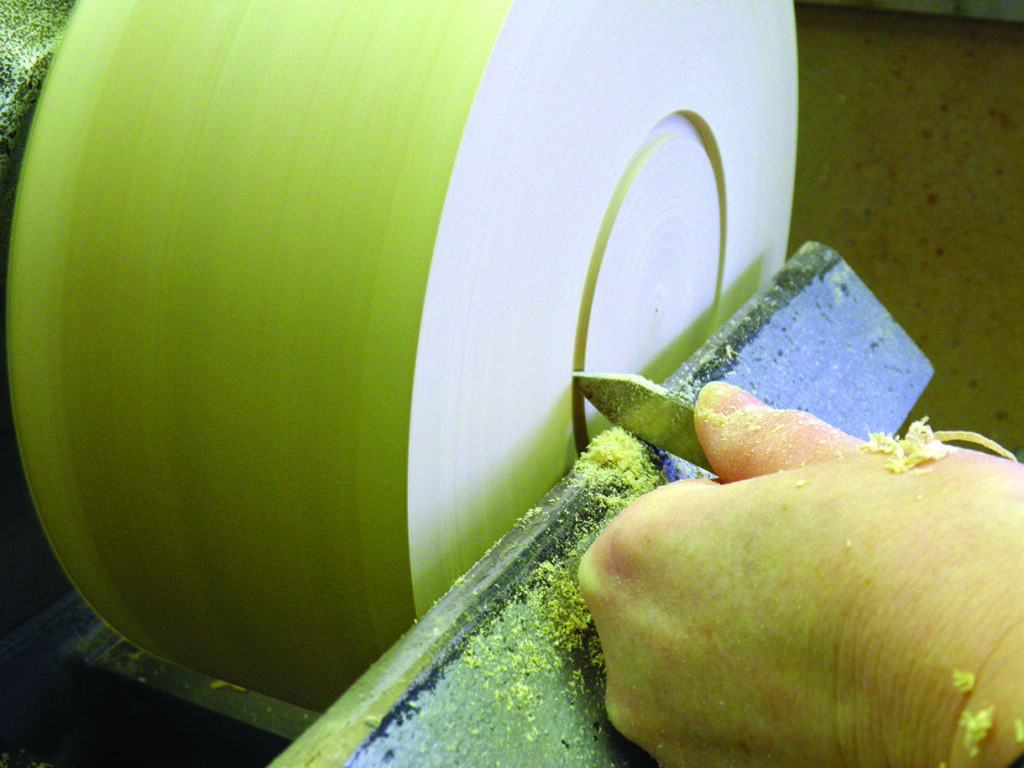
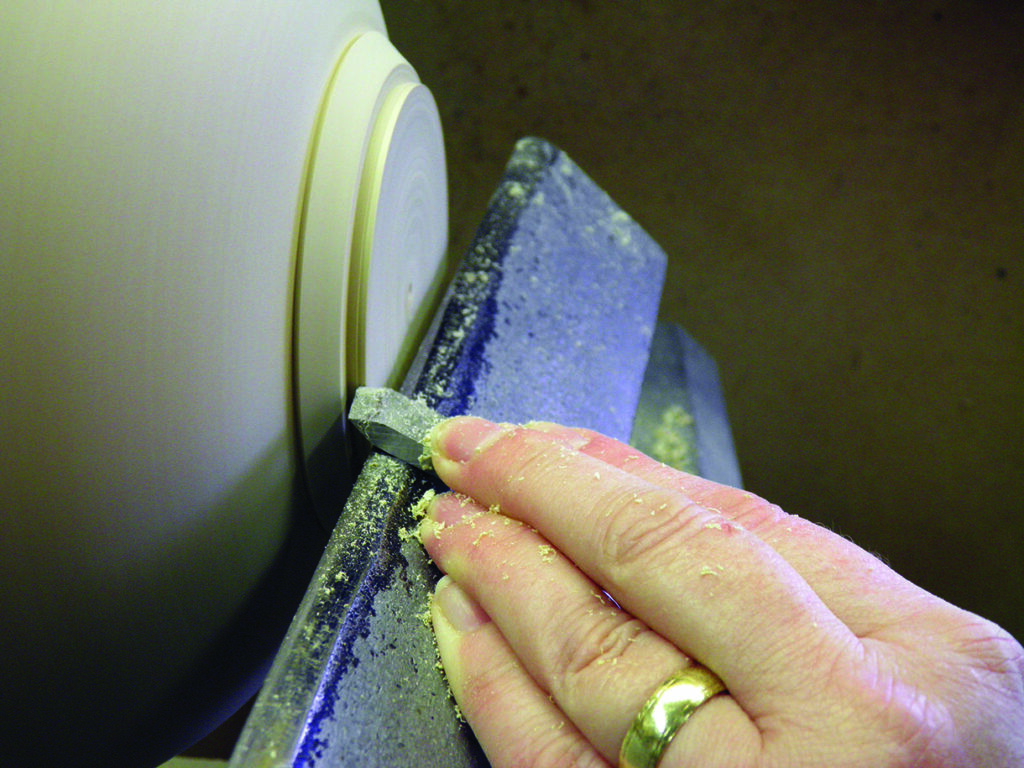
1. Mount a sycamore – or similar close-grained hardwood of neutral colour – bowl blank on the lathe and, using a 10mm standard grind bowl gouge, true up the edge. Now true up the face of the bowl blank. Measure the size of the jaws you intend to use and, using a 3mm parting tool, cut a chucking spigot the correct size for your jaws. Cut a small hole in the centre of the spigot to assist with remounting the bowl blank for removing the evidence of chucking. The edge of a parting tool or corner of a skew chisel can be used for this
Woodturning process with lathe and hands.
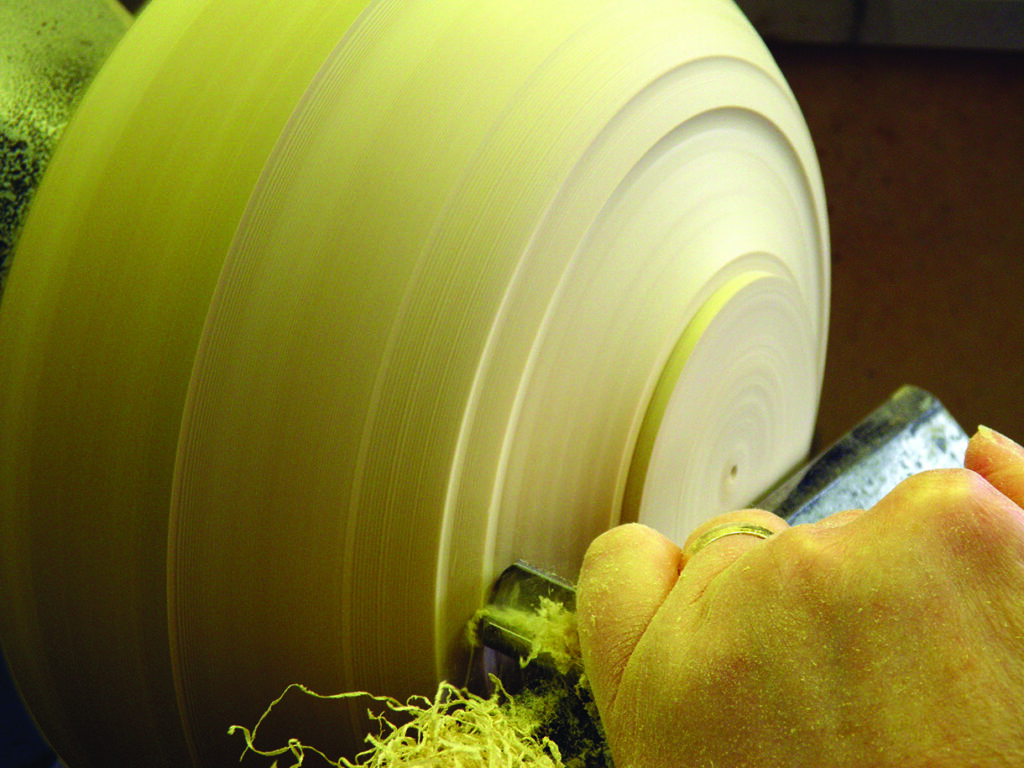
2. Next, using a 10mm standard grind bowl gouge, start to shape the underneath of the bowl and create a cove for the foot
Person using a lathe for woodturning.
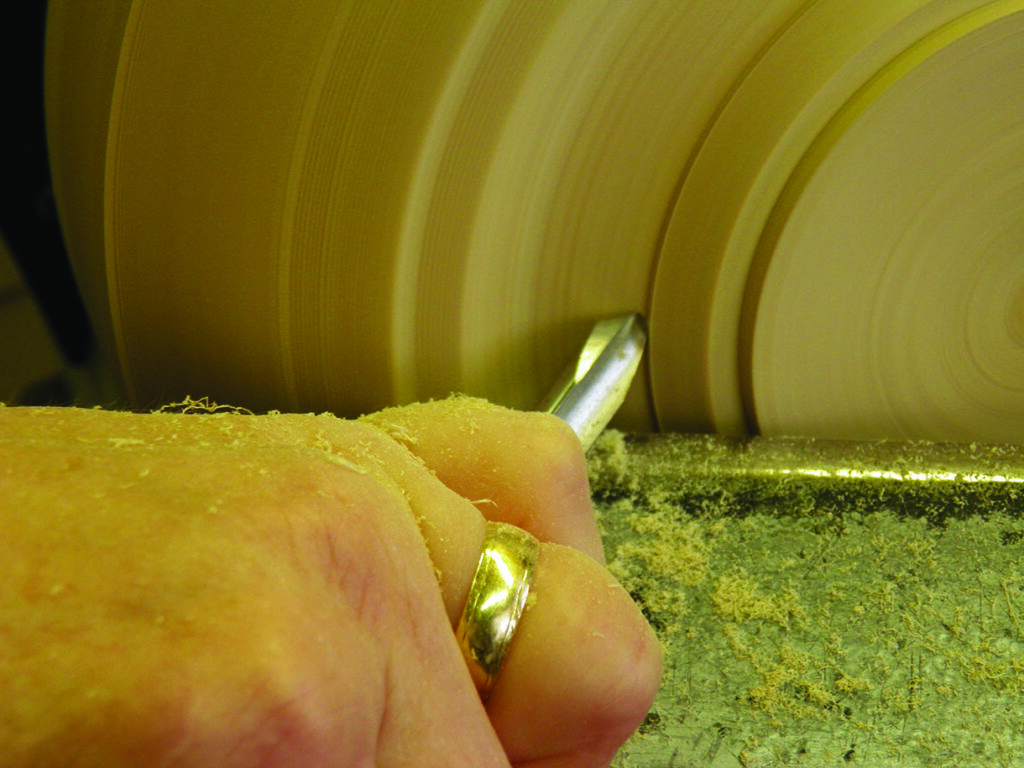
3. Refine the foot by cutting a return curve at the bottom of the cove. For this use a 10mm long-grind/swept-back profile bowl gouge, working towards the bottom of the cove. With this cut being against the grain fibres may tear out. Sheer scrape this section to remove any imperfections
Hand turning wood on a lathe.
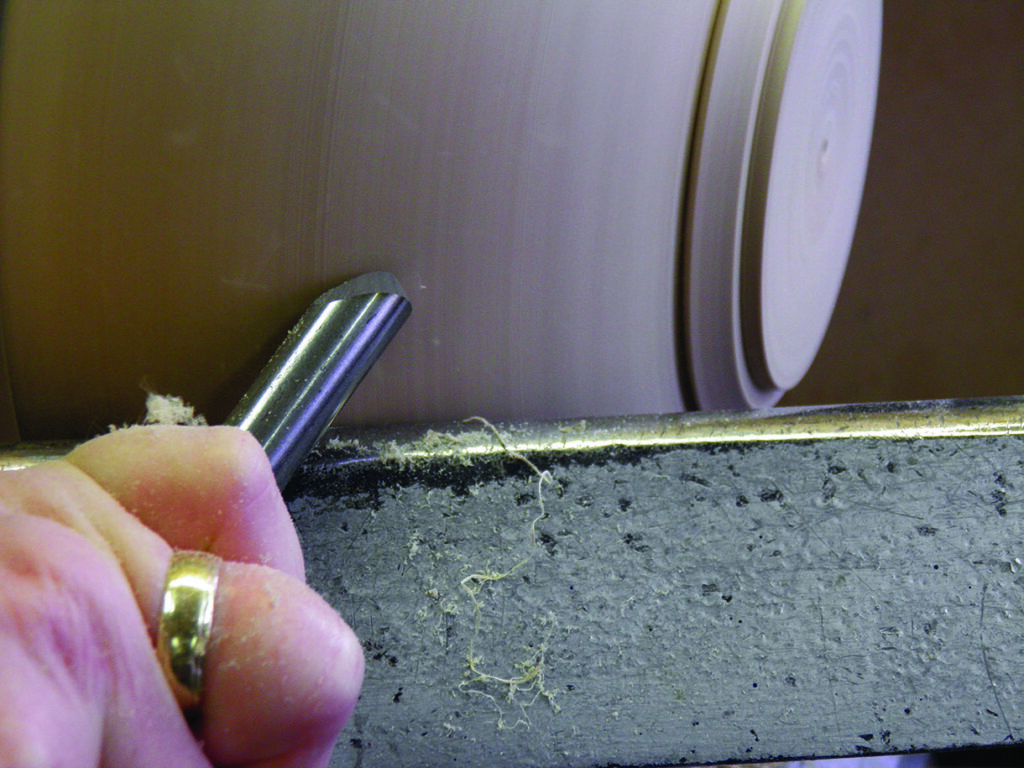
4. Blend the foot into the shape of the bowl and, using a 10mm long grind (fingernail profile) bowl gouge, sheer scrape to refine. The shape of the bowl should appear to run through the foot and not sit flat on to it
Hand carving wood with a chisel.
5. If the jaws you are using are dovetailed, use a flat bar skew chisel laid on its side to cut the dovetail on the chucking spigot. Now sand the bowl, starting with 120 grit abrasive attached to a rotary sander and working through grits 180, 240, 360 and finish with 400grit
Woodturning: drawing guideline on wooden lathe piece.
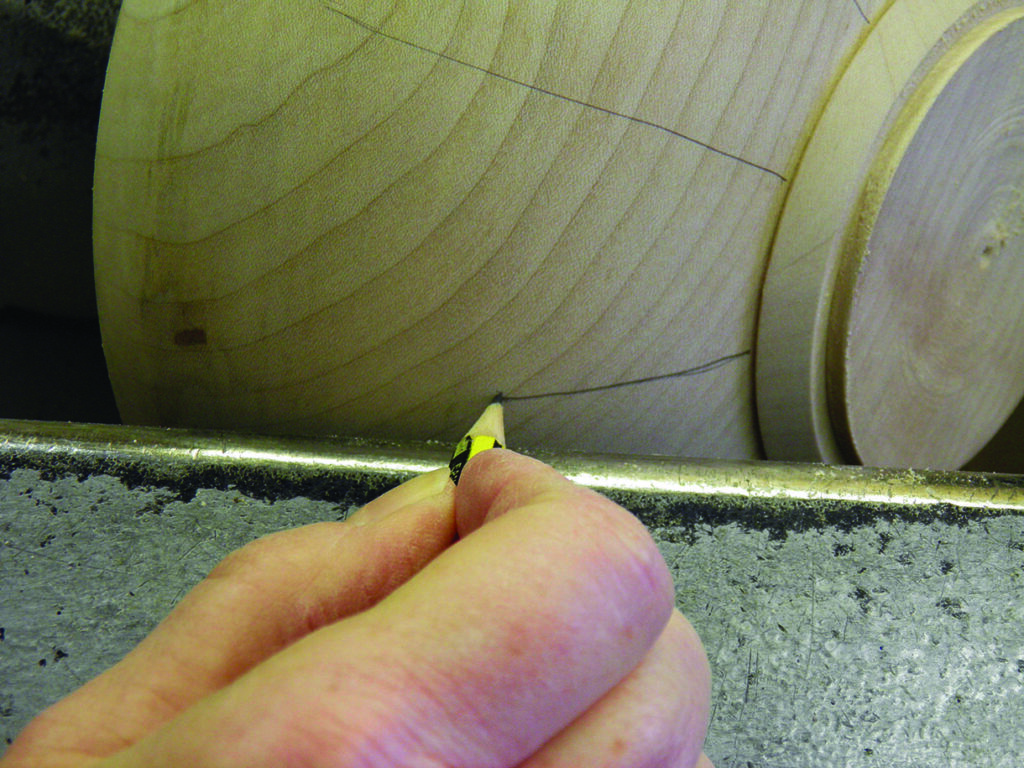
6. Mark out for the carved section. To do this, use an indexing system to secure the chuck at position one. Position the tool rest across the bowl so that when a pencil is laid horizontally on the rest it marks at centreline on the bowl. With the tool rest set, draw a pencil line form coved base – rim. Move the indexer round a position and draw another line and repeat until finished. I created 12 segments. These reference lines will be used to assist in keeping the carved pattern running in the correct direction. Next, draw a line approximately 4mm from the base and the rim of the bowl as reference for where to start and stop the carving

Creating texture

Close-up of a wood carving machine
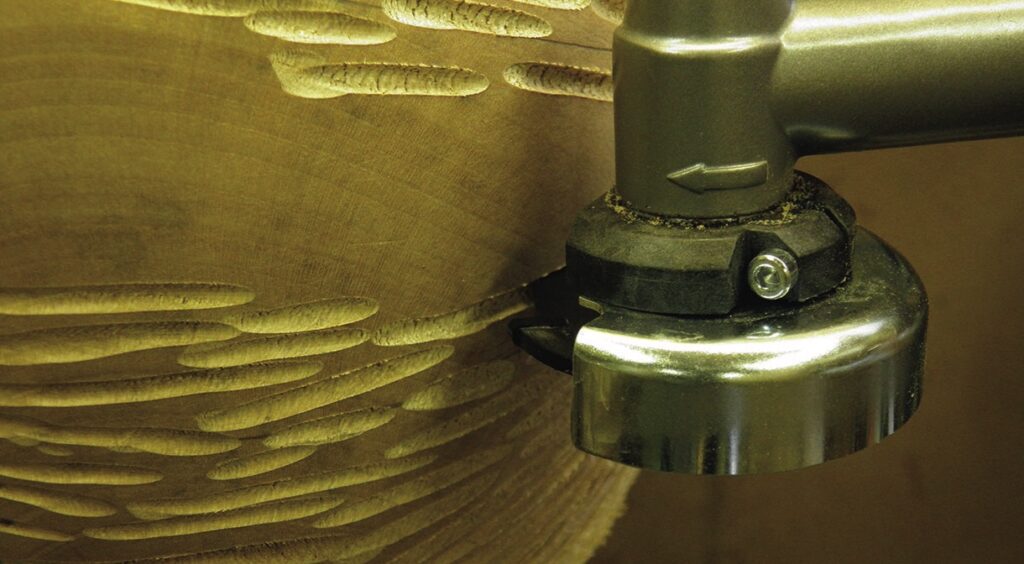
7. Texture can be created using many methods, carving tools – both hand and percussive, rotary carving tools and for this unit of tool there are many cutter options to create different shapes. I chose to use a long-neck grinder, which is designed to be used one-handed but it is best to use two hands when you can. To this is fitted a 50mm two-tooth carbide cutter. This set up is controllable and can create a fine texture or a deeper, more aggressive one as required without biting or grabbing during the cut. The texture I want is created with the lathe stationary and the work locked in position via the indexer to keep things nice and stable. Using the reference lines drawn, position the cutting blade at 90° to the surface being cut and, working from left to right, create random length cuts running aligned from bottom to top of the outside of the bowl. Complete one section at a time. With the grinder turned off and the cutter stopped, move the bowl round to the next index position and repeat the carving. Continue like this until the entire bowl has been carved
Person carving intricate design on wooden bowl.
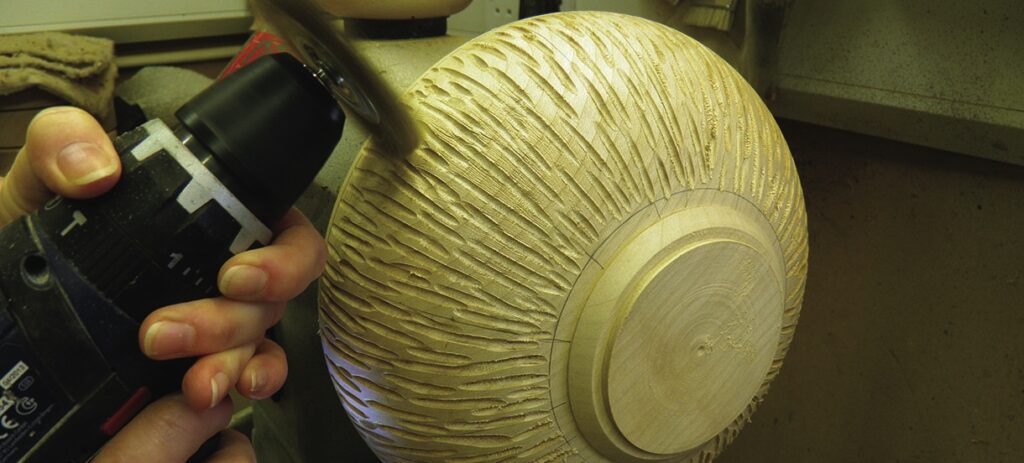
8. With all the carving done, mount a wire wheel into your drill and abrade the surface of the bowl running in the same direction as the carvings. This will clean up some of the harsher elements of the carvings but could also create a bit of texture in the uncarved timber too. You can use a wire hand brush too. Copper or brass wire is gentler than steel wire and, if you use steel brushes, long-wired ones are less aggressive than short-wired ones. The choice is yours, but I chose steel wire so it created a texture on the surface of the work too
Hand sanding wood surface with sandpaper.
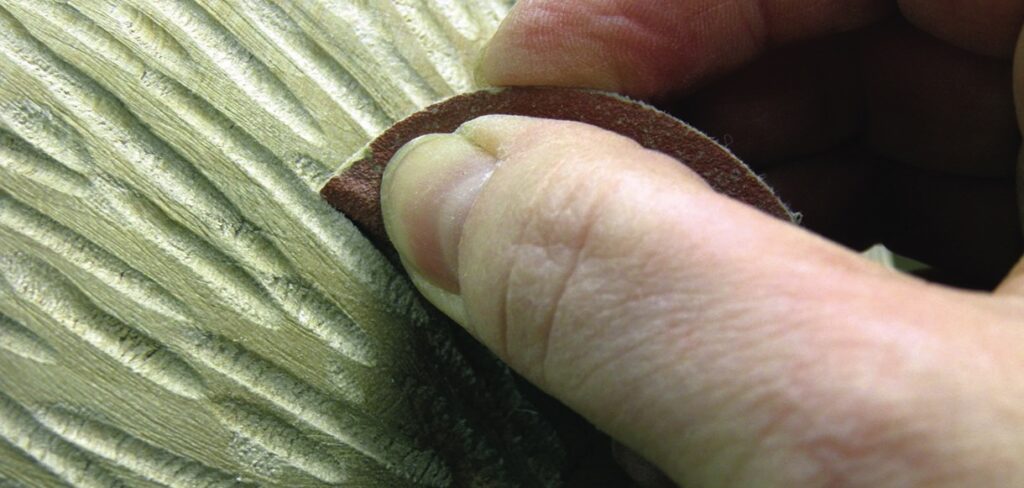
9. With 240 grit abrasive folded in half, sand any heavily torn fibres, Then gently sand the bowl all over with fine abrasive to remove any residual whiskers of timber. A tack cloth should be used at this stage to remove any dust from the work

Colouring the outside

Wood lathe crafting with green paint design
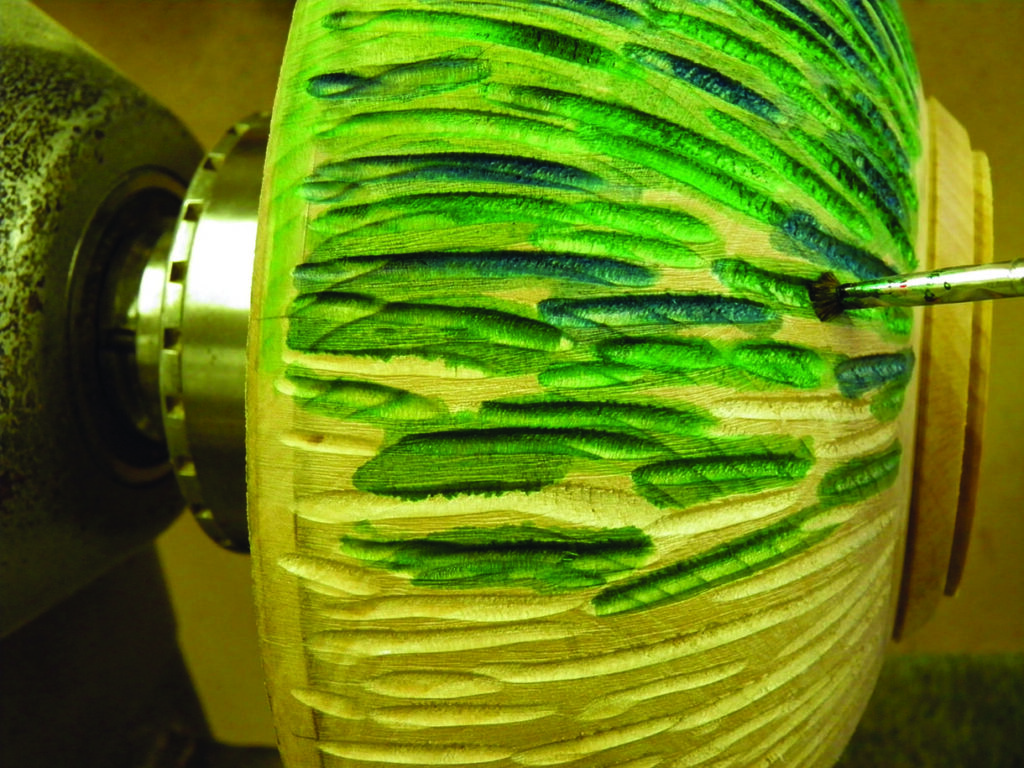
10. Randomly apply spirit-based stains to the carved grooves using a small paint brush with trimmed bristles. I find the stain can be applied more accurately this way. I chose green and blue as base colours but no doubt you will have your own preference for what colours to use
Applying colour to carved wooden bowl
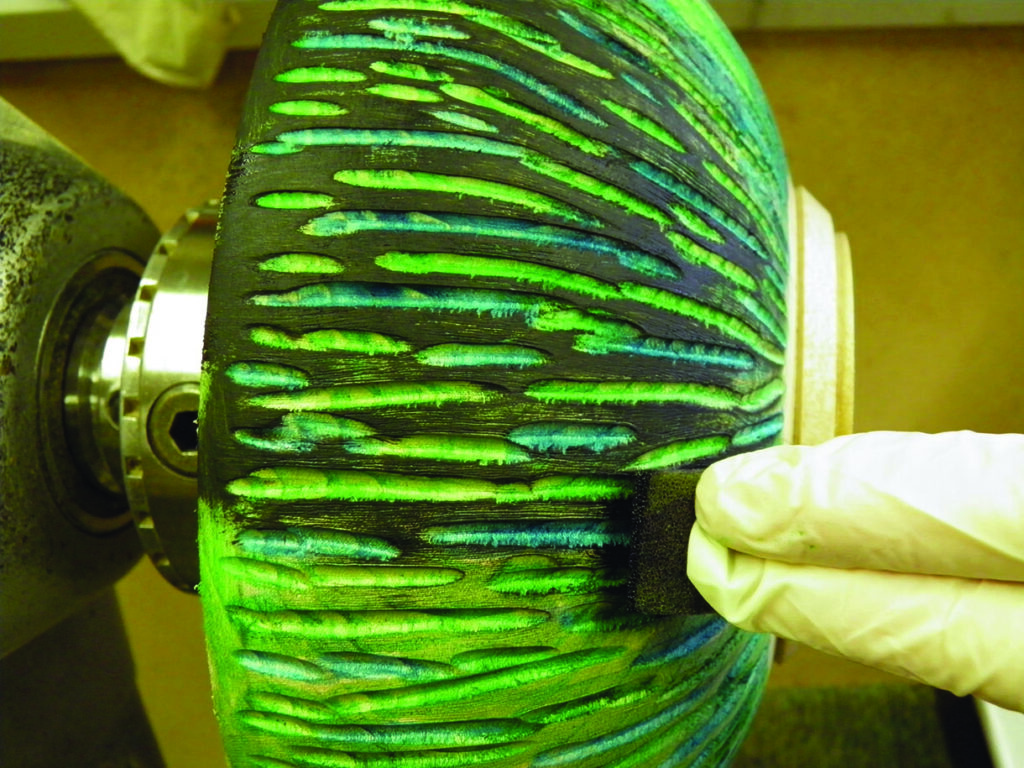
11. With the stain applied to all the carved sections apply the topcoat using a technique known as dry brushing. For this apply a small amount of acrylic black paint to a sponge brush. Using a scrap piece of paper remove some of the paint by dabbing on the paper. Now rub the sponge from top to bottom in the direction of the carvings, coating only the top surface. This reveals the effect made by scratching the surface with the wire wheel and highlights the stained carvings
Hand painting vibrant green and blue on pottery.
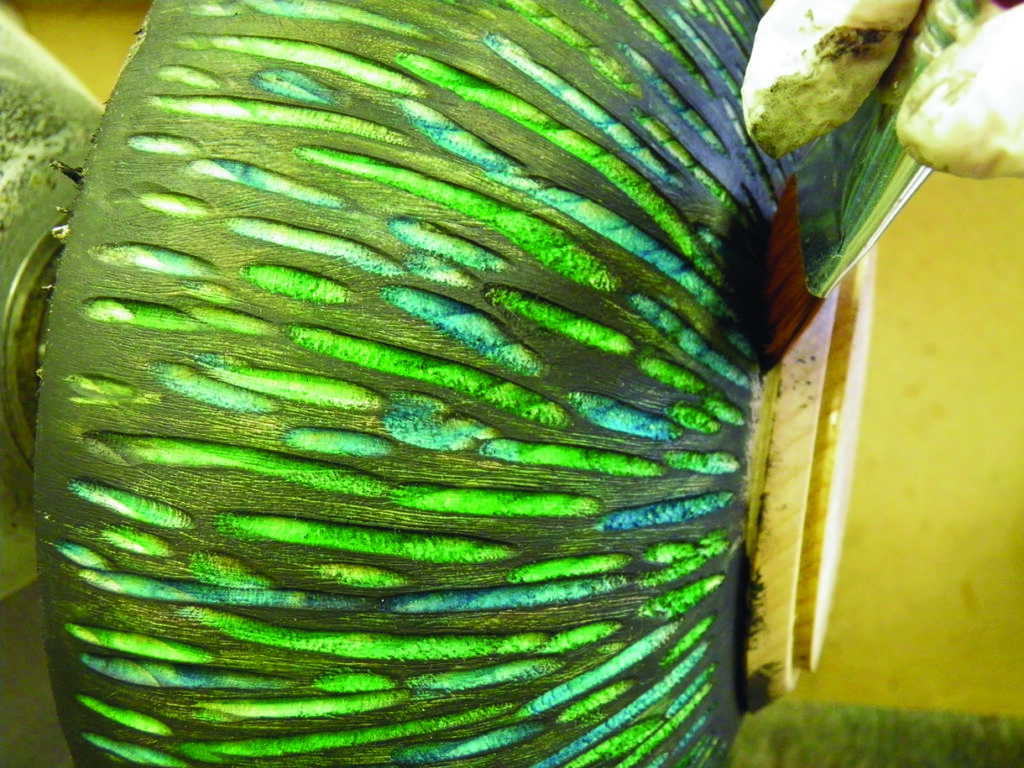
12. Using the brush, paint the black paint into the groove cut into the foot 
Hand sanding spinning wooden bowl on lathe
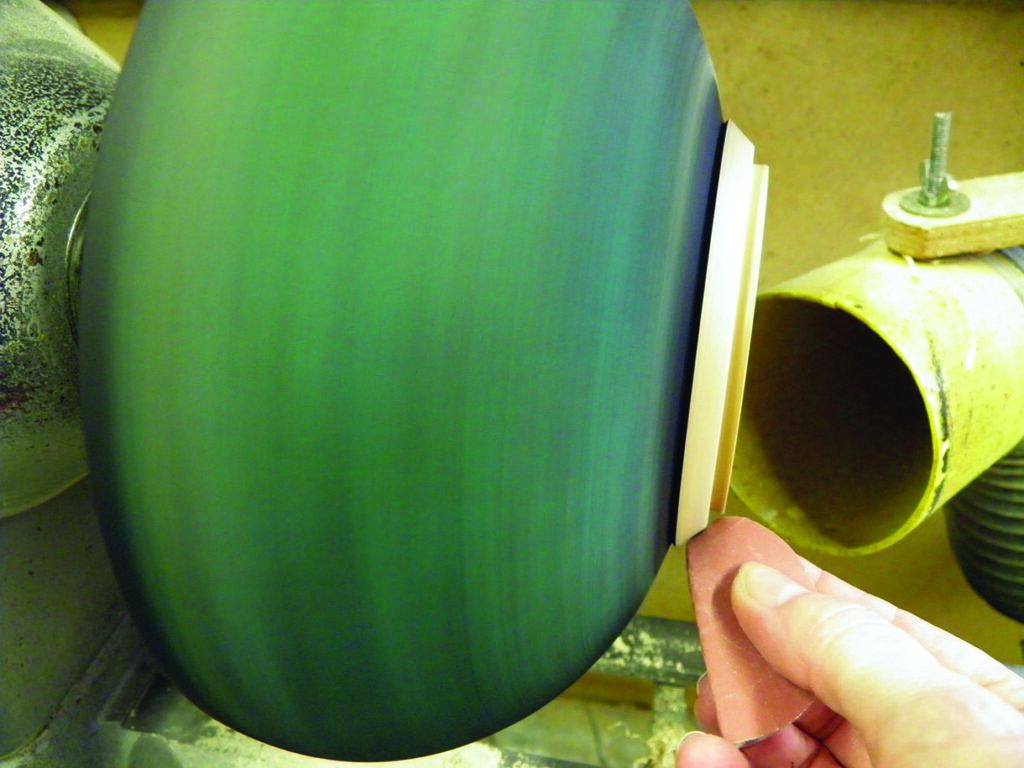
13. Allow the paint to dry fully before sanding the cove of the foot to remove any paint marks

Inside of the bowl

Painting wooden wheel with black paint.
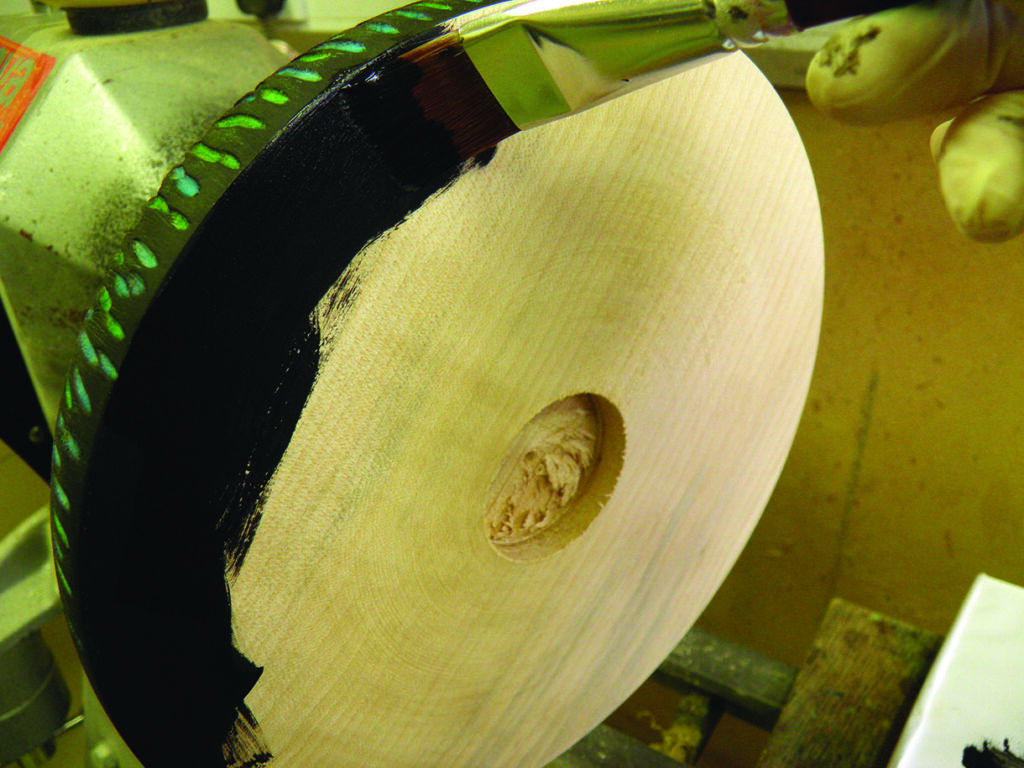
14. Remove the bowl from the lathe, reverse it and mount it in the chuck spigot cut earlier and true up the front face of the bowl. True up the face with a gouge and the first inch of the bowl face to a finish working down through abrasive grits to 400 grit. Now clean away the dust created with a tack cloth. Next, using the black acrylic paint used for the underneath of the bowl, paint the prepared rim
Close-up of woodturning on lathe with tool.
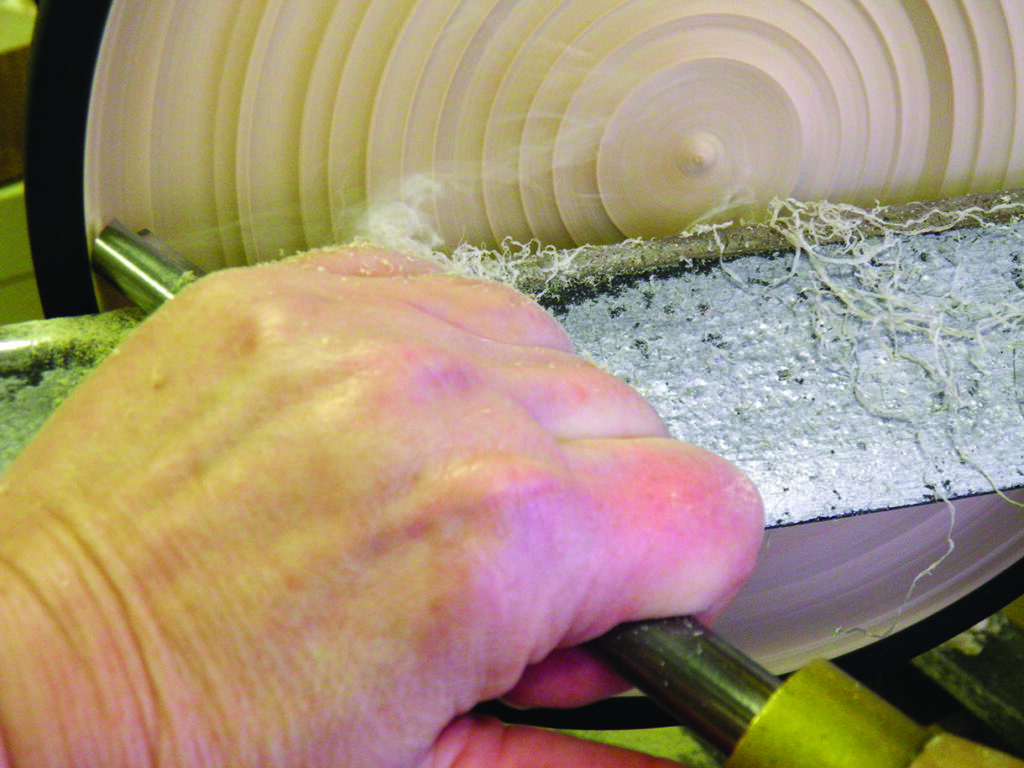
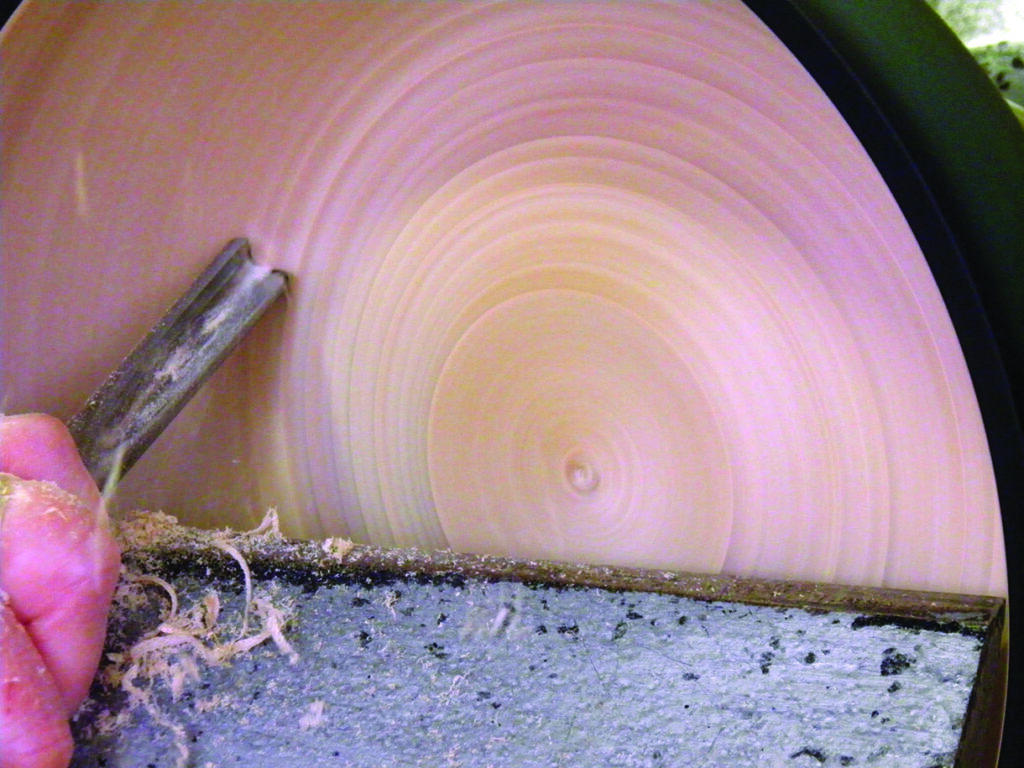
15. When the paint has dried fully start to remove waste and create the thickness of the bowl wall using a 10mm standard grind bowl gouge
Hand turning wood on a lathe.
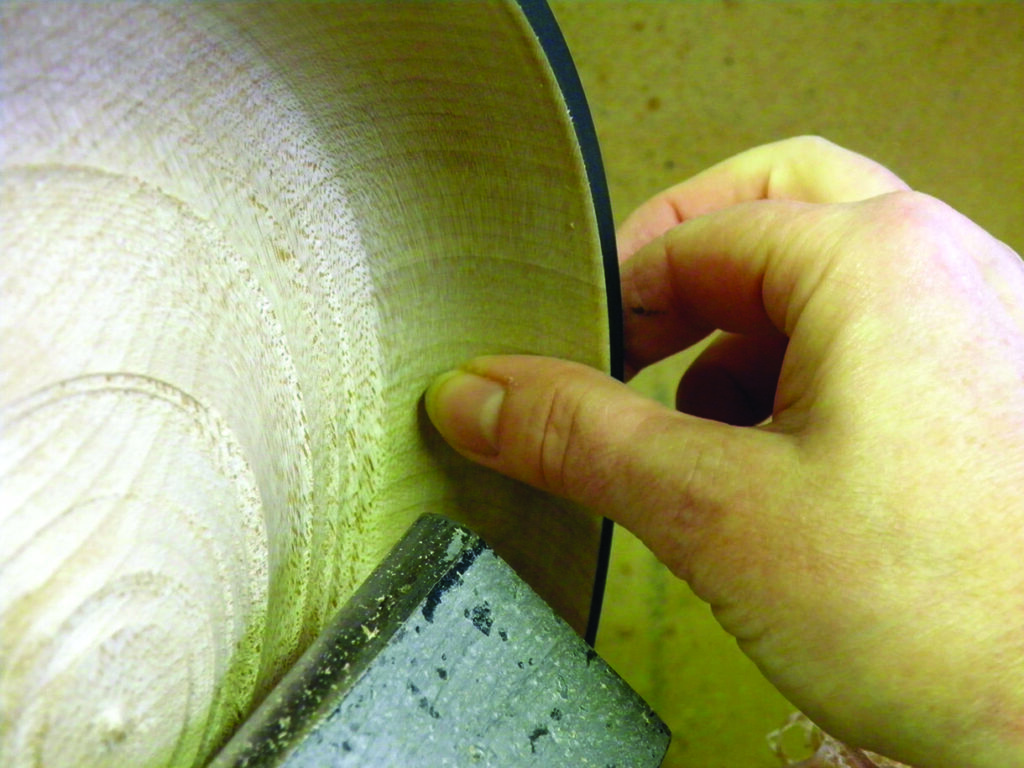
16. With the lathe stationary check to see that the wall thickness of the first 25mm is even before continuing to remove the centre of the bowl. Regularly check the wall thickness of the bowl as you progress
Wood lathe turning with chisel and shavings.
17. When you reach the bottom third of the bowl where the side of the bowl flows into the bottom, lower the handle of the bowl gouge. This will lift the cutting edge of the bowl gouge above centre height. Now push the tool forwards, lifting the handle upwards as you move forwards so that the tip of the tool arcs down towards the centre point of the bowl. This should create a nice clean shearing cut that minimises the risk of grain tear out. Repeat the cut until you have the nice gentle continuous curve and the wall thickness you want. Sand the inside of the bowl down to the finest grit you want to go to
Wooden bowl being crafted on a lathe.
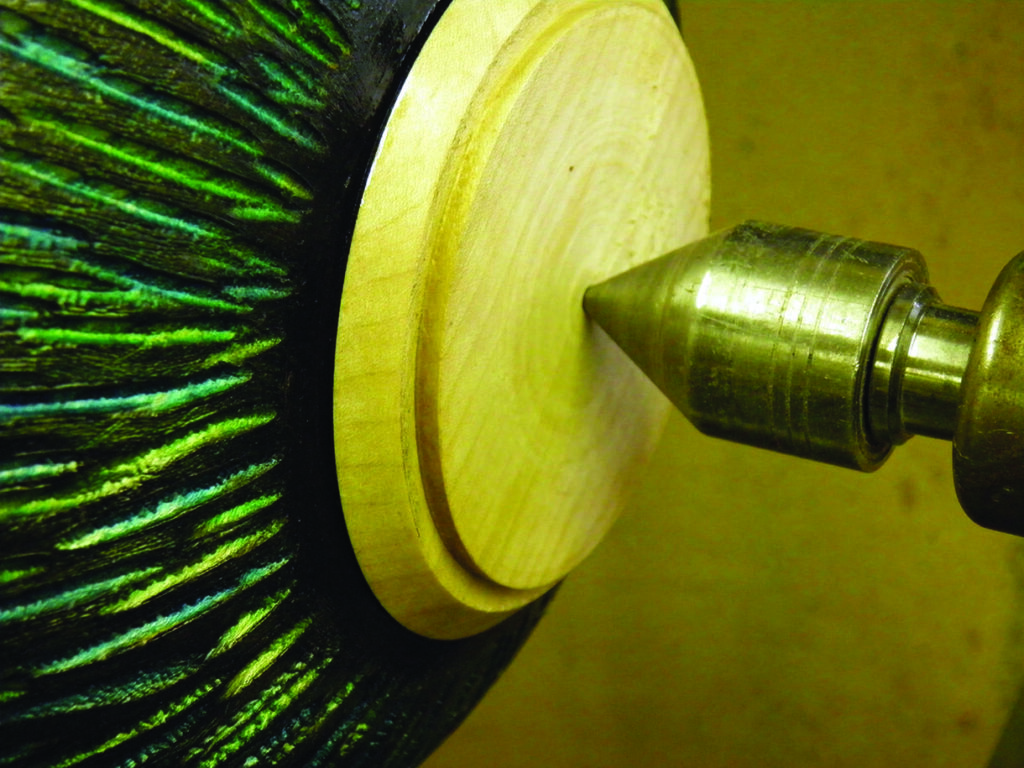
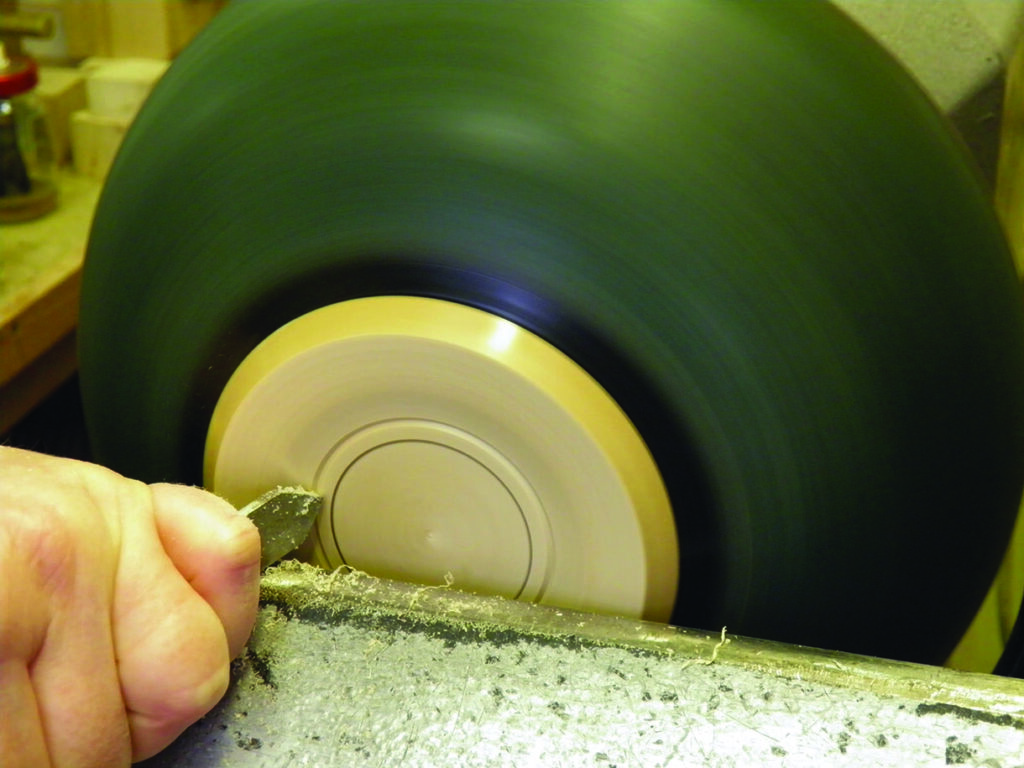
18. To take off the waste material at the bottom of the bowl, use whatever method you choose. A simple between centre mounting method is a good option. Place a shallow domed-faced bit of wood in your chuck, lay a covering of tissue paper over the dome and place inside of the bowl against this while you bring up your revolving centre and locate it in the indent in the bottom you cut. You can then, using a 6mm standard grind bowl gouge, remove most of the chucking spigot and slightly undercut the foot. The small nub of wood left can be carved off and you can then sand the foot smooth
Woodturning on lathe with chisel
19. Alternatively, you can use a vacuum chuck to hold the work and this gives you unrestricted access to the foot section. Whether you use the between centre method or the vacuum chuck you can add V grooves or other detail to the underside. Whatever you choose, once the foot is shaped, sand it to a fine finish and remove any dust prior to applying the finish of your choice
Handcrafted decorative wooden bowl with intricate design
20. Apply several coats of oil until you have the desired finish. Usually this is when the oil coat being applied sits on the surface and no longer soaks into the wood. When oiling the underneath of the bowl use a small paint brush to ensure the carved sections receive enough oil. Wipe away the excess

Alternative decorative effects

Changing the colours used, or indeed not applying colour at all, can have a dramatic effect on this type of carved pattern. A long-neck grinder and cutter set up used or fitted with other blade options opens up the possibility of even more texturing and sculpting options, but that is a another story altogether.
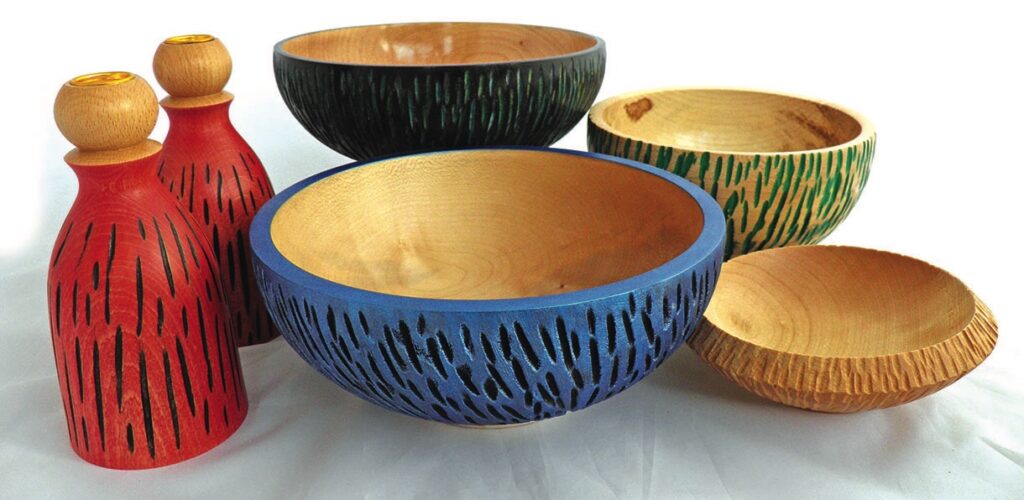
Colourful carved wooden bowls and bottles.

Leave a Reply

Your email address will not be published. Required fields are marked *