The Woodworkers Institute

We bring you the very best of woodworking!

“Make it with us”

Bent wood salad tongs

Michael T Collins makes a useful pair of salad tongs
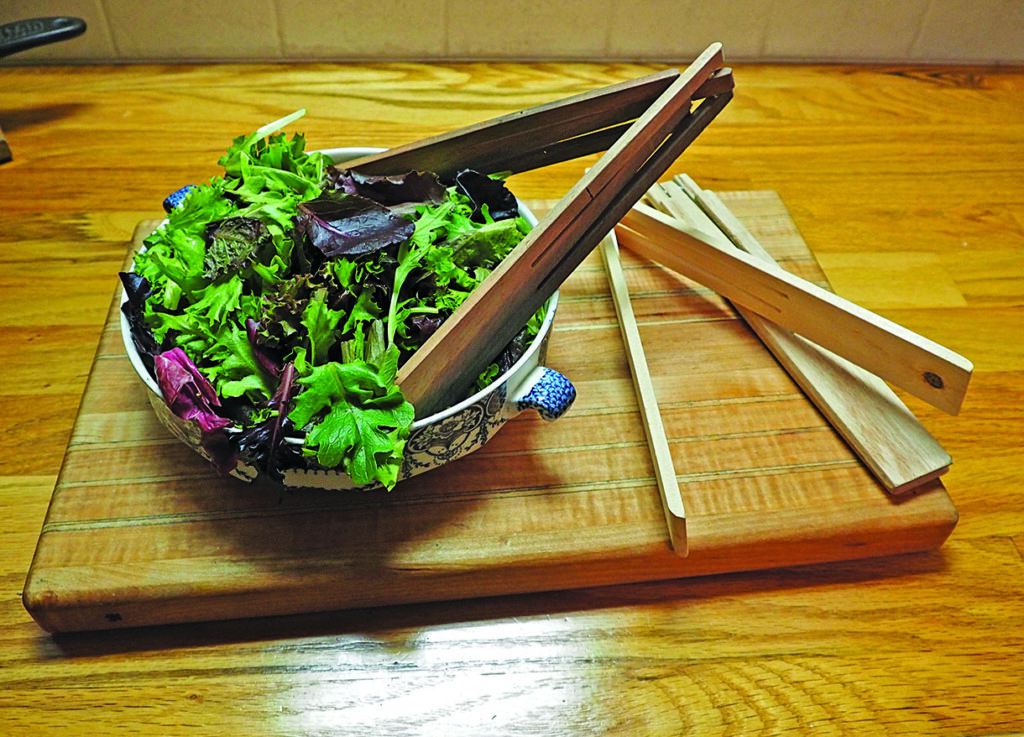
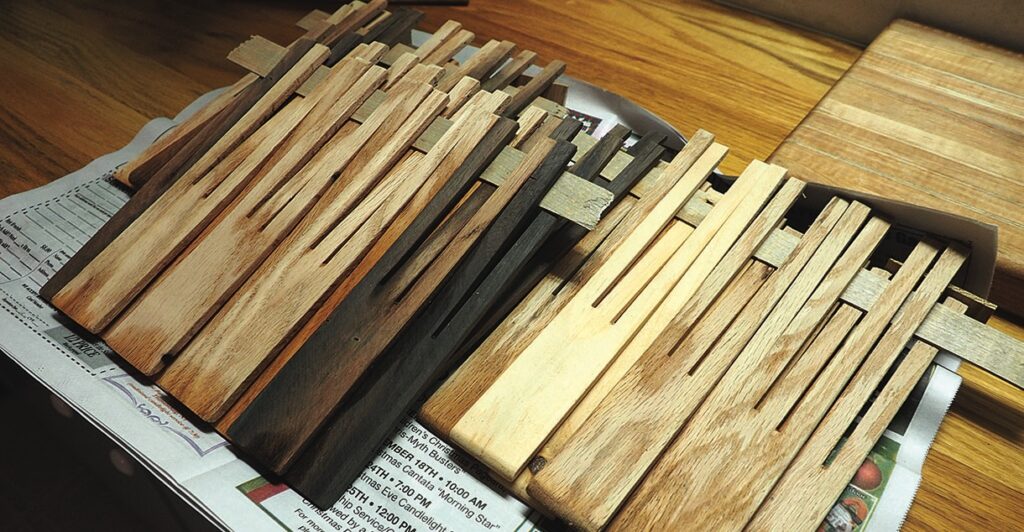
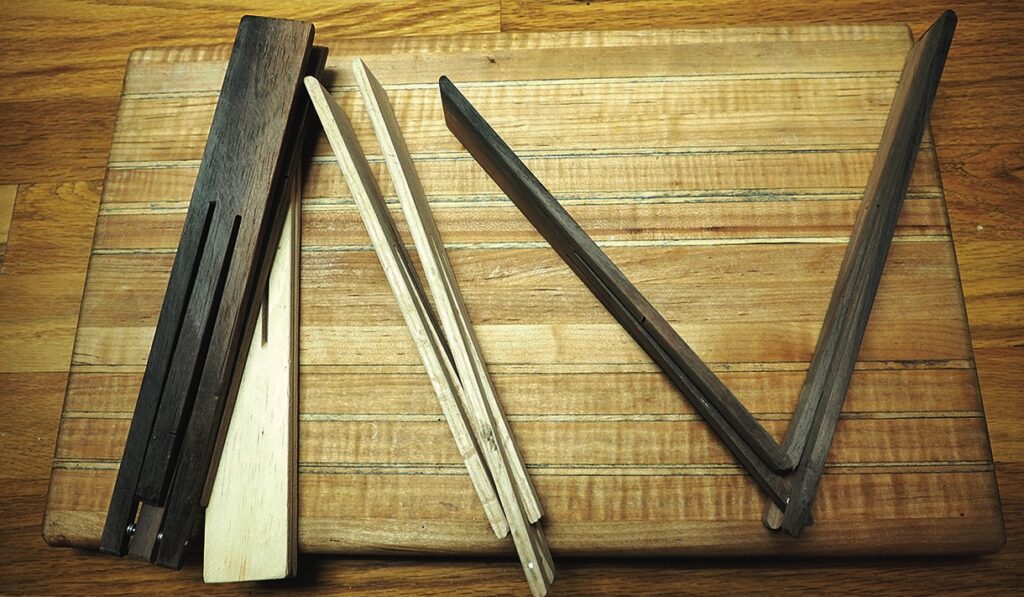
Who doesn’t like a nice pair of hand crafted wooden salad tongs? One year everyone in my family got a pair for Christmas – they’re easy to make out of scraps of wood. I very rarely make batches of anything, but these tongs lend themselves to batch processing. Over the last 20 years I have made them out of many different species of wood and in this article I am using pine (Pinus spp.), oak (Quercus spp.) and katalox (Swartzia spp.) a very hard, almost ebony-like wood that creates a sturdy utensil.

Things you will need

• Rip saw, bandsaw or tablesaw
• Drill and 1mm bit
• Smoothing plane

Cutting list

• As many pieces of wood that you want tongs – 535 x 38 x 6mm 
• At least 110mm OD stainless washers (less if using a bandsaw)
• 38mm stainless steel panel pins (heads removed)

Preparing the wood
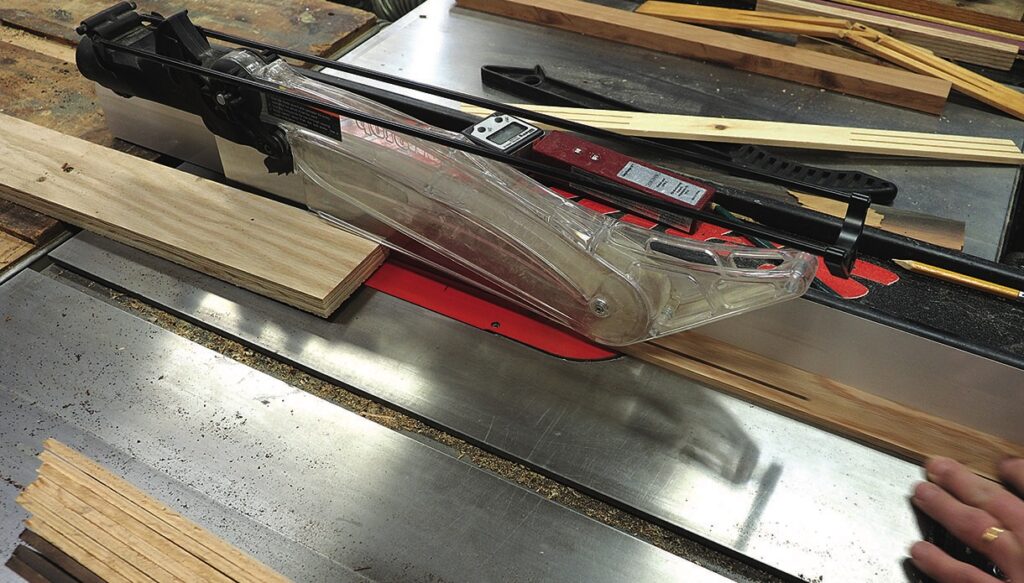
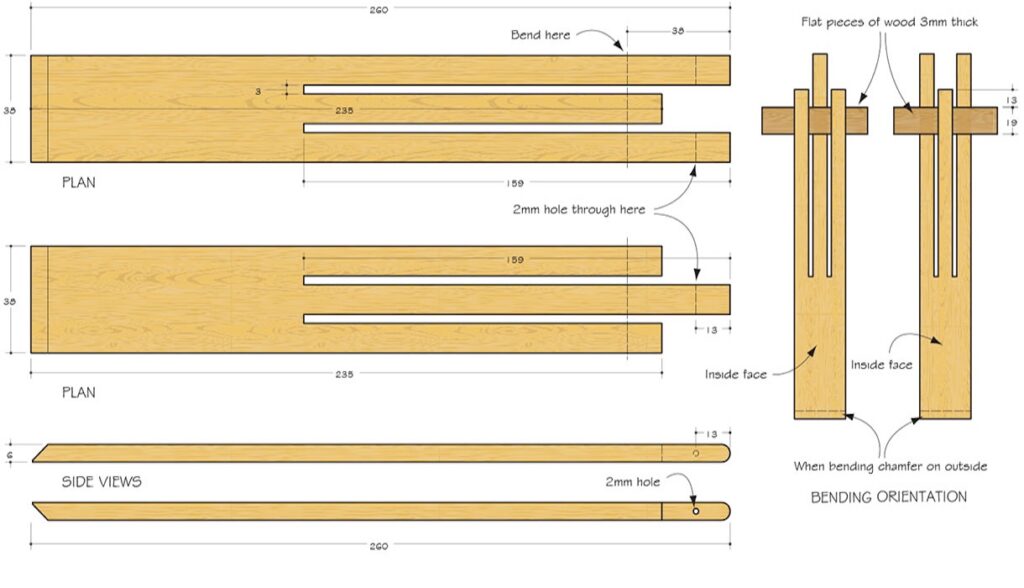
1. Cut all pieces to final dimension. Lock the saw blade in the fully-raised position, this way the kerf left by the blade, at the base of the tines, will be as perpendicular as possible. Firmly secure a stop block behind the blade so that the saw cuts a kerf 150mm long and 6mm to the left of the blade. Screw the stop block to the outfeed table to ensure accurate, safe and consistent cut lengths. Using a scrap piece of wood the same dimension as the tongs, adjust the fence so that the tines are of equal thickness – on a 38mm wide piece, this worked out to be 25mm from the blade (my blade has a 3mm kerf). If using a bandsaw or rip saw, adjust accordingly

Making the tines

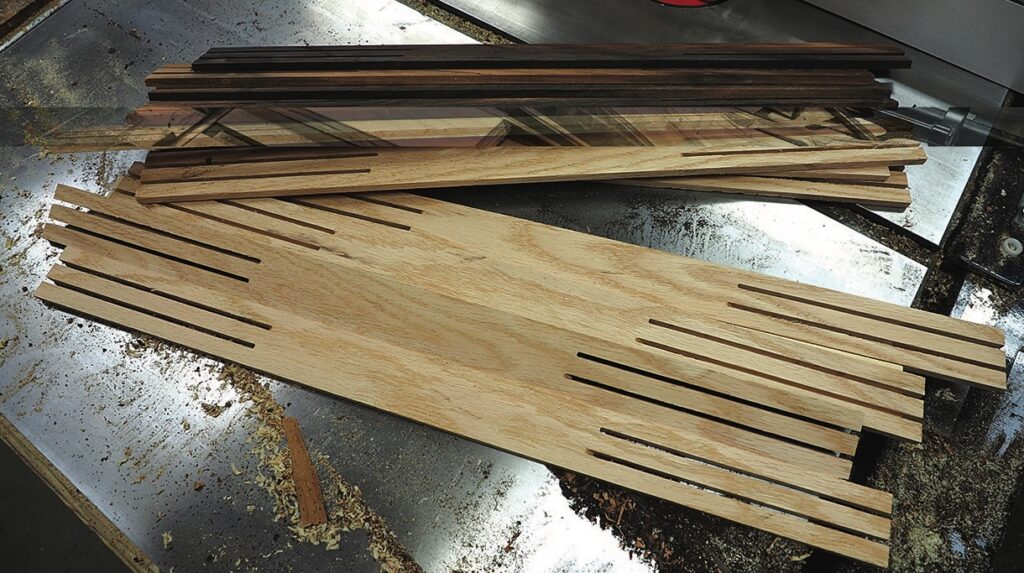
2. Push each piece into the blade until the wood hits the stop. Make three more cuts, rotating the wood so that six tines are produced. Sawing the tines like this is a perfectly safe cut because the wood never goes into the path of the upward rotating teeth and therefore there is no chance of kickback

Dimensions

Making a pair

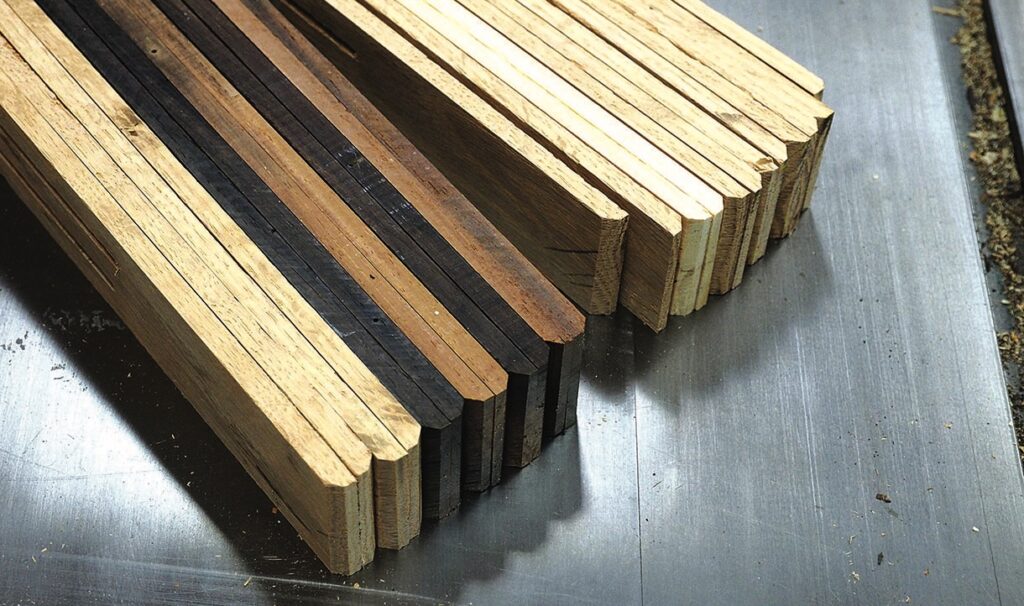
3. Cut all pieces in half and then using a mitre box or mitresaw cut a 45° bevel on the ends. Keep the parts together
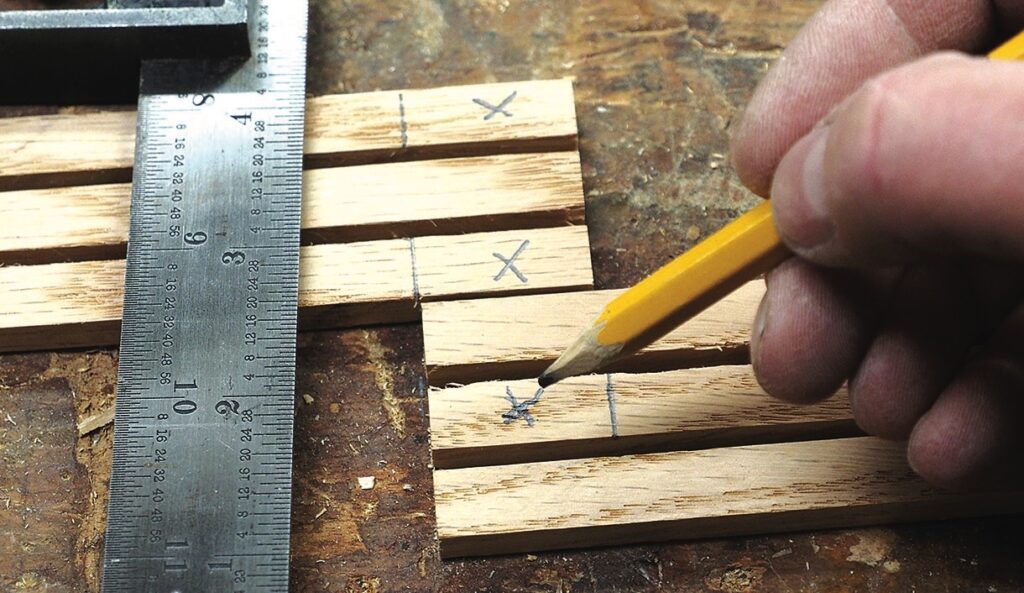
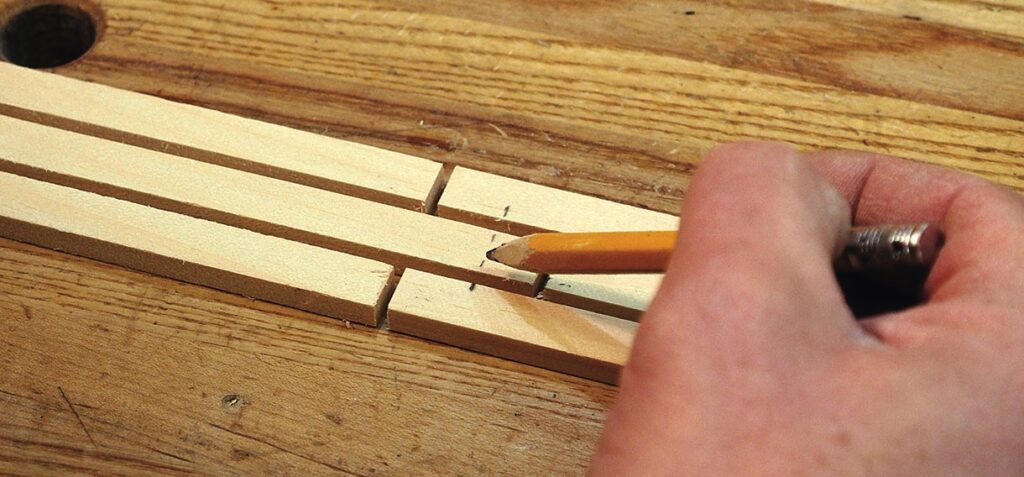
4. Mark the location of the cuts to form the hinge
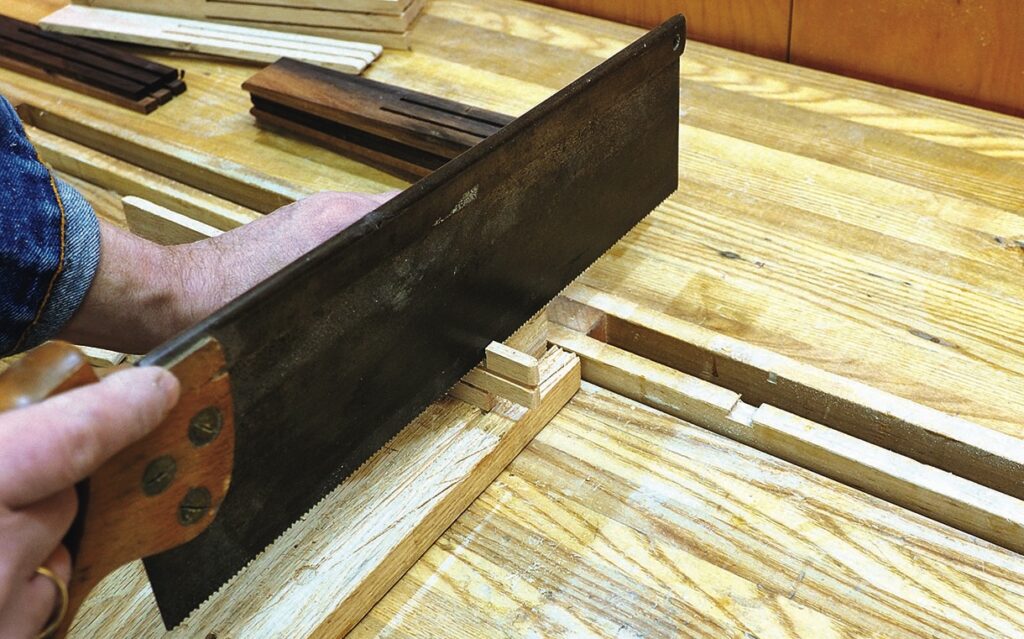
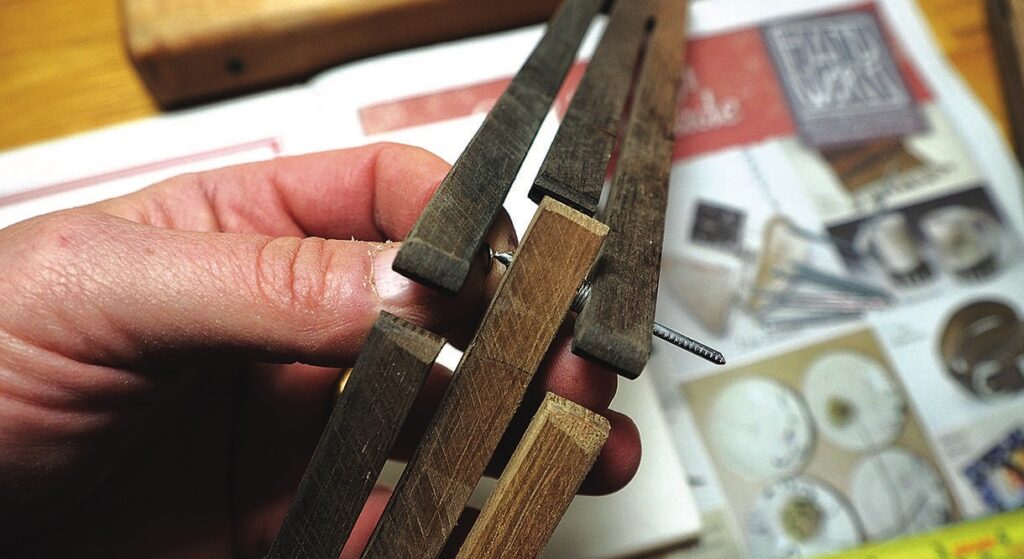
5. Using a hand saw, remove the two outer tines on one arm
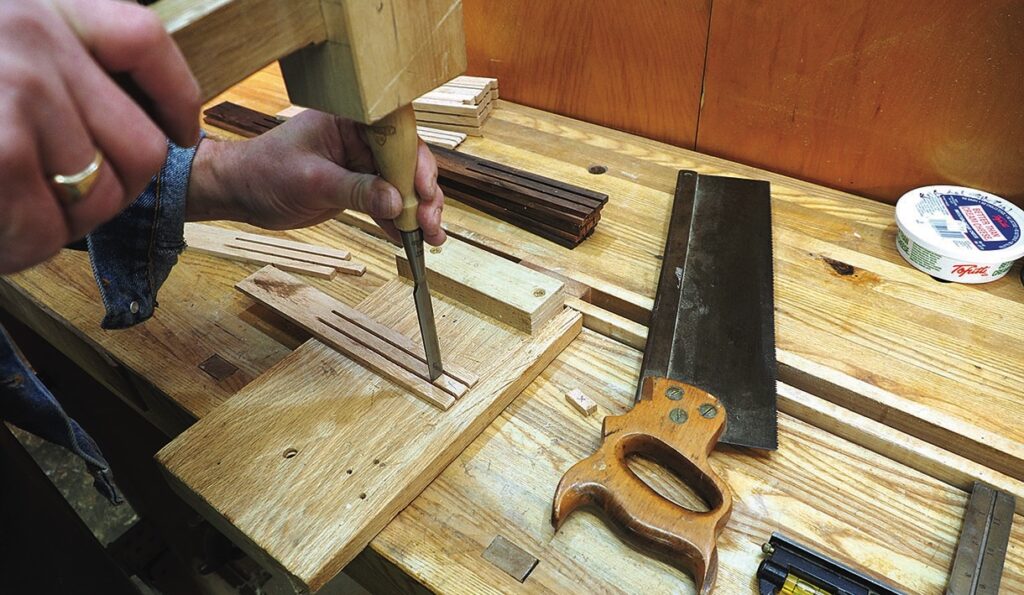
6. Using a chisel, remove the middle tine on the other arm – you could use a coping saw – but chopping with the bevel facing the tines will create a bevel edge on both side that is easily rounded over
7. Round over the tine/pivot ends and sand all over with 120 grit abrasive
8. Place each pair of tongs together and mark the location of the pivot point allowing about 1.5mm space
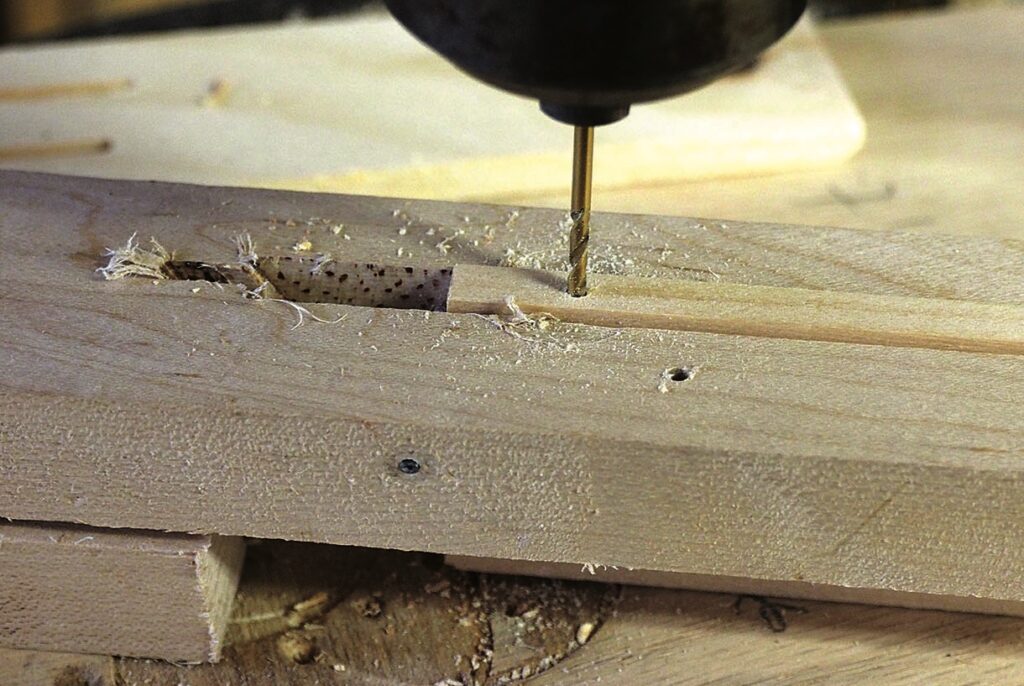
9. Finally, drill a 1.5mm hole 12mm from the ends – I made a jig to hold the tongs in place – it’s crucial that this hole is drilled perpendicular to the edge of the tines

Creating the ‘spring’

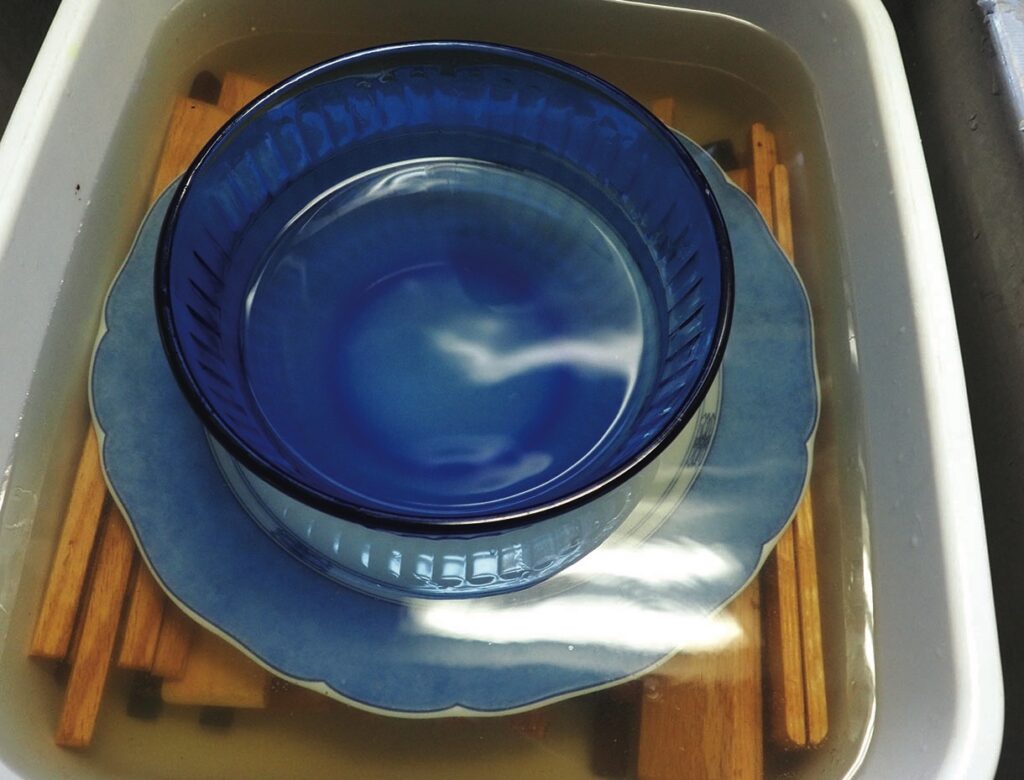
10. Now, soak all the pieces in warm water for an hour. Different woods will need different lengths of time, but on average I have found that one hour works for most species
11. Remove the tongs from the water and place a flat piece of wood between the tines (see diagram for location and orientation). For most wood species 12mm down is ideal. Set them aside to completely dry – the length of time needed to dry will depend on the humidity and temperature. I left them to thoroughly dry overnight. Throughout the initial stages of the drying process, turn occasionally

Assembling the tongs

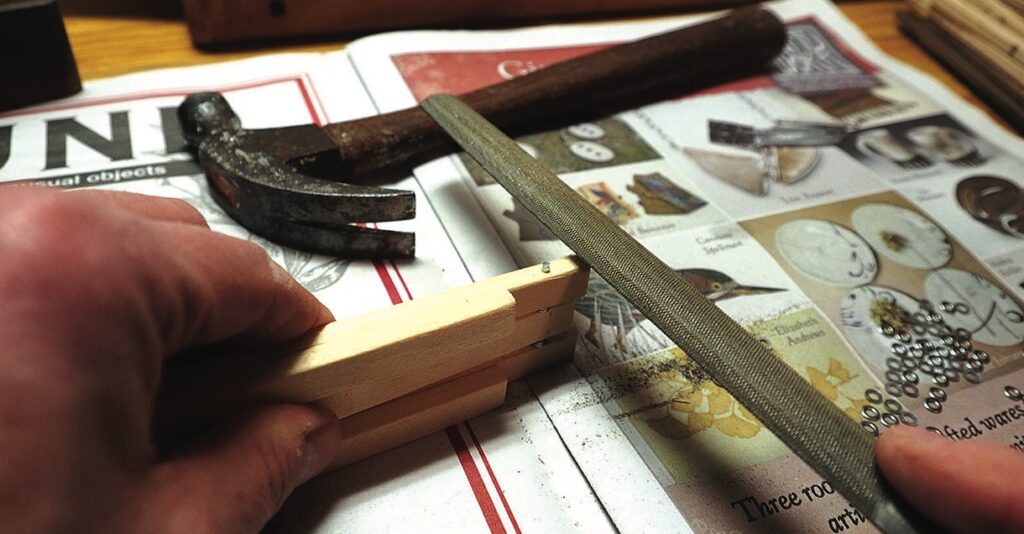
12. Place as many washers between the tines as needed and then hammer the pin through the holes
13. The washers need to create a snug fit. File off any of the pin that protrudes
14. Finally, give the tongs a light sanding and apply a generous coat of mineral oil. These salad tongs are always a big hit as a gift and will last many years. To ensure the wood is well looked after, occasionally reapply mineral oil. Now sit down and enjoy a nice leafy ceasar salad with your new tongs

Variations on a theme

Variations of this project might include making the ends more spoon-like – and what about making them much thinner and creating spring-loaded chop-sticks?

Leave a Reply

Your email address will not be published. Required fields are marked *