
Louise Biggs gets stuck into adhesives
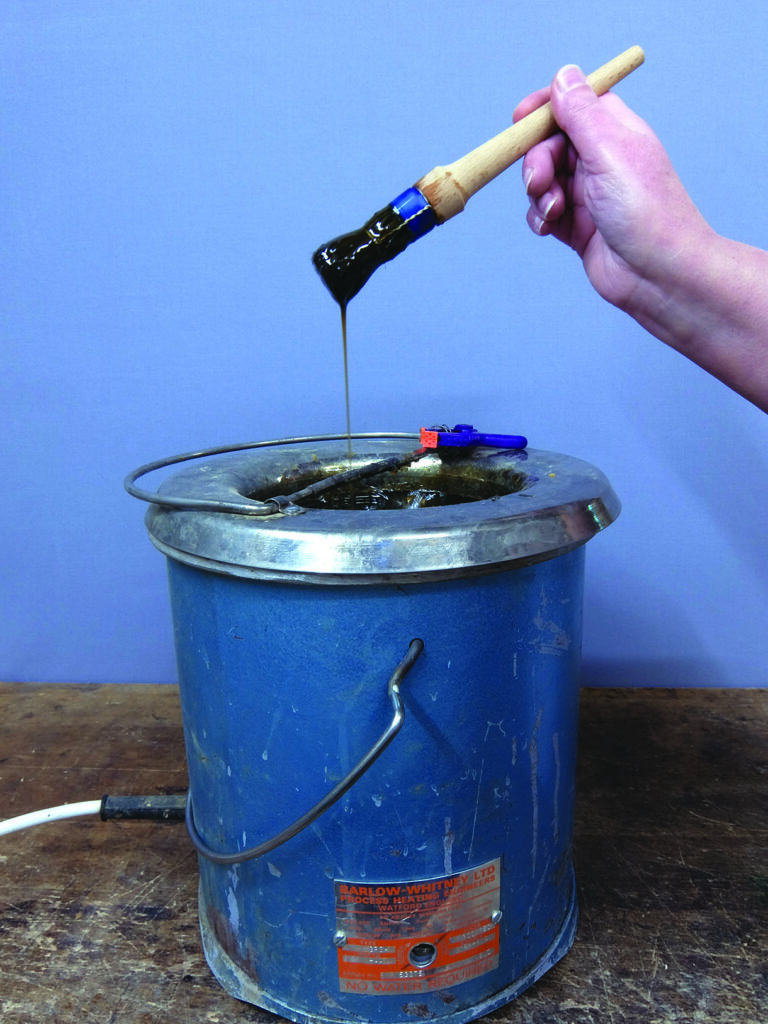
There are many different types of wood glue on the market, far more it seems than when I started as a furniture maker and restorer more than 30 years ago and far too many to go into here. Probably like every other craftsperson, I have particular types and brands I prefer but for the main part my choice of glue depends on the particular job I am working on and the timbers involved.
You may have noticed through my various articles that I mainly swing between the traditional animal/hide glue and the modern PVAs and aliphatic resins. In this article I will explain the glues I use on a regular basis and the reasons I use them.
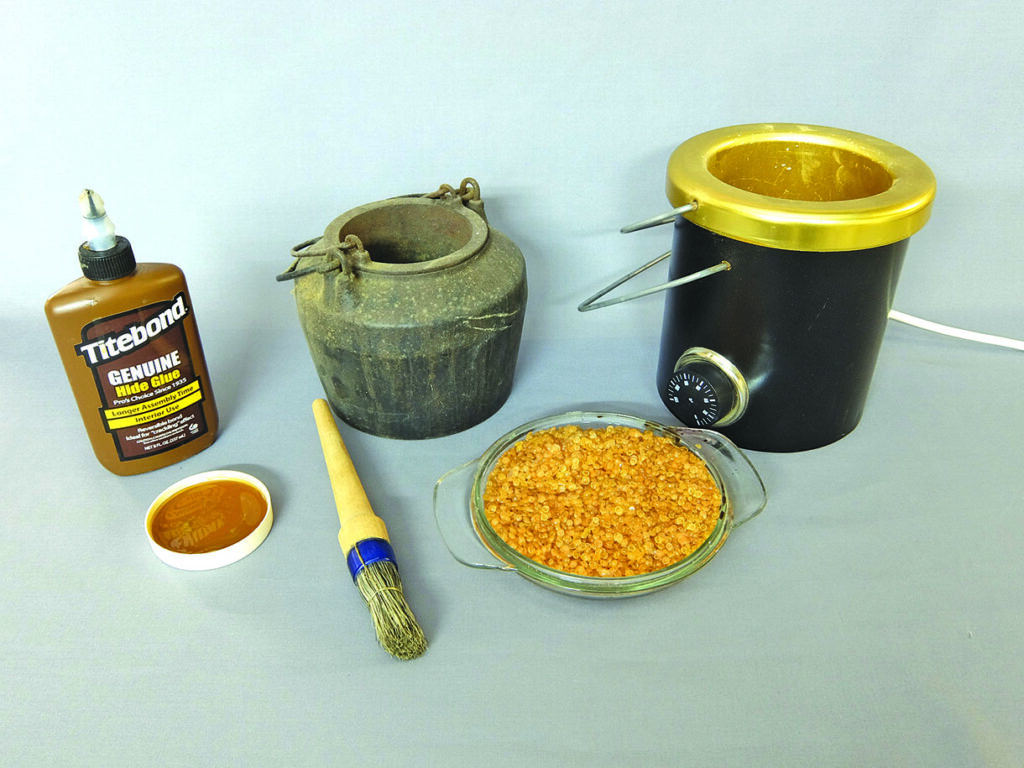
Traditional and electric glue pots with pearl glue and a bridled glue brush and modified hide glue for use cold
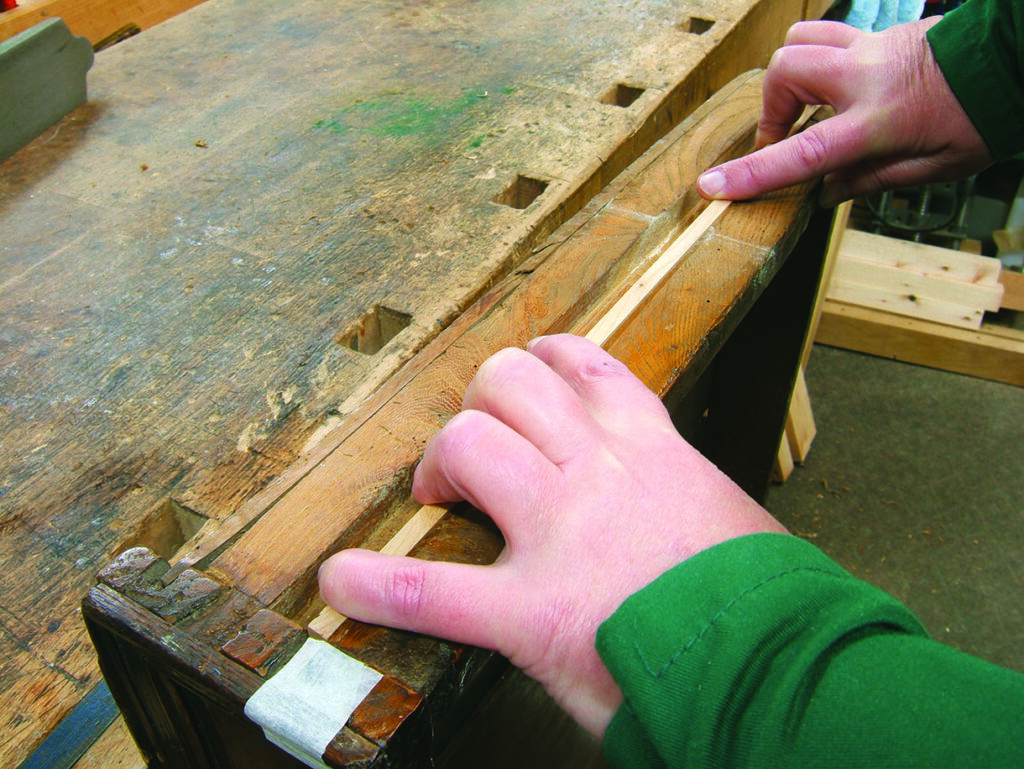
Gluing antiques
For my part there is a defining line between restoring an antique or heirloom piece and restoring or making a modern piece of furniture. I trained at the London College of Furniture (now all part of London Metropolitan University). That training has formed the baseline of how I work. Antiques and family heirloom pieces prior to the 1920s or 30s were glued with animal/hide glue and its variants of fish or rabbit skin glue. Totally natural protein glues have been around since the Egyptians 5,000 years ago. They are classed as reversible glues, with gentle heat or water they can be reconstituted. But as with so many things, there are exceptions. When restoring or conserving an antique it is professionally correct to use the same type of glue. This makes all of your repairs on a piece of furniture reversible if a problem occurs or if they need restoring later in life. If the glue can be reconstituted it causes less damage to the piece you are working on. If, when you lift a section of veneer or open the loose joint, you only get a fine dust which used to be the glue, there really is little option but to clean out the dust and re-glue the joints or relay the veneer.
The animal/hide glues can be used for the construction of furniture and for the laying of veneers. They have the great benefit of being able to form a ‘rub joint’. As they are used hot when applied between two pieces of wood they can be rubbed against each other and as the glue cools and the water evaporates they develop an initial tack which gains strength as it dries. This can prove very useful especially if a piece is going to be difficult to clamp. If there is a downside to these types of glue it is that they are not moisture resistant and heat will eventually degrade them – central heating seems to speed up the process. They also take time to prepare properly and require some specific equipment, namely a glue pot, whether this be the traditional water-filled glue pot or its modern day electric equivalent.
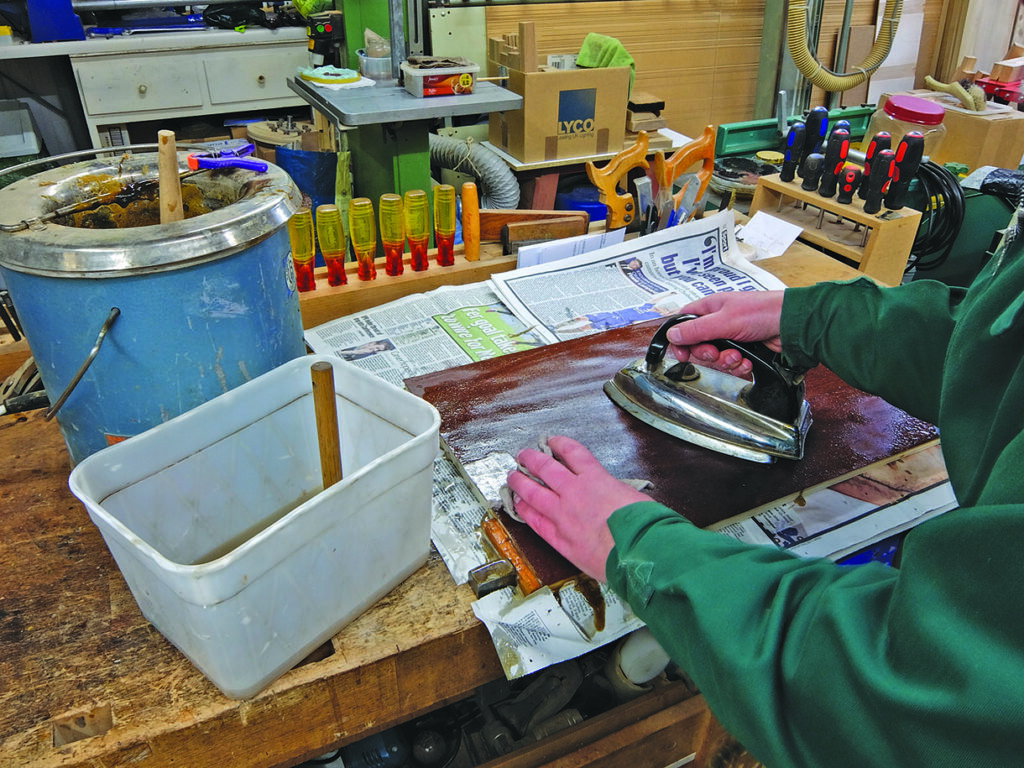
There is a modern prepared Liquid Hide Glue that can be used cold due to an additive but the disadvantage to this over traditional hide glue is the limited shelf life. It is still handy for that odd small piece that renders heating your entire glue pot impractical. It has a fast working time due to it being used hot, ideal for veneering as the glue can be re-heated with an iron and rub-joints but gluing chairs and carcases is best done in manageable stages and it is best left overnight to dry and gain full strength.
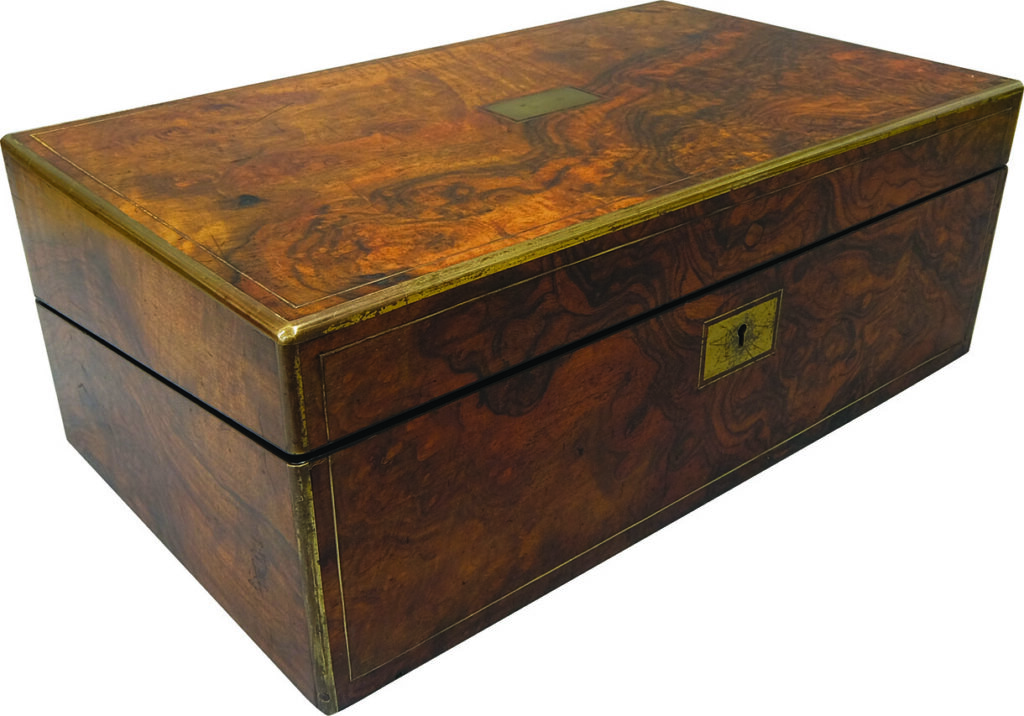
Making new furniture
The modern glues have been around since the 1920s. The most common modern glue in furniture making is PVA – Polyvinyl Acetate (white glue). These nowadays seem to have been adjusted for ever shorter working times – around 10 minutes – for initial adhesion without load but still require the piece to be clamped for a good 12 hours or overnight. They work by the water dispersing into the surrounding timber. They come ready prepared and apart from a brush or roller to spread the glue need no special equipment.
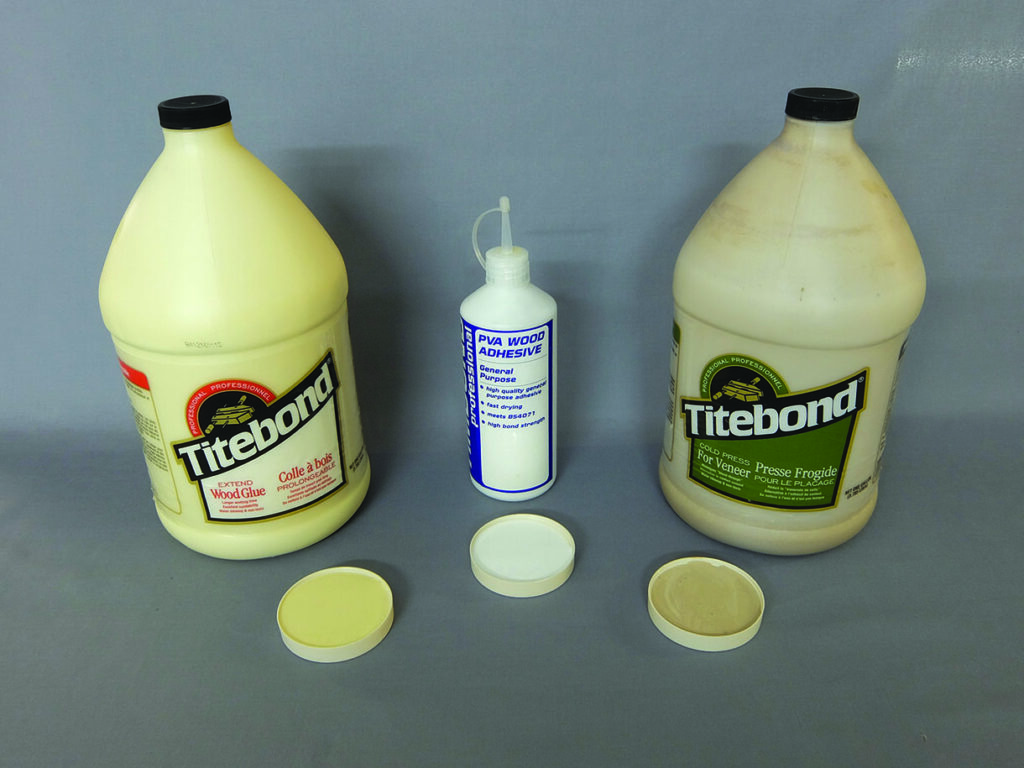
Becoming more readily available and in several different forms are the aliphatic resin glues (one of the biggest names being Titebond). These now come in a range of standard glues, those suited for dark and light timbers so as not to show a glue line, an extended version to give a longer initial working time (30 minutes) and one designed for cold pressing veneers. These are all similar to PVA with modifications to improve strength, initial tack and moisture resistance. As with the PVA glues they do not require any special equipment.
Due to the ever shortening time of the PVAs I now tend to use the aliphatic resin glues, opting for the one with the extended working time which enables me with planning, cramp availability and sometimes a spare pair of hands to glue more sections of a piece of furniture in one go where possible. This then shortens the construction time of a job and gets the piece to my customer more quickly.
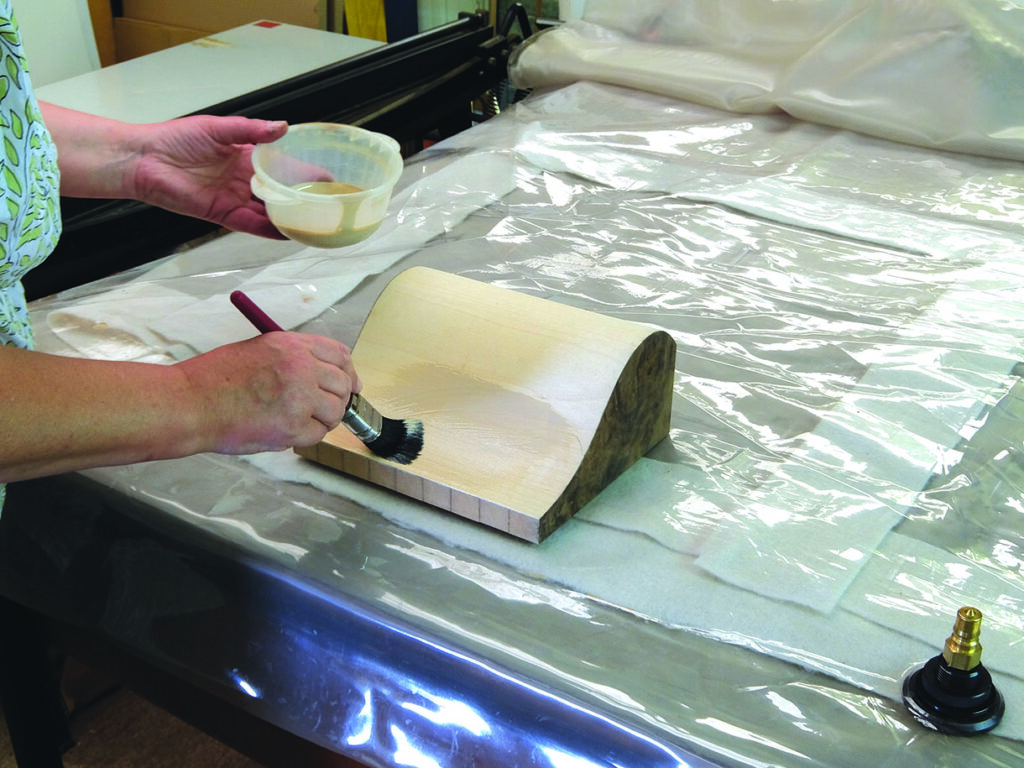
As I have a bag press for veneering I hold the cold press veneering glue in stock but this is only used for new work, antiques are still hand veneered with the animal/hide glue. The biggest benefit of this cold press veneer glue is it has a slightly thinner constituency and can be spread with a roller to gain a thin even layer of glue, which will not create bulges or lumps behind the modern day thinner-cut veneers.
Exceptions to the rules
As with everything there are exceptions to the standard rules. Some of the modern glues leave a residue in the timber and no matter how much you clean up the joints, if you are restoring a modern piece these glues will not adhere to one another properly. I have also found over the years that some timbers, such as rosewood and teak, do not glue well with the PVAs and aliphatic resins due to the oil within the timber. In both cases I would use the animal/hide glue to re-glue a modern piece or to glue oily timbers. The oils do not seem to affect the traditional glue and it appears to adhere to modern adhesives rather better than they do to themselves.
I have covered the adhesives that I choose to use on a daily basis and hope I have given sound reasons for my choices based on my experience. All adhesives for one reason or another have a shelf life and it would be impractical and uneconomical to stock them all. They all have their pros and cons and sometimes it just comes down to personal preference. But my main rule is to use the appropriate glue for the particular piece of furniture concerned, animal/hide glue for antiques and modern glues for new furniture and modern restorations.