
Geoffrey Laycock takes a look at impact risk
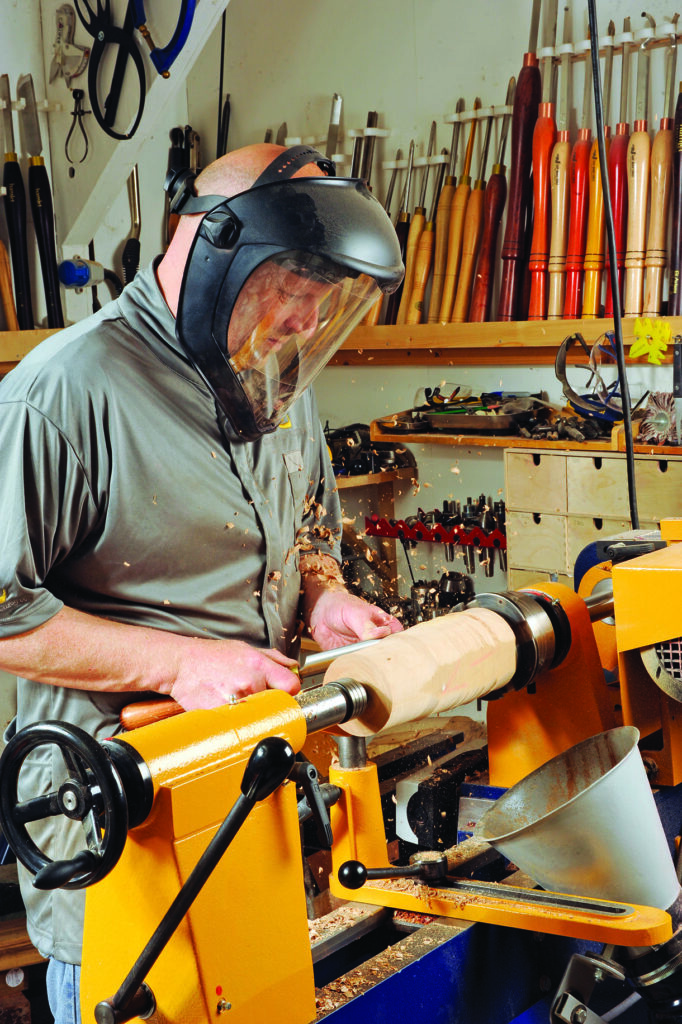
It doesn’t matter whether you are working with a prepared blank bought from a reputable source, your own sourced and seasoned timber or ‘green’ – the fact is that spinning it at several hundred or many more RPM can result in a problem. Hidden defects can exist in timber as shakes, splits, fungal decay etc. induce weakness that can be found with the turning tool or maybe even just centrifugal force as you crank up the lathe speed. Resulting flying pieces can go any direction, but those found with the chisel will mostly head in your direction.
You only have one pair of eyes and they are quite vulnerable, easily scratched or irritated, as we all know. Hit one with a piece of wood travelling at speed and the damage can be irreparable – an eye is, after all, only a semi-rigid, almost spherical container full of jelly.
In practical terms, eyes are not replaceable and, although we can adapt well to losing one eye, two is devastating. Having written that, there are non-sighted woodturners and I am in awe of their determination and skills. With my background in law enforcement I am reminded of a legal precedent set by a court case – relating to use of eye protection at work. Basically, it relates to a man called Paris who worked for Stepney Borough Council. He lost an eye during WW2, and in 1946 he became employed by SBC as a garage mechanic. He was using a hammer to remove a bolt from a vehicle suspension and a metal sliver flew off and hit him in his good eye, resulting in loss of all sight. Yes, lightning can strike twice and with catastrophic consequence. Why tell this story? Because it does help to think of worst-case scenarios sometimes. Eye protection is very important with any task that can involve flying fragments – even from hand tools, chemicals, fumes or gases, but logic should tell us it’s even more important if you have potential for an even bigger consequence. If you have poor or non-existent sight in one eye take greater care.
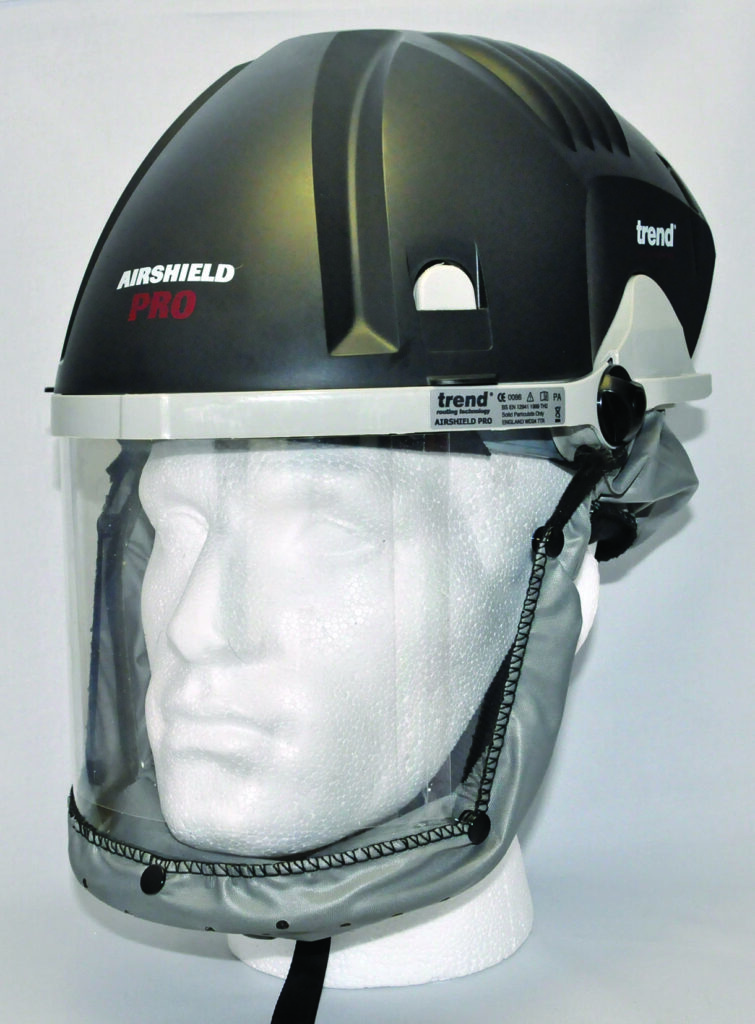
So, back to basics. Whatever you are turning, wear protection and I always advise a full-face shield rather than specs. Simple logic – the flying object may not hit an eye but it can cause serious injury to any other part of your face/forehead. Why not reduce that possibility? And a face shield provides higher impact energy protection than any available safety glasses, which is what you need.