The Woodworkers Institute

We bring you the very best of woodworking!

“Make it with us”

Shelf mouse

Duane Cartwright carves a fun, shelf-climbing mouse
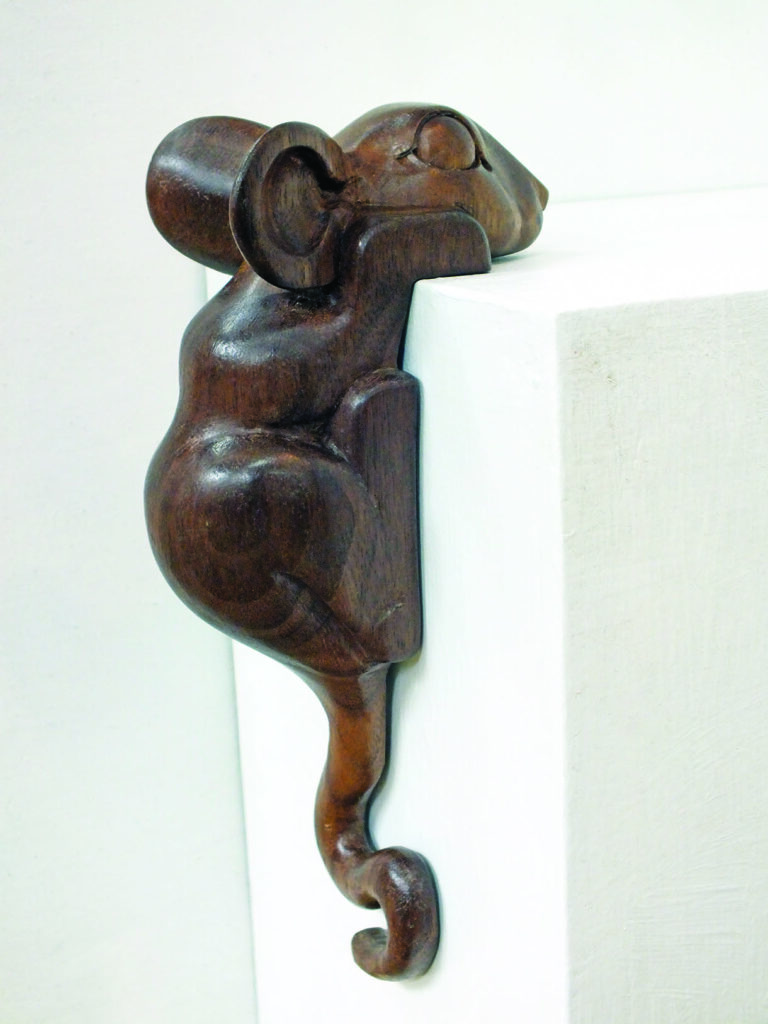
Wooden monkey sculpture on white corner

I have carved this fun little shelf-climbing/sitting mouse in walnut, which is the most popular timber I carve these mice in, though I also produce them in cherry and lime. You could carve these mice in any of your favourite timbers – a wood species with a nice grain pattern would look great. As these little mice climb up and look down they look great when you carve two and have one climbing up the corner of a book case or shelf etc. and the other looking over the opposite edge.

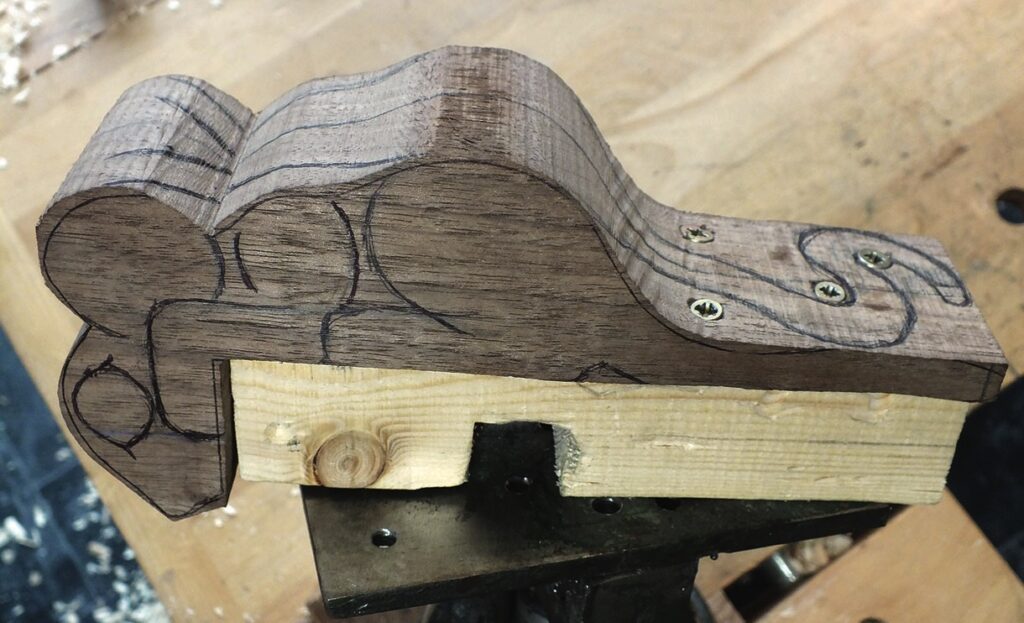
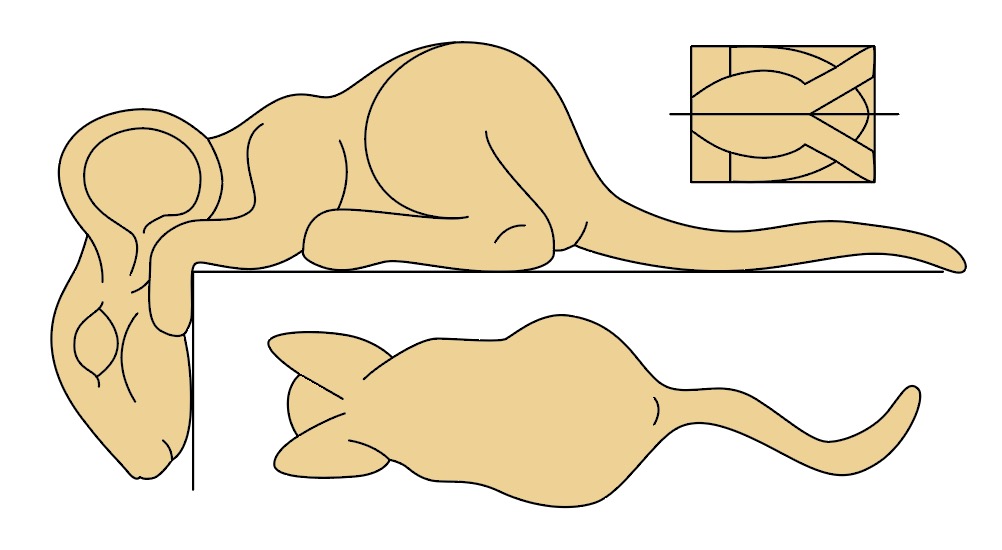
As the mouse will climb up and rest on the corner of a shelf, the underside needs to be flat and the body needs to be at 90° to the head and front feet. To help keep the underside flat and at the right angle, cut the whole pattern profile out on the bandsaw, then draw on the shape of the tail – giving it some curl will add character to the mouse and to the overall look. Then drill a few 3mm holes in the waste areas around the tail. Now rest the mouse on a scrap block of wood and screw a few screws through the pre-drilled holes around the tail, fixing the mouse to the scrap block securely. Then you can attach the block of wood to a carving vice, or use a longer/bigger scrap block with a G-clamp or similar to hold the project securely to a table while you carve. 

Things you will need

Tools:
• Bandsaw & coping saw
• No.11, 3 and 6mm 
• No.9, 5 and 15mm 
• No.6, 4 and 7mm 
• No.3, 6mm fishtail 
• No.3, 10 and 20mm 
• 2mm V-tool
• Carving knife
• Riffler
Supplies:
• Piece of wood, I used walnut (Juglans regia) 50 mm thick x 185mm long x 90mm wide
• 120-240g abrasives 
• Sanding sealer
• Wax

Drawing
Sleeping cat illustrated in geometric shapes

Step-by-step

Wood piece with carved design in workshop.
1. Start by transferring the design on to your timber. You can use a carbon stick and rub over the back of the design, then trace over the design to transfer the carbon on to the wood, or, you can glue the printed pattern on to the wood. Once done, use a bandsaw or coping saw to cut out the profile of the mouse. Now draw on the rough shape of the tail, the ears and the top of the head. Use a square and draw some lines from the paws etc. across to the other side and draw on their placement  so both sides match equally. Now, use a scrap block of wood to attach the project to a carving vice
Chisel carving detailed wooden sculpture.
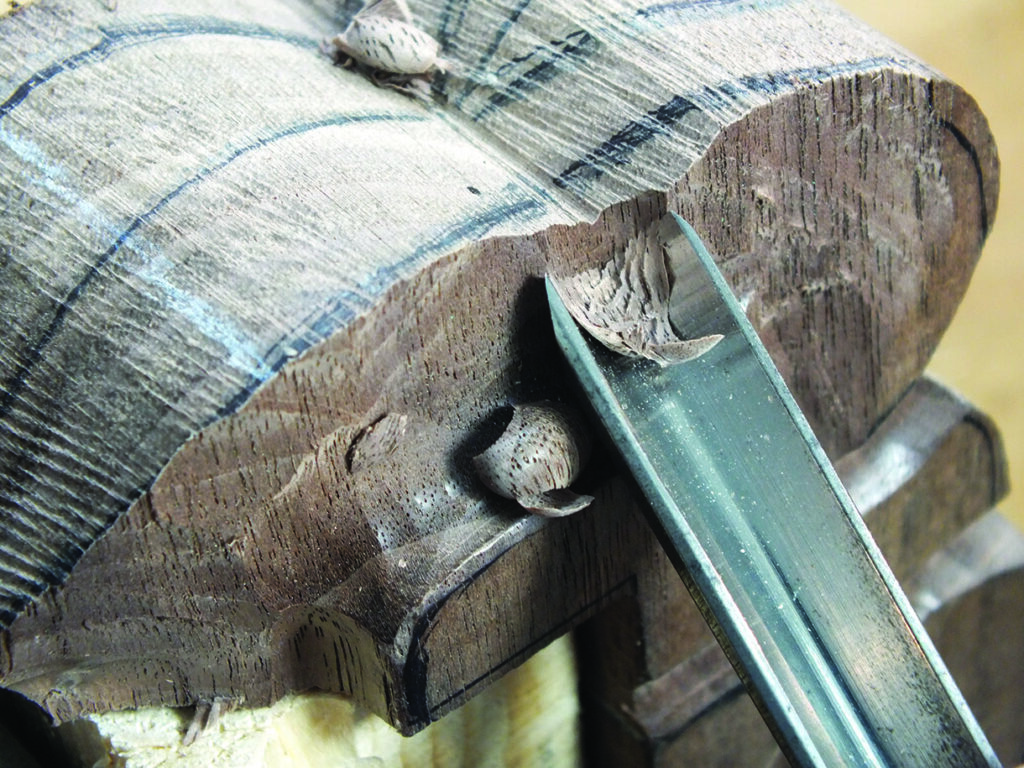
2. Start to remove the waste wood from both sides of the head  and the front of the ears, to the profile lines you drew earlier on top of the head. The front paws should stick out on each side equally
Wood carving detail with carving chisel.
3. Repeat for  both sides of the body. Use the No.11, 3 mm or similar gouge to outline behind the back of the ears and around the back legs and paws, then carve in around the shoulders, taking them back to the body’s profile lines and slope the back of the front legs (the elbows) so they appear to go behind the back paws
Chisel carving intricate details in wood surface
4. Draw the cheeks on to both sides of the head and check they are level with each other. Once happy with their placement, use a No.9, 5mm or similar to carve along the cheeks, then use a shallow gouge to remove the waste wood above the cheeks so they stand proud by a few millimetres
Wood carving with chisel detail close-up.
5. Draw a rough circle above the cheeks for the eyeballs. The circle needs to be big and a small part of it will be part of the cheek. Once happy, draw some lines from the circle across to the other side of the head, then draw the eyeball on the other side, making sure they are equal in size and placement. Use a No.9, 5mm to carve around the eyeballs, then use a shallow No.3 sweep to round over the eyeballs and cheeks so the contours flow
Wood carving with precise groove detail.
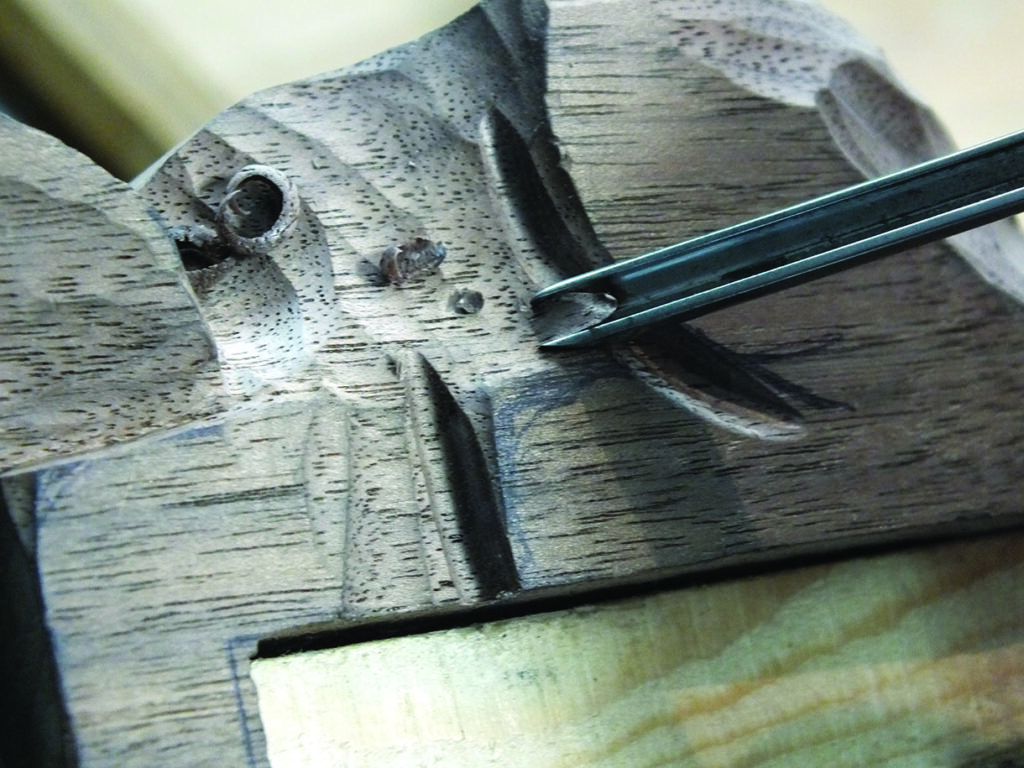
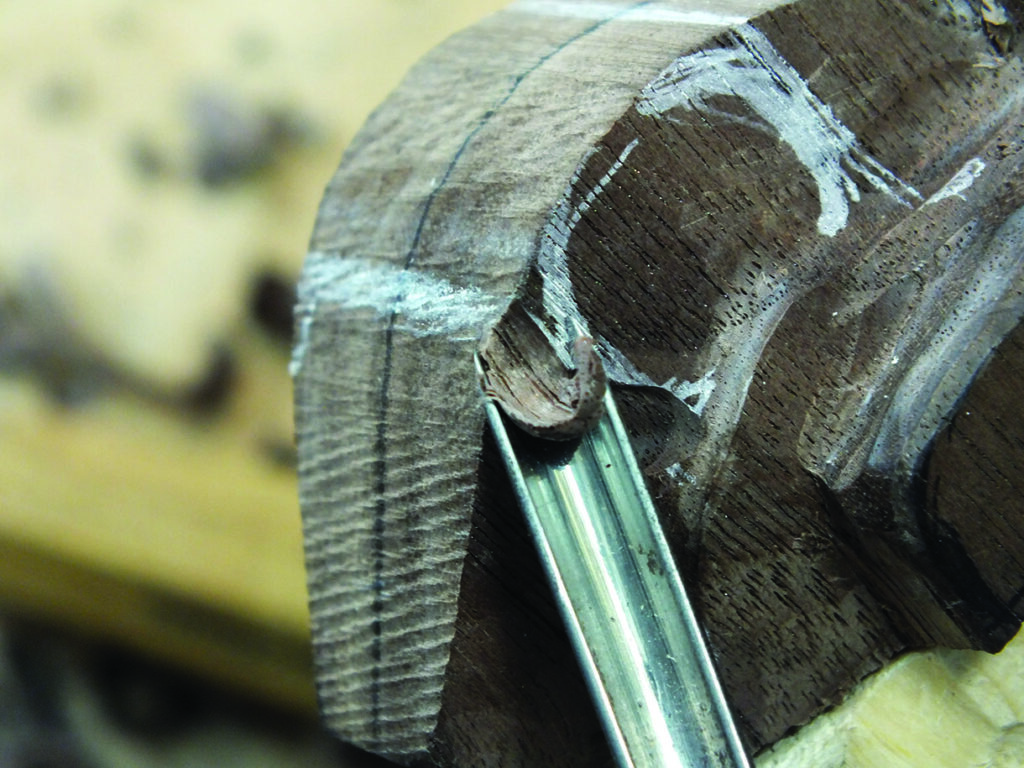
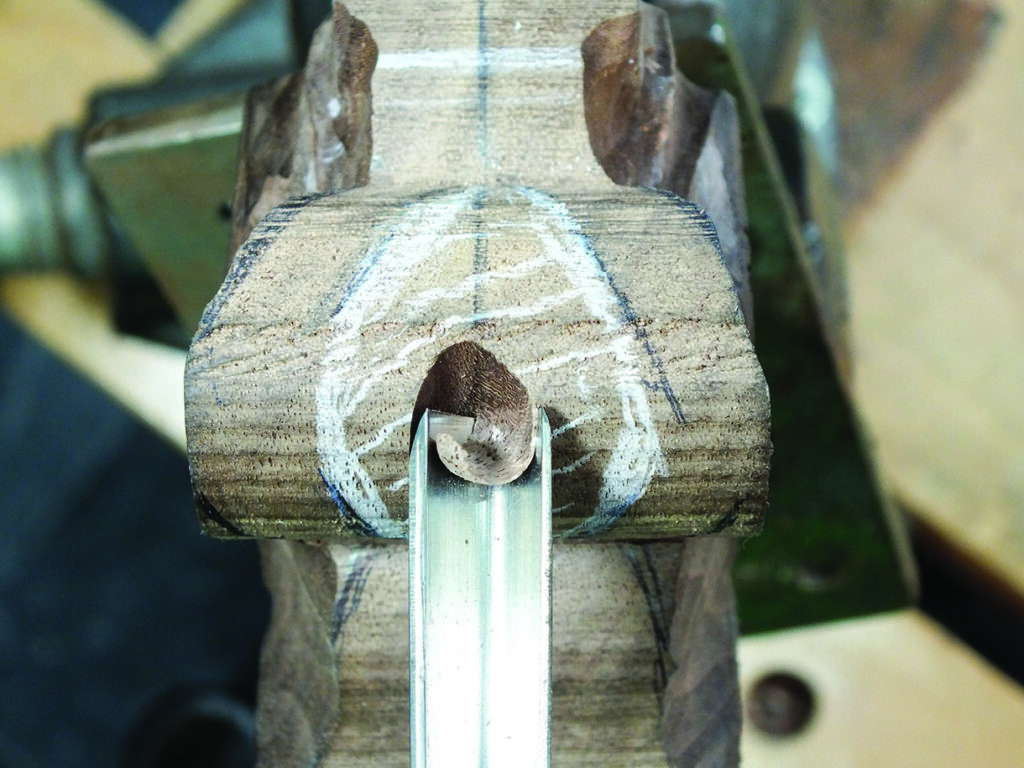
6. Draw in the gap between the ears, then use a deep No.11, 10mm or similar to carve in between the ears, separating them. Keep the ears chunky for now
Close-up of wood carving with chisel tool
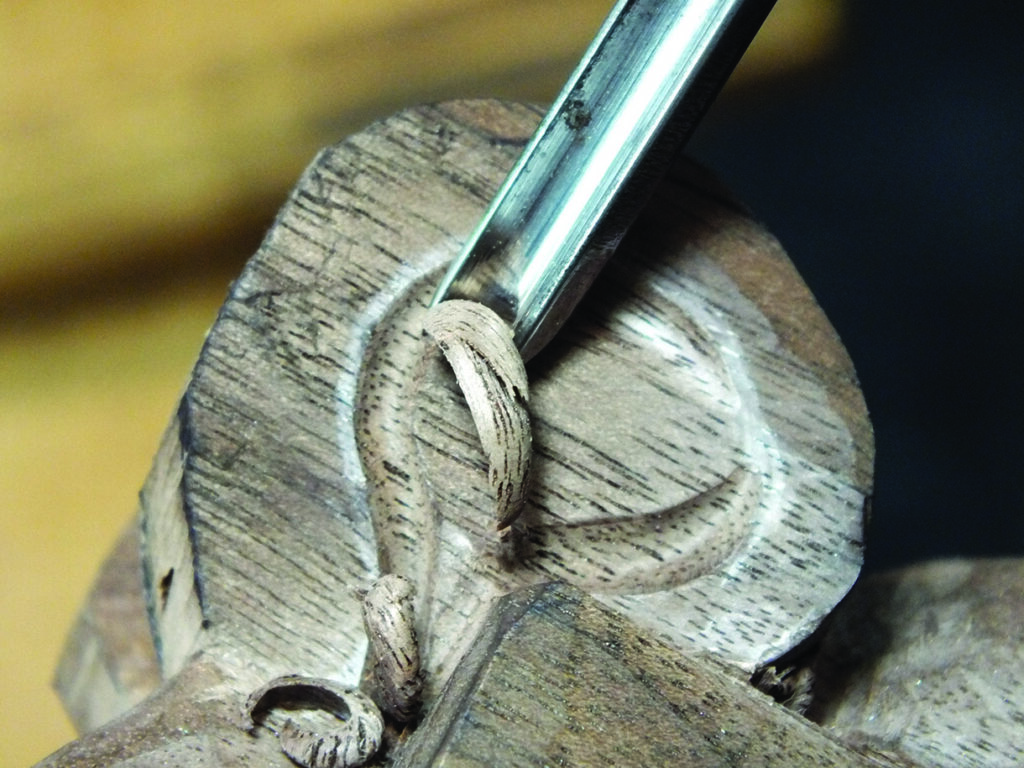
7. Draw on the shape of the inner ear then use a No.9, 5mm or similar to carve in the ears before hollowing them out. Once done, you can finish shaping the outside of the ears, blending them into the head and body
Chisel carving intricate wood detail.
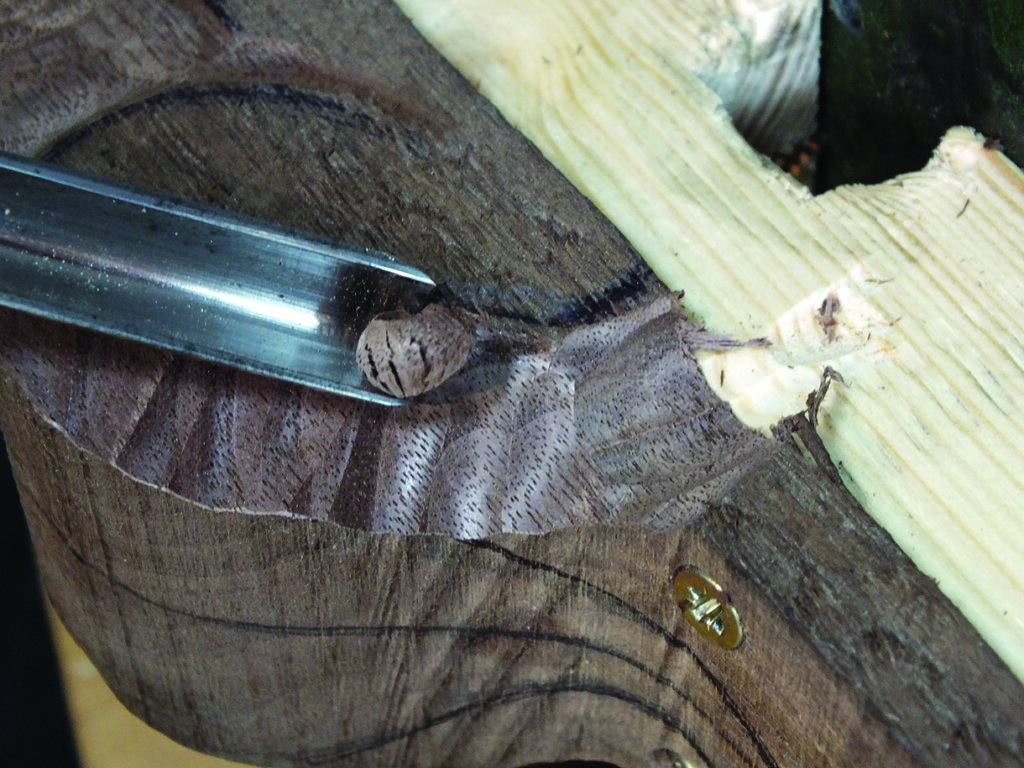
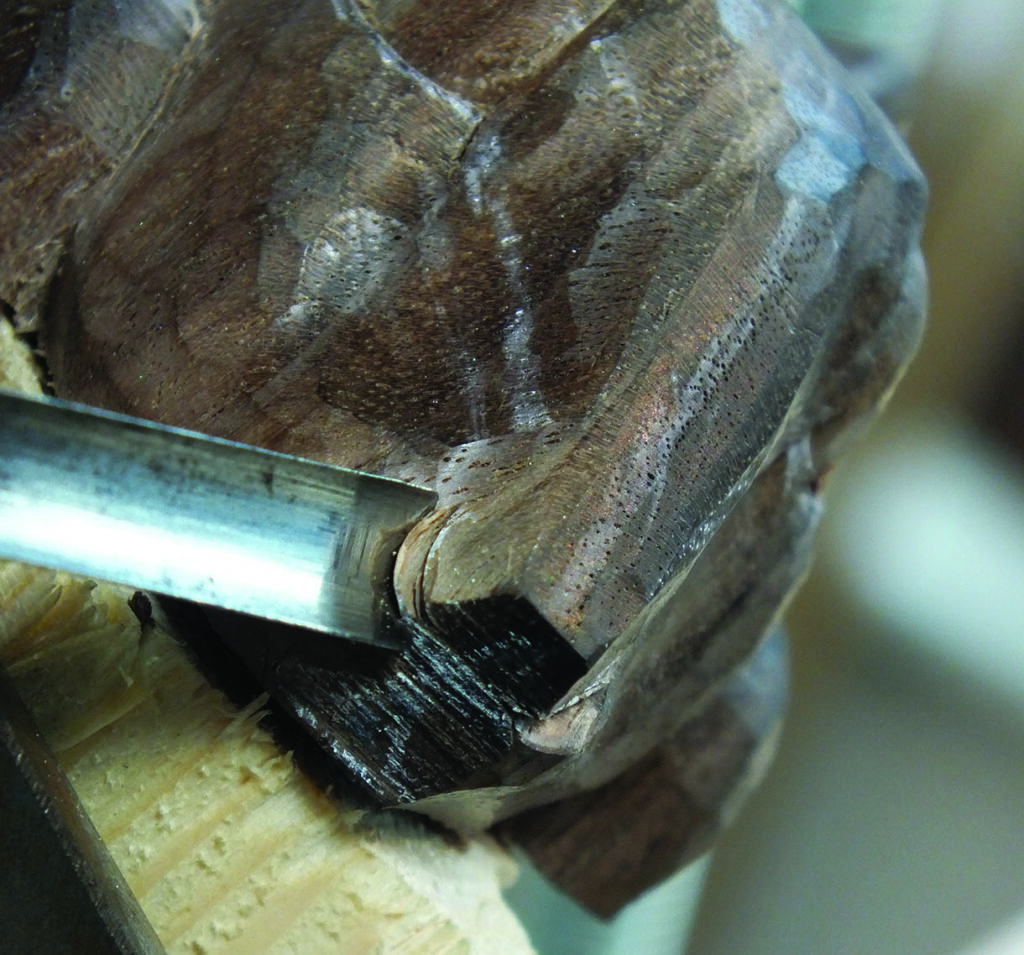
8. Use the No.11, 10mm to carve behind the back legs around the heel. Use a shallow gouge to continue shaping the body so the shoulders, back and limbs all blend together, but keep away from the screws in the tail area
Close-up of wood carving with chisel
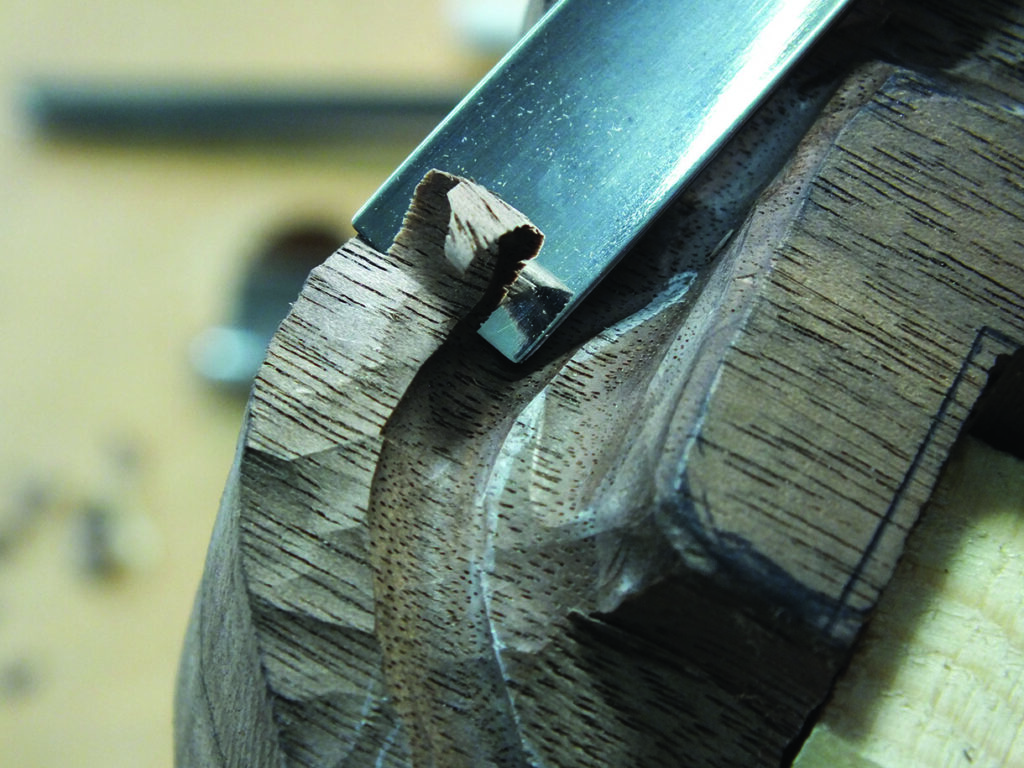
9. Back to the eyes. Draw a line from the top corner of the ears to the tip of the nose on both sides. This is the centreline for the eyes.  Now draw on the top eyelids. The corners of the eye go just under the centreline. Once happy, use a gouge to cut in, creating a stop cut, then use a shallow fishtail gouge or similar reversed and carve up to the stop cut. Once both sides are done draw on the bottom eyelids, then cut in, creating the eyelid stop cuts. Use a skew chisel to carve down to the stop cut and carve in deeper in the corners. Keep the eyeball round and equal on both sides
Wood carving with chisel close-up
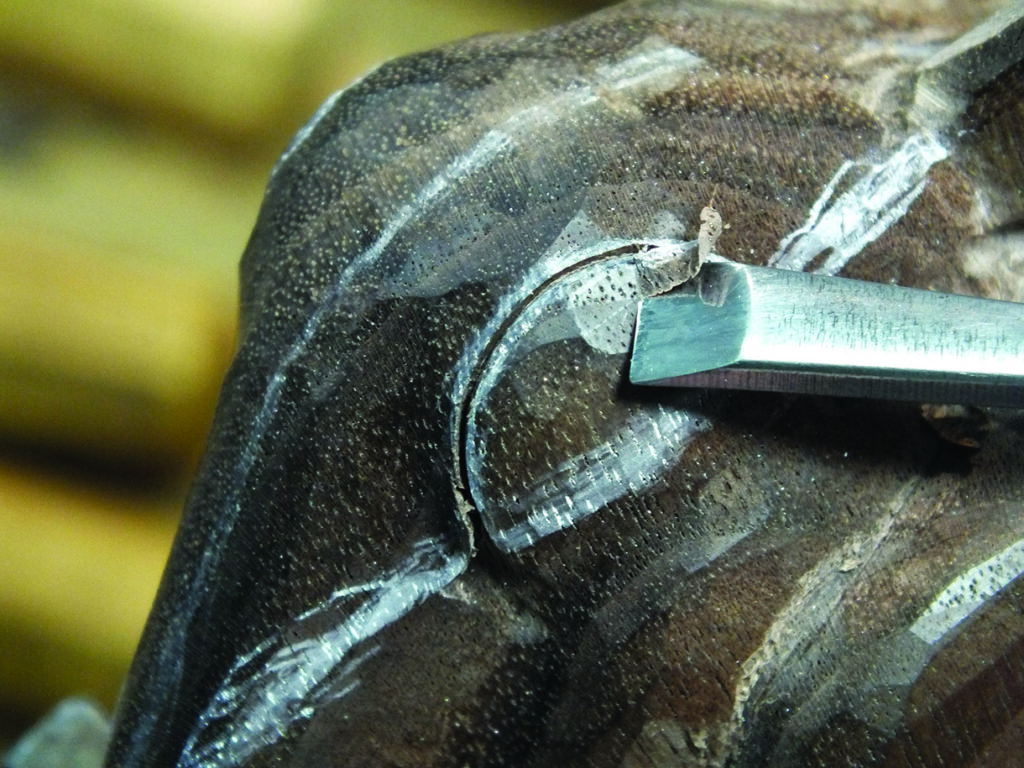
10. For the nose, use a small, deep gouge to carve down both sides so the tip of the nose is narrower than the cheeks. Now draw on the sides of the nostrils and the front of the mouth. The mouth starts under the centre of the nose and forks out under the chin area. Use a gouge to cut in a curved stop cut for the nostrils, then carve up to the stop-cut, creating the nostrils and giving the nose its detail. Now  use a small V-tool for the mouth detail
Scroll saw cutting intricate wood pattern
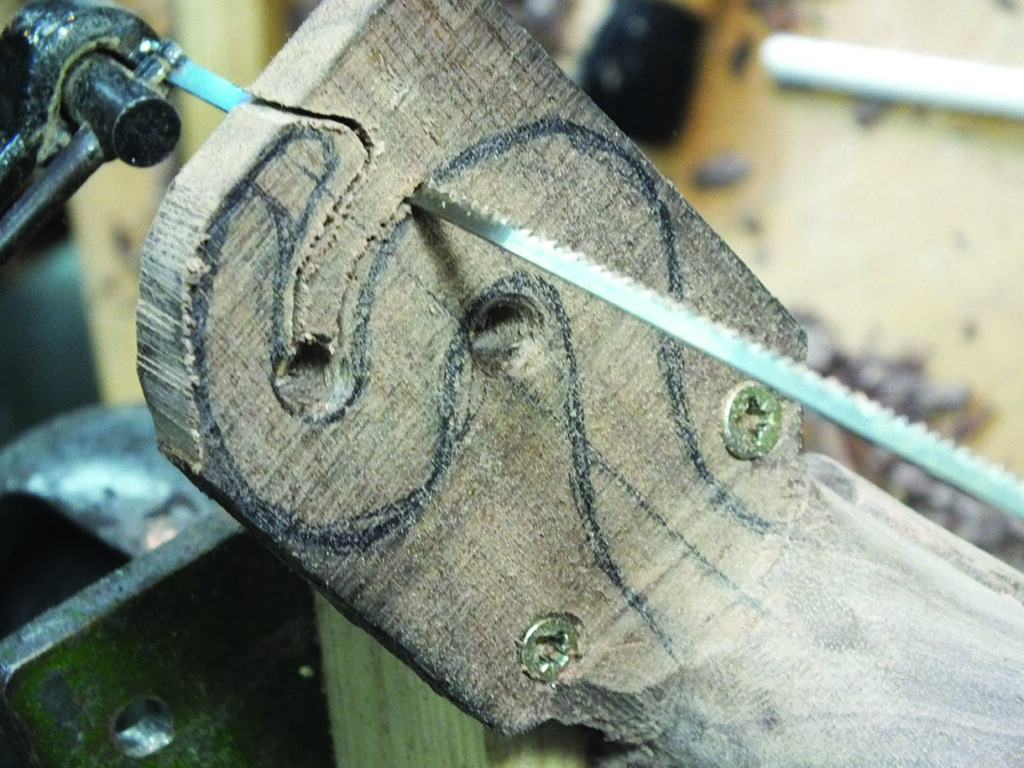
11. Abrade the surfaces to create a smooth finish and remove the mouse from its fixing block. Then re-secure the mouse on the block so most of the tail is free, but held with two of the screw holes to add stability while using a coping saw to cut around the tail to remove the waste. When you get close to the body,remove the mouse from the block and finish sawing the tail. Use a knife to round off the tail giving its final shape, then sand
Wood carving with gouge tool in progress.
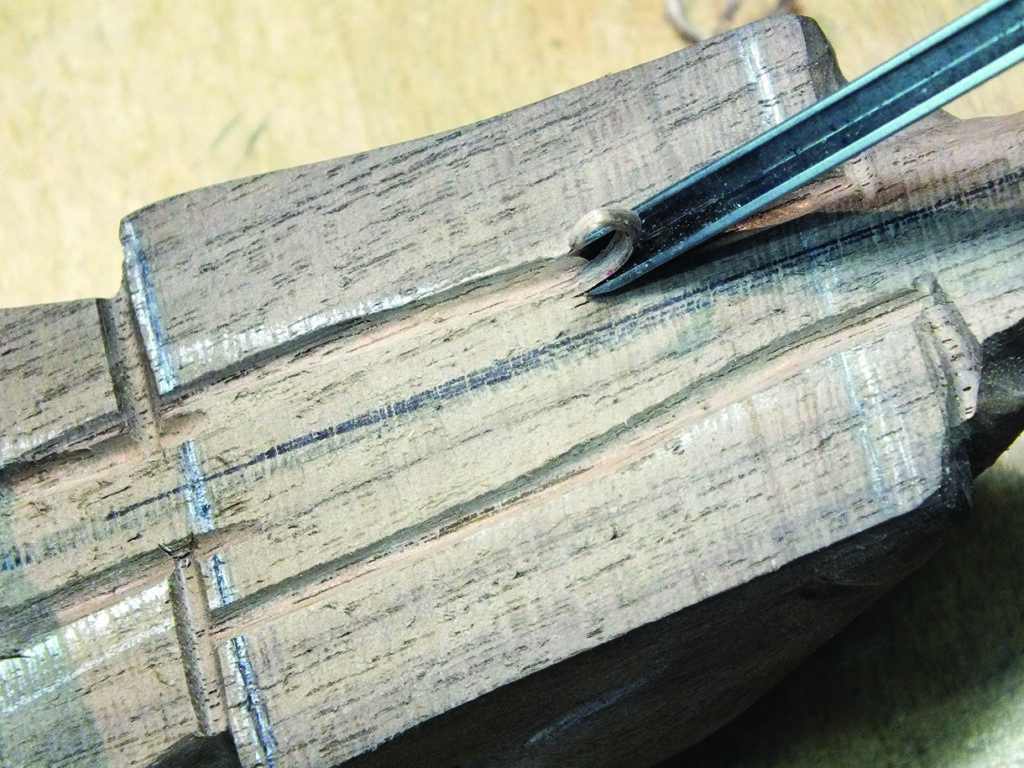
12. On the underside, draw in the paws. Use a No.11, gouge to carve around them and a shallow gouge to carve in between them so they stand proud by a few millimetres. Finish off  sanding the mouse and, once you’re happy that the surface is smooth and free from blemishes, apply a finish of your choice to create the look and lustre you require

Leave a Reply

Your email address will not be published. Required fields are marked *