
Mike Wood shows how to create a pair of these beautiful birds
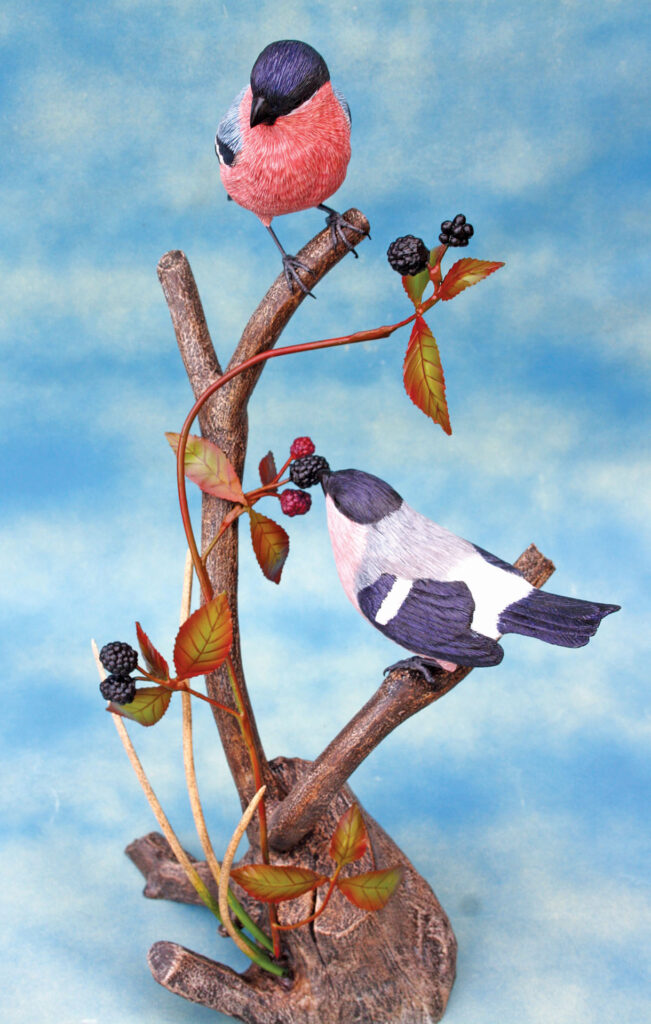
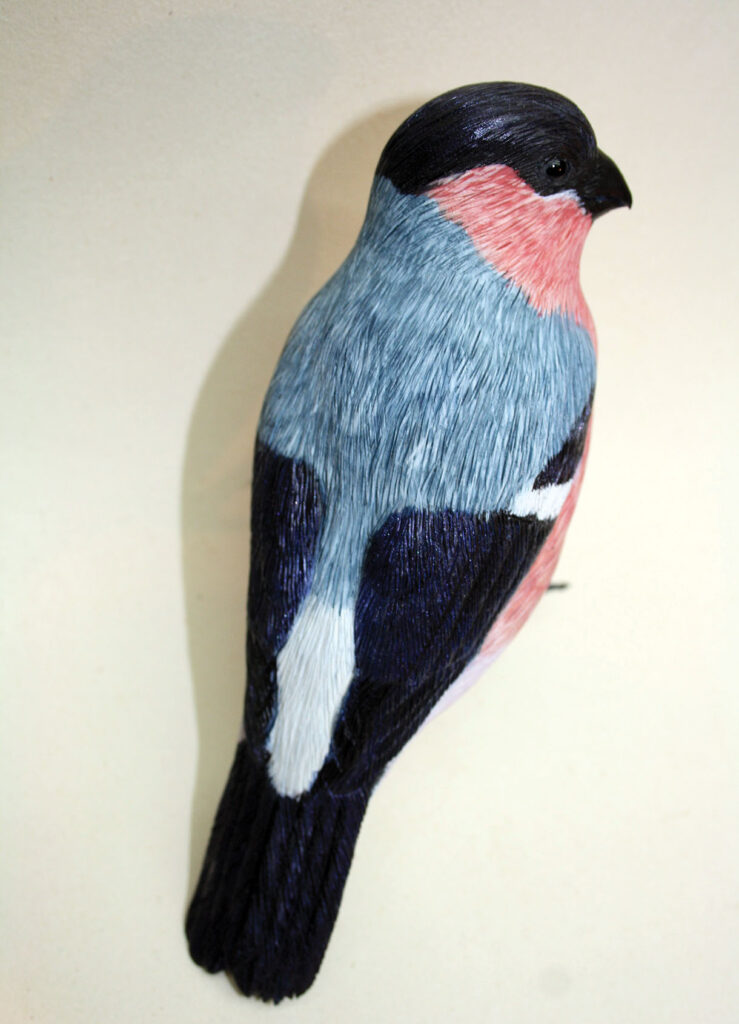
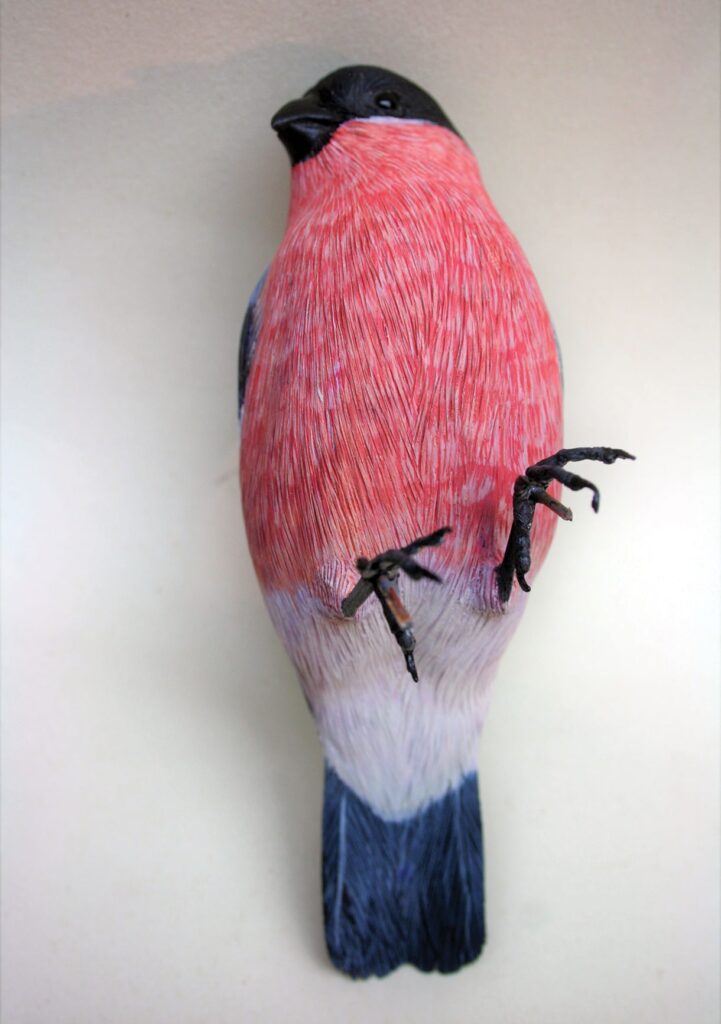
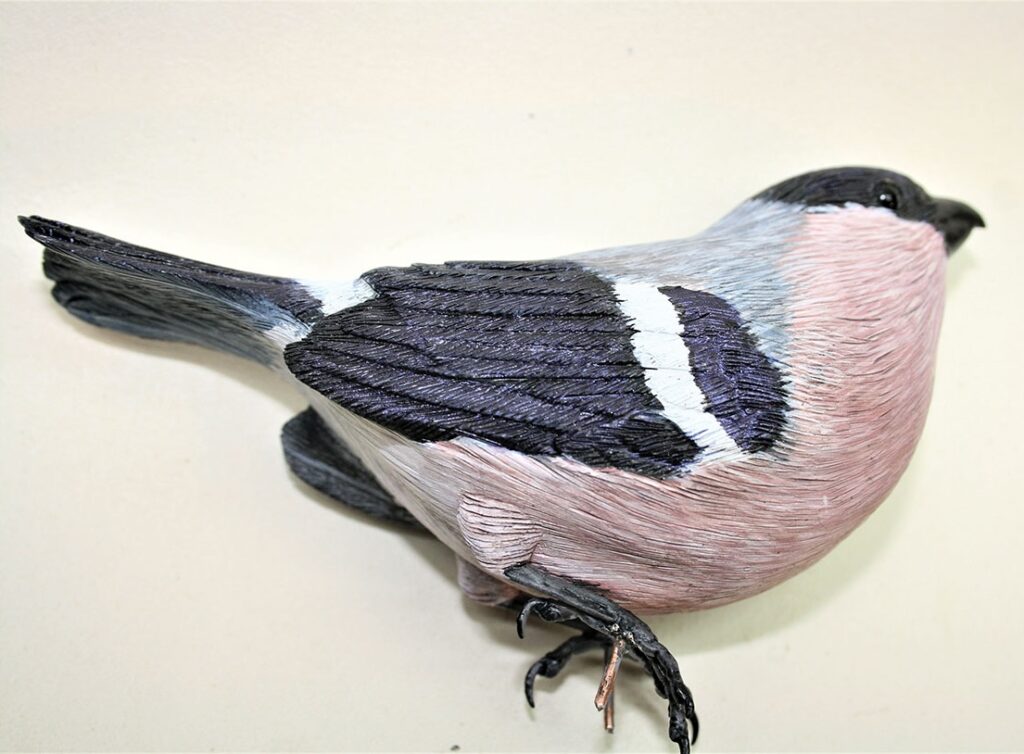
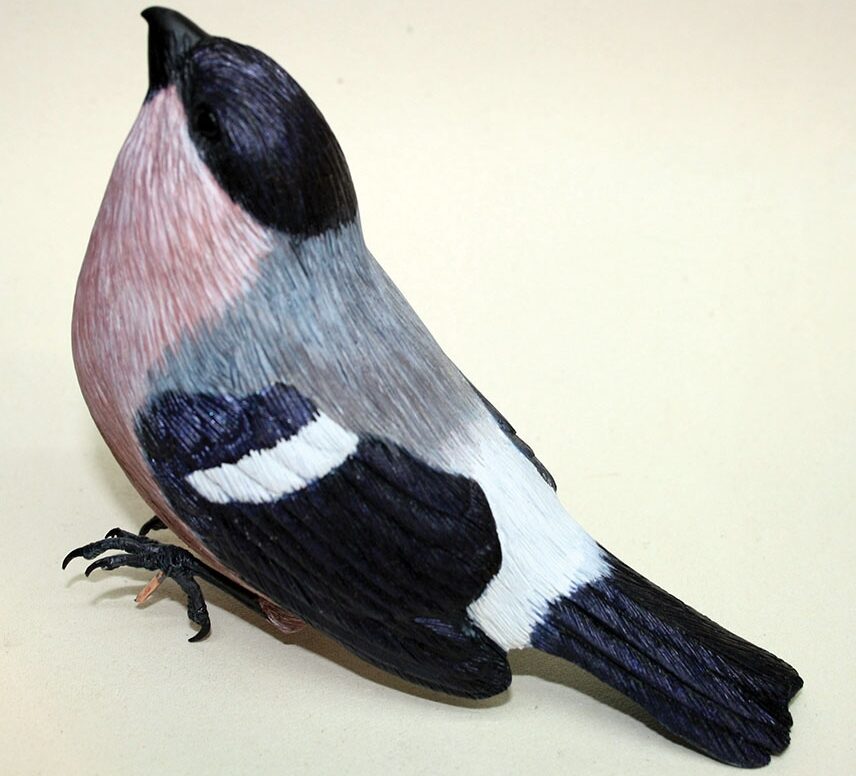
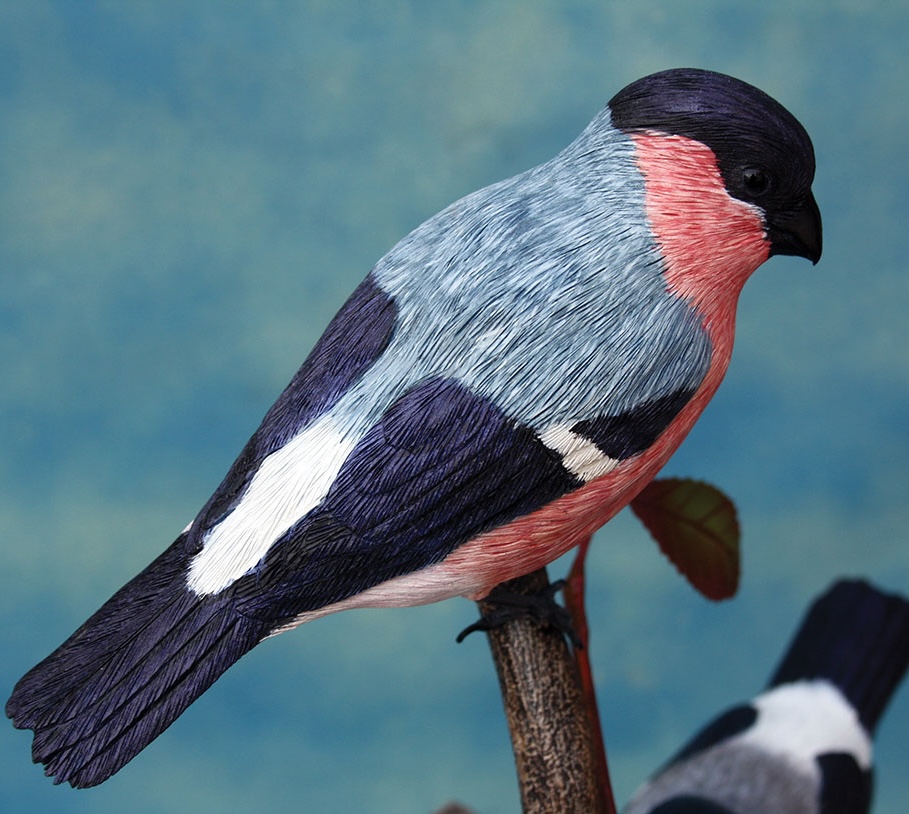
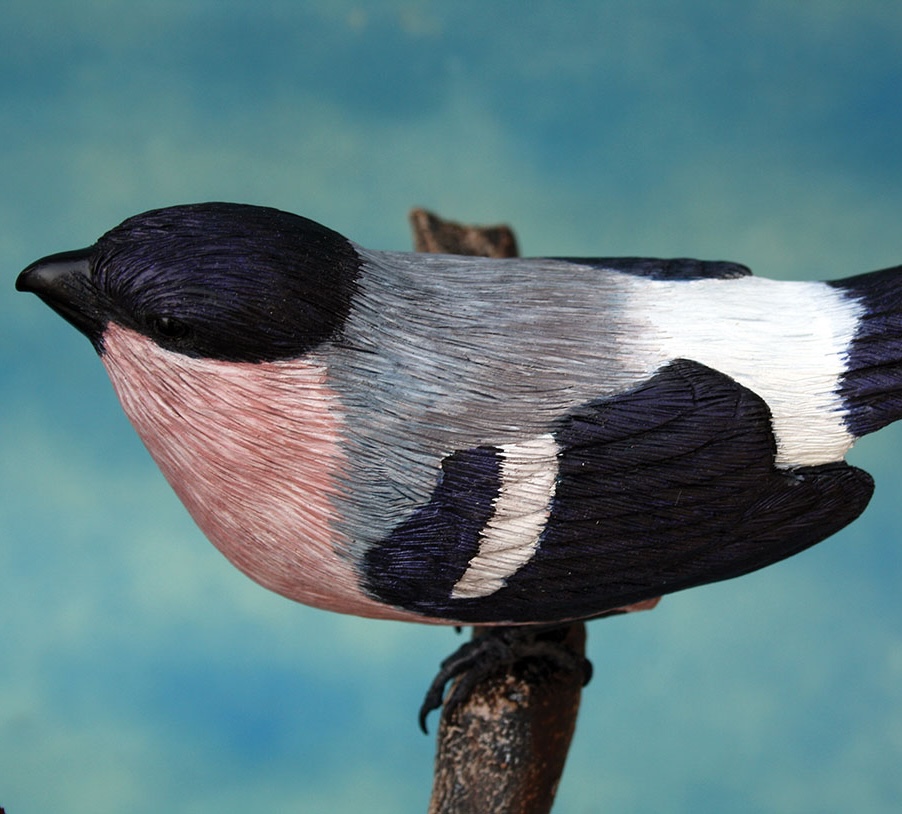
A welcome but relatively rare sight in many UK gardens, the bullfinch (Pyrrhula pyrrhula) is a colourful but shy bird, one of the larger of the finch family. As is usually the case with bird species, the male is the brighter plumaged with much redder underparts than the females or juveniles, although they all share a grey back, black cap and tail, and white rump.
In fact, because of their colourful appearance and pleasant song they were prized in Victorian times as caged birds. They are also known as good mimics and apparently can be taught to copy the sounds made by bird flutes.
According to the British Trust for Ornithology, UK bullfinch populations have declined by 36% since 1967. They are most commonly spotted in woodland and parks, which is also where they like to breed and nest, laying around four or five eggs in each brood – up to three a year – and seemingly remaining in pairs over the year.
While bullfinches will catch insects to feed to their young, their dietary preference is the seeds and buds of fruit trees, on which they feed voraciously with their specially adapted, stubby beaks. In the past they have been deemed pests because of the damage they do to trees such as cherry. Indeed, back in the 16th century, Henry VIII stated that they carried out ‘criminal attacks’ on fruit trees, with an Act of Parliament offering a penny bounty for every one killed. There have been other culls throughout the UK’s orchards in the past.
Their are several species of bullfinch, including the common and Azores bullfinch, and they are found across a large geographical area, from Ireland, across northern Europe and Asia to Japan. They also range widely in their movements, with the British birds rarely moving much more than a few kilometres during their lives, while their northern overseas cousins tend to be migratory.
Bullfinches, which have a lifespan of about two years, are around 16cm long, weigh about 21g and have a wingspan of 26cm. They are currently classified in the UK as Amber under the Birds of Conservation Concern 4: the Red List for Birds (2015). They are also protected under the Wildlife and Countryside Act, 1981.
Things you will need
Tools:
• Personal and respiratory protective equipment (PPE & RPE)
• Bandsaw, coping saw or fretsaw
• Rotary power carving unit
• Rotary carving discs or hand chisels
• Coarse taper burr
• Medium flame or taper burr
• Bullnose stone burr
• Round-nose burr
• Fine ruby taper burr
• Drill and drill bit for the feet
• Sanding drum
• Pyrography unit with scalpel-edge nib
Materials:
• Jelutong (Dyera costulata) or lime (Tilia spp.) size to suit your project Bird: 160mm L x 75mm H x 60mm W
• Eyes & feet
• PVA adhesive
• Metal pin
• Cyanoacrylate adhesive
• Baking soda
• Plastic wood
• Paint brushes/airbrush
• Abrasives 120-240 grit
• Acrylic colours as per the colour palette
Drawing
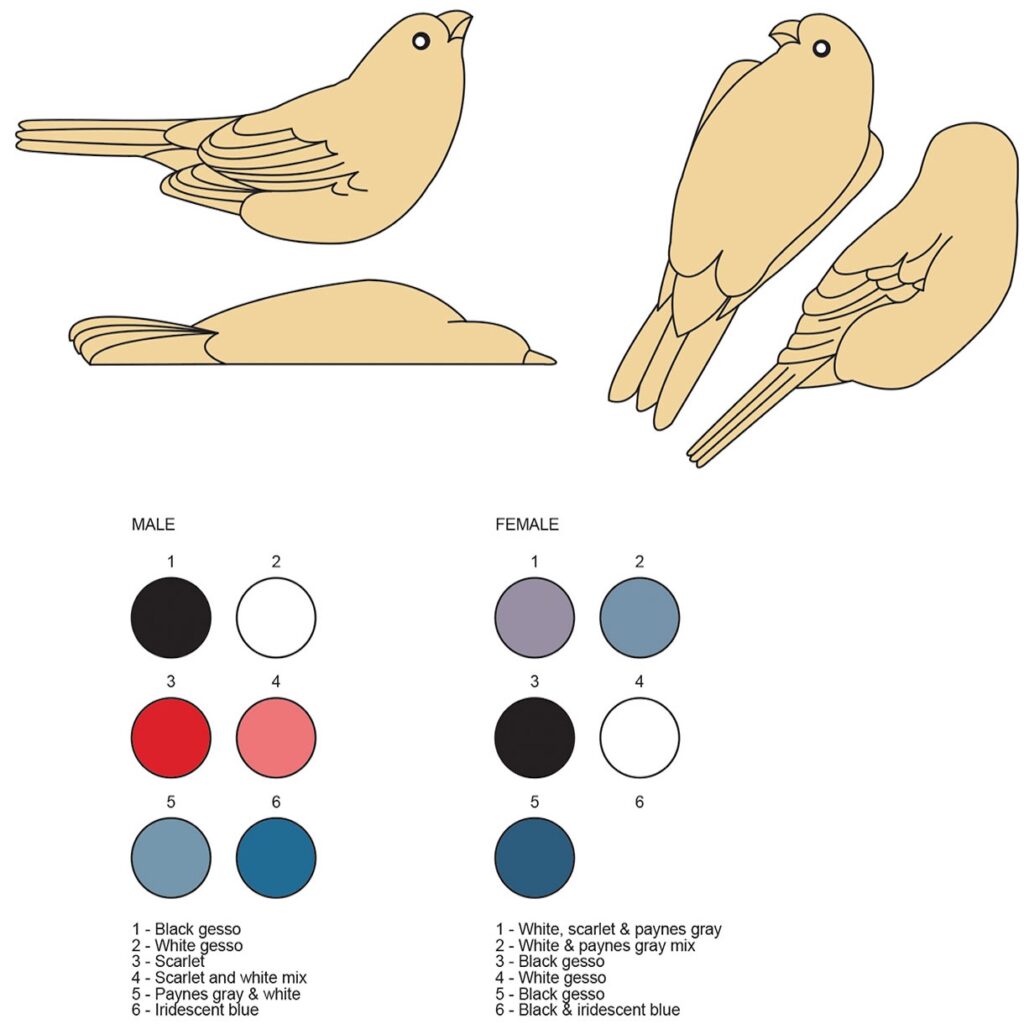
The make
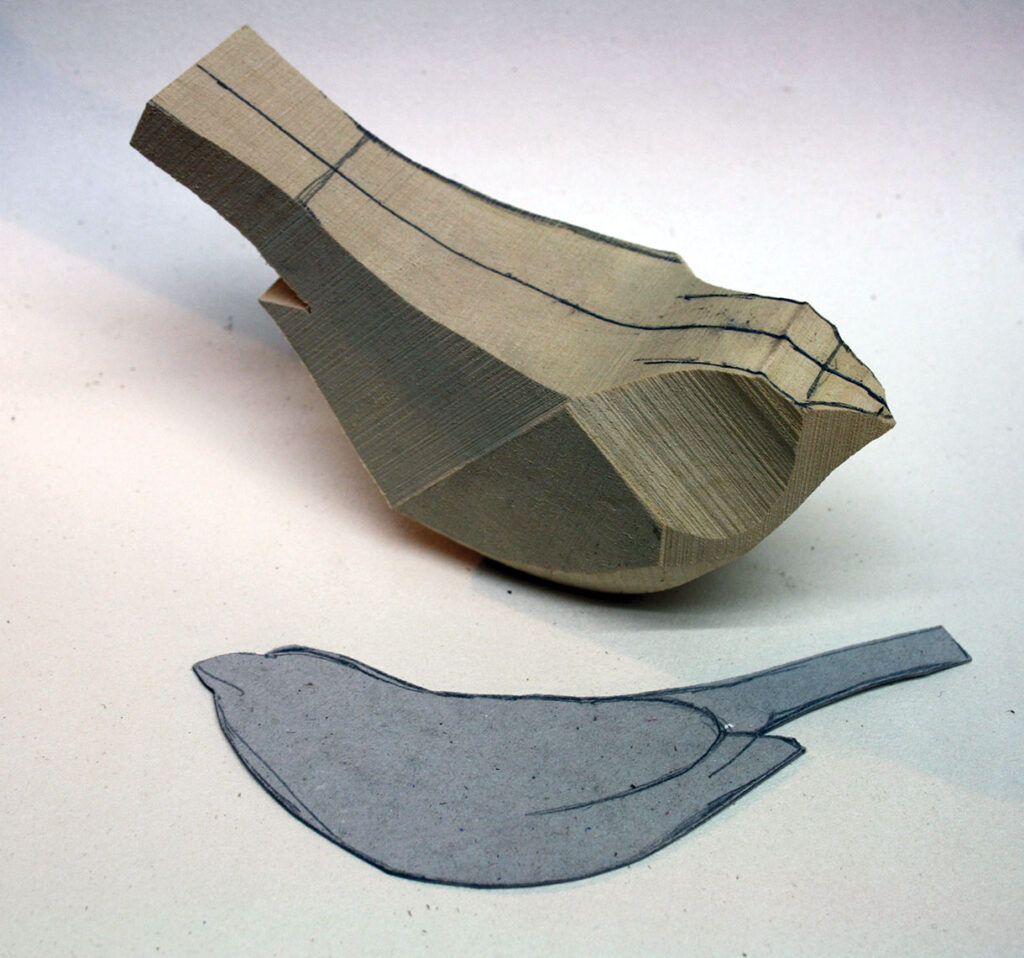
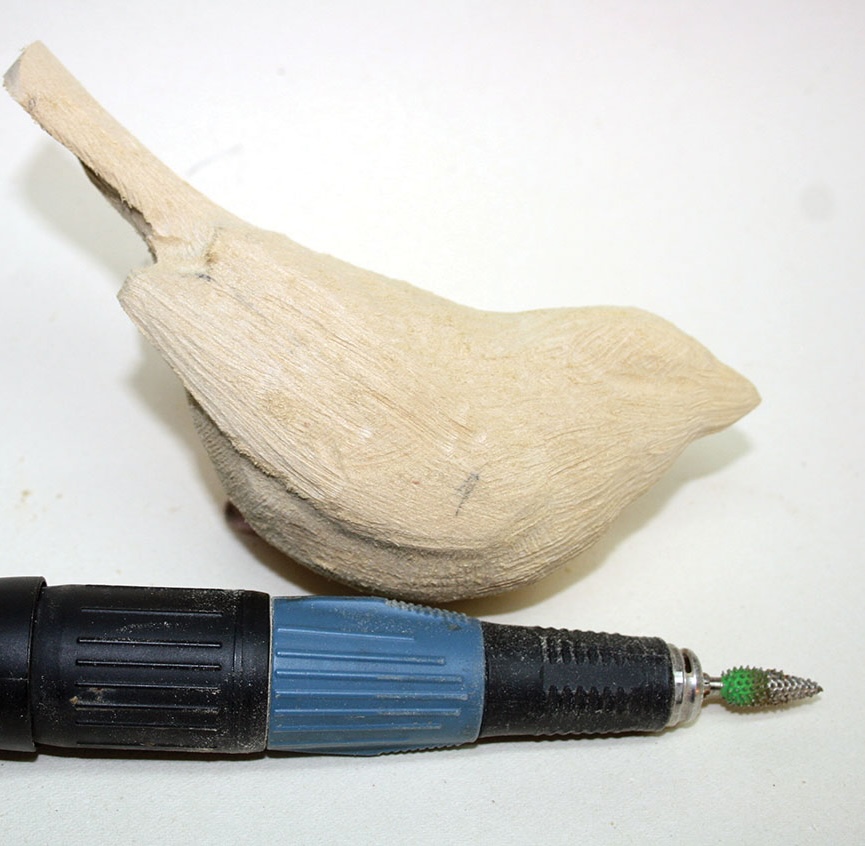
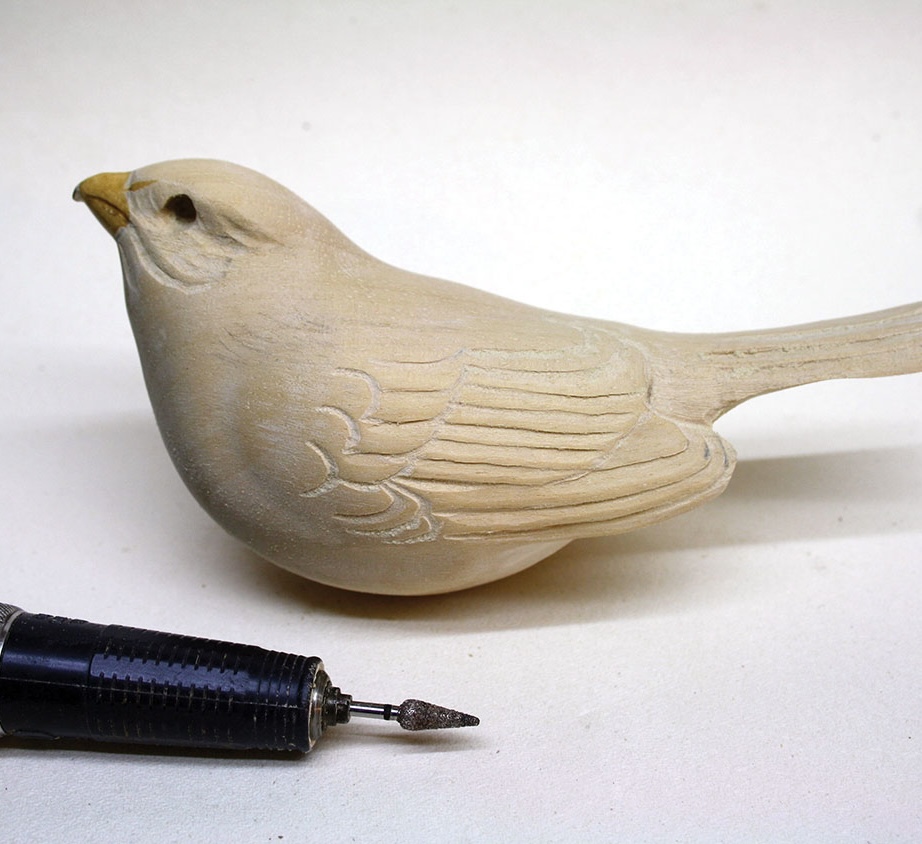
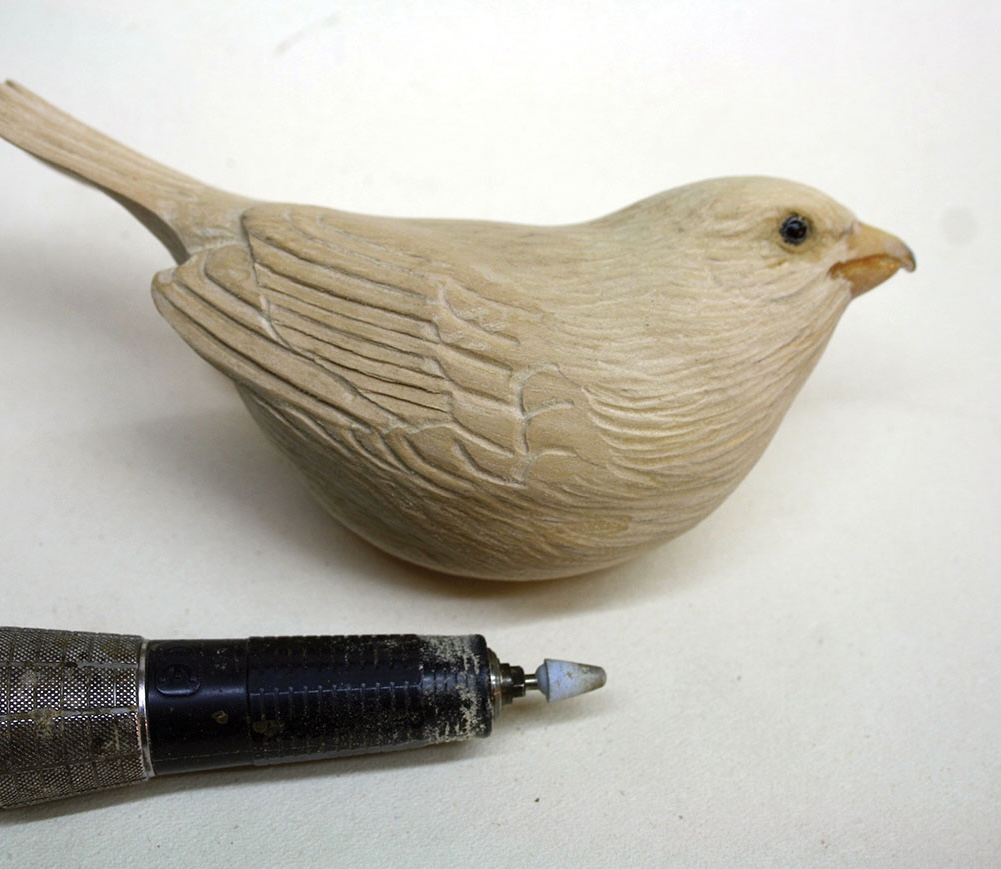
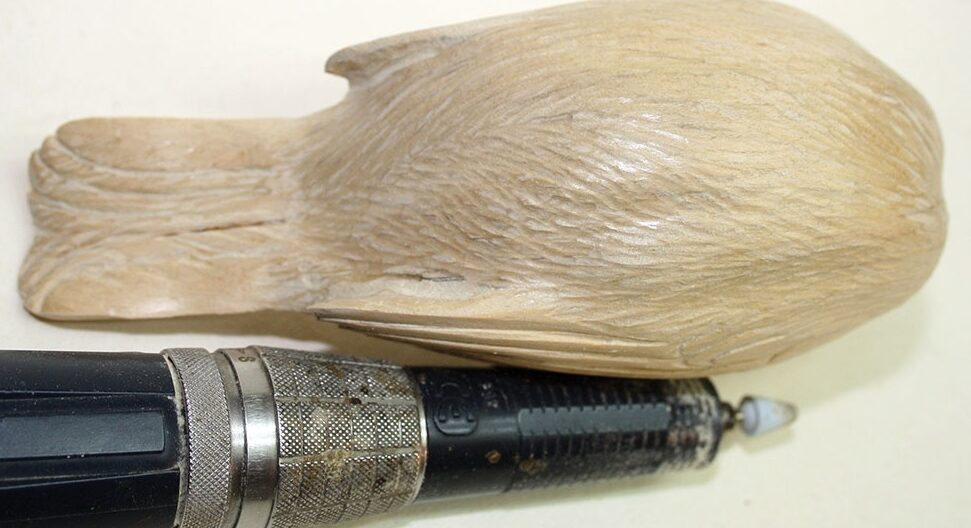
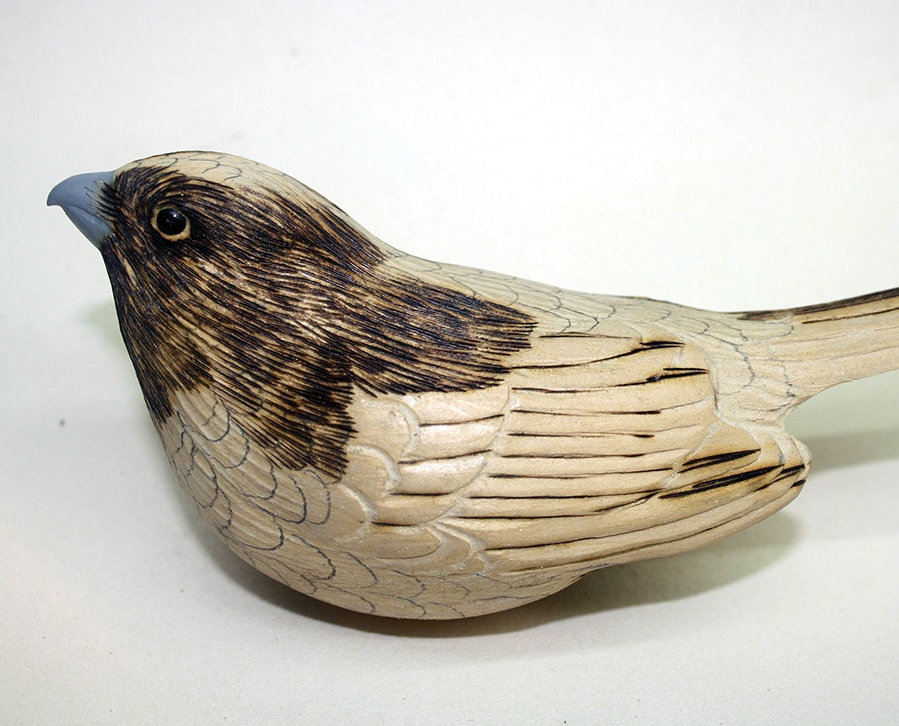
Pyrography
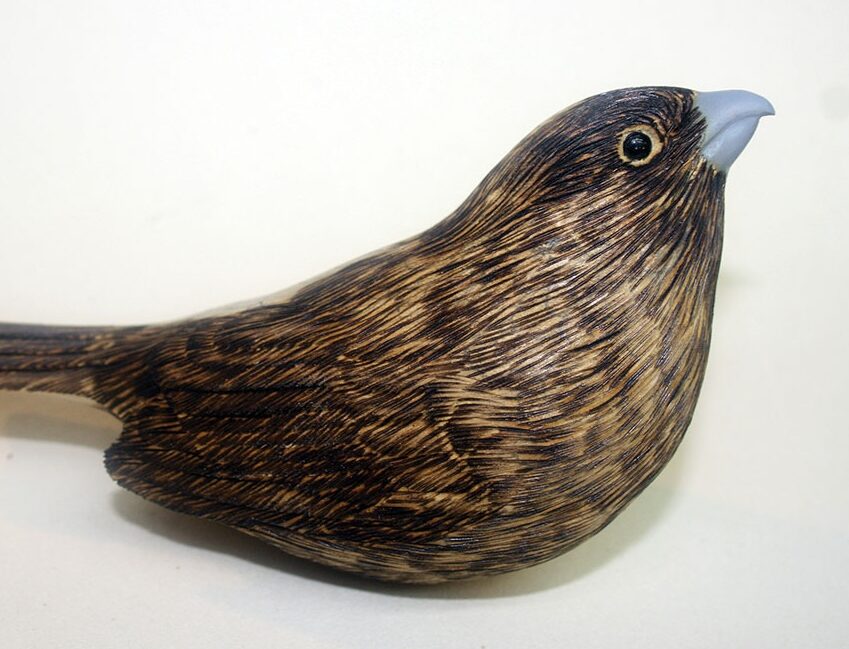
Colouring the male & female
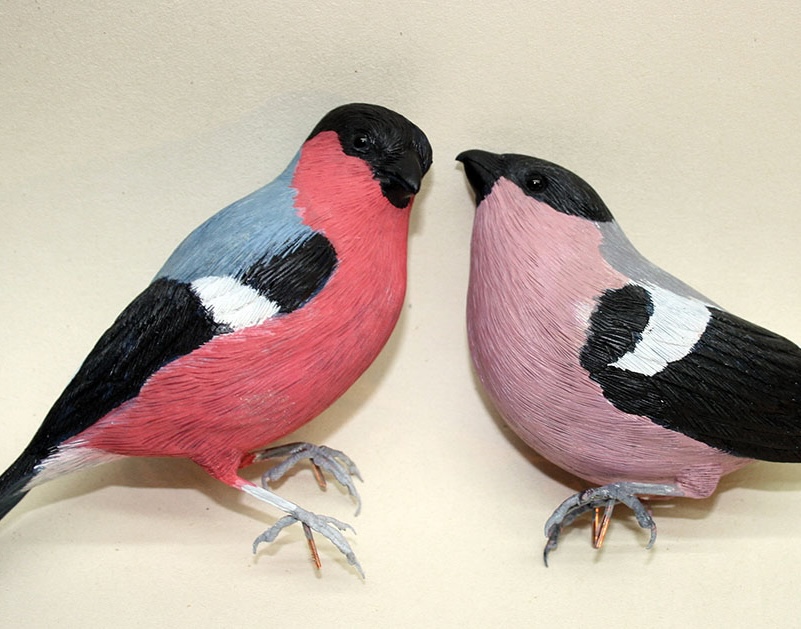
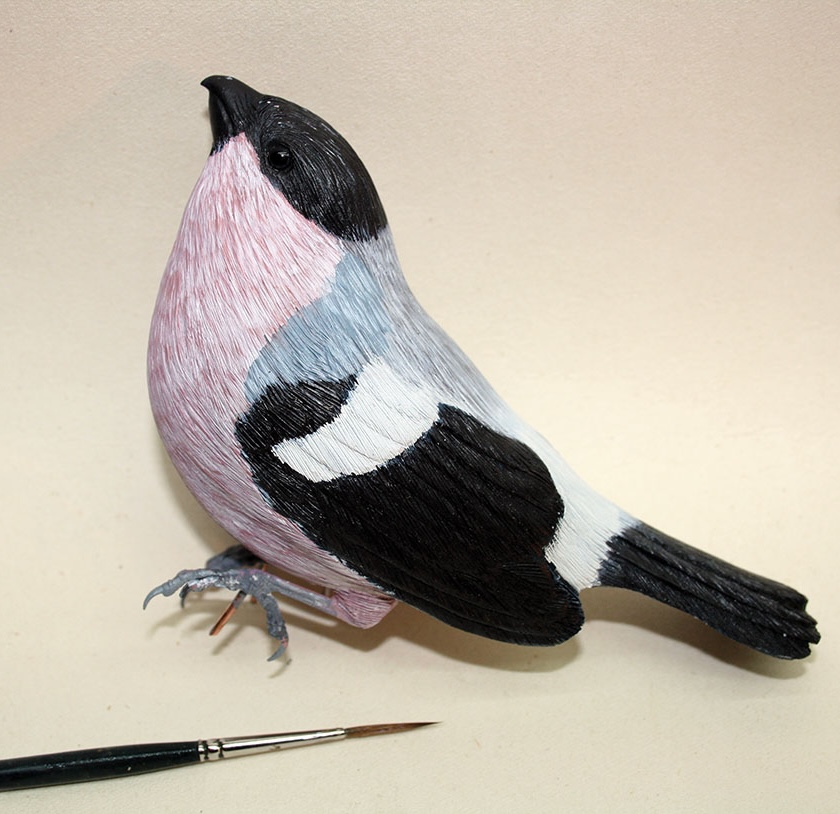
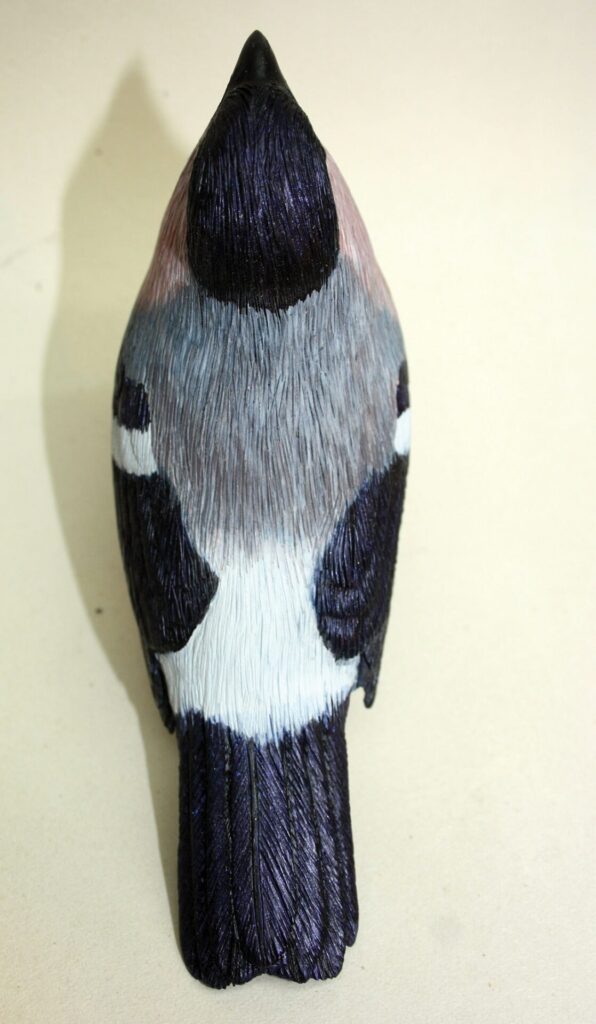
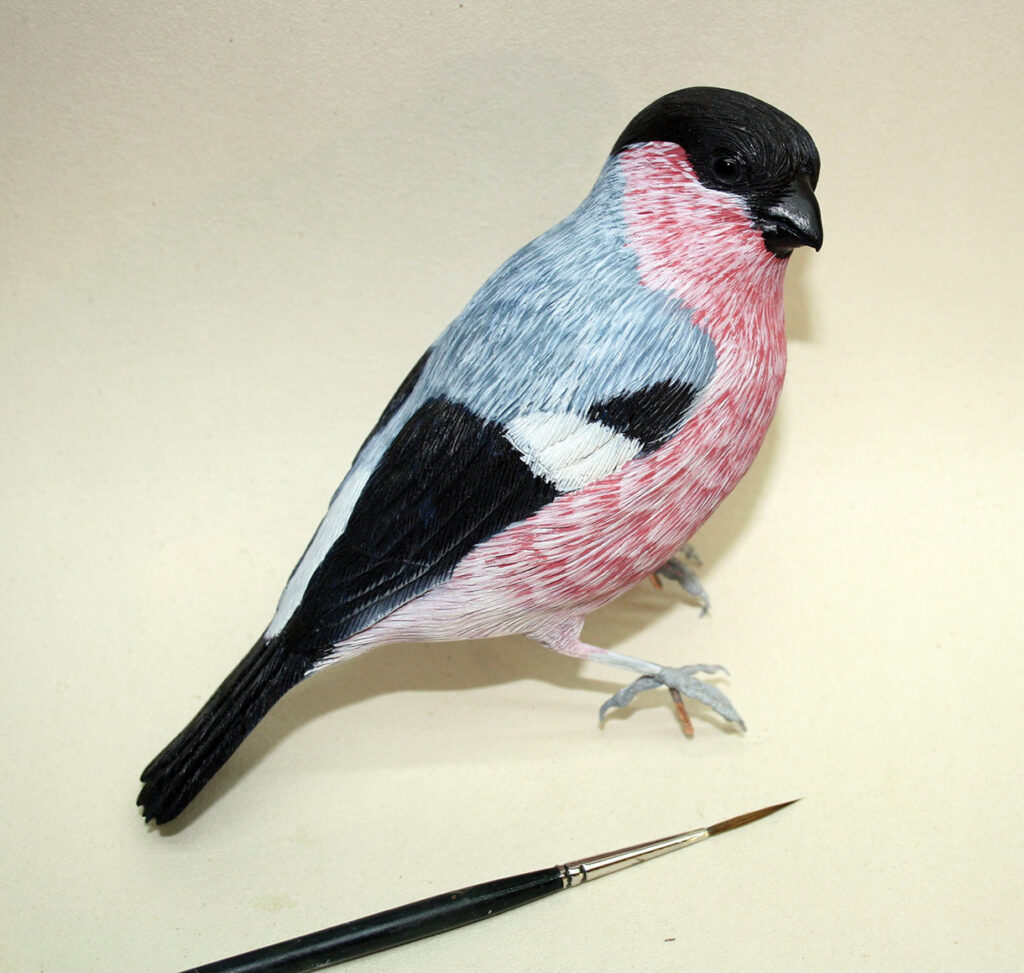
Top tip
If you wish to create life-like birds, then coloured ones give the realistic look over those birds which are left as natural timber. Both styles can be used to create wonderful carvings and each have their place. It’s your project, your rules and choices
The stand and branches
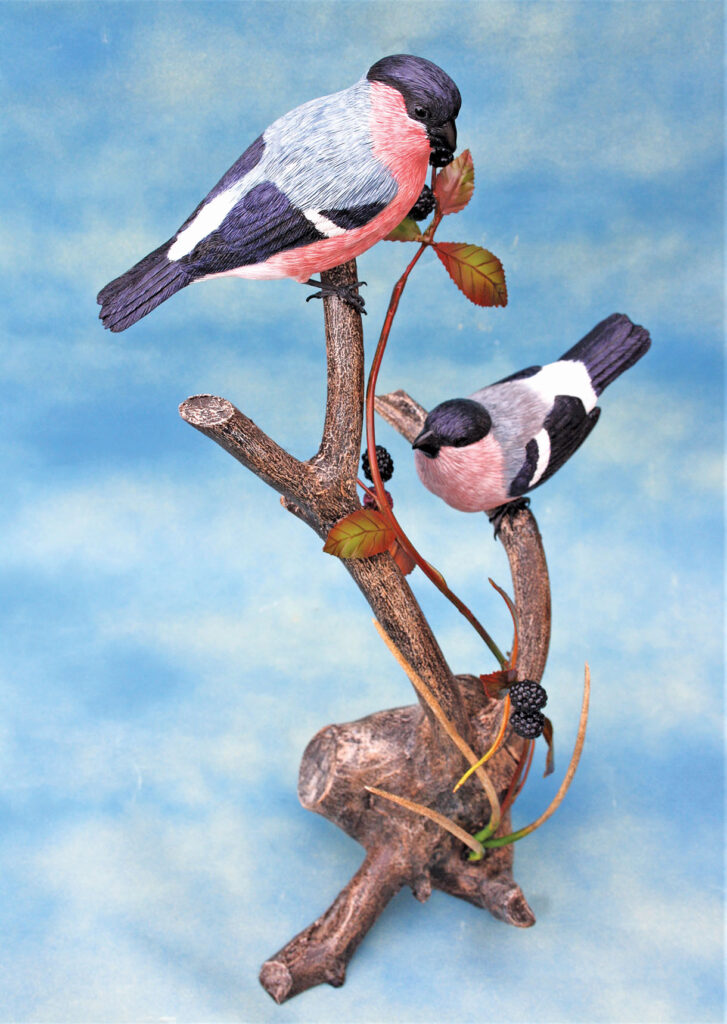
19. To mount the birds in a realistic setting, I chose to find a suitable section of shrub/ tree with a few branches. This was duly cut, cleaned and airbrushed to give me the colouration I needed. You can leave such sections natural, but over time the bark may come off. On to this I placed thin coloured branches with leaves. The stems are made from copper or brass wire an the leaves from copper sheet. These are then sprayed and coloured and inserted into the wooden section. The blackberries are made from modelling clay and then coloured. Many different fruits could be used so you can alter your composition to suite the birds being shown. Of course the composition it up to you, but this one gave me the realistic look I was after for the bullfinches
Top tips
• Stems, leaves, branches and berries can be bought in various shops and online. I find it best to integrate natural large sections and then accessorise these as you wish.
• Colour can be applied with brushes or an airbrush. I use both, but the bulk of the colouring is done by airbrush, which gives me more control over the density and also the texture required for the colour.
•The key to a great setting for the birds is to pick one that is natural to the subject